
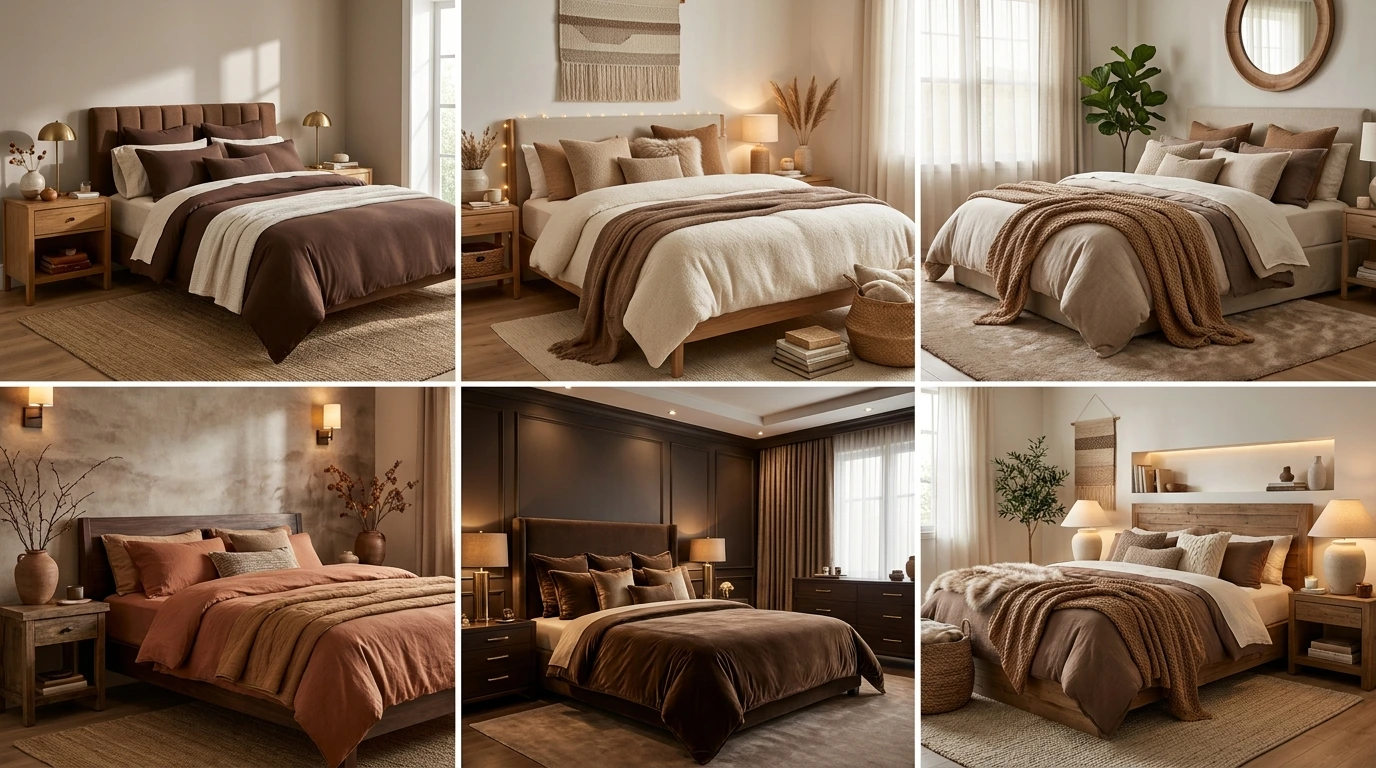
For years, my bedding aesthetic was a pile of throw pillows I bought because a photo told me to. I could pin the images. I could not recreate the feeling, and I know most women reading this have felt that exact gap between the bed on their Pinterest board and the bed in their actual bedroom. This guide closes that gap with 25 specific moods and aesthetics, from brown and earthy to dreamy and romantic to dark and moody, each one broken down into the duvet cover styling ideas, the pillow layering technique, and the small honest details that separate a bed that photographs well from a bed that actually feels like yours. Whether your space is a studio apartment or a full master bedroom, the goal is the same: a bed you want to climb back into every night, not just stage for a photo. Let’s get into it.
Find Your Bedding Mood: Which of These 5 Bedroom Feelings Are You Actually Chasing?
Before you buy another duvet, figure out which cozy bedroom aesthetic you are actually chasing, because the bedding aesthetic that works is the one that matches the mood you already feel in your space, not the one trending this week.
✷ THE WARM EARTH SLEEPER The feeling: a bedroom that feels like late afternoon sun even at midnight. Key bedding element: a chocolate brown velvet lumbar pillow. Your starting color: warm terracotta.
✷ THE DREAMY ROMANTIC The feeling: soft, slightly blurred, like the bed is exhaling. Key bedding element: a ruffled white duvet cover. Your starting color: ivory with a blush undertone.
✷ THE DARK ACADEMIA NESTER The feeling: a bedroom that feels like a study you never want to leave. Key bedding element: a deep forest green duvet. Your starting color: navy or bottle green.
✷ THE CLEAN MINIMALIST The feeling: restful, quiet, nothing fighting for attention. Key bedding element: crisp cotton percale sheets. Your starting color: warm white.
✷ THE MAXIMALIST LAYER LOVER The feeling: a bed you sink into and never quite finish arranging. Key bedding element: a mix of waffle weave, knit, and velvet. Your starting color: layered neutrals with one bold accent.
If you landed on the first two, keep reading, because the brown bedding aesthetic and the dreamy bed aesthetic are exactly where we’re starting.
Every bedding aesthetic in this guide is designed to work with pieces you can actually find, whether that’s a Parachute linen set, a Brooklinen duvet, something from the Target Studio McGee collection, or a well-reviewed pick from Amazon bedding.
Brown got a reputation for being the color you settle for when you can’t decide on anything else. The women who love this bedroom bedding inspiration know better. They’ve figured out that brown, done with any intention at all, reads warmer and more expensive than almost anything else you can put on a bed.
1. The Brown Bedding Aesthetic Nobody Saw Coming Until It Became the Whole Room
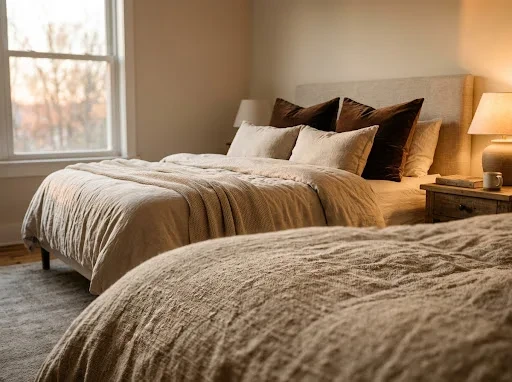
A brown bedding aesthetic done right feels less like a color choice and more like walking into a room that has already been lived in and loved. Start with an oat or clay linen duvet cover, layer in a chocolate velvet lumbar pillow, and let a woven throw sit at the foot of the bed instead of folded flat. The detail that makes it work is contrast in texture, not color, since an all-matte bed in five shades of the same brown just looks unfinished. This is one of the easiest bed styling ideas to execute because linen bedding aesthetic pieces from Pottery Barn or Anthropologie Home already come in these warm neutral tones. Most people make every layer the same weight of brown, and the fix is simple: pick one deep shade, one warm mid-tone, and one cream, and let those three do all the work.
2. When Terracotta Meets Cream Linen and the Bedroom Finally Feels Warm
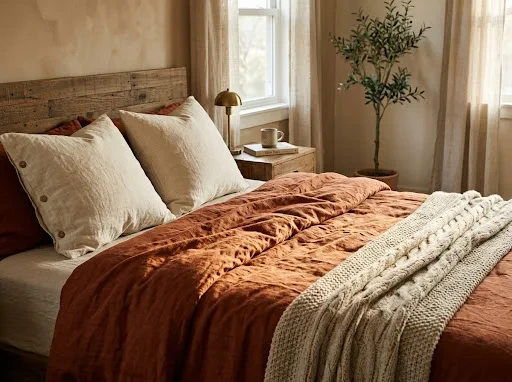
There’s a specific warmth that only shows up when terracotta and cream sit next to each other on a bed, and it’s the closest thing bedding has to golden hour light. Use a terracotta duvet as your base, then layer cream linen shams and a single oatmeal throw folded loosely across one corner. The detail that makes this combination work instead of looking like a themed room is restraint on pattern, since terracotta already reads busy against white walls. Aesthetic bed setup fans in smaller American bedrooms tend to reach for this palette because it warms up a space without needing more furniture. The most common mistake is pairing terracotta with cool grey sheets underneath, which fights the warmth instead of supporting it, so stick to warm white or cream as your base layer.
3. Chocolate Velvet Pillows on a Neutral Bed, and Why Restraint Makes It Work
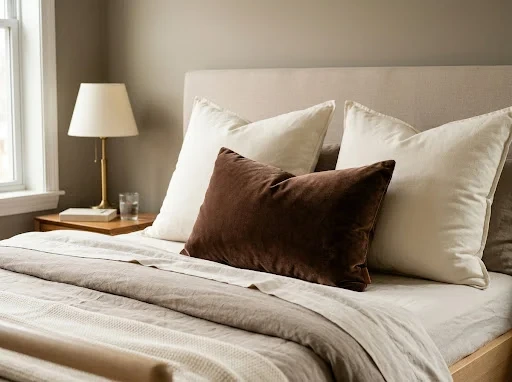
A single chocolate velvet pillow against a neutral linen bed does more for a bedding aesthetic than five throw pillows piled together ever will. The styling is simple: two standard pillows in cream, one velvet lumbar in deep brown, placed slightly off center instead of dead middle. What makes this work is the fabric contrast between the matte linen and the velvet sheen, which photographs and feels layered without adding clutter. This is where most people either overdo the pillow count or underdo the color, and the fix is to let one saturated piece carry the entire warm tone. A bed styled this way looks intentional in a studio apartment or a full master bedroom, since it scales down without losing the effect.
The Editor’s Layer Guide: Warm Earth Base
❈ Base layer: warm oat or clay linen sheet set, tucked loosely, not hospital corners. ❈ Mid layer: a terracotta or rust duvet, folded back a third of the way down. ❈ Top layer: a chunky knit throw in caramel, draped rather than folded flat. ❈ Finishing accent: one chocolate velvet lumbar pillow, placed off center.
4. The Caramel and Warm White Combination That Reads Expensive Not Sweet
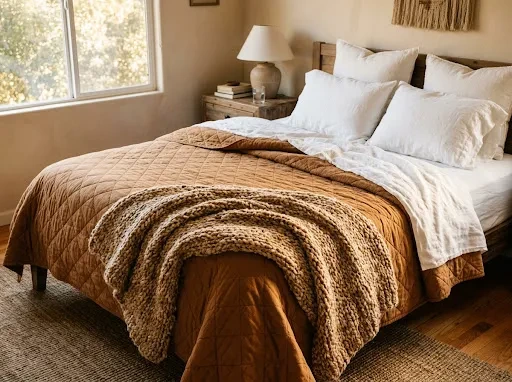
Caramel and warm white sound like they should feel soft and a little sugary, but styled correctly they read closer to a boutique hotel than anything saccharine. The technique is layering a caramel knit throw over crisp warm white sheets, then adding a single caramel euro pillow behind your standard pillow row. What keeps this from feeling too sweet is keeping every other surface in the room neutral, so the bed carries the only warm tone in the space. This combination has become one of the more requested cozy bedroom aesthetic looks because it works in a guest room just as well as a primary bedroom. The mistake to avoid is adding a second competing warm color, like a rust pillow, which pulls the eye in two directions instead of one.
5. Rust, Oat and the Bedroom That Finally Feels Grounded
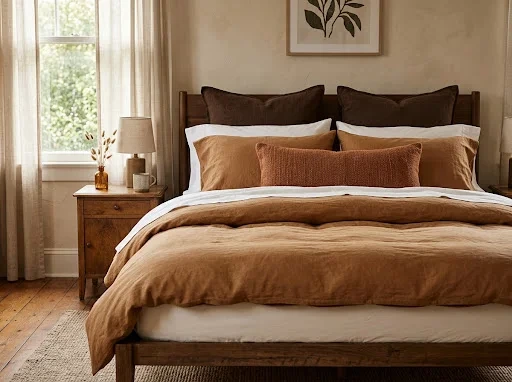
Rust and oat together create a bedding aesthetic that feels like it’s been in the room longer than it actually has, which is exactly the point. Layer an oat linen sheet set under a rust waffle weave blanket, and finish with two oatmeal pillow shams stacked slightly forward of your regular pillows. The detail that separates this from a flat, one-note bed is the waffle texture on the blanket, which catches light differently than the smooth linen underneath it. Bedding ideas for bedroom spaces that feel a little cold or sparse benefit most from this pairing, since rust adds warmth without needing a full color overhaul. The common misstep is choosing a rust that leans too orange, so look for a rust with brown undertones instead of a true burnt orange.
6. The All-Brown Bed That Should Not Work and Somehow Does
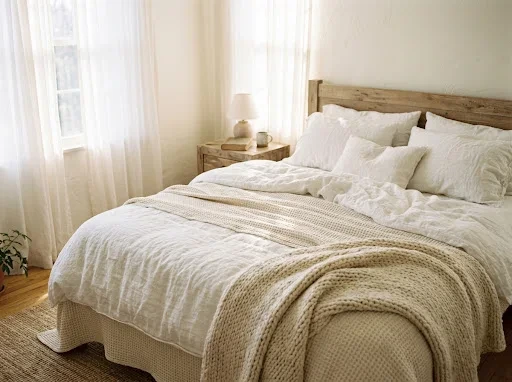
An entirely brown bed sounds like it should feel flat or heavy, and yet when the shades are chosen with intention it becomes the most enveloping bed in the house. The trick is three distinct brown tones: a deep chocolate duvet, a mid-tone caramel throw, and a warm oat pillow sham, never repeating the exact same shade twice. What makes this bedding aesthetic actually work is varying texture as much as tone, mixing waffle weave, velvet, and linen so the eye has somewhere to travel. This is a favorite among dark bedding aesthetic fans who still want warmth instead of moodiness. The fix for a monochrome bed that falls flat is almost always texture, not color, so before you add another brown pillow, add a different fabric instead.
🤎 The Brown Bedding Aesthetic Color Guide: Every Shade of Brown That Works in a Bedroom and What to Pair With Each
CHOCOLATE: a deep, near-black brown with warm undertones. Pairs with: cream, warm white, brass. Avoid: cool grey, which flattens the warmth. Best for: a master bedroom that wants to feel enveloping.
CARAMEL: a golden, honey-toned mid-brown. Pairs with: oat, blush, ivory. Avoid: stark white, which makes caramel look muddy by contrast. Best for: a bedroom that gets a lot of natural light.
RUST: a brown with clear red-orange undertones. Pairs with: oat, olive, warm white. Avoid: true orange or coral, which competes rather than complements. Best for: a fall-leaning bedding color ideas palette.
TERRACOTTA: a clay-based, slightly pink brown. Pairs with: cream, sage, brass accents. Avoid: navy, which can read too stark against the warmth. Best for: a bedroom with warm wood furniture already in place.
TOBACCO: a smoky, slightly greenish brown. Pairs with: olive, cream, black accents. Avoid: bright white, which can look clinical next to tobacco. Best for: a dark academia leaning bedroom.
OAT: a pale, warm neutral brown, closer to a base layer than a statement. Pairs with: literally every brown on this list. Avoid: nothing, oat is the connector tone. Best for: any bedroom, in any size, as the foundational layer.
If warm brown is speaking to you here, it’s worth knowing the palette extends well beyond bedding. Our warm tone inspiration guide breaks down the same caramel, honey, and tobacco tones as they show up in hair color, and the overlap in what reads warm versus muddy is nearly identical.
There’s a specific kind of woman who wants her bed to feel like the inside of a cloud, and she is not being precious about it. She has simply figured out that soft, pale, slightly imperfect bedding photographs and feels better than anything crisp and matched.
7. White Linen Bedding Aesthetic, and the One Layering Trick That Keeps It From Looking Clinical
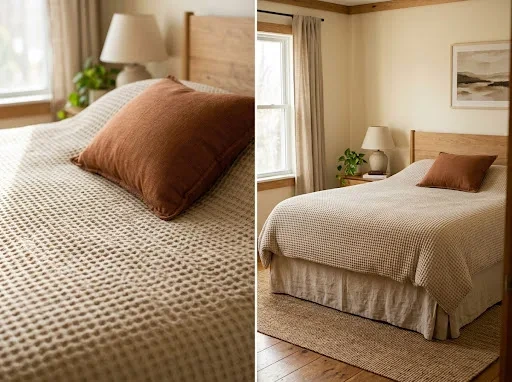
A white linen bedding aesthetic can go one of two ways: soft and lived-in, or sterile like a hospital room, and the difference comes down almost entirely to layering. Start with warm white percale sheets, add a linen duvet in the same warm white rather than a stark bright white, and finish with one textured throw so the bed has visual depth. What keeps it from feeling clinical is avoiding a perfectly matched set altogether, since slightly mismatched warm whites read as intentional rather than accidental. This white bedding aesthetic works especially well in smaller bedrooms because it makes the space feel larger and calmer without adding visual weight. The mistake most people make is buying a true bright white sheet set, which reads cold under most bedroom lighting, so always check for a warm or ivory undertone before you buy.
8. Blush, Ivory and the Ruffled Duvet That Feels Like a Cloud
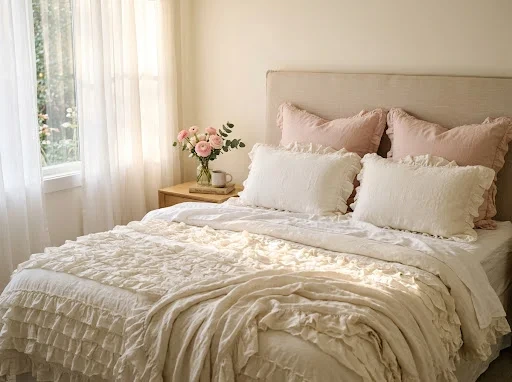
Blush and ivory together, with a ruffled duvet as the centerpiece, is one of the more romantic bed styling ideas that still manages to feel grown up rather than overly sweet. Layer the ruffled duvet over ivory sheets, add a single blush lumbar pillow, and let one edge of the duvet fold back casually instead of pulling it perfectly flat. The detail that keeps this from tipping into overly precious territory is keeping the ruffle subtle, a small edge rather than a full skirt covering the whole duvet. This combination has become a favorite dreamy bed aesthetic pick for guest rooms and primary bedrooms alike, especially paired with a Pottery Barn or Urban Outfitters bedding set. Most people over-ruffle, adding it to every pillow and the bed skirt too, and the fix is choosing exactly one ruffled element and keeping everything else smooth.
9. Sage Meets White in the Bedroom That Feels Like a Greenhouse at Dawn
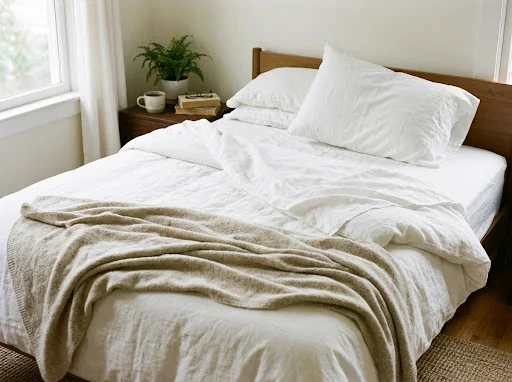
Soft sage against white bedding creates a bedroom that feels quietly botanical without needing a single plant in the room. The styling is a sage linen duvet layered over white sheets, with one white euro pillow behind two sage standard pillows. What makes this dreamy botanical look work is choosing a genuinely soft, greyed-out sage rather than a bright kelly green, which would read more playful than calm. This is a strong neutral bedding aesthetic alternative for anyone who finds pure white or cream too flat but still wants a soft, restful palette. The common error is adding too many green tones at once, so keep sage to one or two pieces and let white carry the rest of the bed.
10. The Romantic Unmade Bed That Is Actually Styled Down to the Last Fold
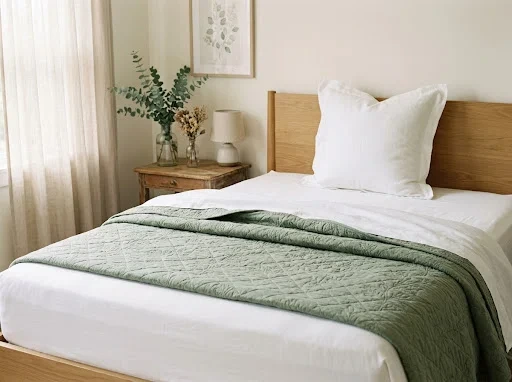
The unmade bed aesthetic looks effortless, which is exactly why it takes more styling than a perfectly made bed, not less. Pull the duvet back diagonally instead of straight, let one pillow lean rather than sit upright, and leave the throw half draped off the side as if you just got up. What makes this feel intentional instead of genuinely messy is a foundation of quality linen bedding aesthetic pieces underneath, since cheap fabric just looks rumpled rather than romantic. This romantic bed styling idea photographs beautifully in soft morning light, which is part of why it has become such a popular look for bedroom bedding inspiration boards. The mistake is pulling everything too loose, so anchor at least one element, usually the fitted sheet or bottom layer, so the whole bed doesn’t read as simply unmade.
The Editor’s Layer Guide: Dreamy Soft Base
- ❈ Base layer: warm white or ivory percale sheets, fitted snugly.
- ❈ Mid layer: a blush or sage linen duvet, folded back a third of the way.
- ❈ Top layer: a lightweight cotton throw, draped rather than centered.
- ❈ Finishing accent: one ruffled or textured pillow, placed slightly askew.
11. Cream, Oatmeal and the Layered Bed That Feels Like a Magazine Spread
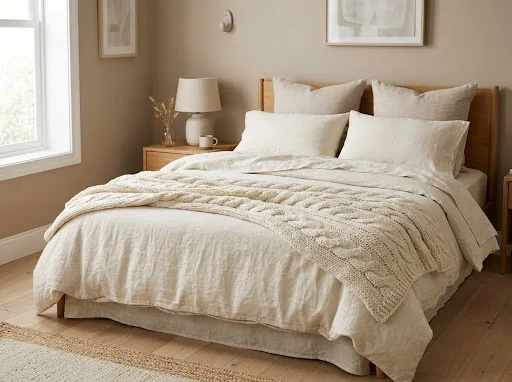
Cream and oatmeal layered together create a soft, editorial bedding aesthetic that reads expensive precisely because nothing in the room is fighting for attention. Layer a cream linen duvet over oatmeal sheets, add two cream euro pillows behind a row of oatmeal standard pillows, and finish with a cream knit throw folded at the foot. The detail that elevates this layered bedding look is texture variation within a nearly identical color family, since flat matching tones alone would read boring instead of considered. This is one of the more forgiving dreamy bed aesthetic combinations because nearly any cream or oat bedding from Brooklinen or Amazon bedding will slot in without clashing. The most common issue is choosing tones that are too close to white, which loses the warmth entirely, so look for genuine cream and oatmeal rather than off-white.
🤍 The Dreamy Bed Styling Formula: 5 Elements That Create the Soft Aesthetic Without Making the Bed Look Flat
THE DUVET: choose a warm white, ivory, or blush duvet with some visible texture, like linen or a subtle waffle weave, rather than a flat cotton sateen that can look one-dimensional in photos.
THE PILLOWS: layer two standard pillows in a slightly darker or contrasting soft tone against your euro pillows, so the row has gentle depth instead of blending into one flat plane.
THE EURO: place your euro pillows fully upright against the headboard, slightly fanned rather than perfectly stacked, since a rigid stack reads staged rather than soft.
THE THROW: fold a lightweight cotton or linen throw loosely across one corner of the bed rather than centered, letting it drape naturally off the edge.
THE FINISH: add one small textural detail, a ruffled edge or a single knit pillow, as the one element that keeps the whole dreamy bed aesthetic from feeling too uniform.
If this softer, lighter palette is where your eye keeps landing, it shares a visual language with some of the most requested hair colors right now. Our dreamy aesthetic ideas guide shows how that same soft, layered quality translates from bedding into beauty just as easily.
There’s a different kind of woman who wants her bedroom to feel like it belongs to someone with better secrets than the rest of us. She reaches for navy and forest green instead of pastels, and she has no interest in her bed looking soft.
12. The Dark Navy Bedding Aesthetic for a Bedroom That Means Business
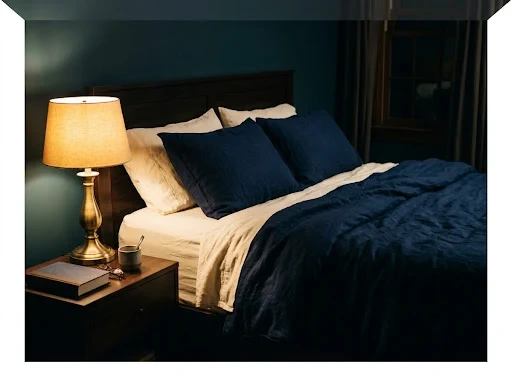
A dark navy bedding aesthetic turns a bedroom into a space that feels deliberate rather than an afterthought, which is exactly why it works so well in a primary bedroom. Layer a navy duvet over warm white or cream sheets, add a single brass or warm wood element nearby, and keep pillows minimal rather than piled high. The detail that keeps navy from reading flat or cold is that warm white base underneath, which stops the whole bed from tipping into something closer to nautical than moody. This dark bedding aesthetic reads especially well in a bedroom with good natural light, since navy can otherwise swallow a dim room entirely. Most people pair navy with cool grey accessories, which makes the whole room feel colder, so stick with warm metals and warm whites instead.
13. Forest Green and Warm Brass, and the Bed That Feels Like a Study
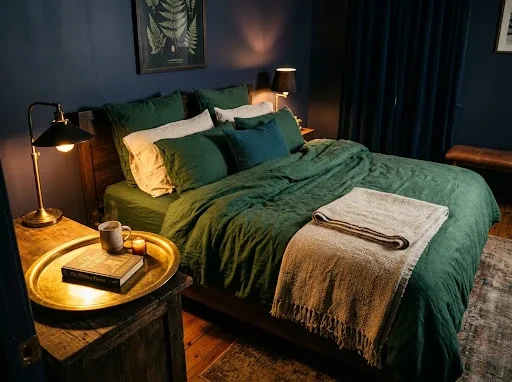
Forest green paired with brass hardware and warm linen accents creates a bedding aesthetic that feels closer to a private library than a typical bedroom. The styling is a forest green duvet, cream linen pillow shams, and one brass reading lamp nearby to reinforce the mood beyond the bed itself. What makes this combination work instead of feeling like a themed room is keeping the green to one saturated layer, with everything else in warm neutral tones. This look has become popular with dark academia bedding aesthetic fans who still want the bed itself to feel warm rather than stark. The common mistake is adding cool grey or silver accents instead of brass, which pulls the whole aesthetic away from warm and toward cold.
14. Dark Academia Bedding Aesthetic, and Why Leather Details Change Everything
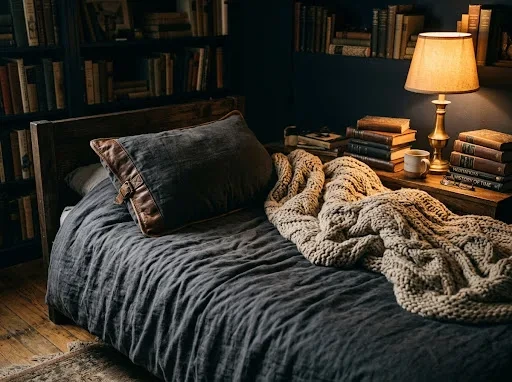
A single leather-trimmed pillow does more for a dark academia bedding aesthetic than an entire new duvet cover would. Layer deep tones, navy, forest green, or tobacco brown, as your base, then add one pillow with a leather or faux leather trim as the textural anchor. What makes this detail work is contrast, since the smooth leather against soft linen or wool creates the same tactile richness that defines this whole aesthetic. This is one of the more distinct bed aesthetic dark academia choices because it borrows from menswear and library interiors rather than typical bedding trends. Most people skip texture contrast entirely and rely on color alone, and the fix is adding exactly one hard-surfaced material, leather, wood, or brass, into an otherwise soft bed.
15. Charcoal and Black Bedding Styling for a Modern Moody Bedroom
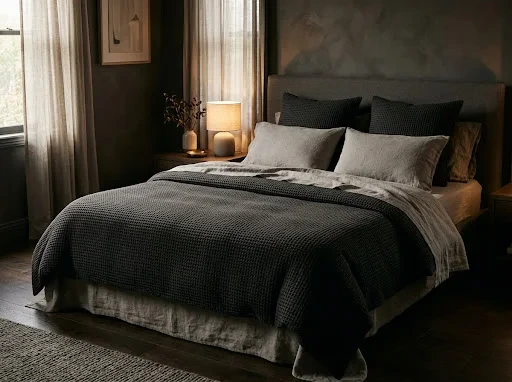
Charcoal and black bedding can read either genuinely sophisticated or like a basement, and the difference comes down to what surrounds it. Use a charcoal linen duvet as your base, add one black euro pillow, and keep everything else, walls, nightstand, lighting, in warm rather than cool tones. The detail that keeps this from feeling heavy is texture, since a matte linen charcoal reads completely different from a shiny black cotton sateen. This modern moody bedding aesthetic works in bedrooms of any size, though it benefits especially from good ambient lighting to keep the room from feeling dim. The mistake most people make is combining charcoal with cool white walls, which drains warmth from the whole space, so a warm white or greige wall color supports this palette far better.
16. The Dark Bedding Aesthetic That Looks Expensive in Any Room Size
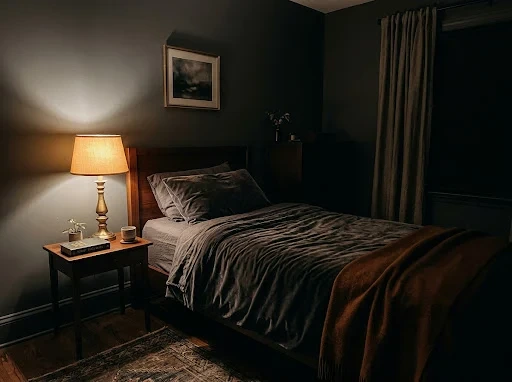
A dark bedding aesthetic can look expensive in a small studio apartment just as easily as it does in a sprawling master bedroom, as long as the fabric quality is doing the talking. Choose one deep tone, navy, forest, or charcoal, in a matte linen or cotton sateen rather than anything with sheen, and keep the pillow count restrained rather than piled. The detail that separates expensive-looking dark bedding from cheap-looking dark bedding is almost always fabric weight, since thin, flimsy dark fabric photographs fine but feels disappointing in person. This look scales down well because dark tones actually make a small room feel more intentional rather than cramped, contrary to the usual advice to keep small spaces light. Most people assume dark bedding needs a large room to work, and the fix is simply choosing higher quality fabric over a bigger bed.
🖤 Dark Bedding Aesthetic Reality Check: What Photographs Dark vs What Actually Looks Dark in a Real Bedroom
WHAT LOOKS DARK IN PHOTOS ONLY: A deep navy shown under warm editorial lighting can read almost black, but in daylight it often looks more like a soft denim blue. A charcoal duvet photographed with heavy shadow can appear near-black, though in a bright bedroom it reads more like a warm grey. A forest green shown at dusk can look nearly black-green, but under regular ceiling light it shows its true, more muted olive tone.
WHAT ACTUALLY READS DARK IN PERSON: A true matte black euro pillow holds its depth in almost any lighting, unlike deep blues or greens that shift with the light source. A tobacco brown with heavy shadow undertones stays visually dark even under bright overhead lighting. A charcoal with a slight blue undertone reads consistently dark rather than shifting toward grey.
THE LIGHTING FACTOR: Warm bedside lamps and dimmable overhead lighting make deep navy and forest green read richer and darker than they do under bright daylight or cool white bulbs. If a dark bedding aesthetic is the goal, invest in warm-toned lighting before assuming the bedding itself isn’t dark enough.
The instinct to pick an unexpected, slightly dramatic color for your bed is the same instinct behind some of the boldest looks in beauty right now. Our bold creative choices guide has the same confidence-first approach, just applied to nail art instead of a duvet cover.
Some women don’t care about color at all. What they want is a bed that feels like it has weight and history, built from fabric you actually want to touch, and that’s a texture question more than a palette one.
17. Waffle Weave Bedding Aesthetic, and Why Texture Is Doing All the Styling Work
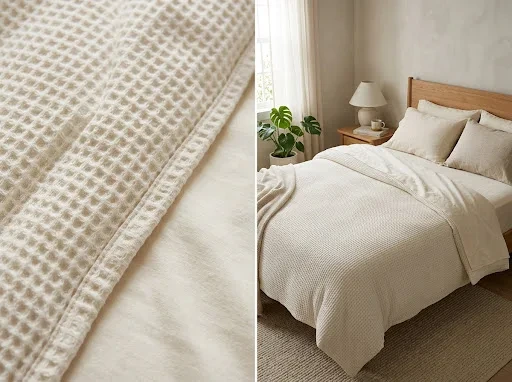
Waffle weave bedding does something flat cotton simply cannot, which is create visual depth and dimension without adding a single new color to the bed. Layer a waffle weave duvet over smooth percale sheets so the two textures play off each other, then add a smooth velvet pillow as contrast rather than another waffle piece. The detail that makes this bedding texture layering work is contrast, not repetition, since two waffle pieces together just look like more of the same texture rather than intentional layering. This is a favorite among duvet cover styling ideas because a single waffle weave piece can transform an otherwise plain bed without a full restyle. Most people add waffle texture everywhere at once, and the fix is choosing one waffle piece and letting smoother fabrics support it.
18. The Knit Throw Folded at the Foot of the Bed That Changes Everything
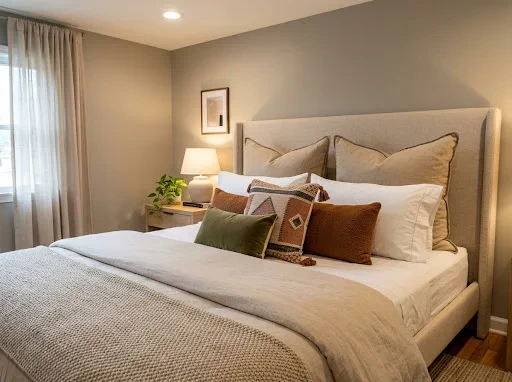
A single chunky knit throw, folded and placed at the foot of the bed, is one of the smallest changes that makes the biggest visual difference in a layered bedding look. The technique is folding it in thirds lengthwise rather than draping it loosely, then setting it slightly off center so it doesn’t look perfectly symmetrical. What makes this throw blanket bed styling detail work is scale, since a thin, flat throw disappears next to a duvet while a chunky knit reads as an intentional layer. This small addition has become one of the most repeated cozy bedding ideas because it requires no other changes to an existing bed. The common mistake is centering the throw perfectly, which reads staged, so shift it slightly and let one edge hang a little longer than the other.
19. Euro Pillow Arrangement Behind Standard Pillows, and the Exact Configuration That Works
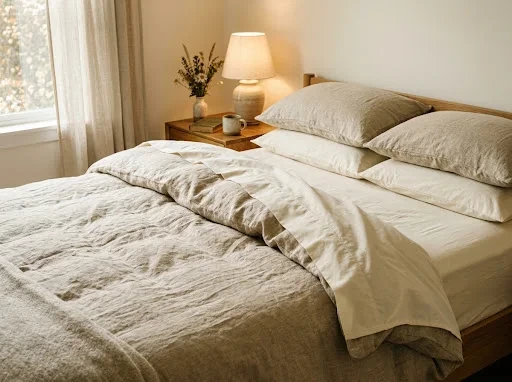
The euro pillow arrangement is one of the most underrated bed pillow layering techniques, and getting it wrong is the single biggest reason a bed reads flat instead of full. Place two euro pillows upright against the headboard, slightly fanned outward rather than stacked flush, then layer two standard pillows in front, followed by one lumbar pillow angled across. What makes this configuration work is the fan angle on the euros, which creates visual height without requiring more pillows than necessary. This is one of the most requested bed throw pillow ideas because it works with almost any bedding aesthetic, from warm brown to dark navy to soft blush. The common mistake is stacking euro pillows flat against each other, which collapses the height this arrangement is meant to create.
The Editor’s Layer Guide: Mixed Texture Base
- ❈ Base layer: smooth cotton percale sheets, to keep one surface calm.
- ❈ Mid layer: a waffle weave or linen duvet, folded back loosely.
- ❈ Top layer: a chunky knit throw, folded in thirds at the foot.
- ❈ Finishing accent: one velvet or leather-trim pillow for contrast.
20. Layered Linen and Cotton, and the Bed That Looks Lived-In on Purpose
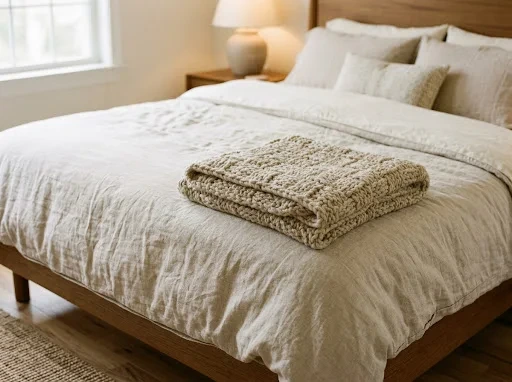
Mixing linen and cotton on the same bed creates a lived-in quality that a single fabric type simply cannot replicate. Use linen for the duvet cover, which naturally wrinkles and drapes with more character, and cotton percale for the sheets underneath, which stays crisp against skin. The detail that keeps this combination from looking mismatched is sticking to one color family across both fabrics, so the texture varies while the palette stays cohesive. This layered bedding look works particularly well for anyone who wants their bed to feel intentional without looking overly styled or precious. Most people either over-iron the linen, which defeats its purpose, or leave everything wrinkled including the cotton, so keep the crisp fabric crisp and let the linen do the relaxed work.
21. Mixing Two Textures on One Bed Without It Looking Like a Mistake
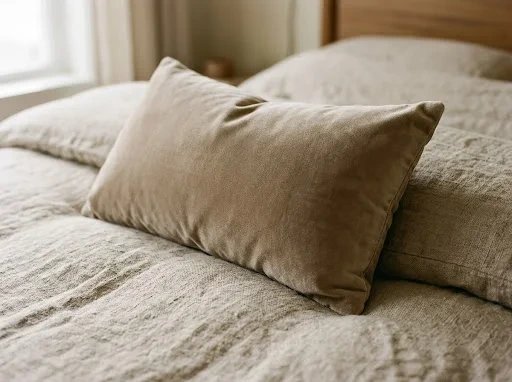
The rule for mixing textures successfully is simple: pick two, never three or more, and let one be smooth while the other has visible weave or nap. A velvet lumbar pillow against a linen duvet is a reliable combination, since the sheen of velvet naturally contrasts against linen’s matte, slightly rumpled surface. What keeps this from looking accidental is repetition, using that same velvet texture in at least one other small spot, like a bench cushion or reading pillow nearby. This bedding texture layering approach is one of the more forgiving styling choices because it works across nearly every color palette in this guide. The mistake to avoid is combining three or more distinct textures at once, which reads chaotic rather than intentional, so edit down to two before you add anything else.
🧶 Bedding Texture Pairing Guide: Which Fabrics Work Together and Which Ones Fight
| TEXTURE | PAIRS WITH | AVOID | BEST SEASON |
|---|---|---|---|
| Waffle weave | Smooth cotton, linen | Another waffle piece | Cool weather |
| Linen | Velvet, cotton, wool | Silky sateen | Every season |
| Velvet | Linen, waffle weave | Another velvet piece | Fall and winter |
| Knit throw | Linen, cotton percale | Heavy wool blankets | Fall and winter |
| Cotton percale | Linen, waffle, velvet | Flannel in warm months | Every season |
Building a genuine linen bedding aesthetic comes down to exactly this kind of texture layering, one calm surface and one tactile surface working together instead of competing. The same instinct that makes a knit throw the most satisfying layer on a bed drives one of the most popular tactile trends right now, and our texture inspired style guide shows how that same warmth translates into an entirely different aesthetic decision.
The bed changes with the season, the guests, the size of the room, and honestly, with whoever you are that year. This last stretch is about the bedding aesthetic decisions that shift depending on what’s actually happening in your life.
22. Fall Bedding Aesthetic With Warm Throws and Deep Tones
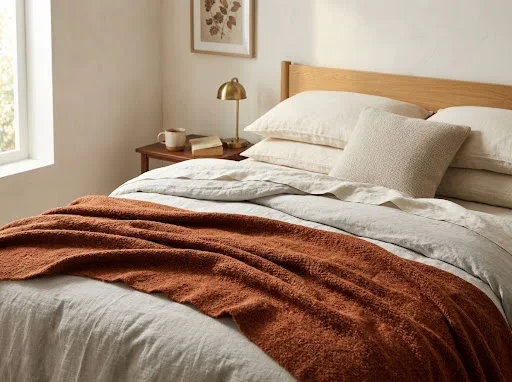
A fall bedding aesthetic leans into deeper, warmer tones and heavier fabric without abandoning the same layering principles used across every season. Swap a lightweight cotton duvet for a flannel or heavier linen option in brown, rust, or forest green, and add a chunky knit throw for the colder months ahead. The detail that makes this transition feel seasonal rather than just heavier is warmth in color as much as warmth in fabric weight, so lean into caramel, rust, and deep green rather than staying neutral. A warm autumn bedroom aesthetic extends naturally beyond the bed itself, and our fall entertaining guide shows how that same warm, layered aesthetic carries into every gathering you host across the season. Most people swap their entire bedding set for fall, when really just changing the duvet and adding one heavier throw is enough to shift the whole mood.
23. The Guest Bedroom Bedding Aesthetic That Makes Anyone Feel Like a Welcome Visitor
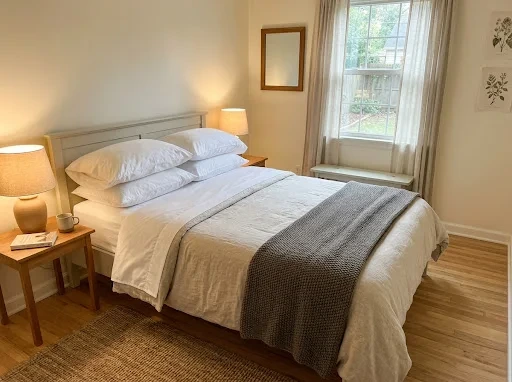
A guest bedroom bedding aesthetic works best when it’s warm and universally comfortable rather than a reflection of your own specific taste. Choose a neutral bedding aesthetic, warm white, dove grey, or soft oat, paired with an extra folded blanket at the foot in case the room runs cold. The detail that makes guests feel genuinely welcome rather than like they’re in a spare room is fresh, high-quality sheets, since guests notice fabric quality faster than they notice color choices. This bedroom bedding inspiration works especially well with a simple Parachute or Brooklinen set, since both brands lean neutral and consistently soft. The common mistake is over-decorating a guest room bed with too many decorative pillows, which just gets stacked on the floor at bedtime, so keep the pillow count practical.
The Editor’s Layer Guide: Guest-Ready Base
- ❈ Base layer: a neutral, high-quality cotton or linen sheet set.
- ❈ Mid layer: a simple duvet in warm white, oat, or dove grey.
- ❈ Top layer: one extra folded blanket at the foot of the bed.
- ❈ Finishing accent: two to three pillows, kept simple and washable.
24. Small Bedroom Bedding Aesthetic, and What Works When Space Is Limited
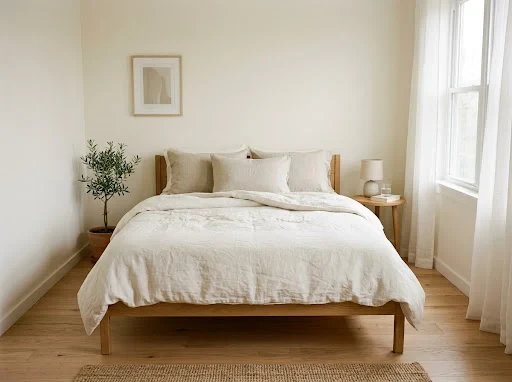
A small bedroom bedding aesthetic depends far more on restraint than on finding clever space-saving tricks. Choose lighter, warmer neutral tones over heavy dark ones unless the room gets excellent natural light, and keep the pillow count to four or fewer so the bed doesn’t visually take over the room. The detail that makes a small space feel intentional rather than cramped is scale, choosing a lightweight linen duvet rather than an oversized, heavily quilted one that overwhelms a twin or full bed. This aesthetic bed setup works in studio apartments especially well when paired with a simple headboard or none at all, letting the bedding carry the visual interest instead. The mistake most people make in small rooms is over-layering, adding a bed skirt, multiple throws, and a full pillow arrangement, when one duvet, two pillows, and a single throw usually reads more considered.
25. The Complete Bedding Edit, and How Every Element Finally Comes Together
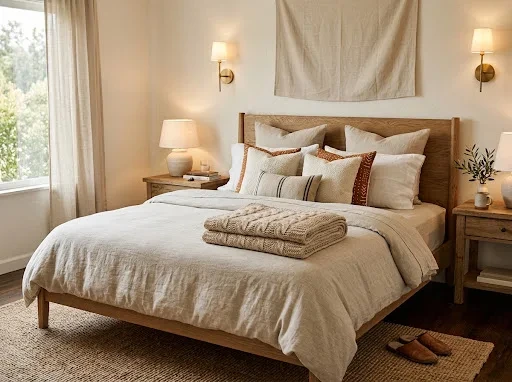
The final version of any bedding aesthetic isn’t about following every rule in this guide at once, it’s about choosing the two or three elements that actually matched your own mood finder result. Pull your base sheet set, one duvet in your chosen palette, an accent pillow or two, and exactly one throw, and resist the urge to add a fourth or fifth layer just because it’s available. The detail that pulls a complete bedding edit together is consistency in undertone, warm with warm, cool with cool, since mismatched undertones are the most common reason a fully layered bed still looks slightly off. This bed styling approach works whether your starting point was brown and earthy, dreamy and soft, or dark and moody, because the underlying layering logic is the same across every aesthetic in this guide. The mistake to avoid at this final stage is chasing every trend at once instead of committing to the one bedding aesthetic that actually matches how you want your bedroom to feel.
Bedding Aesthetic Questions, Answered by Someone Who Has Remade This Bed a Hundred Times
What is a bedding aesthetic and how do I create one?
A bedding aesthetic is simply the specific mood your bed creates through color, texture, and layering choices working together on purpose. To build your own aesthetic bed setup, start with one base color, add one contrasting texture, and layer pillows with intention rather than buying pieces separately and hoping they match. The strongest bedding aesthetics usually come from restraint, choosing fewer, better pieces rather than piling on everything available.
What colors make the best brown bedding aesthetic?
The strongest brown bedding aesthetic combinations use three tones together: a deep chocolate, a warm caramel or terracotta, and a light oat as the connecting neutral. These bedding color ideas work because they mimic natural warm light rather than looking like a single flat color choice. Avoid pairing warm brown with cool grey, which tends to flatten the warmth these tones are meant to create.
How many pillows do I need for a good bedding aesthetic?
Most well-styled beds use between four and six pillows total, following a simple bed throw pillow ideas structure: two euro pillows in back, two standard pillows in front, and one or two accent or lumbar pillows on top. The euro pillow arrangement matters more than the total count, since fanning them slightly rather than stacking flush creates visual height. More than six pillows usually starts working against you rather than for you.
What is the best bedding material for a cozy aesthetic?
Linen consistently creates the most restful, enveloping feel of any bedding material, largely because its natural texture and slight wrinkle read as effortless rather than stiff. A genuine linen bedding aesthetic pairs well with a knit throw for added warmth in colder months. If a truly warm, soft bed matters to you beyond just how it looks, our night routine ideas guide has the exact wind-down practices that help you actually fall asleep in the bed you worked so hard to style.
How do I create a dreamy bed aesthetic on a budget?
A dreamy bed aesthetic depends far more on color choice and layering than on spending a lot of money, so start with an affordable warm white or blush duvet and add texture through a single inexpensive knit throw. Many of the best bedding ideas for bedroom spaces come from Amazon or Target’s Studio McGee collection rather than higher-end retailers. Focus your budget on the duvet, since it covers the most visual surface, and save on pillows and throws.
What bedding works best for a dark or moody bedroom aesthetic?
A dark bedding aesthetic works best with matte, textured fabrics in navy, forest green, or charcoal rather than anything glossy, which can look cheap under bright lighting. Pair the dark base with a neutral bedding aesthetic accent, like a warm white or oat pillow, to keep the whole bed from feeling heavy. Warm lighting nearby helps these deep tones read richer rather than flat or dull.
How do I layer bedding without it looking messy?
The key to a clean layered bedding look is limiting yourself to three main layers: a sheet set, a duvet, and one throw, then adding pillows last. Good bedding texture layering means contrasting smooth and textured fabrics rather than combining three similar textures at once, which tends to blur together instead of reading as intentional. This same principle of layering with intention, rather than piling everything on at once, extends well beyond the bedroom, and our fall entertaining guide shows how the same idea applies to a well-set table.
What throw blanket placement looks most intentional on a bed?
Folding a throw in thirds lengthwise and placing it slightly off center at the foot of the bed reads far more intentional than draping it loosely across one corner. This throw blanket bed styling detail is one of the smallest changes with the biggest visual payoff for any bedding aesthetic. Avoid centering it perfectly, which tends to look staged rather than naturally placed.
How do I style a small bedroom with a beautiful bedding aesthetic?
A small bedroom benefits most from a lightweight duvet, a limited pillow count, and lighter overall tones unless the room already has strong natural light. This kind of cozy bedroom aesthetic doesn’t require more furniture or accessories, just careful editing of what’s already on the bed. A considered bedroom makes mornings feel different too, and our effortless morning look guide has the low-effort brow and lash ideas that match that same intentional ease.
What is the unmade bed aesthetic and how do I get it right?
The unmade bed aesthetic trend is a deliberately loose, slightly rumpled bed that still relies on quality bedding underneath to look styled rather than genuinely messy. This bedroom bedding inspiration works by pulling the duvet back diagonally and letting one pillow lean rather than sit perfectly upright. The most important part is anchoring at least one element, usually the fitted sheet, so the whole bed doesn’t collapse into actual disorder.
The Editor’s Final Layer
A bedding aesthetic is never really about the photo. It’s about the ten seconds at the end of a long day when you pull back the duvet and the whole bed feels like it was made for exactly this moment, not for anyone scrolling past it. Whether you landed on a warm brown palette, a soft dreamy layer, a dark moody bed, or some combination that doesn’t fit neatly into one category, the goal was always the same: a bed that makes you want to get back into it every single night, not just once for a photo.
Your bedroom is the most personal room in your home, and The Muse Vale has the bedroom decor, self-care, and lifestyle guides to help you build a space that genuinely feels like yours.
Come back to The Muse Vale whenever your bedroom needs a refresh. We will have the bedding ideas, styling guides, and mood inspiration ready for every season and every version of yourself.