
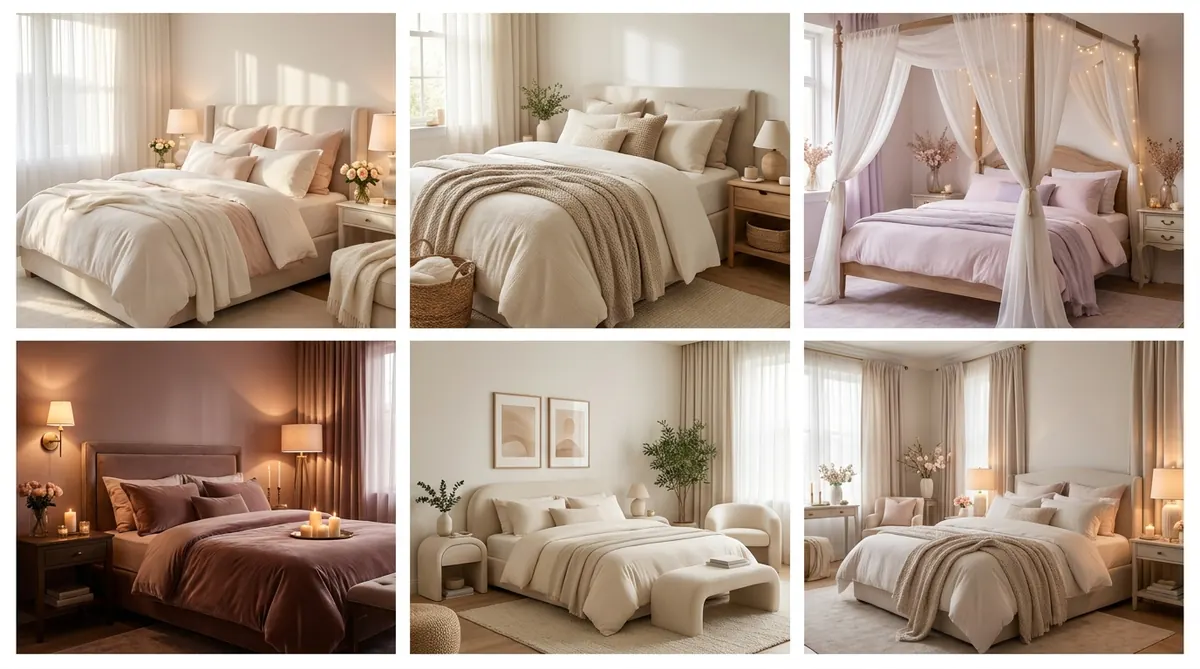
I have photographed dreamy bedroom ideas in hundreds of homes, and I can tell within thirty seconds of walking through a door whether a room has the quality I am looking for. It is not about how much money went into the space. Some of the most atmospheric bedrooms I have shot were rental units with white walls and a single sheer curtain catching the morning light just right, while some of the most expensively furnished master bedrooms photographed flat and lifeless. This roundup pulls together 32 ideas from every category I shoot most, romantic, cozy, aesthetic and bold, organized the way I actually think about a room when I am scouting it through the lens. You will see the exact linen bedding dreamy bedroom combinations that photograph richly at 9am and again at 9pm, the fairy light placements that separate a dorm room from an atmospheric one, and the small compositional choices that make a corner of your bedroom the one everyone photographs first. Whether you are working with a studio apartment in a city or a full master suite in the suburbs, the same visual rules apply, and I am going to show you exactly what I see.
The 60-Second Eye Test: Does Your Bedroom Have the Quality That Makes People Stop?
Before I even lift my camera, I run every bedroom through the same quick read. This is the test that separates a room with real dreamy bedroom aesthetic from a room that just has nice things in it, and once you learn to see these five qualities, you cannot unsee them.
◇ ATMOSPHERIC DEPTH What it looks like: the room has layers you can walk into, not a flat wall of matching furniture. What creates it: varied heights between the bed, a floor lamp and a piece of low seating or a bench. What kills it: everything pushed against the walls at the exact same height.
◇ TEXTURAL WARMTH What it looks like: your eye wants to touch the room before your hand does. What creates it: linen bedding dreamy bedroom layering mixed with at least one knit and one woven texture. What kills it: an all-smooth, all-cotton bed with nothing to catch shadow.
◇ INTENTIONAL LIGHT What it looks like: the light source feels chosen, not just switched on. What creates it: soft bedroom lighting ideas layered at three or more levels instead of one overhead fixture. What kills it: a single harsh ceiling light doing all the work in the room.
◇ PERSONAL SIGNATURE What it looks like: you know within five seconds that this bedroom belongs to a specific person. What creates it: one object that could not have come from a showroom catalog. What kills it: a room that looks like it was assembled entirely from one store’s front page.
◇ COMPOSITIONAL BALANCE What it looks like: nothing feels crowded and nothing feels empty. What creates it: negative space held on purpose next to a single strong focal point. What kills it: trying to fill every wall and every surface at once.
If your bedroom is missing two or more of these, keep reading. Every idea below is built to fix exactly one of them.
I keep coming back to light because it is the one thing that changes a bedroom from a room you sleep in into a room you actually want to wake up in. These are the frames I shoot first in every home, before I even look at what is on the bed.
1. The Shot Where Morning Light Hits the Linen and Everything Else Disappears
This is the frame I chase in almost every bedroom shoot: the exact moment morning window light passes through a sheer panel and lands across the bed. A lightweight sheer curtain in linen or voile diffuses hard sunlight into something soft enough to photograph without blowing out the shot, and it works across every light condition, not just a bright morning. The result is a wash of light that reads as romantic without a single extra prop in the frame. This is one of the fastest morning light bedroom photography tricks I teach, and it pairs beautifully with the kind of night routine connection people build once their room actually feels restful. Most people hang curtains too high and too tight against the window, which kills the soft fall of fabric that makes this shot work, so give yourself six extra inches of rod width on either side.
2. Why I Always Ask Them to Leave the Fairy Lights Loose Above the Bed
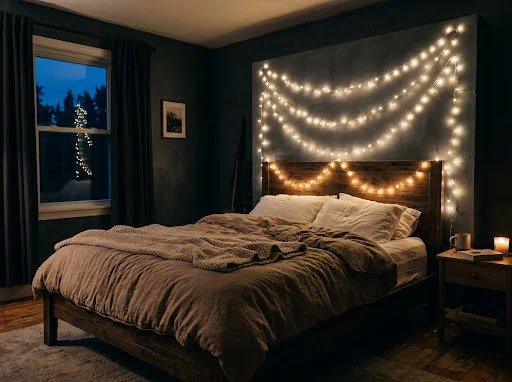
A fairy light bedroom idea only works when the lights are hung with intentional slack instead of pulled taut like a straight line. I drape warm white string lights loosely across a canopy frame or along the headboard wall, letting them dip and catch shadow the way stars would. The uneven spacing is what reads as atmospheric in a photo rather than decorative in a store display. This is one of the simplest bedroom fairy lights placement rules I know, and it costs almost nothing to try tonight in your own bedroom. The mistake I see constantly is buying lights that are too bright and too white, so look for warm white bulbs rated under 3000K if you want the glow to feel romantic instead of clinical.
3. The Bedside Lamp Height That Actually Flatters a Room
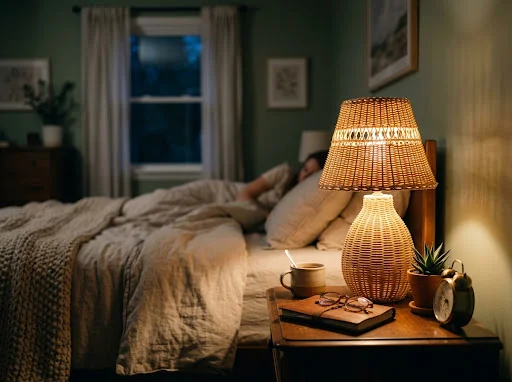
The single most overlooked detail in soft bedroom lighting ideas is lamp height relative to your pillow line. I position bedside lamps so the bottom of the shade sits just above eye level when you are seated up in bed, which throws light downward in a warm pool instead of straight into the camera or your face. A rattan or woven shade softens the light further and adds a texture note that most plain lamp bases miss. This single adjustment changes how the entire bedside vignette photographs, and it is the difference between a lamp that looks staged and one that looks lived in. Most bedrooms have lamps that are too short for the bed height, so measure before you buy rather than guessing.
Through the Lens: Warm Bulb Temperature
- ✷ Shadow falls softest under 2700K to 3000K warm bulbs, never daylight white.
- ✷ Keep the lamp shade diameter at least two-thirds the width of the nightstand beneath it.
- ✷ A linen or rattan shade diffuses light more evenly than a glass or metal one.
- ✷ Target under $40 per lamp if you are furnishing both sides of the bed at once.
4. The Candle Arrangement That Reads Romantic Instead of Random
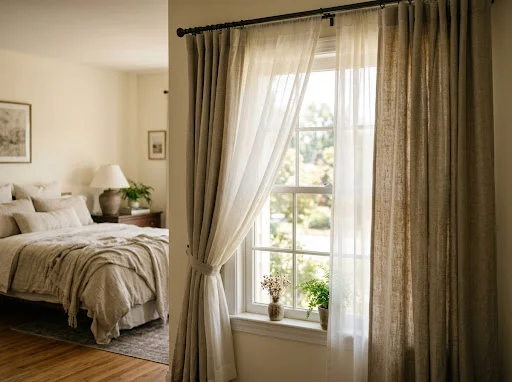
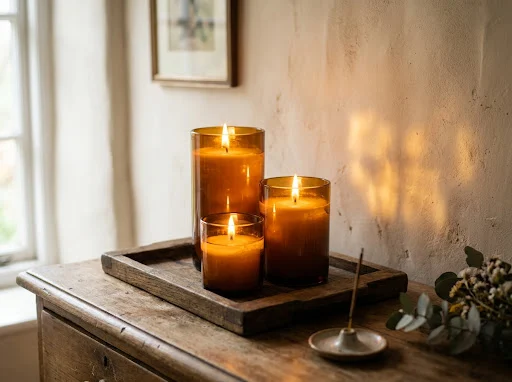
For a romantic candle bedroom styling shot, I never use a single candle alone. I group three candles of varying heights on one tray, usually on the dresser or windowsill rather than the nightstand, so the flicker becomes a background light source instead of the main event. Amber or smoked glass holders add warmth to the light itself, which matters more than people expect when the room is otherwise lit in cool tones. This is one of those romantic bedroom ideas that photographs beautifully at night and costs almost nothing to set up. The common mistake is scattering candles across every surface in the room, which reads as cluttered rather than intentional, so keep them grouped in one spot.
5. The String Light Rule That Separates Intentional From Dorm Room
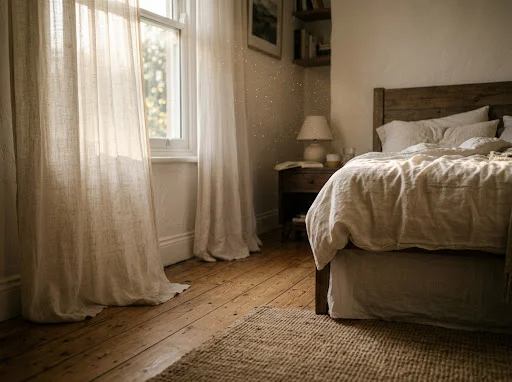
There is a specific placement rule I follow for string lights on a bedroom wall, and it is the difference between a dorm room and a designed one: the lights need a shape, not just coverage. I frame them along one architectural line, like the edge of a headboard or the border of a window, rather than draping them freely across an entire wall. This gives the eye a clear path to follow instead of a scattered glow with no structure. It is one of the easiest bedroom glow up ideas because it uses lights you likely already own, just rehung with intention. The mistake almost everyone makes is buying too many strands and using all of them at once, so start with one clean line and resist adding more.
6. The Sheer Panel Layer That Softens Every Window in the Frame
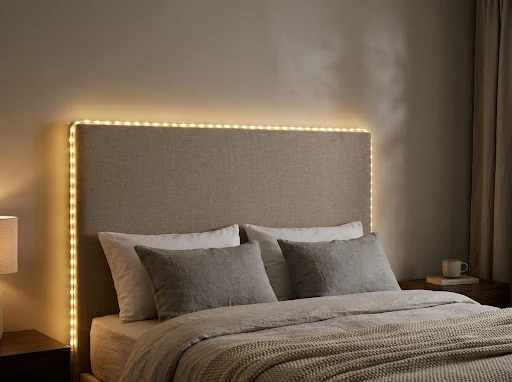
Sheer curtain bedroom ideas work best in layers, not as a single panel doing all the work. I hang a sheer linen panel closest to the glass and a heavier drape just behind it on a second rod, so the room can shift from soft daytime diffusion to full evening privacy without changing the overall look. This double layer is what makes a bedroom window photograph well across every light condition rather than only at certain hours. The ivory or off-white tone reads as luminous rather than stark, which matters more in photographs than most people expect. Most rentals only budget for one curtain layer, but the sheer panel alone, hung on an inexpensive second rod, makes the biggest visual difference for the least cost.
7. The Dark Romantic Bedroom That Uses Light as the Design, Not an Afterthought
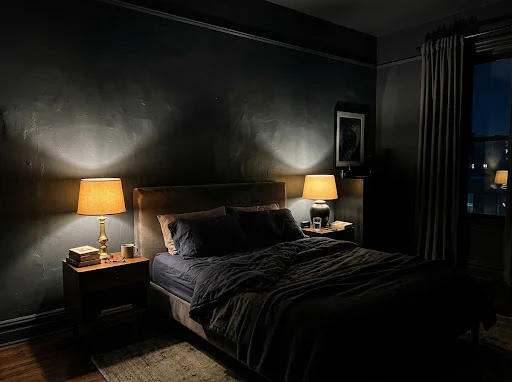
A dark romantic bedroom in deep charcoal or navy only works if the light sources are treated as the actual design elements in the room, not just functional add-ons. I use two or three low, warm-toned lamps instead of one bright overhead fixture, letting pools of light interrupt the dark walls rather than flattening the whole room evenly. This creates the moody, cinematic quality that makes dark bedroom photography feel intentional instead of simply dim. It is one of the more advanced dreamy bedroom aesthetic choices, but it pays off enormously once the season shifts and you are pulling the room into your seasonal gathering ideas for cozier evenings at home. The mistake is trying to light a dark room the same way you would a white one, which just makes it look underlit instead of atmospheric.
💡 The Bedroom Lighting Layer Guide: What Every Dreamy Bedroom Has That Yours Probably Does Not
LAYER 1 — AMBIENT: An overhead fixture or ceiling flush mount set on a dimmer, providing the base fill without ever being the star of the room. LAYER 2 — TASK: A bedside lamp on each side of the bed, positioned at the height described above for reading and evening routines. LAYER 3 — ACCENT: Fairy lights or a plug-in wall sconce that adds a secondary glow separate from the lamps. LAYER 4 — ATMOSPHERE: Candles or a small LED candle set that shifts the room from functional to romantic in under a minute. THE MISSING LAYER: Most bedrooms skip the accent layer entirely, relying only on ambient and task light, which is exactly why so many rooms with good furniture still photograph flat. Getting all four layers in place is one of the fastest dreamy bedroom ideas for making a night routine connection feel genuinely different from the rest of your day.
Every texture series I shoot starts the same way, with me running my hand across the bed before I even look through the viewfinder, because a bedroom you can almost feel through the lens is one that photographs richer in every single frame.
8. The Linen Layer That Makes a Bed Look Slept In, Not Staged
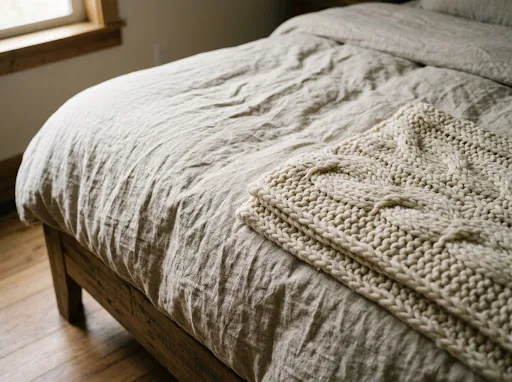
Linen duvet cover dreamy bedroom setups work because linen wrinkles in a way that reads as relaxed rather than messy, unlike cotton, which either looks crisp or looks unmade with nothing in between. I layer a linen duvet over a plain cotton sheet base, then add one contrasting texture, usually a knit or waffle throw, folded at the foot of the bed. This combination gives the eye multiple surfaces to travel across instead of one flat plane of fabric. It is one of the most requested cozy bedroom ideas I get asked about, because it photographs beautifully in both bright daylight and warm evening lamp light. The common mistake is over-ironing linen before a shoot, which strips away the exact texture that makes it work, so leave it slightly rumpled on purpose.
9. Why I Push Clients Toward Dusty Rose Instead of Gray for Velvet

Velvet headboard bedroom color choices matter more than the fabric itself, because velvet catches and holds light differently than any other material in the room. Dusty rose, deep emerald and warm terracotta all photograph far richer than gray or beige velvet, which tends to flatten out under lamp light and lose the depth that makes velvet worth choosing in the first place. I always test a fabric swatch under actual bedroom lighting before committing, since store lighting can make a shade look completely different at home. This is one of the romantic bedroom decor ideas that instantly upgrades a plain platform bed without touching anything else in the room. Most people choose velvet in neutral tones to be safe, but the safe choice is usually the one that photographs the least interesting.
10. The Knit Throw Fold That Looks Effortless Every Single Time
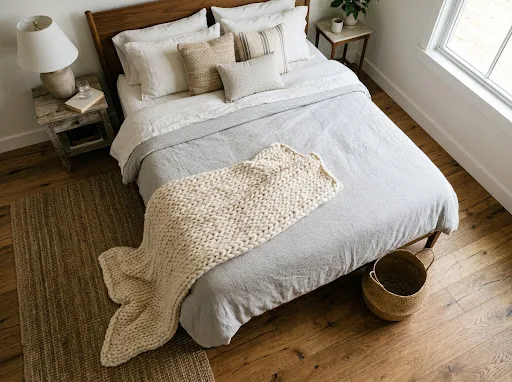
There is one specific fold that makes a chunky knit throw dreamy bedroom moment look effortless instead of overly styled: a loose diagonal drape across one corner of the bed, never a perfectly centered rectangle. I let one edge fall naturally toward the floor rather than tucking every side in evenly, which mimics the way a throw actually lands when someone tosses it there after using it. A cream or oatmeal knit adds textural warmth without competing with patterned bedding underneath. This small styling choice is part of the cozy texture inspiration that separates a bedroom that looks curated from one that looks stiff. The mistake is folding the throw into a tight, symmetrical square, which reads as showroom staging rather than a real bedroom.
11. The Shag Rug Placement That Grounds an Entire Room
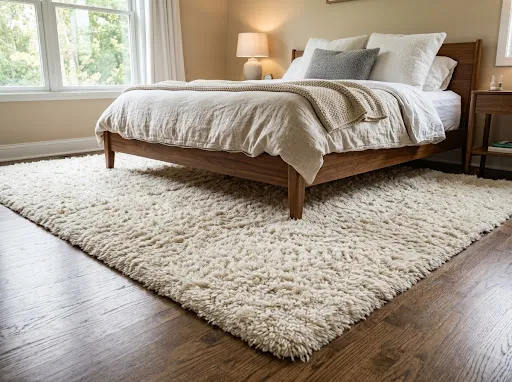
Shag rug bedroom placement is one of the most misunderstood texture decisions I see, because most people center a small rug under the bed frame instead of extending it out where feet actually land. I place the rug so it extends at least two feet beyond each side of the bed, which gives the room a grounded, cozy dreamy aesthetic instead of a floating, disconnected one. A high-pile ivory or cream shag photographs beautifully against both light and dark flooring, adding softness at ground level to balance the texture happening higher up on the bed. This is one of the easiest bedroom rug placement ideas to get right once you know the actual measurement to aim for. The common mistake is buying a rug sized for a living room coffee table setup rather than a bedroom footprint, so measure the full bed width plus walking space before ordering.
Through the Lens: Extended Rug Footprint
- ✷ Extend the rug 24 to 30 inches beyond each side of the bed frame, not just under it.
- ✷ High pile catches shadow and reads richer in photos than low, flat weaves.
- ✷ Ivory or oatmeal tones photograph better across every light condition than stark white.
- ✷ Shop under $150 for a 6×9 or 8×10 shag in this tone range before sizing up.
12. The Macrame Piece That Anchors a Bare Wall
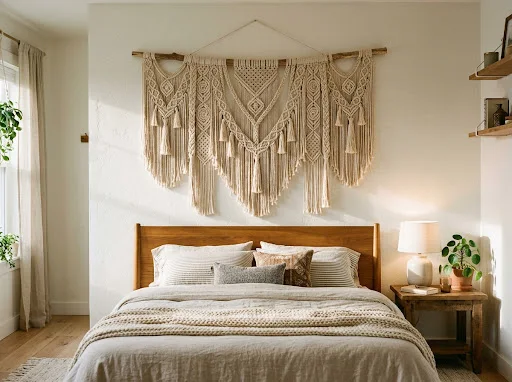
A macrame wall hanging bedroom placement works best above the headboard, centered slightly higher than feels natural, because the empty space it creates below draws the eye upward through the knotwork instead of stopping short. I choose a large-scale piece rather than several small ones, since one substantial hanging reads as an intentional focal point where multiple small pieces start to look scattered. The woven cotton texture adds a handmade quality that photographs with real depth, especially in warm afternoon light. This single piece often becomes the visual anchor of the entire wall composition series I shoot in a bedroom. Most people hang macrame too low, right at headboard height, which crowds the pillows instead of framing them, so leave at least a foot of breathing room above the bed.
13. The All-Linen Bedroom That Feels Like a Different Country
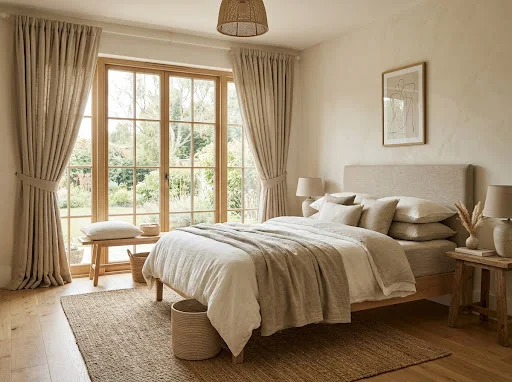
An all-linen bedroom, from the bedding down to the window panels, is one of the most requested dreamy bedroom decor looks I photograph, because the consistent texture across every surface creates a softness that reads as effortless rather than overdone. I keep the palette in the same natural tone family, oatmeal, ivory and soft gray, so the texture itself becomes the visual interest instead of competing patterns. This approach photographs beautifully in a small bedroom dreamy small space just as well as it does in a full master suite, since the monochrome texture layering never feels busy. It is one of the calmest neutral dreamy bedroom palette choices for anyone who wants a room that feels like a retreat rather than a showroom. The mistake is mixing too many different linen weights and finishes at once, which actually reads as mismatched rather than layered, so keep the weave consistent across the room.
🧶 The Dreamy Bedroom Texture Formula: How Many Textures, Which Ones, and Where They Go
THE RULE: Cap a single bedroom at four distinct textures at once, more than that reads as cluttered rather than rich. BED TEXTURES: Exactly two, typically a linen or cotton base layer plus one knit or velvet accent piece. WALL TEXTURE: One rule, choose a single textural element such as macrame or a woven wall hanging, never more than one per wall. FLOOR TEXTURE: One rug, sized to extend well beyond the bed frame as covered above. ACCENT TEXTURE: One final piece, often a rattan or wicker accessory, that ties the natural material palette together. WHAT KILLS IT: Combining five or more competing textures in one frame, which reads as visually noisy rather than cozy no matter how nice each individual piece is. This is exactly the kind of restraint that makes the best cozy bedroom ideas photograph as calm instead of chaotic, and it is worth applying the same cozy texture inspiration logic anywhere else texture layering matters in your home.
Color is the story I tell before I even set up a single light, because the palette a bedroom commits to changes how every other choice in the room reads through the lens.
14. The Sage Green Room That Looks Different Every Hour of the Day
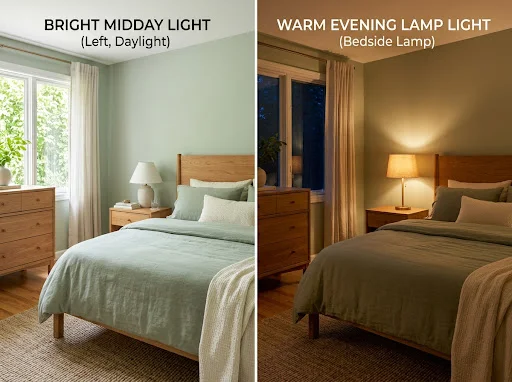
A soft sage green dreamy bedroom is one of the most rewarding rooms to photograph across a full day, because the muted green shifts from cool and calm in morning light to warm and almost golden by evening lamp light. I pair sage walls or bedding with warm wood tones and brass fixtures rather than cool metals, which keeps the room from tipping into a clinical, spa-like feel. This palette works particularly well for anyone drawn to a cottagecore dreamy bedroom without wanting to commit to a fully rustic look. It is one of the more forgiving choices in aesthetic bedroom ideas because sage sits comfortably between neutral and colorful. The mistake is pairing sage with cool gray accents, which flattens the warmth entirely, so stick to warm-toned complements instead.
15. The Cream and Ivory Palette Done Right
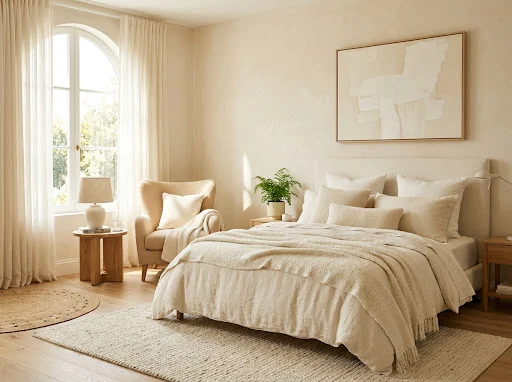
A warm cream and ivory bedroom palette only reads as luminous rather than boring when there is genuine tonal variation within the neutrals themselves, not one flat shade repeated everywhere. I layer at least three distinct cream and ivory tones, from bedding to walls to an accent chair, so the eye can still register depth even without a bold color statement. This is the palette I reach for most often when a client wants a soft luminous aesthetic that photographs beautifully regardless of the season or the light coming through the window. It works exceptionally well in a rental bedroom, since it requires no paint and photographs as intentional rather than plain. The common mistake is choosing every element in the exact same shade of white, which reads as sterile instead of soft, so vary your creams deliberately.
16. The Dusty Rose Story From Walls to Bedding
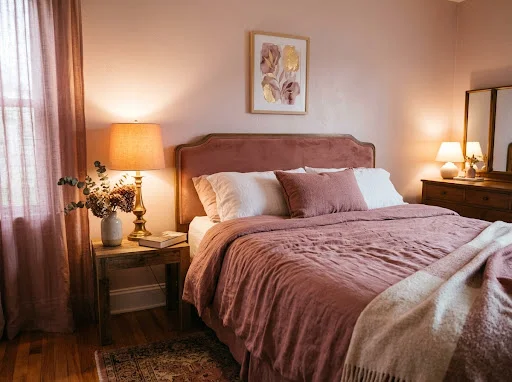
Dusty rose romantic bedroom color stories work best when the shade appears in at least two places, not just the bedding alone. I carry the dusty rose from a quilted bedspread up into a single accent pillow or a piece of wall art, which threads the color through the room rather than isolating it to one surface. This creates a cohesive romantic bedroom ideas palette that photographs warmly in both daylight and candlelight, since dusty rose holds its tone unusually well across different light temperatures. It pairs beautifully with brass hardware and warm wood furniture rather than cool metals or stark white trim. The mistake is using dusty rose only as a single accent pillow, which reads as an afterthought instead of a genuine color commitment.
17. The Deep Navy Room That Is Still Romantic
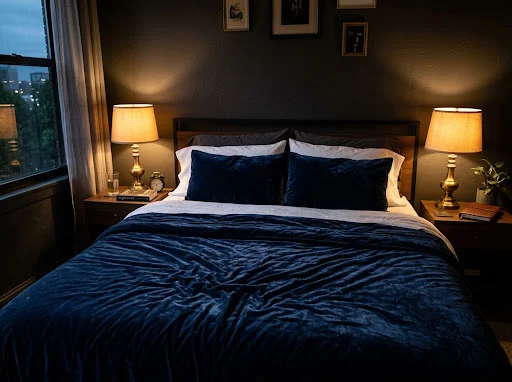
A dark moody bedroom in deep navy or charcoal stays romantic rather than heavy when there is enough warm light layered in to counter the cool base tone, which is exactly why the lighting layer guide above matters so much in this palette. I choose navy velvet or matte cotton bedding over anything glossy, since shine on a dark fabric tends to read as harsh under lamp light rather than luxurious. Brass or warm gold accents against the navy create the contrast that makes this dark romantic bedroom read as intentional rather than simply dim. This is one of the boldest dreamy bedroom decor choices on this list, and it photographs unlike almost anything else in a lighter home. The common mistake is pairing navy with cool white trim and silver hardware, which strips away the warmth entirely, so stay in the brass and gold family instead.
18. The Cottagecore Room in Earth and Botanical Tones
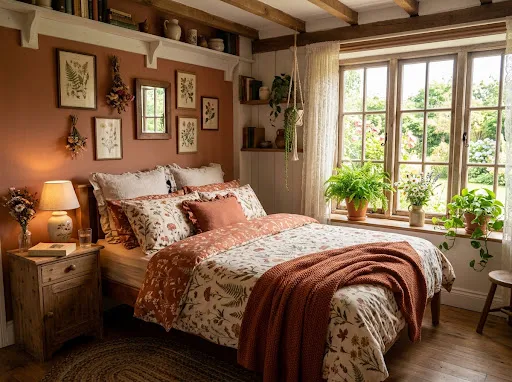
A cottagecore dreamy bedroom leans into warm terracotta, muted florals and natural wood in a way that feels collected over time rather than purchased all at once for one look. I mix a botanical print bedding piece with plain linen underneath, so the pattern reads as one intentional layer rather than covering the entire bed. This palette photographs especially well with real or faux greenery layered in, since the botanical print and the actual plants echo each other visually. It is one of the more personal aesthetic bedroom ideas, since the earth tone palette tends to invite small collected objects, books and dried flowers that make the room feel specifically yours. The mistake is treating cottagecore as strictly floral, when the stronger version of this look leans more on warm neutral texture than on pattern alone.
19. The White Bedroom That Is Not Clinical
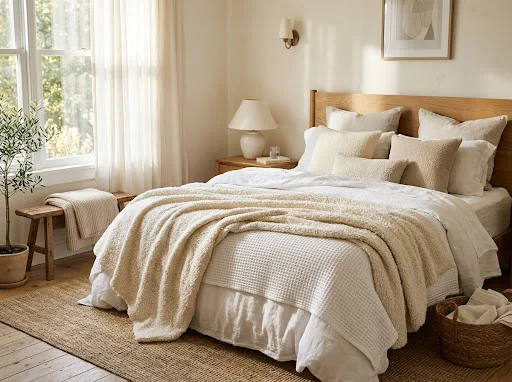
The white bedroom that is not clinical earns that distinction from texture, not from color, since an all-white palette with zero textural variation is exactly what reads as cold and sterile in a photograph. I add a boucle or waffle-weave throw, a woven basket and at least one warm wood surface to break up the flatness that plain white bedding alone creates. This is the exact fix for anyone whose rental bedroom dreamy ideas keep falling short despite starting from a genuinely good, bright white base. The warmth comes entirely from material choice rather than paint color, which is why this approach works in every white-walled rental across the country. The common mistake is adding more white accessories to fix a flat white room, when the actual fix is adding texture and warm wood tone instead.
🎨 The Dreamy Bedroom Color Guide: What Each Palette Actually Feels Like to Sleep In
WARM CREAM: Daytime feel: soft and bright without feeling stark. Evening feel: golden and glowing under lamp light. Best for: anyone wanting a luminous, low-commitment neutral base. Avoid if: you tend to lose things visually in an all-neutral room.
SOFT SAGE: Daytime feel: calm and slightly cool. Evening feel: warmer and almost golden under lamp light. Best for: people drawn to a cottagecore dreamy bedroom without full commitment. Avoid if: you want a strictly warm-toned room from morning to night.
DUSTY ROSE: Daytime feel: soft and gently romantic. Evening feel: rich and warm under candlelight. Best for: anyone chasing genuinely romantic bedroom ideas. Avoid if: you prefer a strictly gender-neutral palette.
DEEP NAVY: Daytime feel: grounded and a little dramatic. Evening feel: cinematic and moody once the lamps are on. Best for: bold personalities who want a dark romantic bedroom. Avoid if: your bedroom gets very little natural light already.
ALL WHITE: Daytime feel: bright, clean and expansive. Evening feel: can feel flat without warm accent lighting. Best for: small or rented spaces where a light palette makes the room feel bigger. Avoid if: you are not willing to layer in enough texture to keep it from feeling sterile.
Choosing a warm tone palette the same way you would think through any color palette decision in your life is exactly the mindset that makes these dreamy bedroom ideas hold up long after the first photo is taken.
When I shoot the composition series, I am watching where the eye actually travels through a room, because a bedroom with beautiful pieces in the wrong places still photographs weaker than a simpler room arranged correctly.
20. The Canopy Drape That Creates the Most Atmosphere for the Least Effort
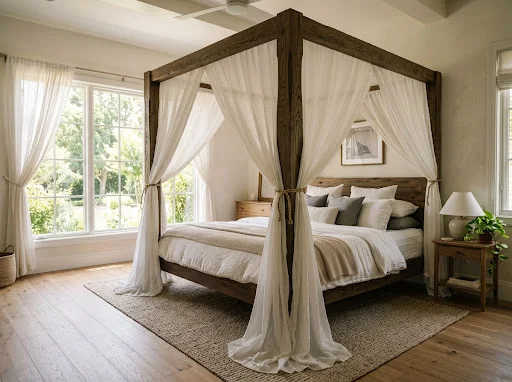
Canopy bed bedroom ideas photograph best when the curtain panels are gathered loosely at the corner posts rather than pulled taut and pinned flat. I let extra fabric pool slightly at the base of each post, which gives the canopy the soft, romantic movement that makes it feel like part of the room’s architecture rather than an add-on kit. A sheer white or ivory panel diffuses light beautifully during the day and adds privacy and depth once evening lamps come on. This is one of the fastest ways to add atmospheric depth to a plain platform or four-poster frame without any structural changes. The mistake is pulling the fabric too tight, which flattens the drape and removes the exact softness that makes this shot work.
21. The Gallery Wall Arrangement That Actually Reads as Intentional
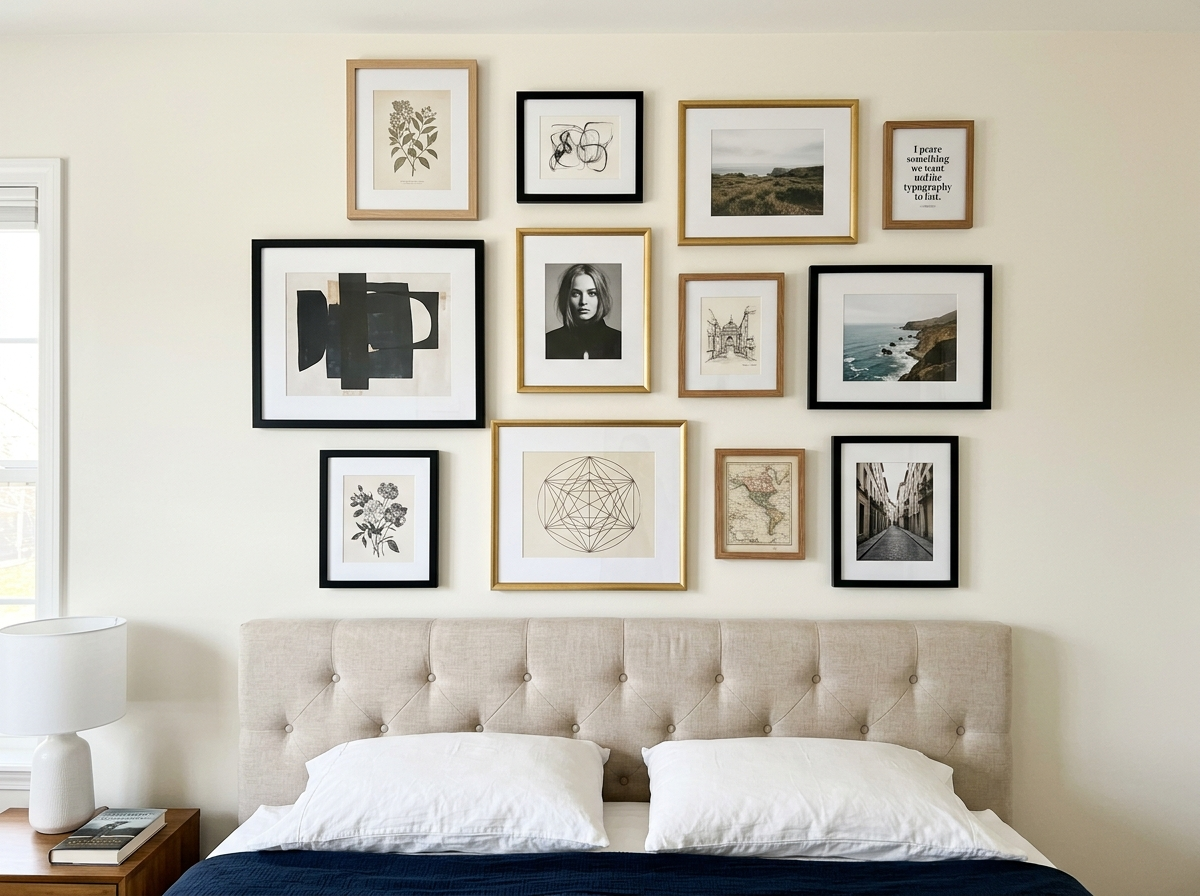
A bedroom gallery wall dreamy composition depends far more on spacing consistency than on the individual frames themselves. I keep two to three inches of gap between every frame, no exceptions, since inconsistent spacing is the single fastest way to make an otherwise beautiful collection of art look accidental. Mixing frame sizes is fine, but I keep the gap distance identical throughout the entire arrangement so the eye reads it as one cohesive composition. This is one of the aesthetic bedroom wall ideas people attempt most often and get wrong most often, purely on the spacing detail alone. The common mistake is starting to hang frames directly above the headboard and working outward without planning the full layout first, so lay every piece on the floor in position before a single nail goes in the wall.
Through the Lens: Consistent Frame Spacing
- ✷ Hold every gap between frames to two to three inches, measured with a ruler, not by eye.
- ✷ Center the entire arrangement on the headboard, not on the wall itself.
- ✷ Mix matte and glossy frame finishes for depth rather than uniform materials.
- ✷ Lay the full layout on the floor first, photograph it, then transfer measurements to the wall.
22. The Mirror Placement That Doubles Both Light and Space
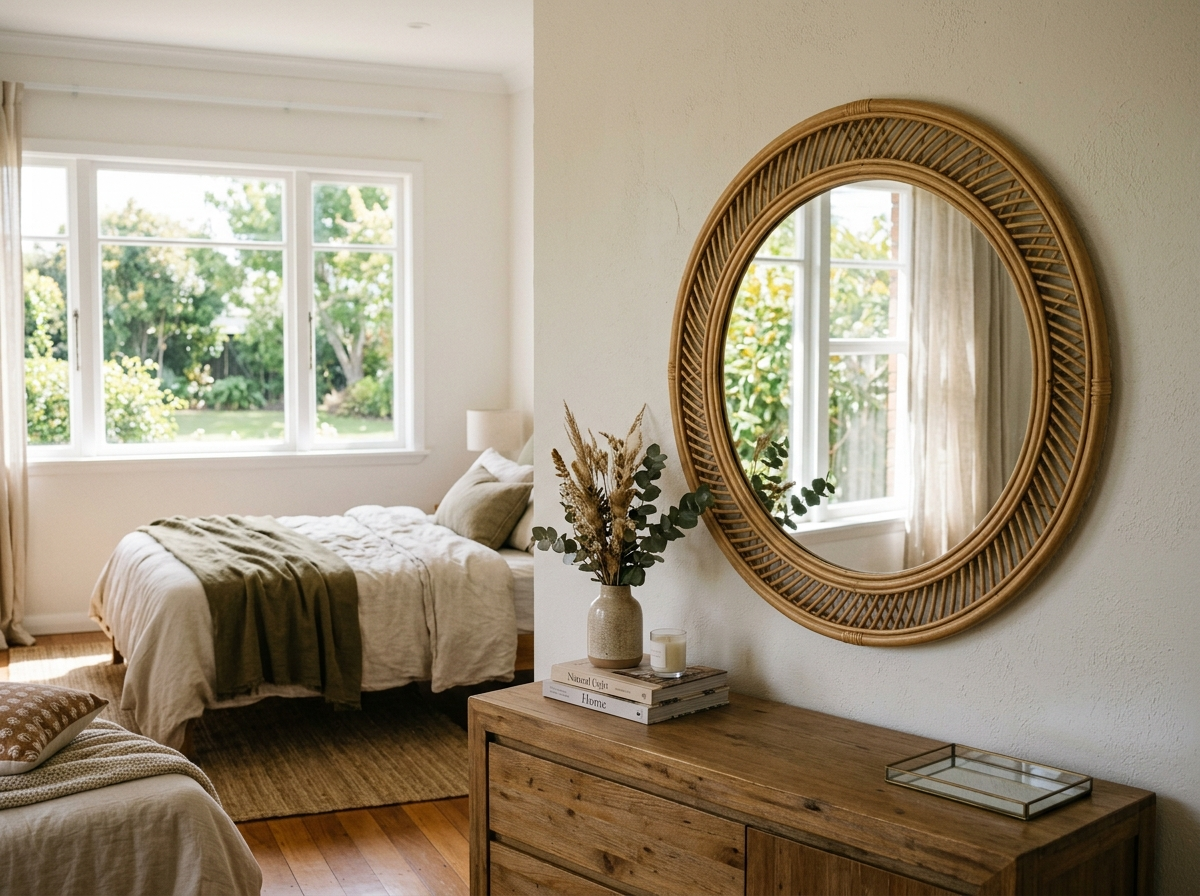
Bedroom mirror placement dreamy setups work best when the mirror is hung directly across from the window rather than to the side of it, since this angle bounces the maximum amount of natural light back into the room instead of reflecting a wall. I choose a round rattan-framed mirror over a rectangular one in most bedrooms, since the organic shape softens the more angular lines of typical bedroom furniture. Positioned correctly, a single mirror can visually double the perceived size of a small bedroom dreamy small space without adding a single extra piece of furniture. This is one of the highest-impact, lowest-cost aesthetic bedroom ideas on this entire list. The mistake is hanging a mirror at an angle that reflects the ceiling or ceiling fan rather than the window, so check the reflection at eye level before committing to a hanging height.
23. The Plant Placement That Adds the Most Visual Impact
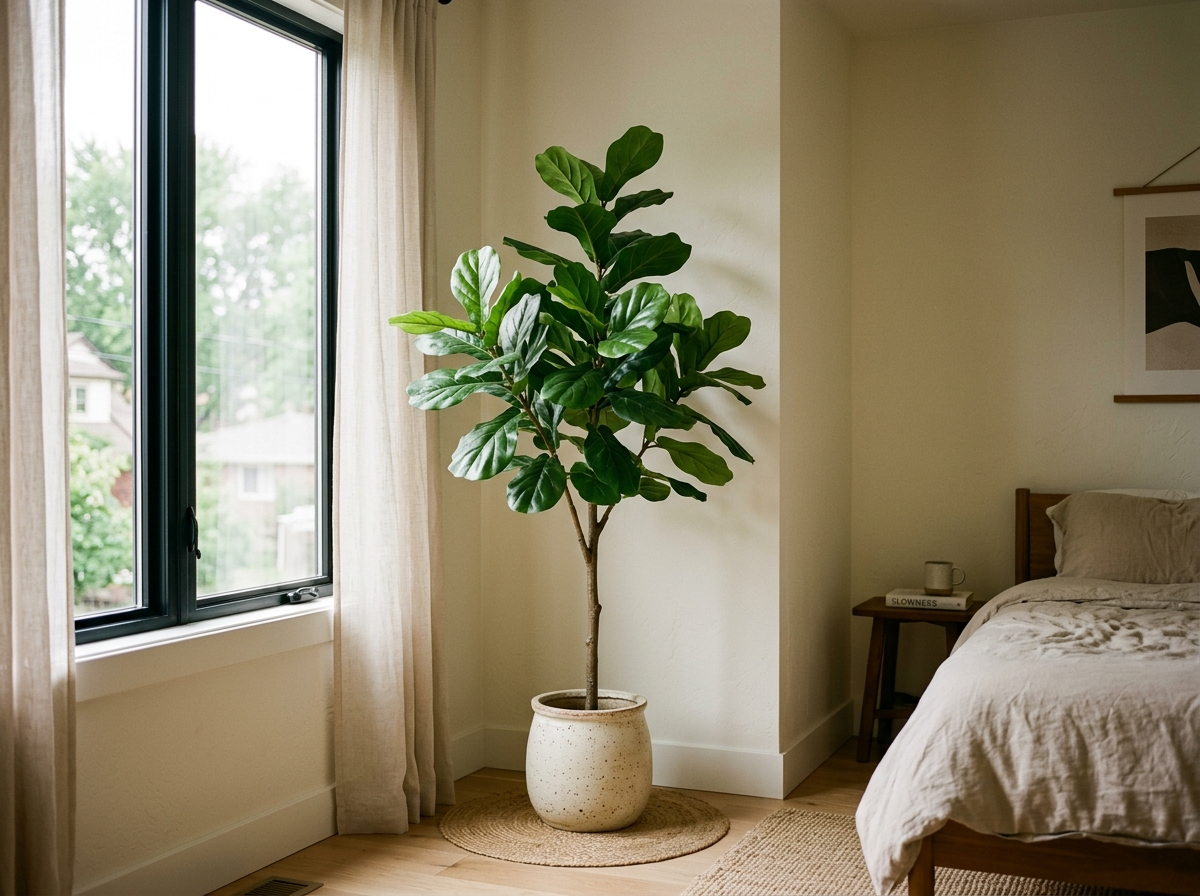
Bedroom plant styling ideas photograph strongest when a single tall plant is placed in an empty corner rather than several small plants scattered across surfaces. I use one statement plant, real or a high-quality faux fiddle leaf fig or olive tree, positioned near the window where it can catch natural light in the frame without blocking the light source itself. This adds height and organic texture to a corner that would otherwise stay visually empty, filling out the composition without crowding the room. A single well-placed plant does more for atmospheric depth than five small plants spread thin across a dresser and nightstand. The mistake is placing a plant directly in front of the window, which blocks the exact light quality this entire lighting series is built around, so shift it slightly to the side instead.
24. The Vanity Corner Treated as a Design Moment, Not Just a Function
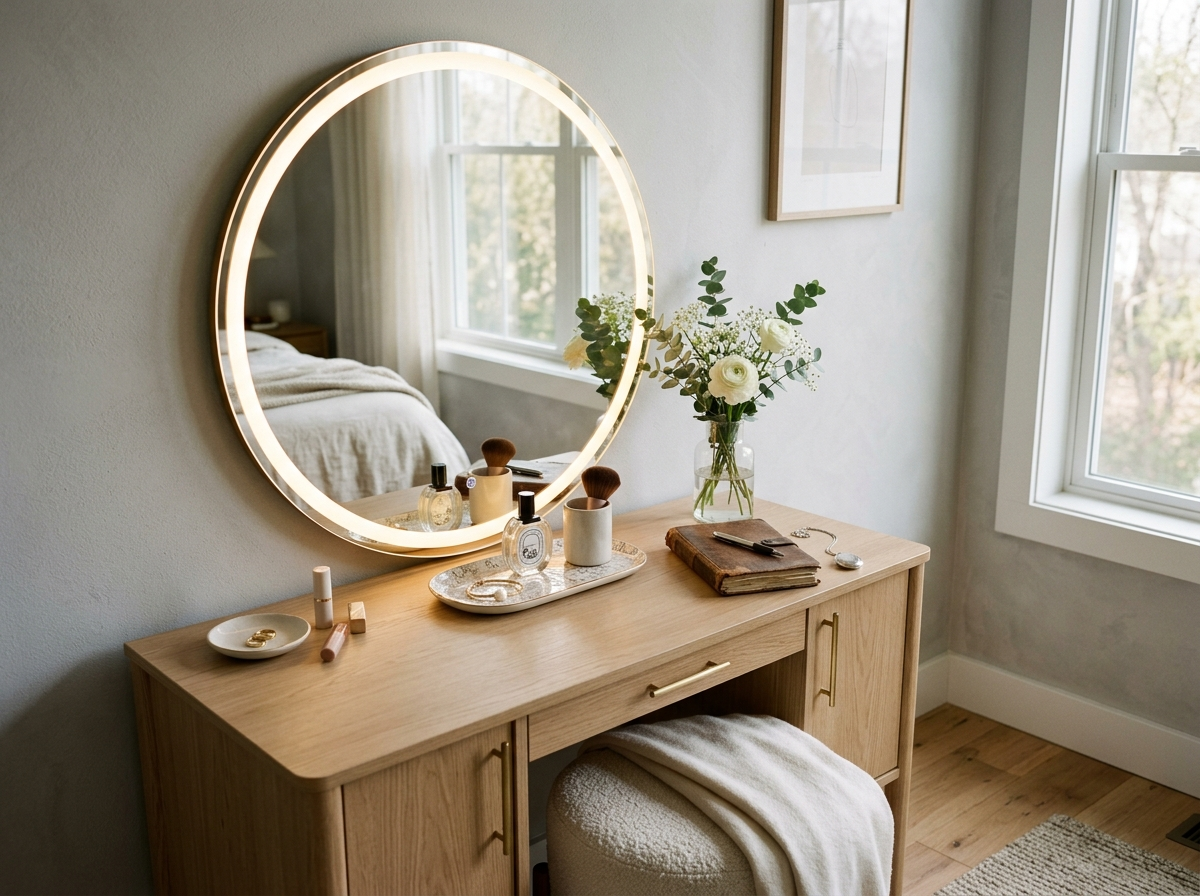
Bedroom vanity styling ideas move from purely functional to genuinely photogenic the moment you treat the surface like a small still life rather than just a place to store products. I keep the vanity top down to three or four grouped objects, a tray, a small vase and one personal item, rather than every bottle and brush on display at once. LED ring lights around the mirror add the effortless morning aesthetic glow that makes this corner one of the most photographed spots in a bedroom during actual daily use, not just for a staged shoot. This small, contained styling moment gives a bedroom a second focal point beyond the bed itself. The common mistake is letting the vanity become a catch-all surface for everything without a home, which reads as clutter rather than a curated corner.
25. The Corner That Became the Most Photographed Spot in the House
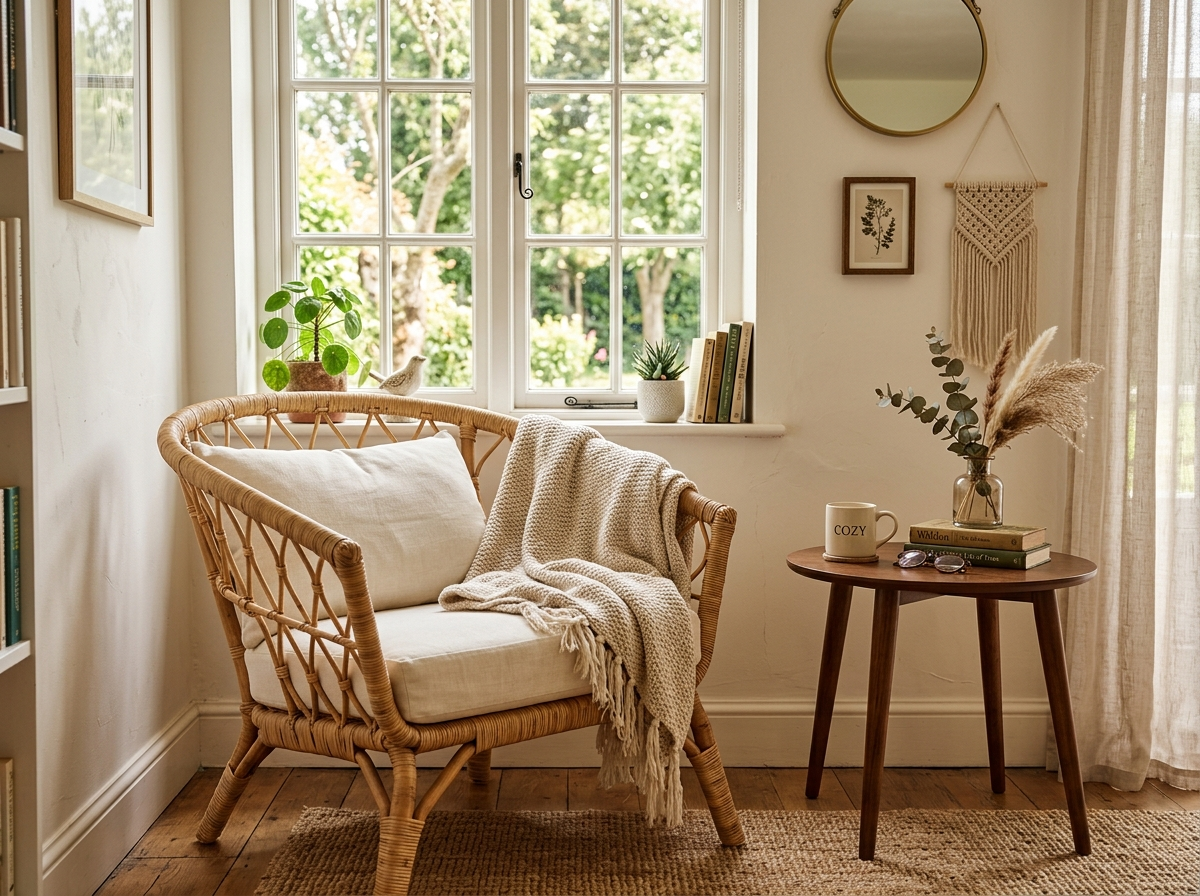
Almost every bedroom I shoot has one corner that ends up as the most photographed spot in the entire home, and it is almost always the corner where a single accent chair meets natural window light. I place a rattan or boucle chair at a slight angle to the window rather than facing it head-on, which creates a more dynamic composition than a chair squared off perfectly to the wall. Adding a small side table and a folded throw completes the vignette without requiring anything else in that corner of the room. This single seating moment often becomes the visual signature that people remember about a bedroom long after they have forgotten the color of the walls. The mistake is treating this corner purely as extra storage space, when it has far more visual potential as a small, intentional seating moment.
26. The Bookshelf That Becomes Part of the Aesthetic, Not Just Storage
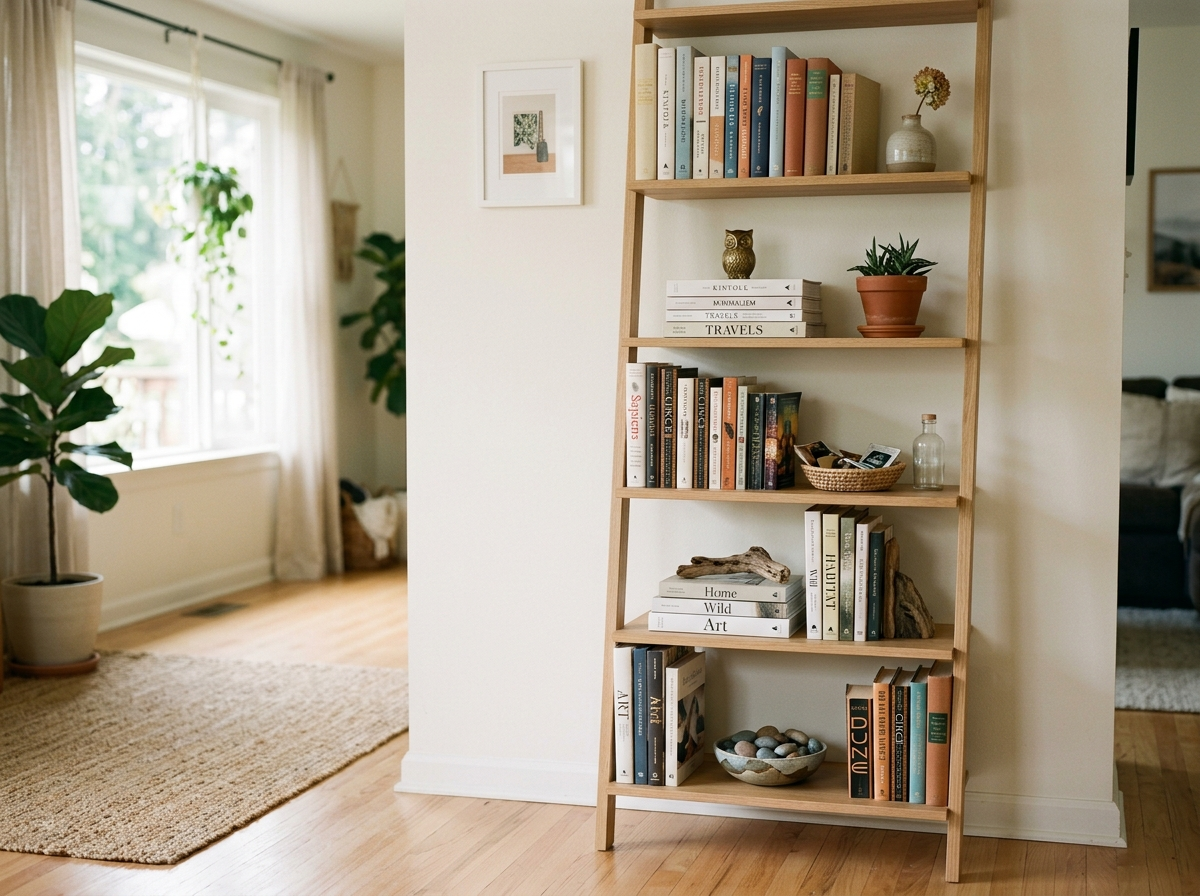
Bedroom bookshelf styling as part of the dreamy aesthetic depends on breaking up the shelves with more than just spines lined up in a row. I group books both vertically and horizontally in alternating sections, then add small objects, a piece of pottery or a framed photo, between the groupings so the eye has places to rest between the text-heavy sections. A slim ladder-style shelf in natural wood keeps the piece from feeling bulky in a bedroom, where floor space usually matters more than in a living room. This turns a purely functional storage piece into part of the room’s overall composition rather than a separate afterthought. The mistake is filling every shelf completely edge to edge, which leaves no negative space and makes the whole piece read as cluttered instead of curated.
📐 The Dreamy Bedroom Composition Rules: What the Photographer Checks Before She Takes a Single Shot
CHECK 1: The room has one dominant focal point, not two competing for attention in the same frame. CHECK 2: At least three different heights are represented, low seating, mid-height nightstands and a taller headboard or shelf. CHECK 3: There is genuine negative space somewhere in the frame, a bare wall section or an uncluttered surface, not everything filled at once. CHECK 4: The eye has a clear path to the strongest element in the room within the first two seconds of looking. CHECK 5: At least one light source is visible or implied in the frame, whether that is a window, a lamp or a fairy light detail. CHECK 6: One object in the room could not have come from a catalog, a piece with a personal story attached to it.
This checklist is exactly what separates a genuinely strong dreamy bedroom aesthetic from a room with expensive pieces arranged without a plan, and it is the same instinct that drives the best creative room details I have ever photographed, in a bedroom or anywhere else in a home.
The bedrooms in this final series all have one thing in common: a single detail that nobody else would have thought to include, and it is almost always the detail that makes people ask where it came from.
27. The Three Changes That Cost Under $100 Total
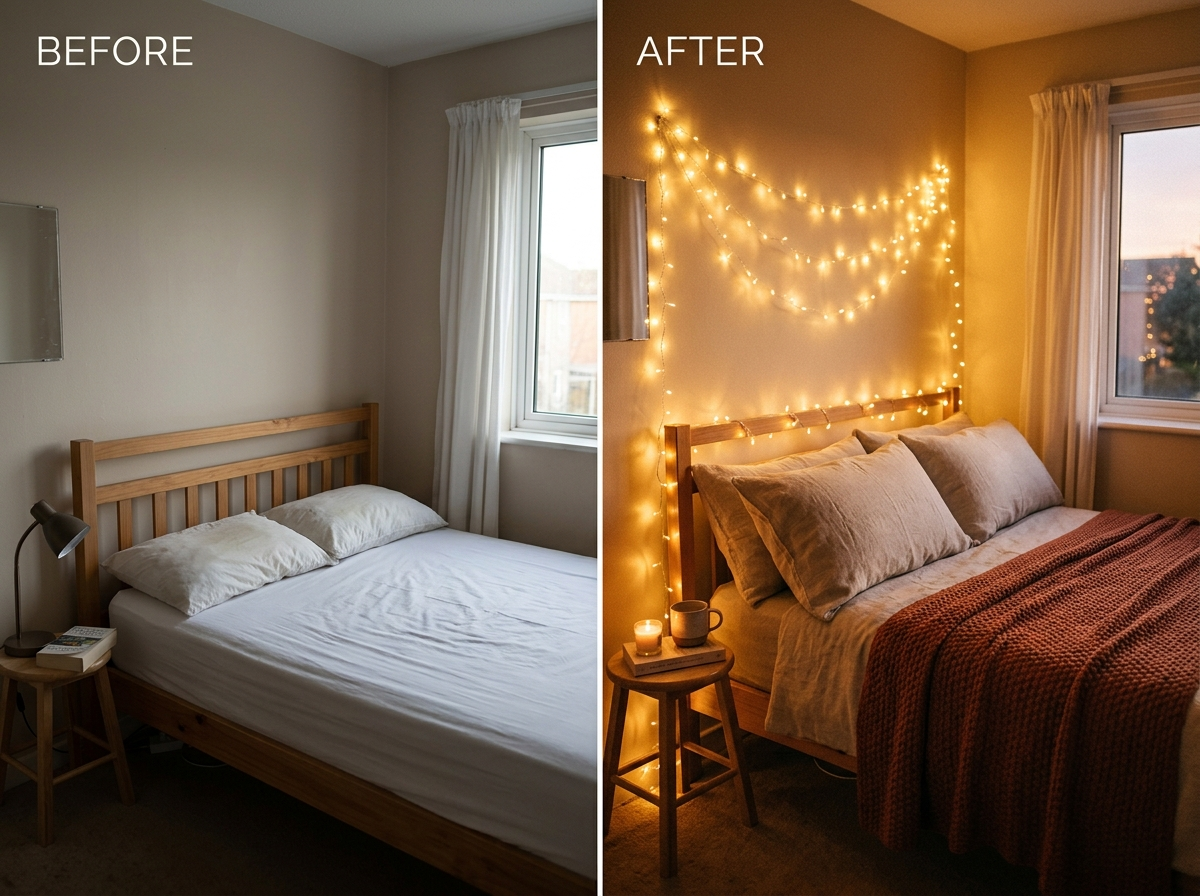
A dreamy bedroom on a budget comes down to three specific purchases, not a full room overhaul: a set of warm white fairy lights, one linen or linen-look pillowcase pair, and a single textured throw for the foot of the bed. I have shot budget bedroom transformations using exactly these three pieces, sourced from Target, Amazon or IKEA, that photograph nearly identically to rooms costing ten times as much. The key is spending the full budget on texture and light rather than spreading it thin across many small decor pieces that add clutter instead of atmosphere. This is one of the most requested dreamy bedroom ideas I get asked about, precisely because it proves that atmosphere is a design choice, not a price tag. The mistake is buying several cheap decorative objects instead of committing the whole budget to these three high-impact categories.
Through the Lens: Three Purchases Only
- ✷ Warm white fairy lights, under 3000K, hung with intentional slack as covered earlier.
- ✷ One linen or linen-look pillowcase set in a neutral tone for instant textural upgrade.
- ✷ One chunky knit or textured throw folded at the foot of the bed.
- ✷ Source all three from Target, Amazon or IKEA and keep the full spend under $100 total.
28. How Compact Spaces Create More Atmosphere Than Large Ones
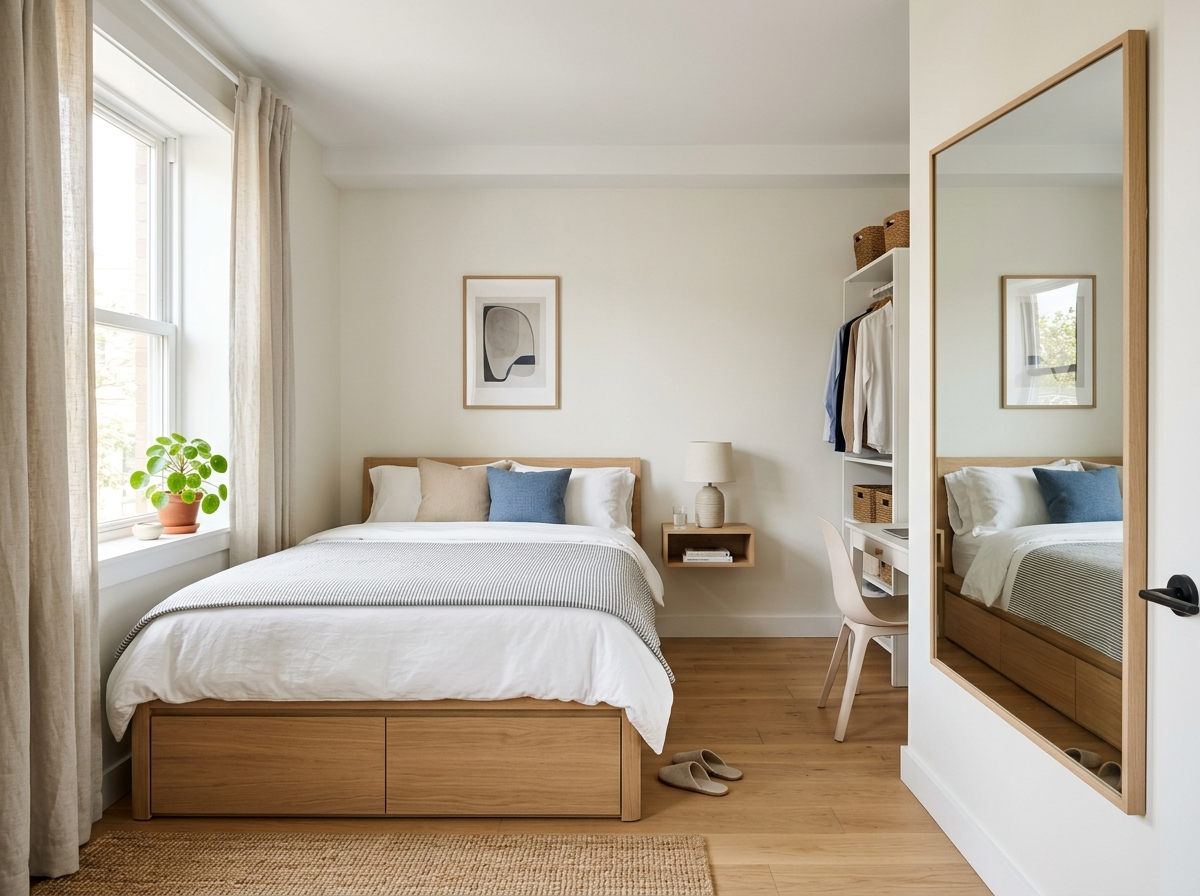
Small bedroom dreamy ideas often photograph more atmospheric than large master bedrooms, because a compact space forces every single object in the frame to earn its place instead of getting lost among too much furniture. I choose a slim-profile bed frame with built-in storage to free up visual floor space, then commit fully to one or two focal points rather than trying to fill the entire room with separate design moments. Studio apartments in cities are some of the most atmospheric bedrooms I have shot precisely because of this constraint, not despite it. The compositional balance rule from the checklist above matters even more here, since a small room has almost no room for visual noise before it starts to feel cramped rather than cozy. The mistake is trying to replicate a large bedroom’s layout in a small footprint, which only emphasizes how tight the space actually is.
29. No Painting, No Drilling, Completely Transformed
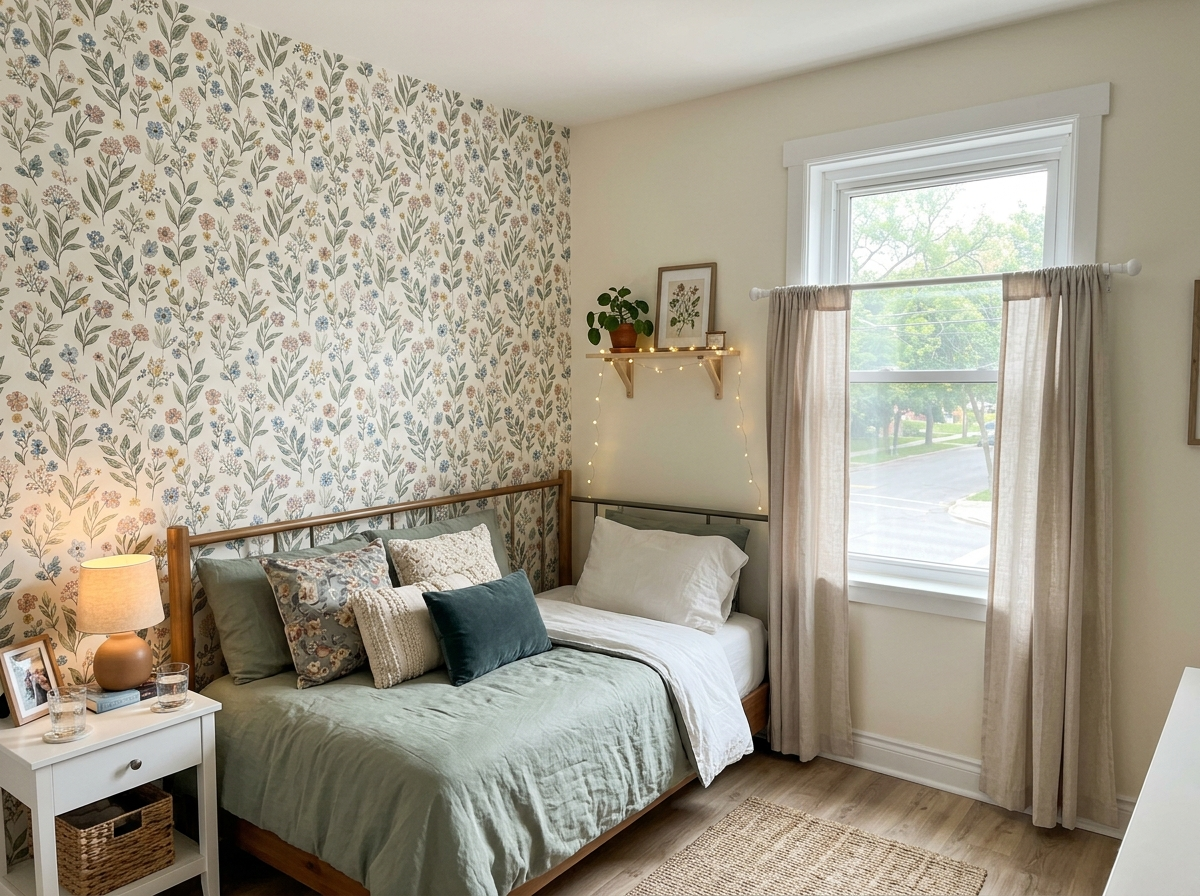
Rental bedroom dreamy ideas rely entirely on changes that leave zero trace behind, which is exactly why peel-and-stick wallpaper on a single accent wall has become one of the most effective tools I recommend. I apply it to just one wall, usually behind the headboard, rather than the entire room, which keeps the commitment low while still creating a strong visual statement in every photo. Combined with tension curtain rods that require no drilling and adhesive hooks for fairy lights or wall art, an entire bedroom glow up ideas transformation is achievable without a single hole in the wall. This approach works across white-walled rentals in every part of the country, regardless of the building’s rules around permanent changes. The mistake is trying to change too many walls at once, which raises both the cost and the removal effort dramatically for very little added visual impact.
30. The Detail That Guests Always Ask About
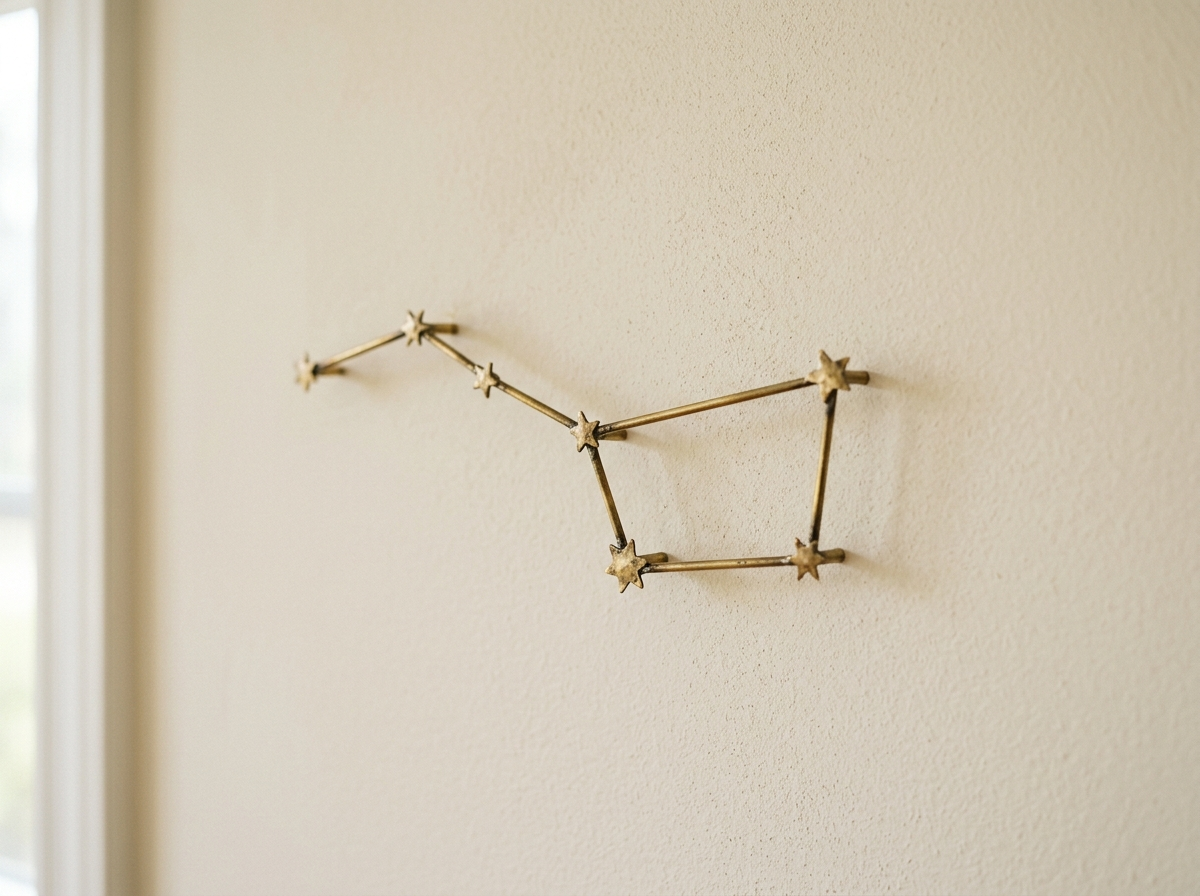
Every truly memorable bedroom I have photographed has exactly one detail that guests ask about before they ask about anything else in the room, and it is never the biggest or most expensive item. I encourage clients to keep one object that has a genuine story, a piece found while traveling, a family item repurposed for the bedroom, or a single unexpected material choice like brass constellation wall art. This single detail does more for the personal signature quality than an entire room of matched, catalog-sourced pieces ever could. It is the detail I photograph closest and longest, because it is the one thing in the frame that cannot be replicated exactly in anyone else’s bedroom. The mistake is hiding this kind of personal object away instead of giving it a clear, uncluttered spot to be noticed.
31. Dreamy Bedroom Ideas for a Young Adult Aesthetic That Is Not Childish
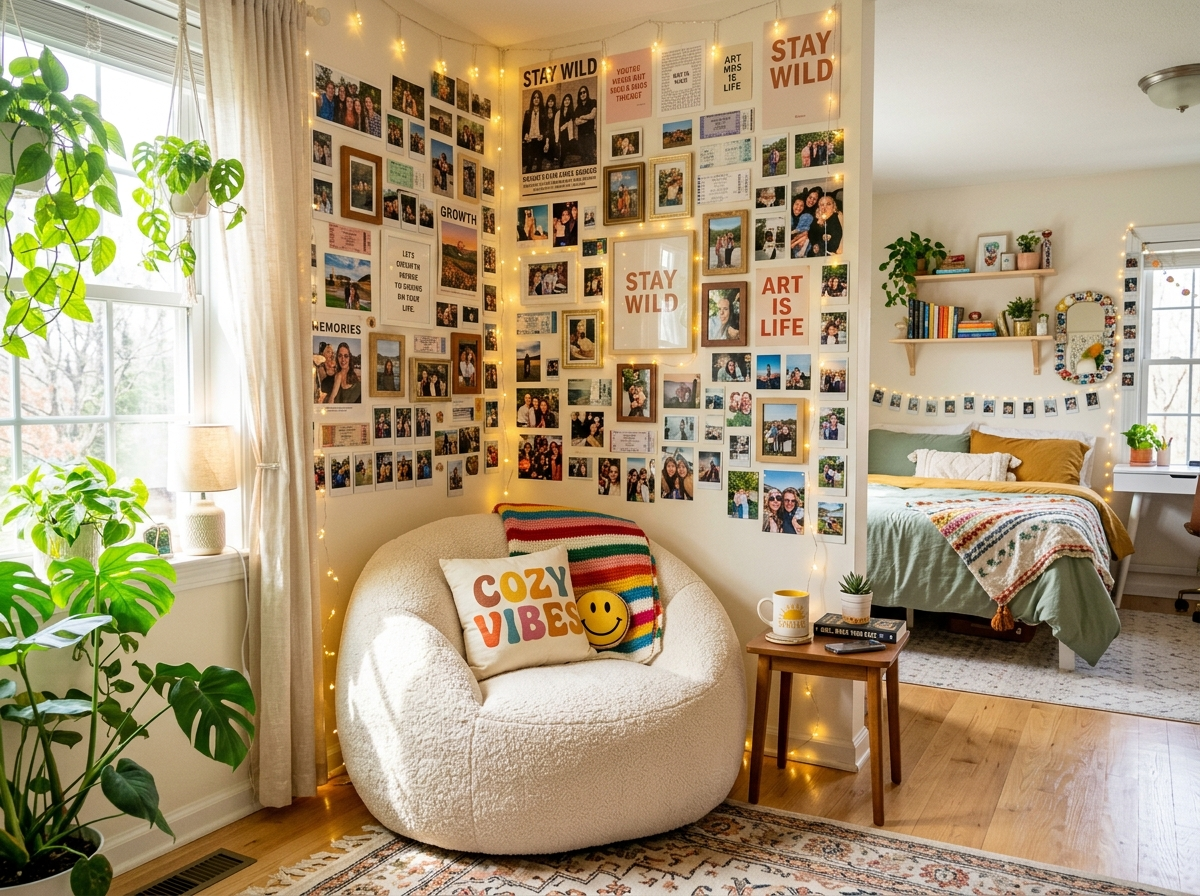
A dreamy bedroom for a teenage or young adult aesthetic avoids childish without losing personality by leaning on texture and color instead of novelty prints or themed decor. I use a boucle accent chair, a gallery wall built from the person’s own photos rather than printed art, and a warmer, more mature version of the fairy light and candle layering used throughout this list. This approach photographs just as atmospheric as any adult master bedroom while still feeling age-appropriate and personal to a younger space. College dorm rooms that became something special almost always followed this exact formula, prioritizing texture and personal photos over dorm-store theme decor. The mistake is choosing decor built around a specific trend or character theme, which tends to age out of relevance far faster than a texture and color-based approach.
32. The Complete Dreamy Bedroom, the Final Frame When Everything Is Right
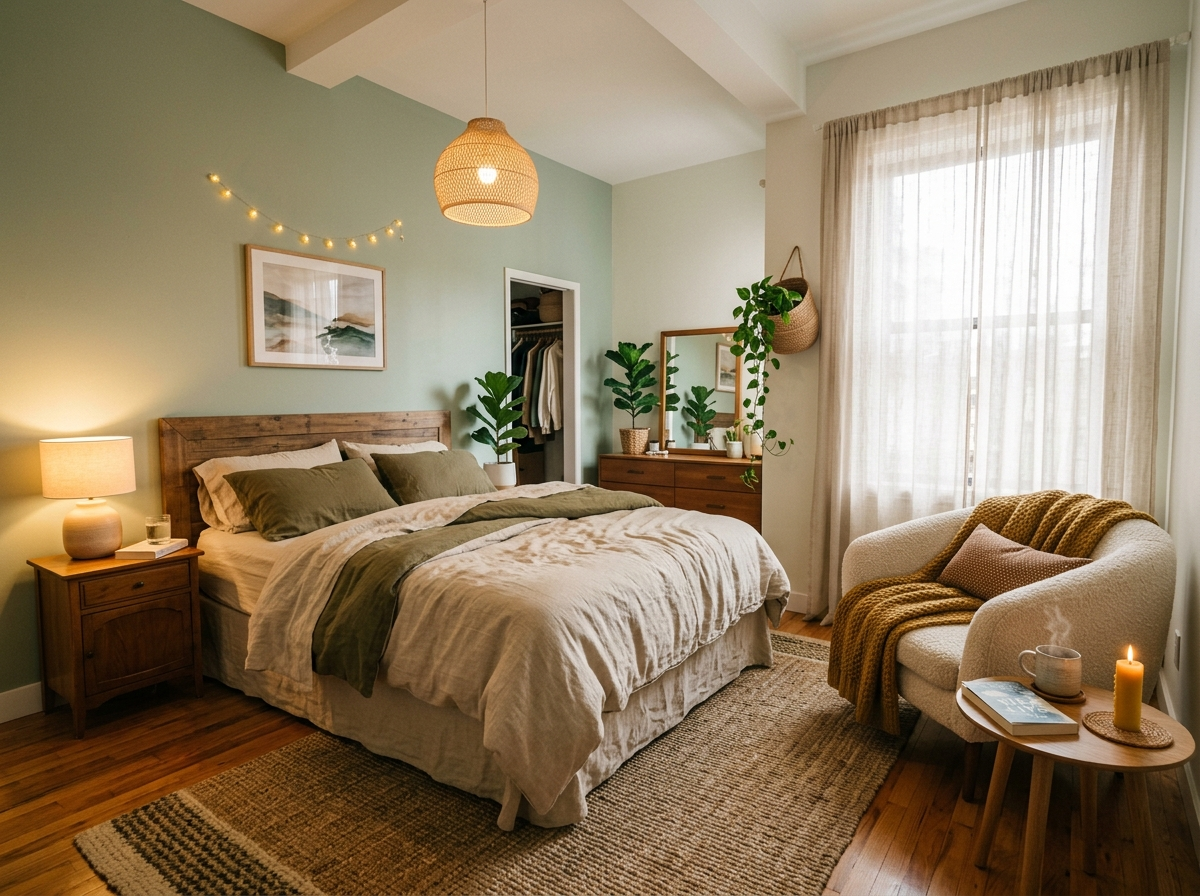
The final frame I look for in any bedroom shoot is the moment when light, texture, color and composition are all working together instead of one element carrying the whole room. By this point in a shoot, the linen bedding dreamy bedroom layering, the layered lighting, the single strong focal point and one deeply personal detail are all present in the same frame, and that combination is what actually reads as a complete dreamy bedroom aesthetic rather than a collection of nice individual pieces. I never shoot this final frame first, it only comes together once every earlier idea on this list has been applied with intention rather than all at once. This is the shot that ends up saved the most on Pinterest boards, not because any single element is unusual, but because the whole room finally works together. The lesson from every bedroom I have ever photographed is the same one: the most romantic bedroom decor ideas are never about adding more, they are about making sure every single thing in the frame is there on purpose.
Dreamy Bedroom Questions, Answered Through the Photographer’s Lens
What makes a bedroom feel dreamy?
A bedroom earns real dreamy bedroom aesthetic status through layered light, varied texture and one personal detail working together, not through any single expensive piece. The dreamy bedroom ideas that photograph best always combine at least three of the five qualities from the eye test above. Rooms that focus on only one element, usually just color or just furniture, tend to look nice but not genuinely atmospheric. It is the combination that creates the feeling, not any one choice alone.
How do I make my bedroom aesthetic on a budget?
Focus your spending on texture and light rather than spreading a small budget across many decorative objects. The most effective aesthetic bedroom ideas on a limited budget are fairy lights, one linen pillowcase set and a textured throw, exactly as covered in the budget breakdown above. Dreamy bedroom on a budget results come from concentrated spending, not from buying the maximum number of items your budget allows. Three well-chosen pieces will always outperform ten cheap ones in photographs.
What lighting makes a bedroom feel most dreamy?
Layered lighting across four levels, ambient, task, accent and atmosphere, is what creates genuinely soft bedroom lighting ideas rather than a single overhead fixture ever could. A fairy light bedroom idea combined with warm bedside lamps and a few grouped candles covers three of those four layers almost immediately. The goal is never maximum brightness, it is variety in both light source and warmth of the bulbs themselves. Most bedrooms only have one or two of these layers in place.
What colors are most romantic for a bedroom?
Dusty rose, warm terracotta and deep navy all read as genuinely romantic bedroom ideas when paired with warm-toned lighting and brass or gold hardware rather than cool metals. The bedroom color palette ideas that feel most romantic tend to hold their warmth across both daytime and evening light, which is why the color guide above breaks palettes down by exactly that criteria. Cool grays and stark whites, without deliberate texture added in, tend to read as clean rather than romantic. The warmth comes from the combination of color and material together, not color alone.
How do I make a small bedroom feel dreamy?
Commit to one or two strong focal points rather than trying to fill every wall and surface, since a small bedroom dreamy small space depends entirely on restraint. Mirror placement, discussed earlier, is one of the single highest-impact dreamy bedroom ideas for a compact room, since it visually expands the space without adding furniture. A slim storage bed frame also frees up floor space that would otherwise disappear under bulky furniture. The same effortless morning aesthetic that a well-composed small bedroom creates each morning comes directly from this kind of intentional restraint.
What is a dreamy bedroom aesthetic on Pinterest?
The dreamy bedroom aesthetic that performs best on Pinterest almost always combines soft, warm lighting with visible texture, since flat, evenly lit photos rarely earn saves compared to images with genuine depth and shadow. Pinterest bedroom aesthetic ideas tend to favor the exact layered light and texture combinations covered throughout this list rather than any single trending color or product. The bedrooms that get saved and repinned most are the ones photographed in the golden morning or evening light discussed in the lighting series above. Composition matters as much as the styling itself for how well an image performs.
How do I style a canopy bed for a dreamy bedroom?
Canopy bed bedroom ideas photograph best with the curtain fabric gathered loosely rather than pulled tight, letting extra fabric pool naturally at each post as covered in the composition series above. A sheer white or ivory fabric diffuses light beautifully during the day while adding depth once evening lamps are on. This single addition often becomes the strongest visual element in an otherwise simple bedroom, elevating the overall dreamy bedroom decor considerably. The fabric weight matters more than the frame style itself for how romantic the final look reads.
Can I create a dreamy bedroom in a rental?
Yes, and some of the most atmospheric bedrooms I have ever photographed were rentals with completely white walls and zero permanent changes allowed. Peel-and-stick wallpaper, tension rods and adhesive hooks make most of these dreamy bedroom ideas fully achievable without painting or drilling a single hole. These bedroom glow up ideas rely on texture, light and personal objects rather than structural changes, which is exactly why they translate so well to a rental. The same soft luminous aesthetic achievable in an owned home is just as reachable within a rental’s restrictions.
What plants work best in a dreamy bedroom?
A single tall statement plant, real or a high-quality faux version, does more for bedroom plant styling ideas than several small plants scattered around the room. Fiddle leaf figs and olive trees photograph particularly well positioned near a window, adding organic height without blocking the natural light itself. This approach to cozy bedroom ideas fills an otherwise empty corner while adding real visual texture to the composition. One well-placed plant will always outperform a cluttered collection of smaller ones in photographs.
How do I make my bedroom feel more romantic?
Layer warm light through lamps and candles, choose a color palette from the romantic end of the spectrum like dusty rose or deep navy, and add at least one textural element like velvet or a chunky knit throw. These romantic bedroom decor ideas work together rather than individually, which is why the full lighting and texture systems covered throughout this list matter more than any single purchase. A genuinely dreamy bedroom ideas transformation usually touches light, texture and one meaningful object all at once. The same intentional layering that makes a bedroom feel romantic works just as well when you extend that mindset into your seasonal gathering ideas once the colder months roll around.
The most atmospheric bedroom I have ever photographed was not the most expensive one. It belonged to someone who had committed fully to a handful of these dreamy bedroom ideas rather than spreading a large budget thin across dozens of small decisions, and it showed in every single frame I took. A room that feels like it belongs to someone specific will always photograph better than a room that could belong to anyone, no matter how much was spent furnishing it.
A dreamy bedroom is just the beginning of a home that feels completely yours. The Muse Vale has the decor, wellness, and lifestyle guides to help you build the rest of it with the same intention.
Come back to The Muse Vale whenever your bedroom needs a new frame. We will have the inspiration, the ideas, and the visual guidance ready whenever you need it.