

Morning routine ideas are everywhere, but most of them are built for a life nobody actually lives. After years of watching real American women build, break, and rebuild their mornings, I started keeping notes on what genuinely holds up past day three. This is that audit: the honest version of a healthy morning routine ideas list, minus the 4am wake-up call and the two-hour journaling session nobody has time for. It does not matter if you are up with a 5am alarm, dragging yourself out of bed at 7am, or negotiating a school drop-off before your workday even starts. Your morning is the one part of the day you control before anyone else gets a vote in it, and a solid morning routine for women should reflect that. What follows is not a Pinterest board. It is a field report on the small, specific habits that keep showing up in the mornings of women who actually get things done, plus the ones that look great online and fall apart by Wednesday.
The Morning Audit: Rate Your Current Routine Before You Change Anything
Before you add a single new habit, it helps to know where you actually stand. These five questions are the start of every morning routine checklist I build with a client, and they will tell you more about your mornings than any list of morning routine ideas ever could. Answer honestly. A productive morning routine is not about doing more; it is about knowing what is already working.
✦ Do you know what time you will wake up tomorrow? If your answer is YES: → Your morning already has a foundation, even if the rest feels chaotic. Consistency in wake time is the single biggest predictor of a routine that sticks. If your answer is NO: → This is your starting point. Everything else in this guide will be easier once your wake time stops moving around.
✦ Do you have a first action that is not your phone? If your answer is YES: → Your nervous system gets a few minutes to wake up before it is flooded with other people’s opinions and demands. If your answer is NO: → This single change tends to reorganize an entire morning without adding a single extra minute to it.
✦ Do you eat before noon without deciding what to eat? If your answer is YES: → You have already solved one of the biggest energy drains in a busy woman’s morning: decision fatigue. If your answer is NO: → This is costing you more mental energy than you realize, and it is one of the easiest fixes on this list.
✦ Is your morning the same on Monday as it is on Friday? If your answer is YES: → You have built real structure, which is the actual definition of a routine rather than a habit you try occasionally. If your answer is NO: → That is normal, and it is not a failure. A flexible framework still counts as a routine, and we will get to that.
✦ Do you feel behind before 10am most days? If your answer is YES: → Something in the first hour is not doing its job, and it is likely one of the six habits in the first time block below. If your answer is NO: → Good. Protect whatever you are already doing, because it is working better than you may be giving it credit for.
Most women think their morning starts when the alarm goes off. It actually starts the night before, and what happens in the first fifteen minutes after waking decides whether the rest of the day feels managed or reactive.
1. The Alarm Strategy That Actually Gets Productive Women Out of Bed

The coaches who tell you to wake up earlier are missing the actual finding here: the time on the alarm matters far less than what happens in the sixty seconds after it goes off. Productive women tend to place their alarm across the room, use a light-based wake tool instead of a jarring sound, and commit to a single non-negotiable wake time that does not shift on weekends. The reason this works is simple: decision fatigue starts the moment you hit snooze, because now you are negotiating with yourself before the day has even started. Waking at a consistent hour, even an imperfect one, trains your body’s internal clock faster than any 5am morning routine ideas list ever will. Where women get stuck is treating the alarm as a suggestion; the fix is picking one wake time and giving it two full weeks before judging whether it works.
2. The No-Phone First 10 Minutes Rule and Why It Changes the Whole Day’s Focus

Every productive woman I have studied protects the first ten minutes of her day from her phone, and it is the single habit that shows up most consistently across otherwise very different routines. The practice looks like this: phone stays on airplane mode or in another room until a specific first action is complete, whether that is making the bed, drinking water, or simply sitting up and breathing for sixty seconds. This works because the first input your brain receives sets its mode for hours; a text notification or a news headline puts you in reactive mode before you have chosen anything for yourself. A quick digital detox morning window, even a short one, protects your morning routine self care time from being hijacked before it starts.
The Audit Note: Phone Delay Wins
- ◉ What productive women do: Leave the phone charging outside the bedroom overnight.
- ◉ What most women do instead: Keep it on the nightstand as the alarm and check it immediately.
- ◉ The difference this makes: A calmer first ten minutes and noticeably less morning anxiety by their own report.
- ◉ How to start this week: Move the charger to the kitchen counter tonight, nothing else required.
3. The Glass of Water Habit That Takes 30 Seconds and Costs Nothing

This is the smallest habit on the entire list and also one of the most consistent across every productive morning I have audited. A full glass of water within the first few minutes of waking, before coffee, before anything else, shows up again and again as a quiet non-negotiable. The reason is straightforward: you wake up mildly dehydrated after six to eight hours without fluids, and that dehydration is part of why mornings can feel foggy before caffeine even enters the picture. Keeping a filled glass or bottle by the bed removes the only real barrier, which is simply forgetting. Where this habit breaks down is when women rely on remembering it fresh each morning instead of setting it up the night before.
4. The Intention-Setting Practice That Takes 2 Minutes and Replaces an Hour of Unfocused Work
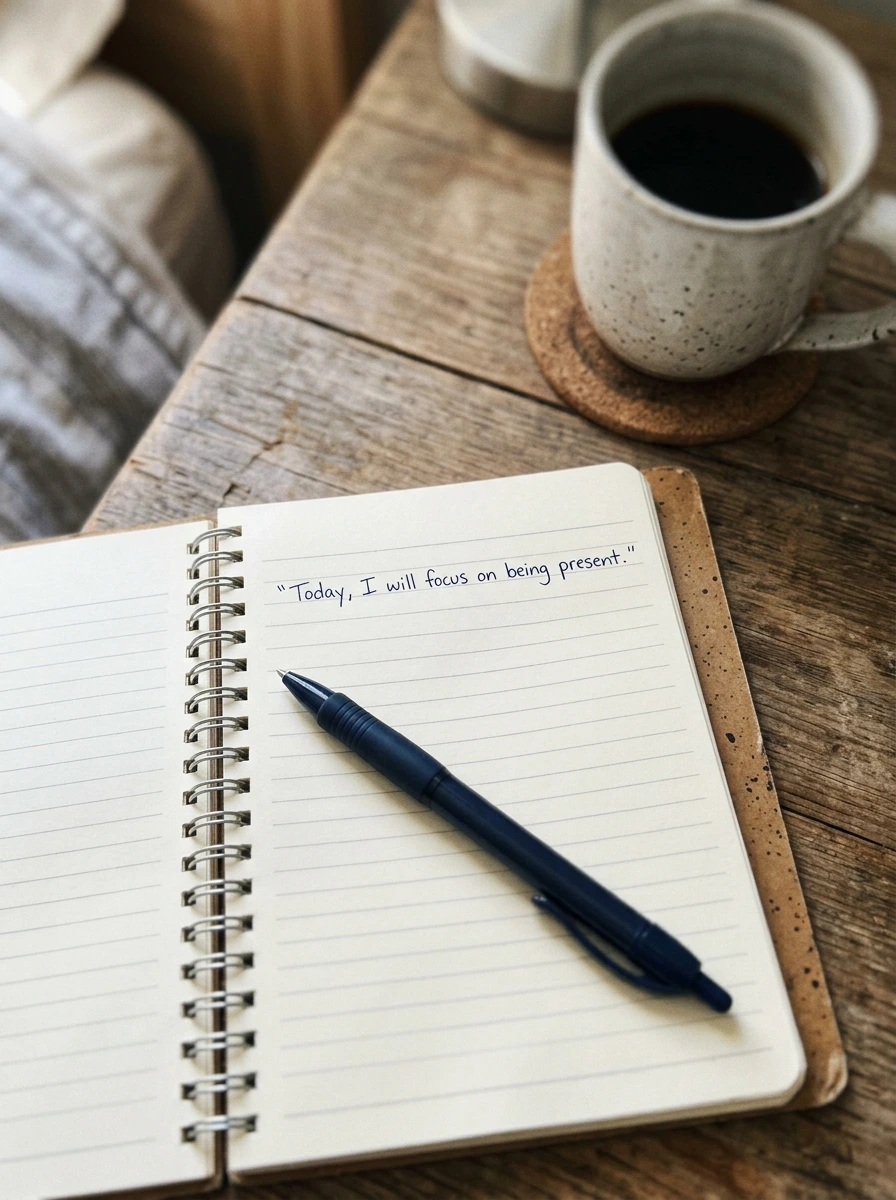
Productive women rarely start their day by opening email; they start by naming one thing that actually matters before they open anything. This is not a full journaling session, it is a two-minute practice of writing or saying one sentence: the single outcome that would make today feel like a win. It works because it gives your brain a filter for the hundred small decisions ahead, so low-value tasks get deprioritized almost automatically instead of eating the whole morning. This is a light version of a morning planning session, and it pairs well with any morning routine checklist you already use. Women often skip this because it feels too simple to matter, which is exactly the trap; the fix is doing it for five straight days before deciding it is not worth the two minutes.
5. The Morning Movement Minimum – What Counts, What Does Not, and Why 7 Minutes Is Enough

There is a real gap between what productive women say about morning workouts and what they actually do most days, and this audit finding closes that gap. A full workout is not the baseline; seven minutes of real movement, a short stretch sequence, a walk around the block, a few sets of bodyweight exercises, is the actual floor that keeps energy consistent. This works because movement increases blood flow and wakes up the nervous system faster than caffeine alone, which is part of why a morning stretch routine pairs so well with coffee rather than replacing it. A short morning workout routine on hard days beats a skipped hour-long one every single time. The trip-up is treating seven minutes as not worth doing because it is not a full workout; the fix is doing the seven minutes on the days a full workout feels impossible.
6. The One Decision Productive Women Make the Night Before That Removes 20 Minutes of Morning Friction

Here is the audit finding that surprised me most: the single biggest time-saver in a productive morning routine happens the night before, not in the morning at all. Productive women pick one thing, usually the outfit or the next day’s top priority, and decide it before bed instead of leaving it for a groggy 6:30am brain to figure out. This removes an entire category of decision fatigue from the morning, and it is part of why a strong evening routine matters as much as anything on this list; a solid night routine foundation makes tomorrow’s wake-up feel like a choice instead of an ambush. It works because your evening brain, less tired and less rushed, makes better decisions than your morning brain does under time pressure. Where this falls apart is trying to pre-decide five things at once; start with just one.
⏰ The First 15 Minutes Audit: What Productive Women Do vs What Everyone Else Does
A clear pattern shows up when you compare productive mornings to average ones minute by minute, and it has less to do with willpower than with structure. This comparison is one of the clearest morning routine ideas breakdowns I have built, and it maps well onto any productive morning routine you are trying to shape.
| MINUTE | PRODUCTIVE WOMEN | EVERYONE ELSE |
|---|---|---|
| 0-2 | Alarm off, feet on floor, no phone touched | Alarm snoozed once or twice |
| 2-5 | Full glass of water, curtains or lights on | Phone checked for notifications |
| 5-10 | Bed made, one intention set for the day | Scrolling news or social media |
| 10-15 | Light movement or stretch, still no phone | Still in bed, phone in hand |
| RESULT BY 9AM | Calm, focused, already ahead of one task | Rushed, reactive, behind before starting |
The women who stick to a routine like this are not more disciplined by nature; they simply protect the first fifteen minutes on purpose instead of leaving them to chance.
7. The Morning Skincare Routine That Takes 4 Minutes and Actually Works

The audit finding here is refreshingly simple: the women with the best skin are not doing the most steps, they are doing the same four minutes every single day without fail. A basic morning skincare routine of cleanse, treat, moisturize, and SPF, done consistently, outperforms an elaborate seven-step routine done twice a week. This works because skin responds to consistency far more than intensity, and a simple routine is one you will actually finish before your coffee gets cold. Building this into your morning routine aesthetic means picking products you enjoy using, since enjoyment is what keeps a habit alive past the first two weeks. The mistake most women make is buying more products hoping for better results; the fix is fewer products, used every day, without exception.
8. The Wardrobe System That Eliminates the “I Have Nothing to Wear” Morning Spiral

Few things derail a productive morning routine faster than standing in front of a full closet feeling like none of it works. Productive women solve this with a system, not more clothes: a small rotation of outfits they know work, laid out or decided the night before, so morning decision-making drops to almost zero. This works because closet overwhelm is a decision fatigue problem disguised as a clothing problem, and reducing the choices actually increases how put-together you feel walking out the door.
The Audit Note: The Outfit Rotation
- ◉ What productive women do: Keep a short rotation of five to seven outfits they trust completely.
- ◉ What most women do instead: Own dozens of options and still feel like they have nothing to wear.
- ◉ The difference this makes: Getting dressed drops from fifteen minutes of second-guessing to under three.
- ◉ How to start this week: Pick three outfits you already love and wear only those for one full week.
9. The Quick Beauty Routine That Makes Women Feel Put-Together Without a Full Face of Makeup

The honest audit finding on morning beauty is that most productive women are not doing more, they are doing less, but doing it with intention. A five-minute routine, tinted moisturizer, brows, mascara, done, consistently outperforms an elaborate routine that gets skipped half the week out of sheer time pressure. This works because feeling put-together is about a few specific details rather than full coverage, and those details are worth choosing on purpose rather than rushing. Getting this part of the morning right matters for how the rest of the day feels, and our minimal morning beauty guide has the specific brow and lash ideas that fit inside that five-minute window. Where women get stuck is trying to do a full routine every day and giving up entirely on the busy ones; the fix is having a real five-minute version ready for those mornings.
10. Morning Hair Habits That Take Under 5 Minutes and Survive the Whole Day

The women with the fastest hair routines are not lucky, they have simply matched their haircut and styling habit to how much time they actually have, not how much time they wish they had. A five-minute hair routine usually means one styling tool, one product, and a technique practiced enough times to be nearly automatic. This works because complicated hair routines get abandoned the first busy week, while simple ones survive because they are realistic. Choosing a cut and color that cooperate with a five-minute window is worth the upfront investment, and our quick hair inspiration guide has color and style ideas built for exactly that kind of low-effort morning. The mistake here is chasing a hairstyle from a video that took someone else twenty-five minutes to achieve; the fix is finding the version that takes you five.
11. The Getting-Ready Playlist That Changes the Energy of the Whole Block

This one sounds small, but the audit data on it is consistent: women who play music during the getting-ready block report noticeably less morning dread than women who get ready in silence or with the news on. A specific getting-ready playlist, upbeat, familiar, no more than twenty minutes long, functions almost like a timer while also shifting mood before the day’s demands start. This works because music changes physiological state faster than almost any other input, and a familiar playlist removes the friction of choosing something new every day. The trip-up is picking a playlist so long it stops functioning as a natural stopping point; the fix is keeping it tight enough that the last song is your cue to walk out the door.
12. The Mirror Check That Productive Women Do Last – Not for Vanity, for Confidence

The final habit of the getting-ready block is not about appearance the way it looks from the outside. Productive women take fifteen seconds in front of a mirror before leaving, not to critique, but to confirm: this is who is walking into the day. This works because it is a small confidence ritual, a moment of choosing to feel ready rather than rushing out mid-thought, and it closes the getting-ready block with intention instead of panic. The mistake is turning this into a critique session; the fix is a single neutral or kind observation and then walking out the door without revisiting it.
🪞 The Getting Ready Time Audit: How Long Each Part Actually Takes vs How Long Women Think It Takes
Part of what makes a morning routine for women feel unmanageable is a mismatch between perceived time and actual time. This audit, built from tracking real getting-ready blocks, is one of the more useful quick morning routine ideas on this list because it shows exactly where the minutes actually go.
SKINCARE: Women estimate: 10 minutes. Reality: 4 minutes. Time saved with a system: 6 minutes. MAKEUP: Women estimate: 20 minutes. Reality: 8 minutes. Time saved with a system: 12 minutes. HAIR: Women estimate: 15 minutes. Reality: 5 minutes. Time saved with a system: 10 minutes. OUTFIT: Women estimate: 15 minutes. Reality: 3 minutes. Time saved with a system: 12 minutes. BAG: Women estimate: 5 minutes. Reality: 2 minutes. Time saved with a system: 3 minutes. BREAKFAST: Women estimate: 10 minutes. Reality: 6 minutes. Time saved with a system: 4 minutes.
Total time saved with a real system in place: roughly 47 minutes, most of it recovered not by moving faster but by removing decisions altogether.
Once the getting-ready block ends, the next stretch of the morning is where energy for the entire day either gets built or quietly gets spent.
13. The Breakfast Non-Negotiable – What Productive Women Eat Versus What They Wish They Ate

The gap between the breakfast productive women describe in interviews and the one they actually eat on a Tuesday is significant, and closing that gap is worth naming honestly. Most eat something with protein, even something simple like eggs or yogurt, rather than the elaborate smoothie bowl they photograph on weekends. This works because protein in the morning steadies blood sugar and energy in a way that a pastry or skipped meal simply cannot match, no matter how disciplined the rest of the day is. A realistic healthy morning routine ideas list treats breakfast as fuel, not performance, and plans for the rushed version, not just the ideal one. Where women get stuck is aiming for the elaborate version daily and giving up on breakfast entirely when time runs short; the fix is having a two-minute protein option ready for exactly those mornings.
14. The Morning Coffee Ritual That Is About More Than Caffeine

Coffee shows up in nearly every productive morning I have studied, but the audit finding here is about the ritual, not the caffeine itself. Women who report the most satisfaction with their mornings tend to treat coffee as a small pause, a few minutes standing at the counter or sitting before the day starts, rather than a cup grabbed on the way out the door. This works because the pause itself, not the drink, is doing the psychological work of marking a transition into the day. Whether that means a French press at home or the familiar Starbucks drive-through order on a rushed Monday, the ritual matters more than the method. The mistake is rushing through it every single day; the fix is protecting at least three mornings a week where the coffee is actually savored, not just consumed.
15. Morning Hydration Habit Beyond the First Glass of Water

One glass of water at wake-up is a strong start, but the audit shows a second layer that most women miss entirely: hydration spread across the whole morning block rather than front-loaded in one gulp. Productive women often keep a water bottle within reach through the getting-ready and breakfast blocks, refilling once before they leave the house. This works because steady hydration supports focus and energy more reliably than a single large dose followed by hours of nothing, especially once coffee, which is mildly dehydrating, enters the picture. The trip-up is treating the first glass as the whole habit; the fix is a visible bottle that travels with you through the rest of the morning.
16. The 10-Minute Morning Meal Prep That Sets Up Lunch Too

The most efficient productive women are not cooking two meals before 8am, they are using ten minutes to set up both breakfast and lunch at once. This looks like packing lunch while breakfast is cooking, or prepping ingredients the night before so morning assembly takes minutes rather than a full cooking session. This works because doubling up on a single kitchen session saves a second trip back into decision-making later in the day, when energy for meal planning is usually lower anyway. A short morning meal prep ideas habit like this removes one more choice from an already busy afternoon. Where this breaks down is trying to cook elaborate lunches in the morning rush; the fix is keeping the lunch prep simple enough to finish in the same ten minutes as breakfast.
17. What Productive Women Do NOT Eat in the Morning and Why It Matters

This audit finding is less about addition and more about subtraction. Productive women consistently avoid a heavy, sugar-forward breakfast, not out of restriction, but because they have noticed the energy crash that follows it by mid-morning. This works because a sugar spike followed by a crash undermines exactly the steady focus a productive morning depends on, regardless of how good it tastes going down. It is not about eliminating anything entirely; it is about noticing which breakfast choices consistently precede a rough 11am. The mistake is treating this as a strict rule; the fix is simply paying attention for one week to how different breakfasts affect your actual energy by late morning.
18. The Morning Supplement and Wellness Habit That Actually Has Science Behind It

Among the many wellness habits marketed at morning routines, one keeps showing up with real support behind it: getting natural light exposure within the first thirty minutes of waking. Productive women often pair this with their coffee or breakfast, standing near a window or stepping outside briefly rather than staying in artificial light the whole morning. This works because morning light exposure helps regulate the body’s circadian rhythm, which affects energy and sleep quality far more than most supplements do. It is one of the simplest and best-supported morning hydration habits’ quieter cousin: not about what you drink, but about what you let your body see. The trip-up is skipping it on cold or busy mornings; the fix is committing to even sixty seconds by a window, which is enough to matter.
☕ The Morning Nourishment Audit: What Actually Gives Productive Women Energy vs What Just Feels Like It Should
HIGH RETURN MORNING HABITS: Protein-forward breakfast: Steady energy that lasts past 10am without a crash. Morning light exposure: Regulates circadian rhythm and improves alertness within minutes. Spread-out hydration: Prevents the mid-morning fog that dehydration causes. A calm coffee ritual: Marks a real transition instead of just delivering caffeine.
LOW RETURN (LOOKS GOOD, DOES LITTLE): An elaborate smoothie bowl photographed but rushed while eating: The visual effort outweighs the actual nutritional care taken. A long list of supplements taken inconsistently: Consistency matters more than quantity, and most women are not consistent here. A “wellness shot” taken on an empty, dehydrated stomach: Often causes more stomach discomfort than benefit before food.
THE COACH’S VERDICT: If you only change one thing from this whole nourishment block, make it protein at breakfast. It has the clearest, most consistent effect on morning energy of anything in this entire healthy morning routine ideas audit. Personal style still matters here too; our personal style expression guide is a good reminder that the small, enjoyable choices you make each morning are part of what makes a routine sustainable in the first place.
The nourishment block fuels the body. What comes next is the block that fuels focus, and it is the one most productive women protect most fiercely.
19. The Morning Journal Habit – What Productive Women Actually Write Versus What Looks Good Online

The gap between an aesthetic gratitude journal and what productive women actually scribble down most mornings is significant, and it is worth naming honestly. Most are not writing three pages of prose; they are jotting three to five lines, a mix of what is on their mind and what needs to happen that day. This works because the act of writing, even briefly, externalizes mental clutter that would otherwise take up working memory all morning. A short morning journal prompts practice like “what’s on my mind” and “what matters most today” covers most of the benefit in under three minutes.
The Audit Note: The Three-Line Journal
- ◉ What productive women do: Write three to five honest lines, no formatting required.
- ◉ What most women do instead: Buy a beautiful guided journal and use it twice before stopping.
- ◉ The difference this makes: A habit that actually survives a busy week instead of one that gets abandoned.
- ◉ How to start this week: Keep a plain notebook by the coffee maker and write three lines tomorrow.
20. The Morning Planning Session That Takes 10 Minutes and Saves 2 Hours
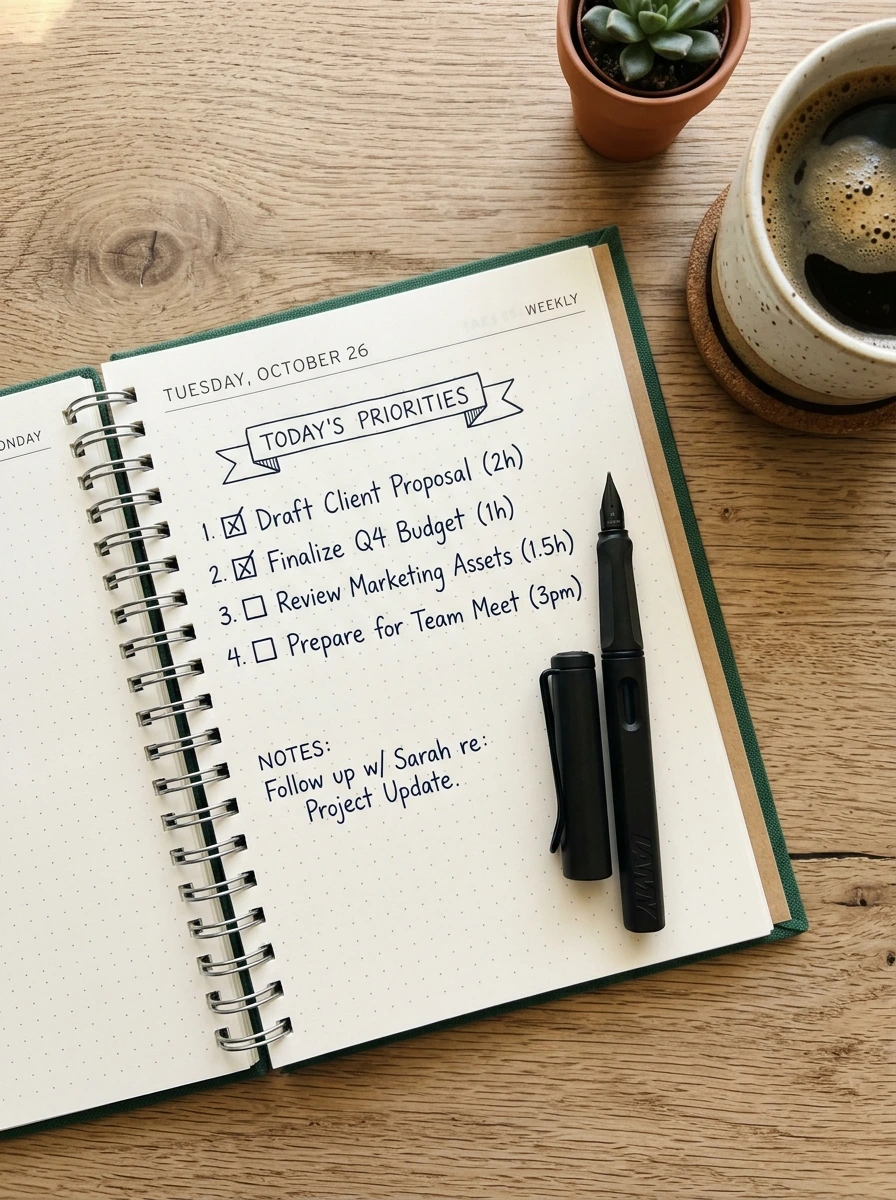
This is the audit finding that most directly separates a good day from a scattered one: ten minutes spent naming the day’s actual priorities before opening email or Slack. Productive women use this window to pick no more than three real priorities, glance at their calendar, and identify the single task that would matter most if nothing else got done. This works because it front-loads decision-making into a calm window instead of making those same decisions reactively, task by task, throughout a chaotic day. A short morning time blocking pass, even a rough one, can save closer to two hours of drift later on. The mistake is trying to plan the entire day in granular detail; the fix is keeping the list to three priorities and letting the rest sort itself out.
21. Morning Affirmations – The Honest Audit of What Works and What Is Just Noise

Affirmations get a mixed reception in this audit, and that mixed reaction is honest. Generic, repeated phrases with no real connection to the day tend to feel hollow and get abandoned fast. What actually works is more specific: a single sentence naming a real strength you are bringing into a real challenge that day, not a vague statement recited on autopilot. This works because specificity engages the part of the brain that plans and problem-solves, while generic affirmations mostly just get tuned out after a week or two. The trip-up is picking phrases from a list that mean nothing to your actual day; the fix is writing your own single sentence, tied to something real, each morning.
22. The Morning Reading Habit That Builds Over Months Into Something Significant

Ten pages before the phone comes out does not feel like much on any single morning, but the audit shows this is one of the habits with the longest payoff. A short morning reading habit, ten to fifteen minutes, adds up to a dozen or more books across any season of life, something almost no one accomplishes by trying to read for an hour on a rare free evening. This works because small, protected windows beat ambitious ones that depend on energy you may not have left by nighttime. It also functions as a gentler alternative to screen time first thing, giving the brain a calmer kind of stimulation before the demands of the day begin. The mistake is picking a dense, difficult book that turns this into a chore; the fix is choosing something genuinely enjoyable, at least for the first few weeks of building the habit.
23. The Morning Gratitude Practice Stripped of All the Cringe

Gratitude practices have a branding problem: they sound saccharine, and that reputation keeps a lot of genuinely useful habits from getting a fair try. The version that actually works among productive women is short and specific, one real thing, named honestly, not a forced list of five items reached for out of obligation. This works because specificity again does the heavy lifting; naming one real thing engages actual reflection, while a rushed list of five becomes rote within days. A morning gratitude practice this small fits inside the same three-line journal habit from earlier in this block, so it costs no extra time. The trip-up is treating it as a performance for anyone else to see; the fix is keeping it private and specific, just for you.
24. The Brain Dump Morning Technique That Clears Mental Clutter Before Work Begins
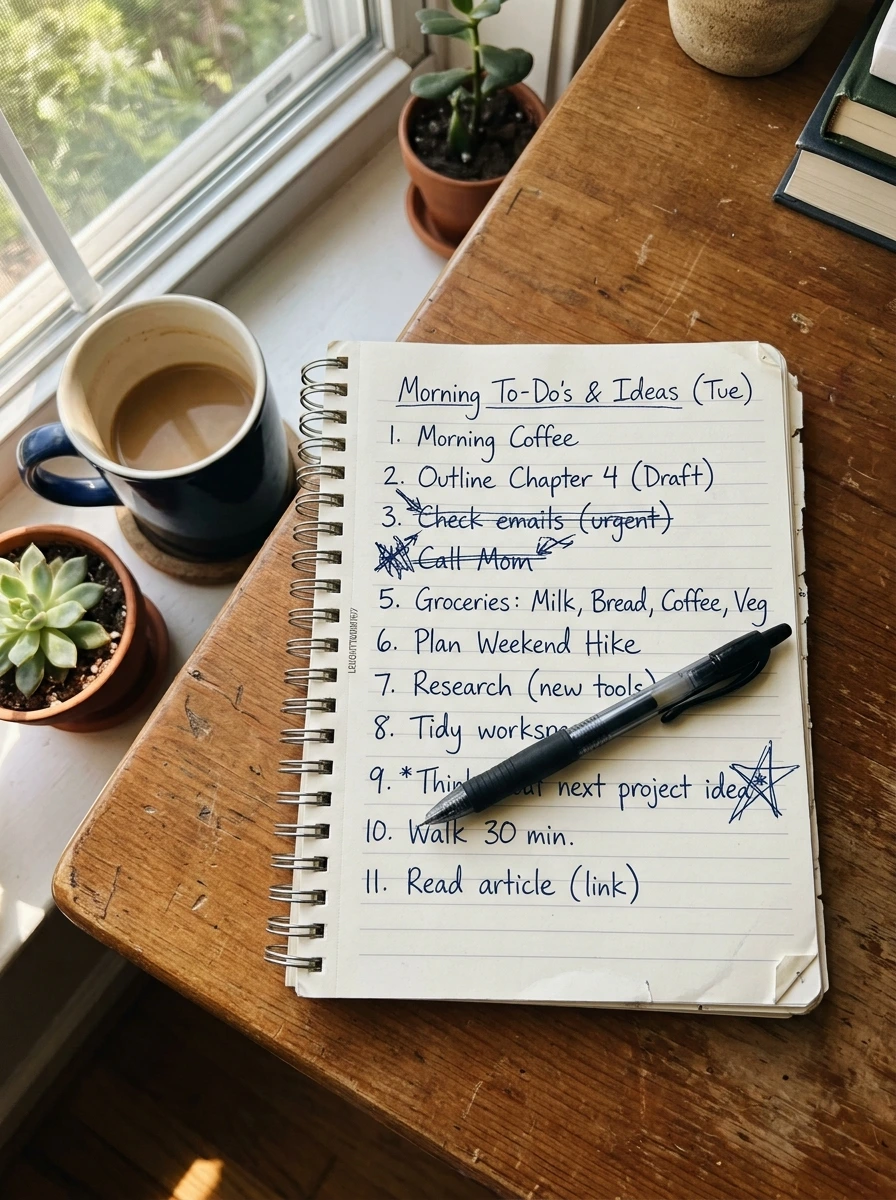
The final habit in this block is less about focus and more about clearing space for it. A morning brain dump technique means writing down every open loop in your head, appointments, errands, nagging thoughts, in one unfiltered list before the workday starts. This works because an unexpressed mental list quietly consumes working memory all day, and getting it onto paper frees up real cognitive space for actual focused work. It takes three to four minutes and requires zero organization; the goal is getting it out, not making it tidy. The mistake is trying to solve every item on the list immediately; the fix is simply capturing it and choosing later, with a clearer head, what actually needs attention today.
📋 The 10-Minute Morning Planning Session: The Exact Framework Productive Women Use Every Single Day
MINUTE 1-2: Glance at the calendar and note any fixed appointments or deadlines for the day. MINUTE 3-5: Write three priorities, ranked, with the most important one first. MINUTE 6-8: Do a quick brain dump of anything else on your mind so it stops taking up space. MINUTE 9-10: Pick the single first task you will do once the workday actually starts.
WHAT THIS REPLACES: A scattered hour of reactive task-switching that usually happens anyway, just later in the day and with far more stress attached. WHAT YOU NEED: A plain notebook, a pen, and ten uninterrupted minutes before the inbox opens.
A morning this organized pays off beyond the workday itself. On days that end with hosting or entertaining, a strong start matters even more; our evening entertaining ideas guide shows how a calm morning sets up an evening that never feels rushed or chaotic.
The focus block builds the mental structure for the day. The last stretch of the morning is about the transition out of that structure and into whatever comes next.
25. The Morning Walk or Outdoor Moment That Resets Everything Before the Inbox Opens

The audit finding here is almost embarrassingly simple: a five to ten minute walk outside, even just to the end of the driveway and back, functions as one of the clearest resets available before the workday begins. Productive women, particularly the ones working from home, use this as a hard line between morning and work, a physical transition that a closed laptop lid does not provide on its own. This works because a short morning walk habit combines light exposure, movement, and a change of environment, three things that each independently boost focus and mood.
The Audit Note: The Driveway Reset
- ◉ What productive women do: Step outside for five to ten minutes before opening a laptop.
- ◉ What most women do instead: Move straight from breakfast to the first work task with no transition.
- ◉ The difference this makes: A noticeably calmer entry into the workday, by their own report.
- ◉ How to start this week: Set a five-minute timer and simply walk outside before your first task tomorrow.
26. The Commute Morning Routine for Women Who Drive or Take Transit to Work

For women with an actual commute, whether by car or public transit, the audit shows a clear pattern: the commute itself becomes part of the morning routine, not just the gap before it. Productive commuters use that time intentionally, a specific podcast, a call with a friend, or simply silence, rather than letting it default to stress about traffic or the day ahead. This works because a commute framed as transition time rather than lost time changes how the whole morning feels in hindsight, even when the actual minutes spent are identical. The mistake is spending the whole commute mentally rehearsing the day’s stress points; the fix is choosing one specific, enjoyable use of that time and sticking with it most days.
27. The Work-From-Home Morning Boundary That the Most Productive Remote Workers Swear By

Remote workers face a specific morning problem that commuters do not: no physical distance between the end of the morning routine and the start of work. The most productive remote women in this audit solve it with a deliberate boundary, changing out of pajamas, moving to a different room, or that short outdoor walk from earlier in this block, something that marks a clear before and after. This works because without a physical marker, the brain has no clear signal that morning has ended and work has begun, which leads to a foggy, half-focused start. The trip-up is rolling straight from bed to laptop; the fix is picking one specific action that always precedes opening the laptop, no exceptions.
28. The Morning Routine Audit Practice — How Productive Women Review and Adjust Their Routine Every Few Weeks

The final audit finding is about the routine itself: the women whose mornings hold up longest are not the ones who found the perfect system once, they are the ones who check in on it every few weeks and adjust. This looks like a five-minute honest review: what is working, what has quietly stopped happening, and what needs to change given a shifting schedule. This works because life does not stay the same, a new job, a different school schedule, a season change, and a routine that does not flex with it eventually gets abandoned entirely rather than adjusted. Treating your own morning routine ideas as a living system rather than a fixed set of rules is what keeps it useful across any season of life. The mistake is either never reviewing it or reviewing it so often it never gets a fair chance; the fix is a simple check-in roughly once a month.
Morning Routine Questions, Answered by a Coach Who Has Heard Every Excuse
What is the best morning routine for productive women?
There is no single best morning routine, but the most effective ones share a pattern: consistent wake time, a phone-free first ten minutes, some form of movement, and a short planning window. These morning routine ideas work because they are simple enough to repeat daily, not because they are elaborate. A productive morning routine built from a handful of small, sustainable habits will always outlast an ambitious one built from a dozen.
How do I start a morning routine if I am not a morning person?
Start with one habit, not eight. Pick the single simple morning routine ideas change that feels most doable, often the glass of water or the phone delay, and give it two weeks before adding anything else. Morning routine habits stack far more successfully than they launch all at once, and not being a morning person has far less to do with willpower than most advice suggests.
How long should a morning routine actually be?
A real morning routine for women can be as short as fifteen minutes and still be effective; length is not the point, consistency is. Some of the quick morning routine ideas in this guide, the water, the intention-setting, the ten-minute planning session, take under twenty minutes combined. Longer is not automatically better if it means the routine gets skipped on busy days.
What should the first thing I do in the morning be?
The specific action matters less than what it is not: not your phone. Most morning routine ideas that actually work start with something calm and physical, water, light, movement, before any screen enters the picture, and that includes any morning routine before work. How you look and feel walking out the door matters too, and our morning aesthetic details guide has ideas for making that part feel intentional rather than rushed.
How do I stick to a morning routine when my schedule changes?
Build flexibility into the plan from the start rather than treating any change as a failure. A morning routine for busy women needs a short version and a long version of the same core habits, so a hectic Tuesday still gets the essentials even if the extras get dropped. These morning routine tips work specifically because they bend instead of breaking when life gets unpredictable.
Is a 5am morning routine actually worth it?
Only if your actual schedule and body clock support it; there is nothing magic about the hour itself. The value in 5am morning routine ideas comes from the quiet, uninterrupted time before other demands start, not from the specific number on the clock. A 7am version with the same quiet, protected structure offers nearly identical benefits, and matching wake time to your real life is a more honest healthy morning routine ideas approach than chasing a trend.
What morning habits do the most productive women have in common?
Across very different schedules, the common threads are consistency, a phone-free start, some movement, and a short planning window, more than any single specific practice. These morning routine habits matter more for morning routine for success than any one dramatic ritual does. Personal style plays a role too, and our quick hair inspiration guide is a good example of how a small, low-effort choice can support a bigger pattern of consistency.
How do I build a morning routine that includes self care?
Self care does not require a separate block of time; it can be woven into habits already on this list, an unhurried coffee, a genuine skincare moment, five minutes of movement done for enjoyment rather than obligation. Morning routine self care works best when it feels restorative rather than like one more task on a list, and that shift in framing is often all these morning routine ideas need to actually stick.
What should a morning routine look like for work from home women?
The priority for remote workers is a clear boundary between morning and work, since the two blend together without one. A morning routine for women working from home benefits from getting fully dressed, even casually, and stepping outside briefly before starting the workday, which supports a morning routine aesthetic that still feels put-together on camera. Our low maintenance hair ideas guide is a useful companion here, since low-effort hair that still looks intentional matters even on video-call mornings.
How do I create a morning routine checklist that I will actually follow?
Keep it to five items or fewer and write it somewhere visible, a sticky note on the mirror works better than an app most people forget to open. A useful morning routine checklist reflects habits already proven to work for your actual schedule, not an aspirational list borrowed from someone else’s life. Revisit it every few weeks using the same audit approach from earlier in this guide, since the best morning routine ideas are the ones that get adjusted, not abandoned.
The Audit Report Closes
Morning routine ideas only matter if they survive contact with an actual Tuesday, not the version of your life you wish you had. After auditing what really holds up, the pattern is consistent: small, specific, repeatable habits beat elaborate ones every time, and the women with the calmest mornings are not doing the most, they are doing the same handful of things without fail. The perfect morning routine is not a fixed list, it is the imperfect, consistent version you actually do, adjusted every so often as your real life changes around it.
A strong morning routine is the foundation of a life that feels more intentional, and The Muse Vale has the wellness, beauty, and lifestyle guides to help you build the rest of that life one good habit at a time.
Come back to The Muse Vale whenever your routine needs a reset; we will have the productivity ideas, self-care guides, and lifestyle content ready for every season of your life.