
Field Notes – First Entry
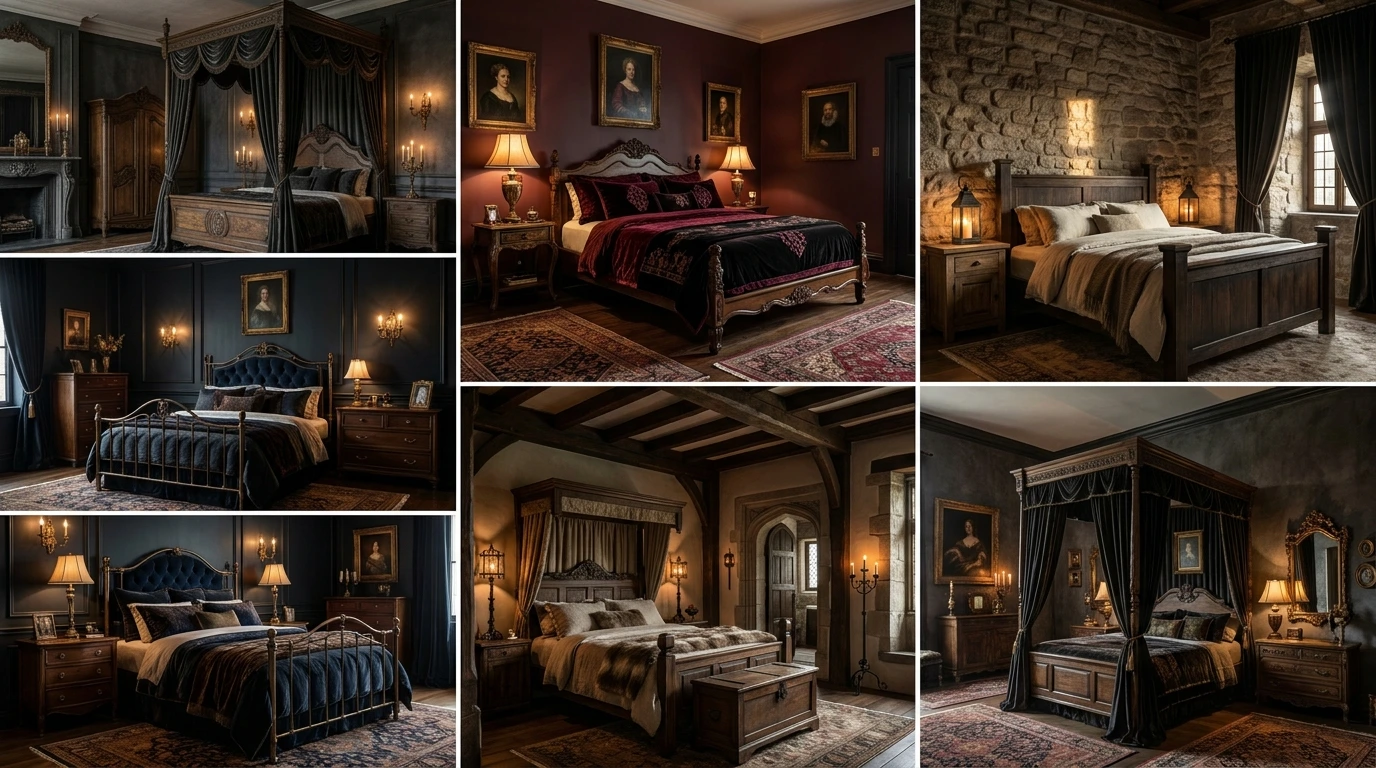
The first time I saw a vintage moody bedroom done right, it wasn’t in a magazine. It was a client’s guest room in the Garden District, a space she’d almost given up on because every “dark academia” mood board she’d saved online left her with a room that read more haunted house than heirloom. What she had instead, once we finished, was a room built around one real wrought iron bed frame she’d hauled out of a shuttered plantation-style estate sale, a hand-me-down mirror with actual mercury spotting, and a paint color so deep it swallowed the corners at night and gave them right back at dawn. Nothing in that room was trying too hard. That’s the whole secret to a vintage moody bedroom: restraint dressed up as drama.
I’ve spent fifteen years buying, restoring, and occasionally arguing with old furniture, and I’ve learned that a genuine dark castle bedroom isn’t built from a shopping cart. It’s built from a handful of decisions, made in the right order, with materials that were meant to age. This is my field guide to the twenty-four pieces and moments that make a room feel like it’s held generations, whether your house was built in 1890 or 1998.
Toolkit Breakdown: The Five Non-Negotiables
Before you buy a single candlestick, you need these five things settled. Skip one and the whole vintage bedroom decor illusion cracks.
- A dark base color – walls, bedding, or both, in a shade with some blood in it (aubergine, bottle green, near-black charcoal)
- One antique anchor piece – a real old object, not a reproduction, that the rest of the room defers to
- Warm metal accents – brass, aged bronze, or wrought iron, never chrome, never cool-toned
- A heavy textile – velvet, wool, or a worn Persian-style rug that muffles the room and gives it weight
- Low, layered ambient light – no single overhead fixture doing all the work
Sleeping Quarters
1. The Wrought Iron Bed Frame That Anchors the Whole Room
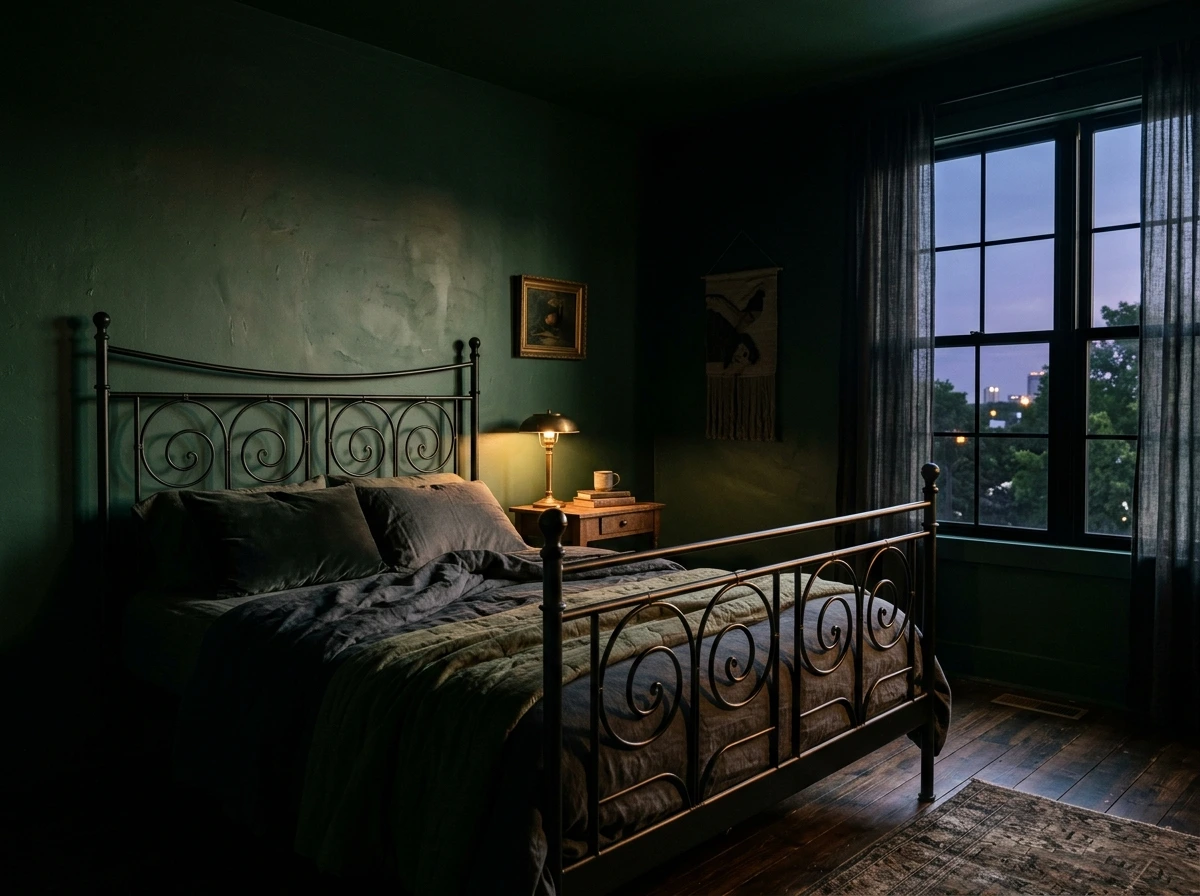
A good iron bed frame does more work than any other single object in a vintage moody bedroom, because your eye lands there first and calibrates everything else against it. Look for hand-forged scrollwork with uneven joints rather than a uniform, laser-cut pattern, since the imperfection is what reads as old. Real pieces carry a matte, slightly pitted black finish rather than a glossy powder coat, and that texture catches candlelight in a way modern metal never does. This is the gothic bedroom ideas starting point I recommend to almost every client, because it sets the scale for the rest of the room without needing a headboard behind it. I’ve had clients try to skip this and build the mood entirely from bedding instead, and it never quite lands the same way.
2. A Distressed Wood Headboard With Real Mileage
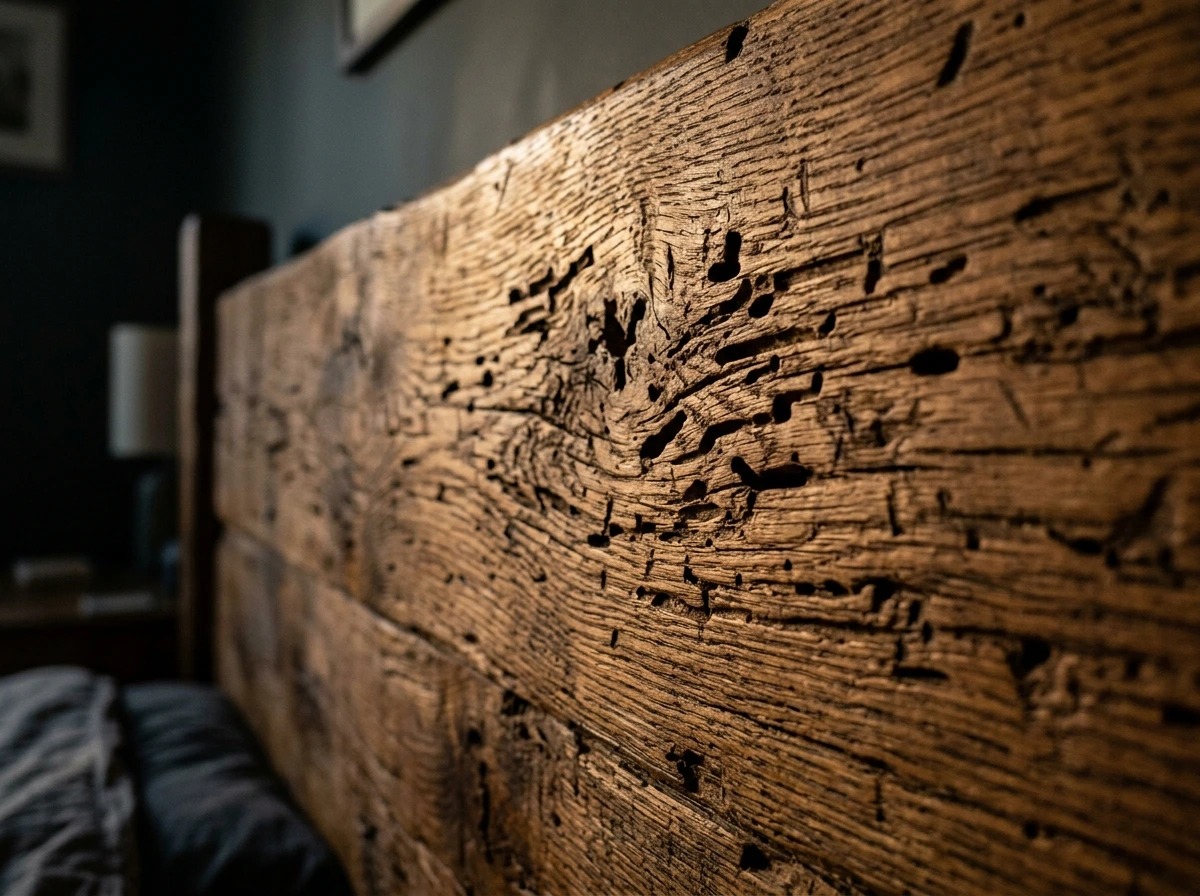
If iron isn’t your material, a distressed wood headboard carries the same weight through a different texture, especially in oak or walnut with visible grain and old joinery marks. Choose a piece with actual tool marks or worm holes rather than a sprayed-on “distressed” finish, which tends to look chalky under warm light. Waxed, unlacquered wood develops a deeper patina finish furniture over time, so resist the urge to seal it too hard when you bring it home. This is where old world bedroom aesthetic really separates itself from a themed room, because the wear has to look earned rather than applied.
✷ Source Notes
- Architectural salvage yards almost always have orphaned headboards pulled from demolished homes
- Estate sales in older neighborhoods beat furniture stores for real oak grain
- If buying new, ask specifically for “hand-distressed” rather than “vintage-style” in the listing
- A local refinisher can strip a bad varnish job for under fifty dollars
3. Heavy Drapery Panels That Frame the Bed Like a Stage
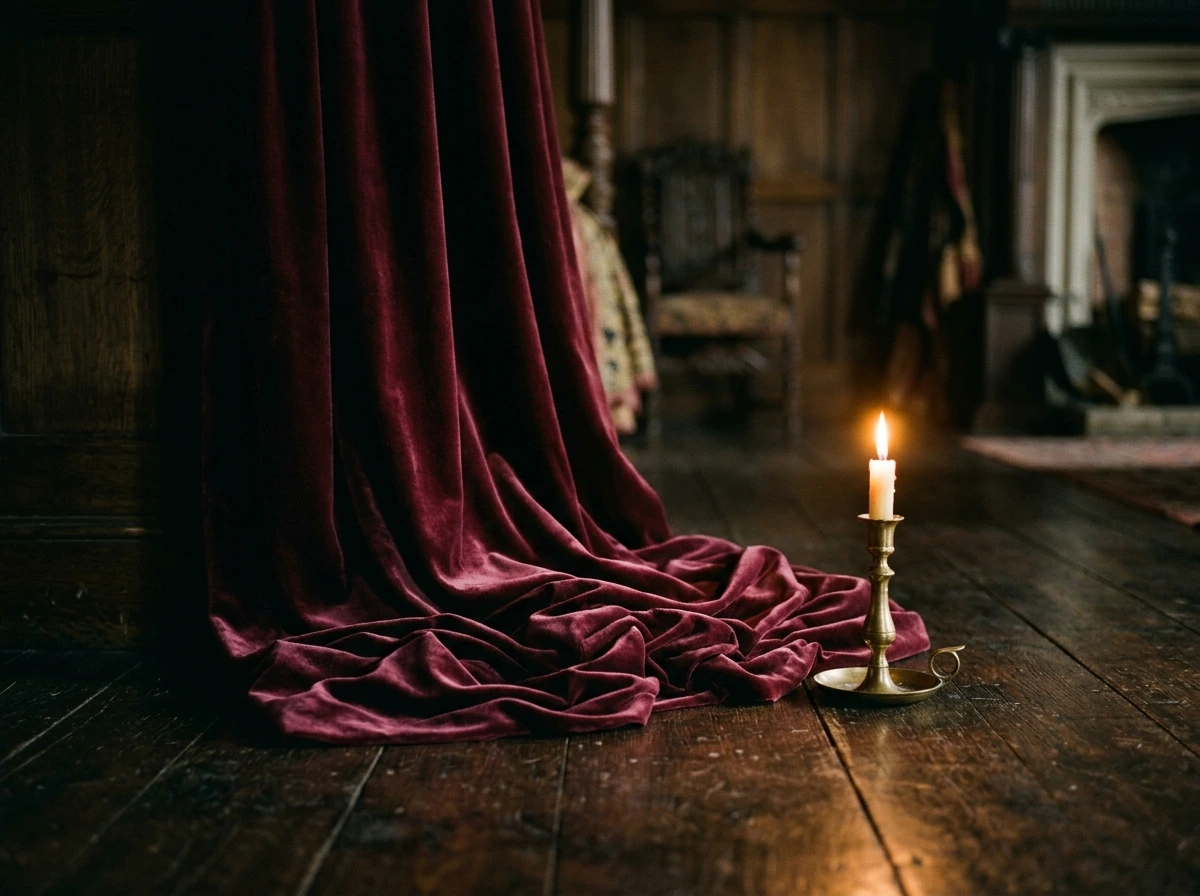
Bed canopies and drapery panels are the fastest way to make a modern bed frame disappear into the aesthetic, and they don’t require touching the frame itself. Mount a simple iron rod above the headboard and let two heavy panels fall on either side, tied back loosely rather than pinned tight. Velvet holds shadow better than cotton or linen, which is why heavy drapery panels in a deep jewel tone do more for mood than almost any wallpaper choice. My honest take: buy these slightly too long and let them pool on the floor. Tailored hems read modern, and modern is not the goal here.
The Restorer’s Note: Clients almost always buy drapery panels one size too short because the packaging measurements look generous in a bright showroom. In a dim vintage moody bedroom, short panels read cheap instantly. Size up, always.
4. A Deep, Saturated Paint Color That Does the Heavy Lifting
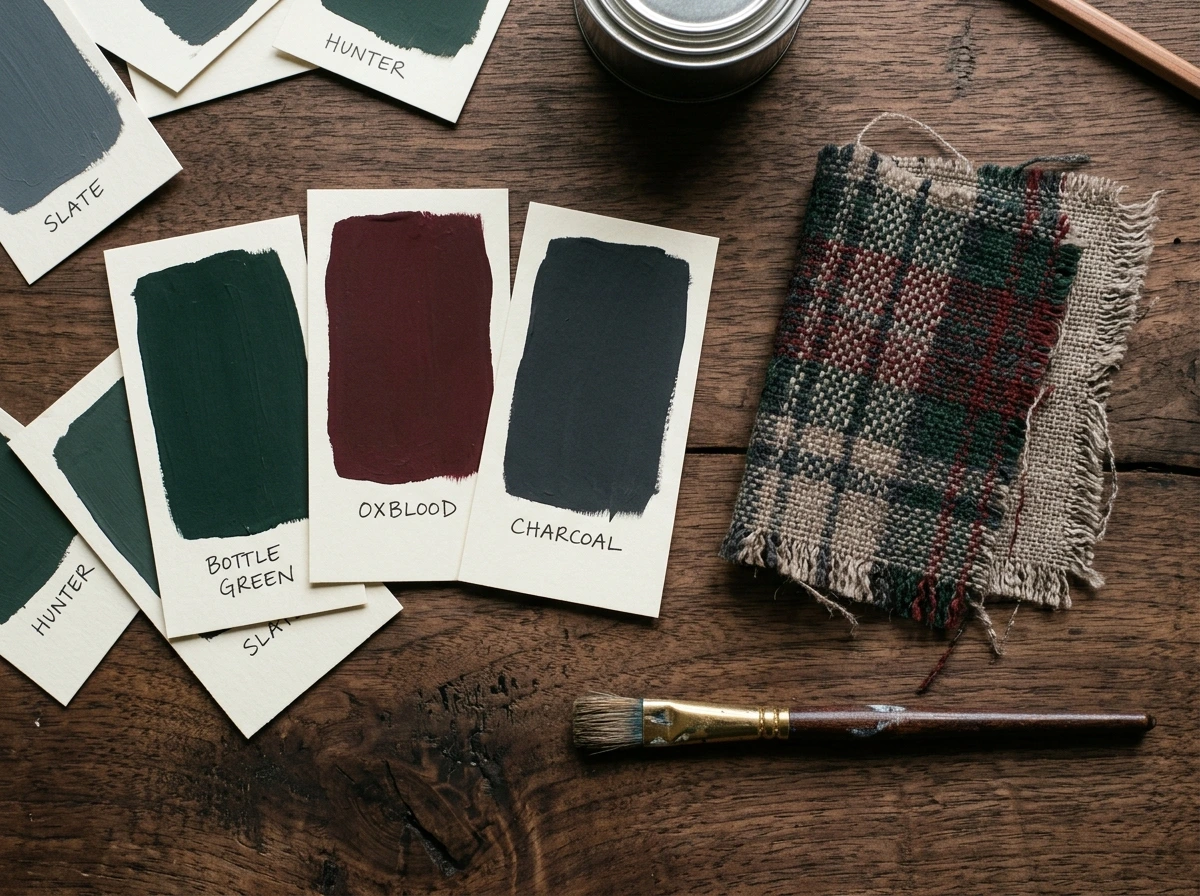
Color is the fastest, cheapest way to get a dark castle bedroom, and it’s the decision people second-guess the most. Go with a true saturated shade like bottle green, oxblood, or near-black plum rather than a “greige” pretending to be moody, and use a matte or eggshell finish so it absorbs light instead of bouncing it. Paint the ceiling the same color if you want the room to feel like it’s holding you, which is a trick borrowed straight from old manor houses. This single choice does more for gothic romantic bedroom atmosphere than any accessory on this list.
🕯️ Provenance Notes: Where Dark Walls Actually Come From Deep saturated wall colors in English and French manor bedrooms weren’t originally a style choice. Pigments that produced rich greens, reds, and blacks were expensive to make and slower to fade evenly, so they showed up in the homes of people who could afford to repaint less often. That history of scarcity is part of why the look still reads as luxury now. If the palette speaks to you, there’s a good chance gothic costume ideas already live somewhere in your closet, since the same rich, saturated colors carry over from decor into dress.
5. Layered Vintage Bedding Instead of a Matched Set
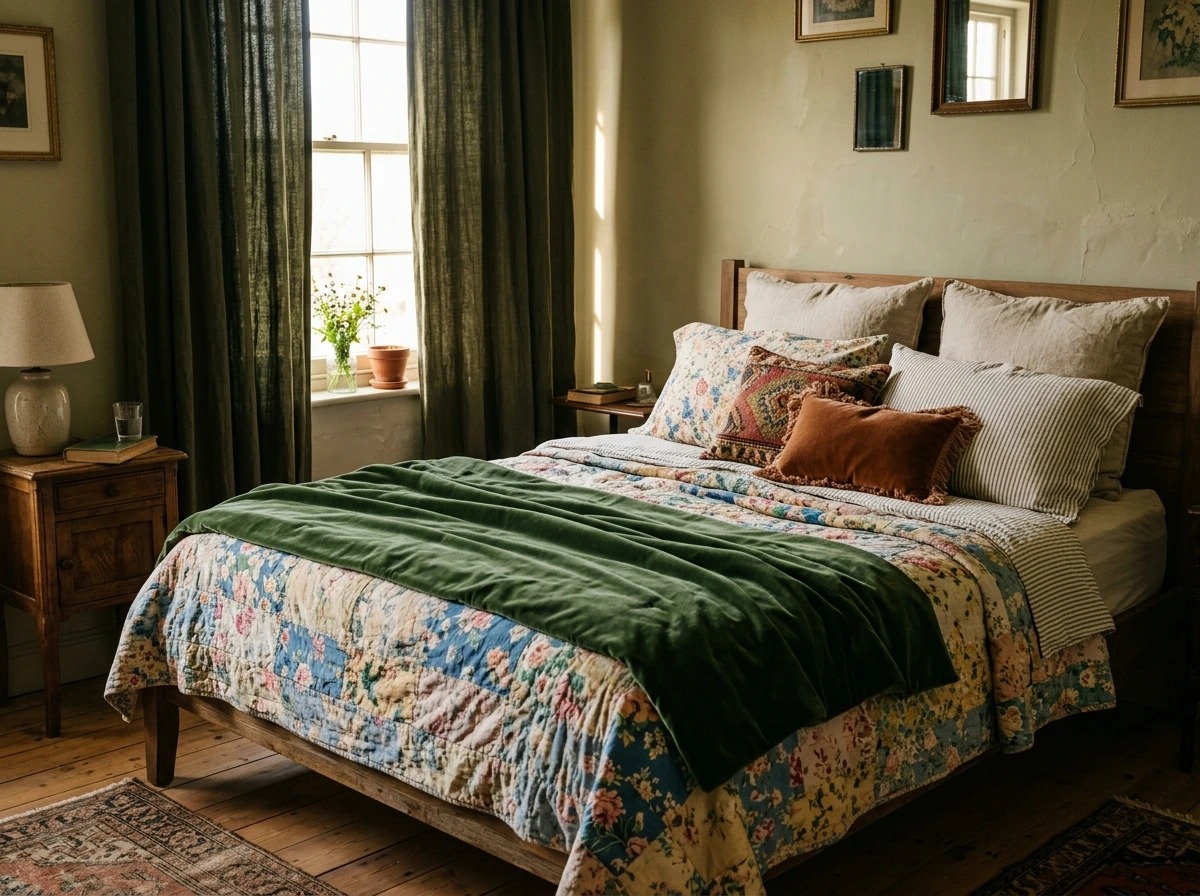
Skip the matched three-piece bedding set entirely and build the bed in loose layers instead, the way an old household actually would have out of necessity rather than style. Start with a solid base sheet in a muted tone, add a quilted or jacquard coverlet, then finish with a heavier wool or velvet throw folded at the foot. Mixing a faded floral with a solid velvet throw is exactly the kind of layered vintage textiles moment that separates a real vintage bedroom decor scheme from a rental staging photo. Nothing here should match perfectly, and that’s the point.
6. An Antique Nightstand With Its Own History
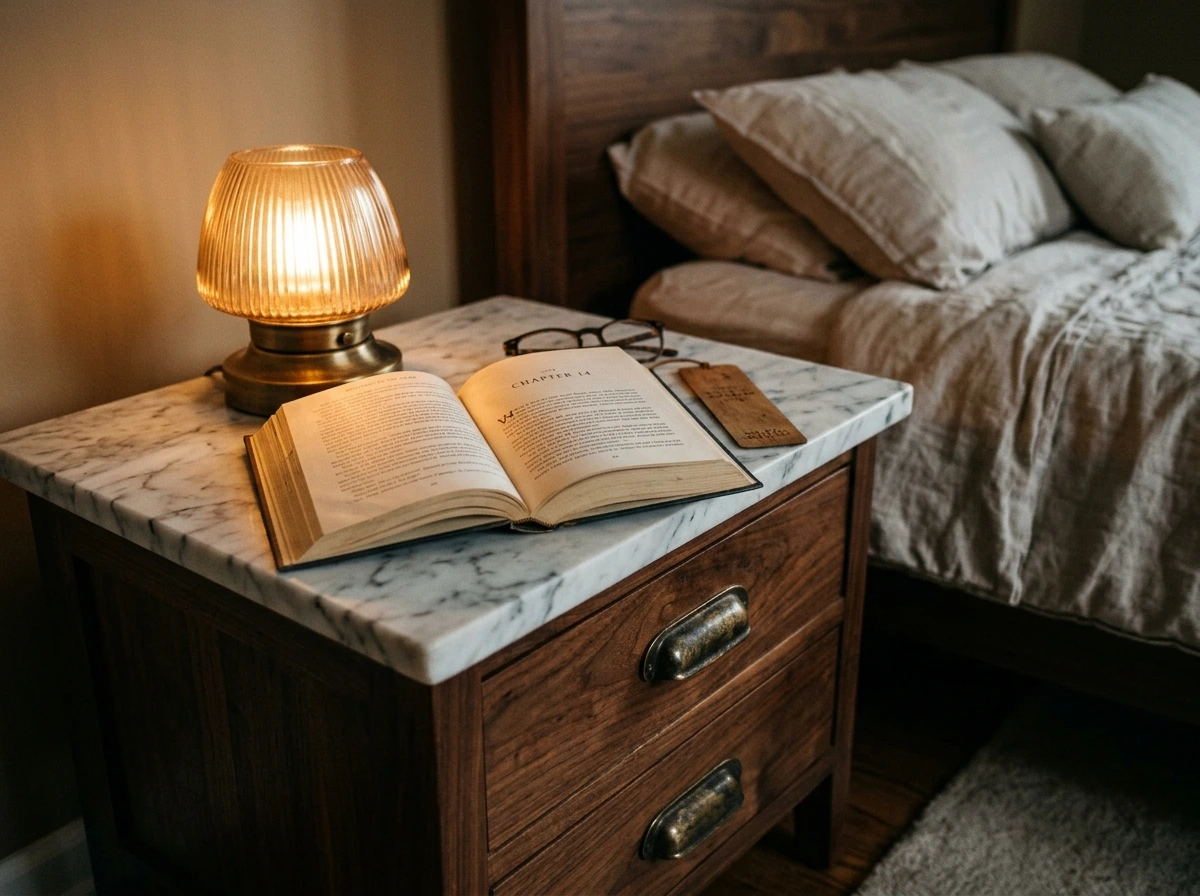
A nightstand pulled from an estate sale carries proportions and hardware you simply can’t buy new, usually a touch shorter and deeper than modern pieces, with a marble or wood top that’s already scarred in places. Look for one with its original brass pulls intact, even if they’re tarnished, since re-plating strips away exactly the character you’re chasing. Pair it with a single low lamp rather than an overhead fixture, because task lighting at bed height is what makes a dark room still feel usable. This is one of the easiest wins in antique bedroom furniture shopping, since nightstands are small enough to fit in almost any car.
Vanity Chamber
7. Entering the Vanity Chamber Through an Ornate Mirror Frame
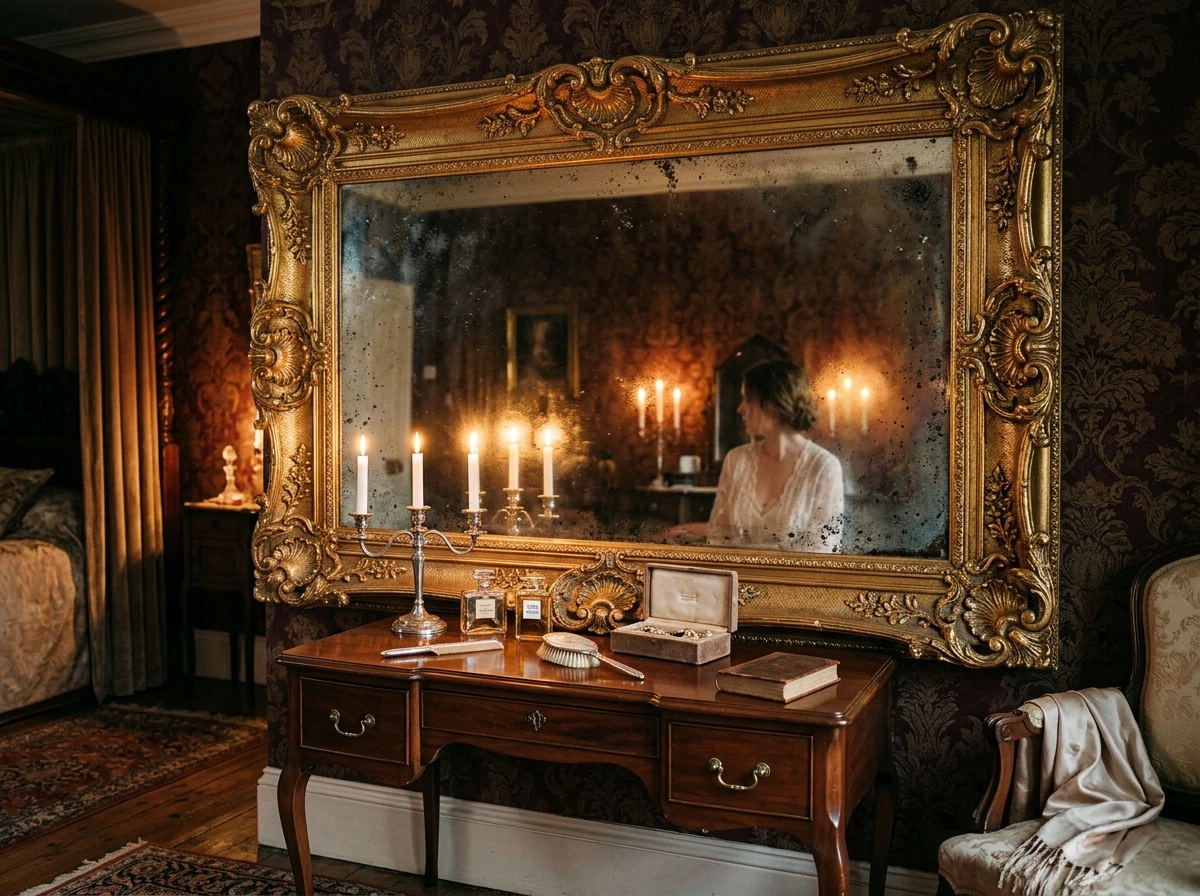
Once the bed is settled, the vanity corner is where a vintage moody bedroom gets its second wind, and it starts with an ornate mirror frame in gilt or aged bronze. Hang it slightly higher than eye level and let the frame’s carving catch shadow from a nearby lamp rather than overhead light. Foxed or slightly clouded glass is a feature here, not a flaw, since it softens reflections the way real antique mirrors do after a century of oxidation. A frame like this is doing double duty as both function and focal point, which is rare in a bedroom this size.
✷ Source Notes
- Estate sales list mirrors under “wall decor” far more cheaply than antique shops do
- Facebook Marketplace searches for “gilt mirror” turn up estate liquidations weekly
- A frame shop can re-gild a chipped corner without replacing the whole piece
- Foxed glass can be faked with a specialty spray if you can’t find the real thing
8. A Claw Foot Dresser Pulled From an Old Estate
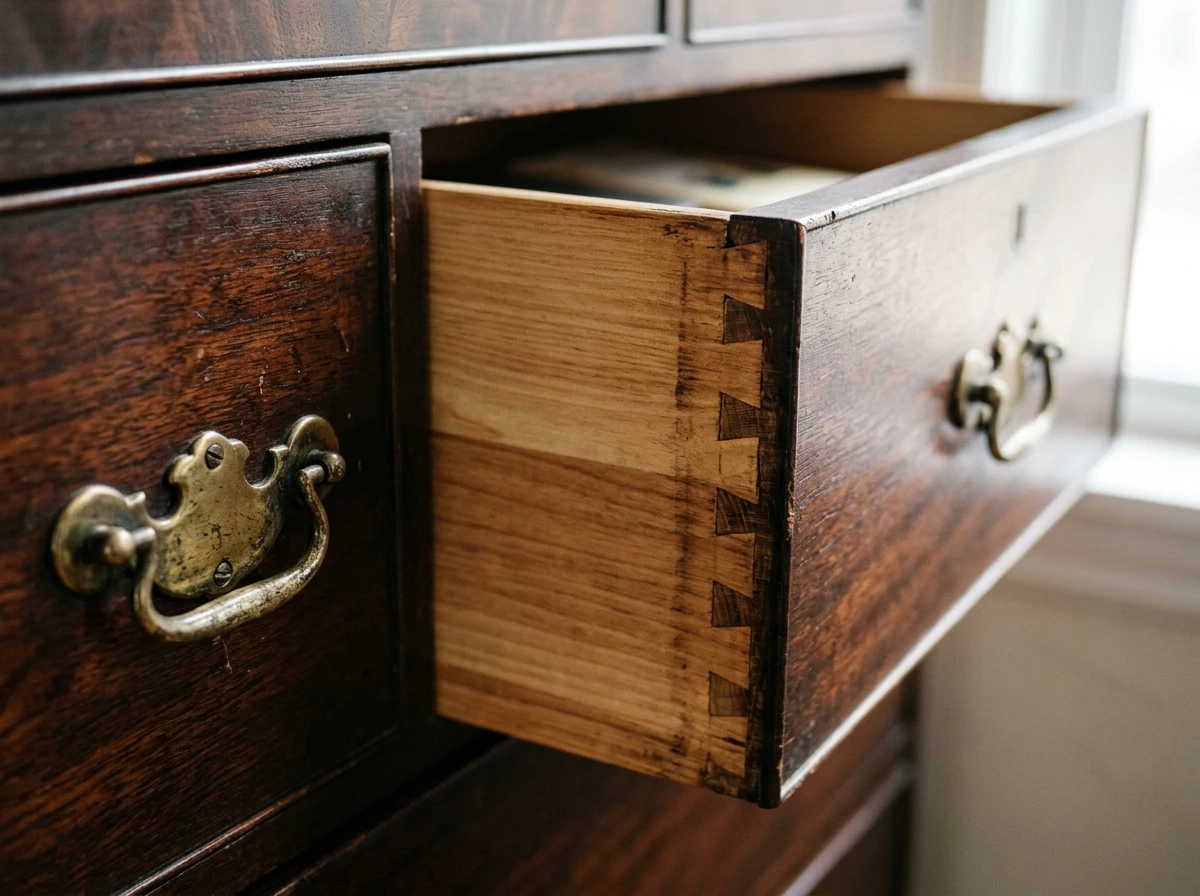
A real claw foot dresser brings a kind of gravity to a room that flat-panel modern furniture simply cannot fake, largely because the joinery and proportions were built for a different century of living. Check the drawer construction for dovetail joints rather than staples or glue, since that’s the fastest way to confirm you’re looking at genuine antique bedroom furniture rather than a “vintage-inspired” reproduction. Mahogany and walnut both darken beautifully with age and wax, developing the kind of patina finish furniture that new pieces simply can’t shortcut. I steer clients away from stripping these down to bare wood; the existing finish is usually worth more than a fresh one.
9. Brass Candlestick Holders Doing the Work of a Nightlight
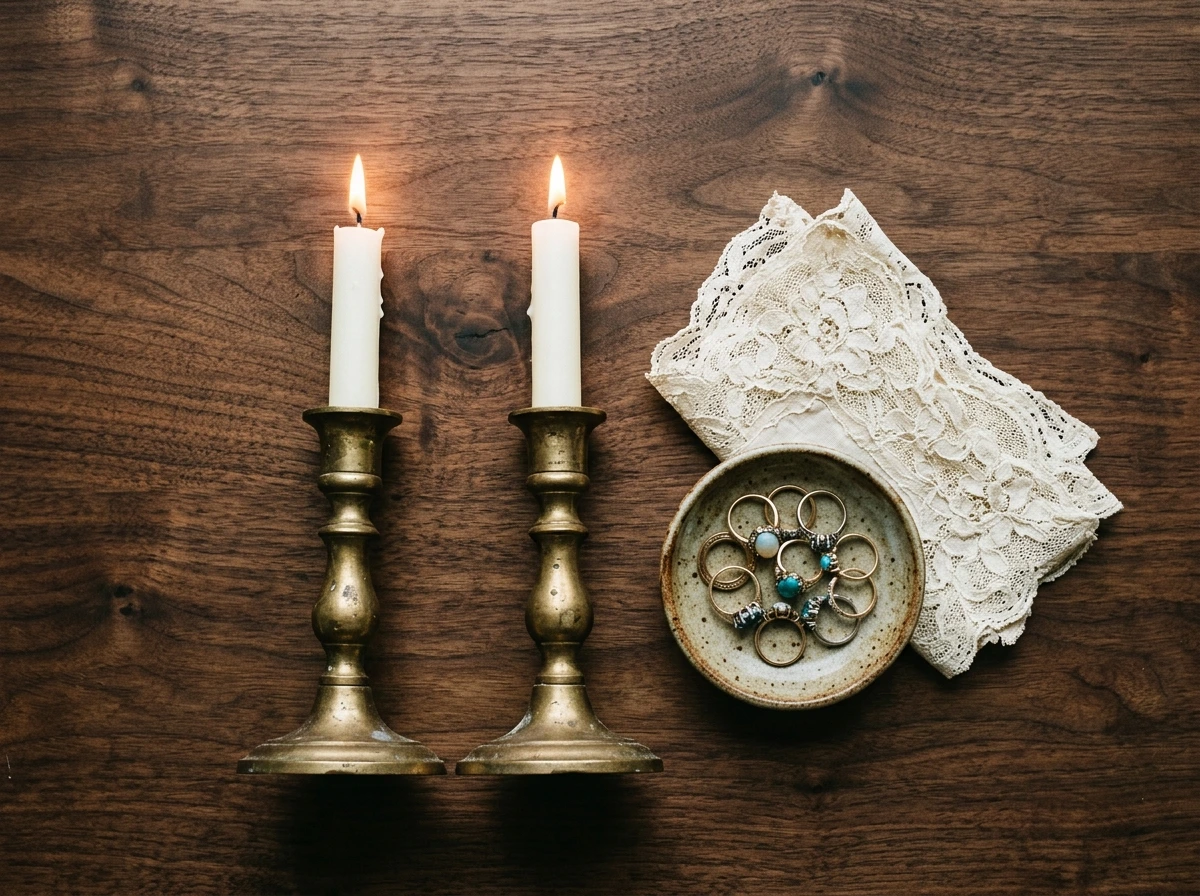
A pair of brass candlestick holders on the vanity or dresser does more atmospheric work than most people expect from an object this small. Choose unlacquered brass so it tarnishes naturally over time rather than staying artificially bright, and cluster them at uneven heights instead of matching pairs lined up symmetrically. Real beeswax or taper candles cast warmer light than any bulb, which matters enormously in a room built around shadow. This is one of the cheapest entries on the whole list, and it’s the one I recommend first to anyone testing whether they actually like this look before committing further.
10. A Dark, Patterned Wallpaper Behind the Vanity Alone
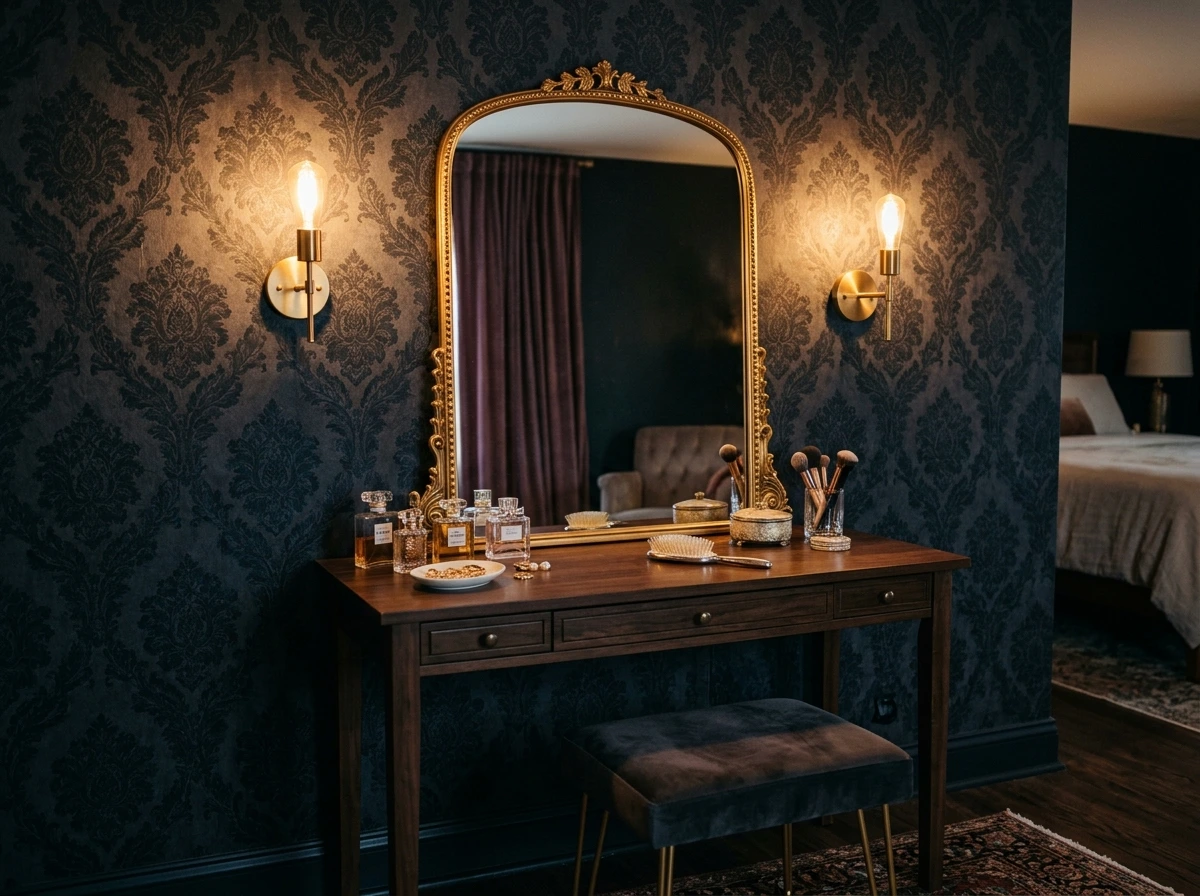
You don’t need to wallpaper the whole room to get the effect; one wall behind the vanity in a dark, patterned paper does the job while keeping the rest of the room easier to live in. Damask, botanical, or a subtle fleur-de-lis print in charcoal or deep burgundy reads as old world bedroom aesthetic without overwhelming a smaller footprint. Matte or lightly textured paper photographs and lives better under candlelight than anything with a metallic sheen. A single accent wall like this is also the easiest thing to change your mind about later, which matters more than people admit when committing to a dark academia bedroom for the first time.
💰 Estate Sale Budget Map
- Brass candlesticks: $8–$25 a pair secondhand, $40–$70 new unlacquered
- Claw foot dresser: $150–$450 at estate sales, $900+ retail for comparable joinery
- Patterned wallpaper (one accent wall): $60–$150 for enough rolls
- Gilt mirror, small to medium: $40–$120 secondhand, $200+ new
11. Wall Sconces That Replace the Overhead Light Entirely
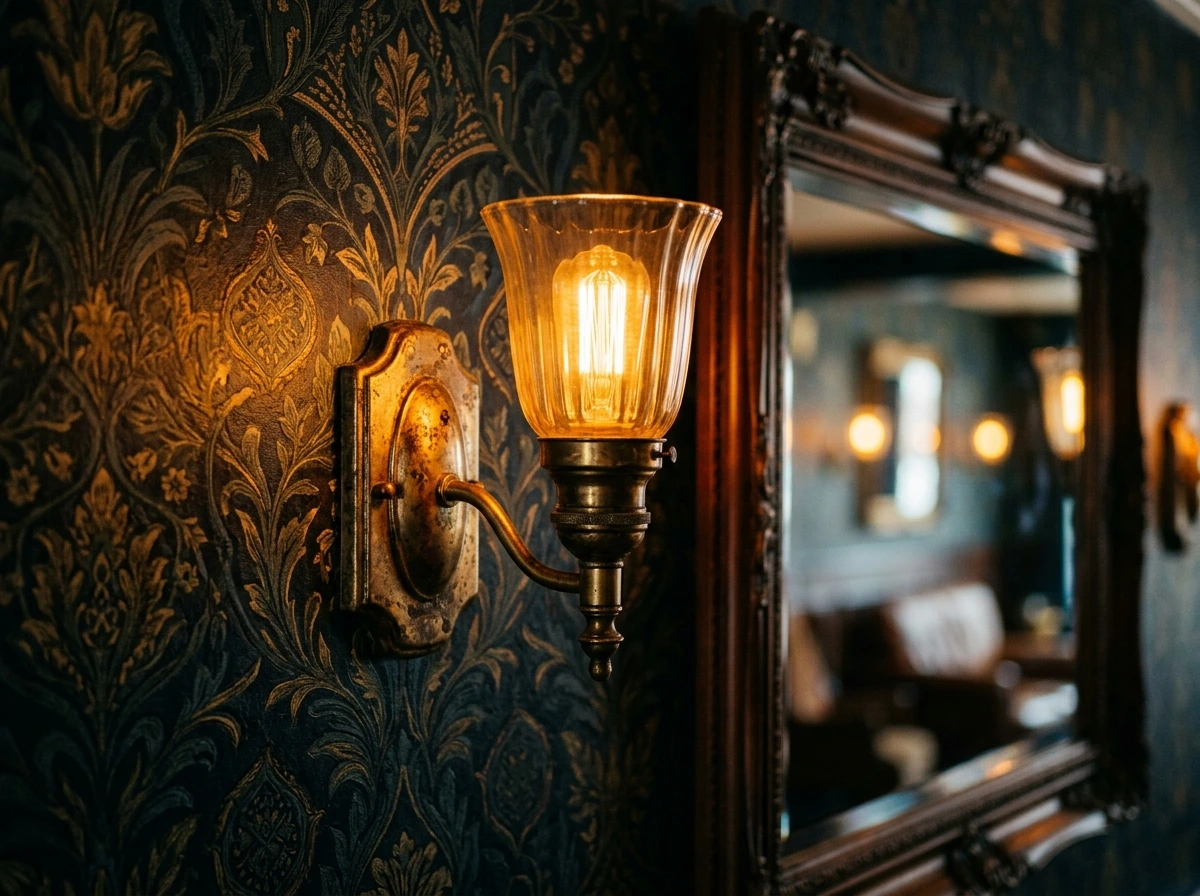
Flip the vanity’s overhead light off permanently and let a pair of candle-style brass sconces do the work instead, mounted at roughly eye level on either side of the mirror. This kind of low, layered ambient light is one of the five non-negotiables for a reason; it changes how every other object in the room reads after dark. Look for sconces with an exposed bulb or amber glass shade rather than a frosted cover, since visible warm light is part of the effect. Dimmable warm-white bulbs, never daylight-toned, keep this from tipping into a lit museum case.
12. A Vanity Stool Upholstered in Worn Velvet
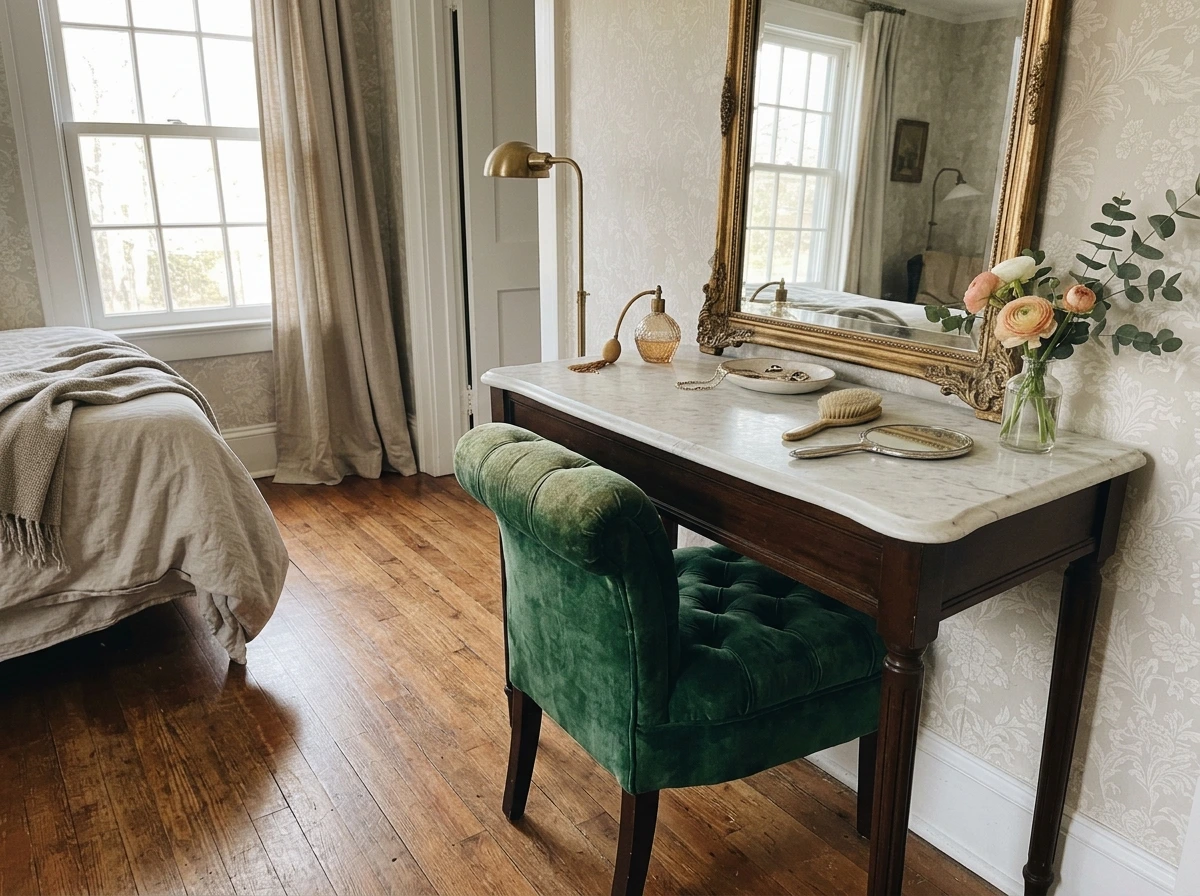
A small tufted stool in a deep velvet, ideally one with a bit of visible wear on the seams, finishes the vanity corner without adding bulk. Look for turned wood legs rather than straight modern ones, since the curve reads as older even on a newly upholstered piece. This is also a good spot to work in a faded jewel tone that doesn’t quite match the drapery, because a little tonal mismatch is what keeps a moody vintage decor scheme from feeling like a matched showroom set. It’s a small piece, but it’s the kind of detail that photographs beautifully in a corner shot.
Reading Wing
13. Stepping Into the Reading Wing With a Cracked Leather Armchair
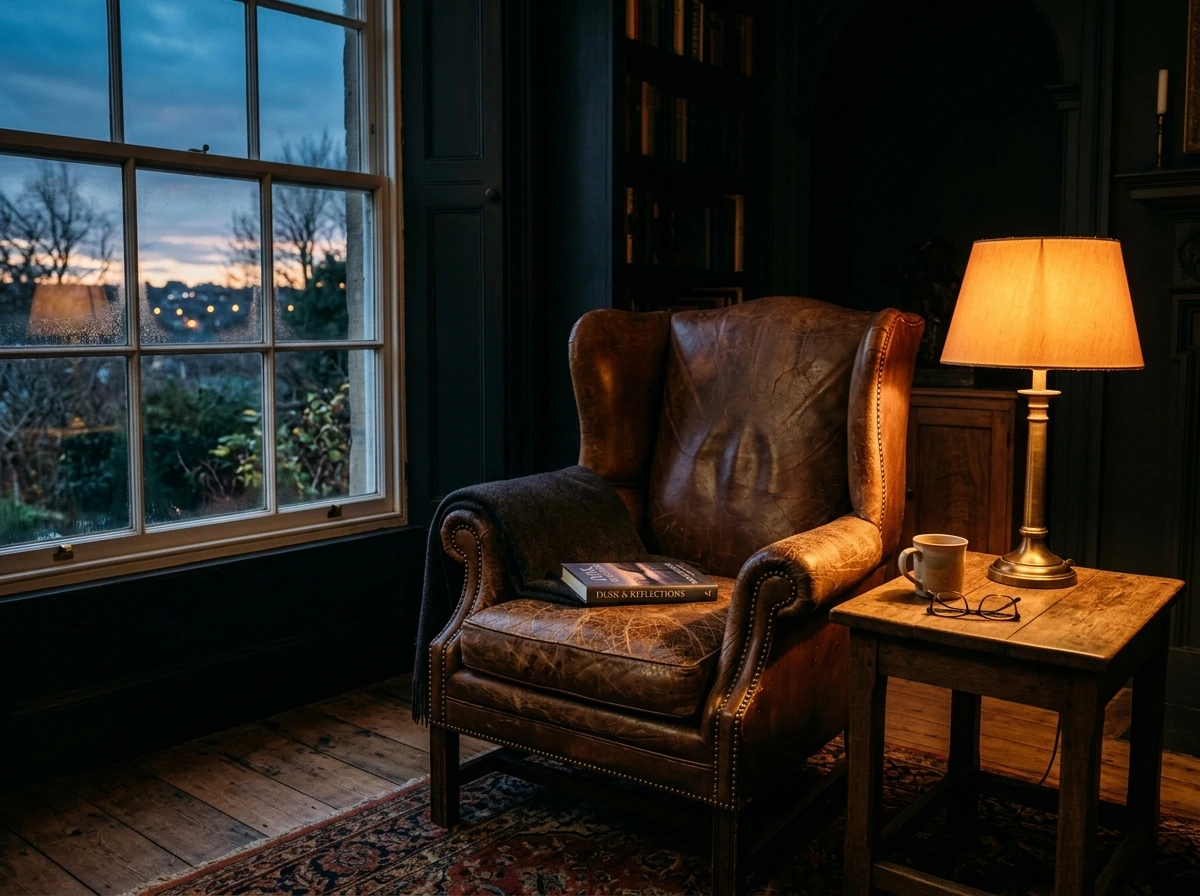
A worn leather wingback chair, ideally with real cracking along the arms, gives a vintage moody bedroom a lived-in corner that isn’t the bed itself. Position it near the window rather than against a wall so it catches natural light during the day and lamp light at night, which lets the same chair serve two very different moods. Oxblood or dark chocolate leather ages better visually than black, since scuffs and sun-fading actually add character instead of just showing dirt. This chair is usually the first thing guests sit in, which tells you something about how much a single dark academia bedroom piece can anchor a room’s whole feel.
The Restorer’s Note: I’ve watched clients buy a “distressed” leather chair from a big box store and end up with cracking that looks uniform and sprayed on, which reads fake within a week. Real cracked leather has irregular stress points around the arms and seat edge, never a symmetrical pattern across the whole surface.
14. A Bookshelf Built for Dark Academia Bedroom Corners
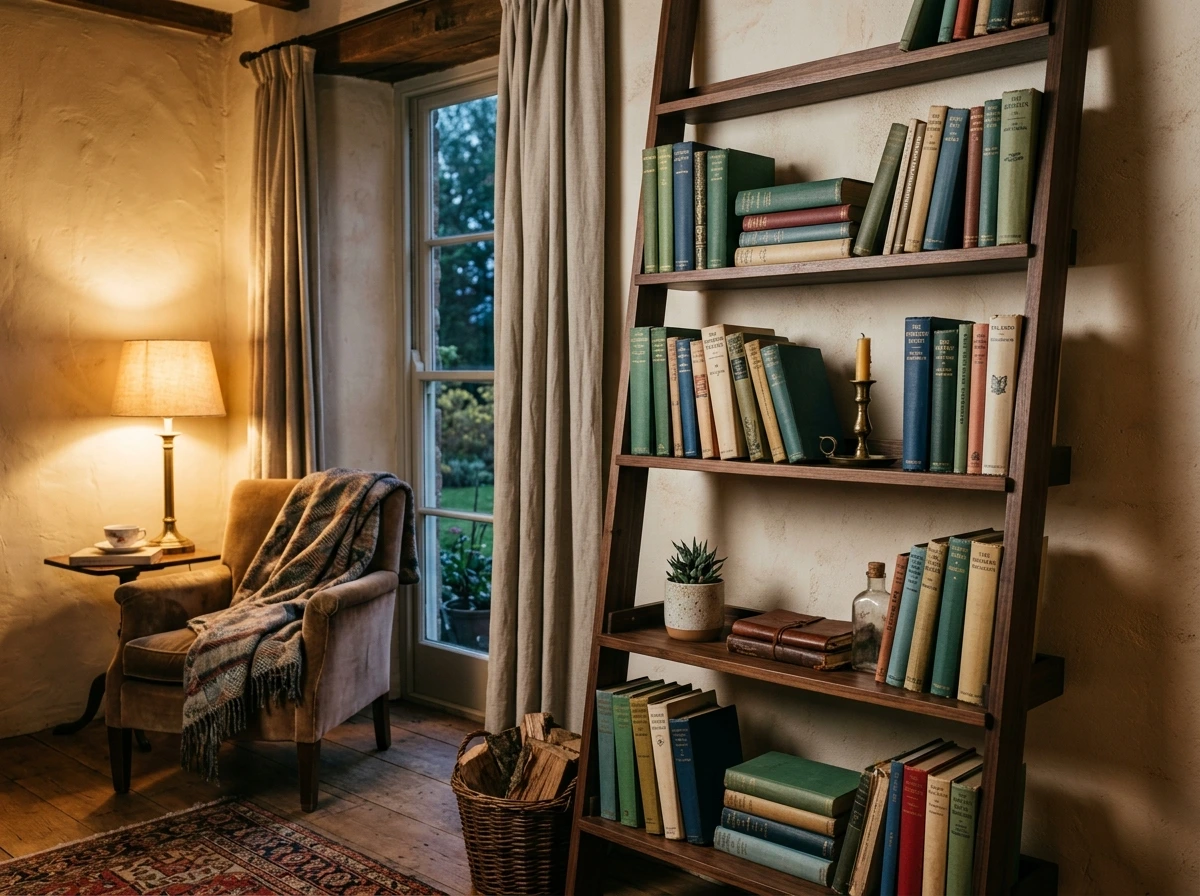
A tall, narrow bookshelf in dark walnut or ebonized oak works harder in a small reading corner than a wide, low one ever could, both visually and for storage. Fill it unevenly, stacking some books flat and others upright, and leave gaps for small objects like a candlestick or a framed print rather than packing every shelf edge to edge. This kind of intentional imperfection is exactly what separates a real dark academia bedroom from a staged one. Old cloth-bound books with worn spines do more visual work here than anything with a glossy modern jacket.
✷ Source Notes
- Library sales and used bookstores sell cloth-bound hardcovers by the pound
- Thrift stores often have orphaned bookshelves cheaper than the books to fill them
- A furniture wax on unfinished wood shelving darkens it without a full refinish
- Estate sale decor ideas boards on Pinterest are a fast way to scout shelf styling before buying
15. A Persian-Style Rug That Muffles the Whole Room
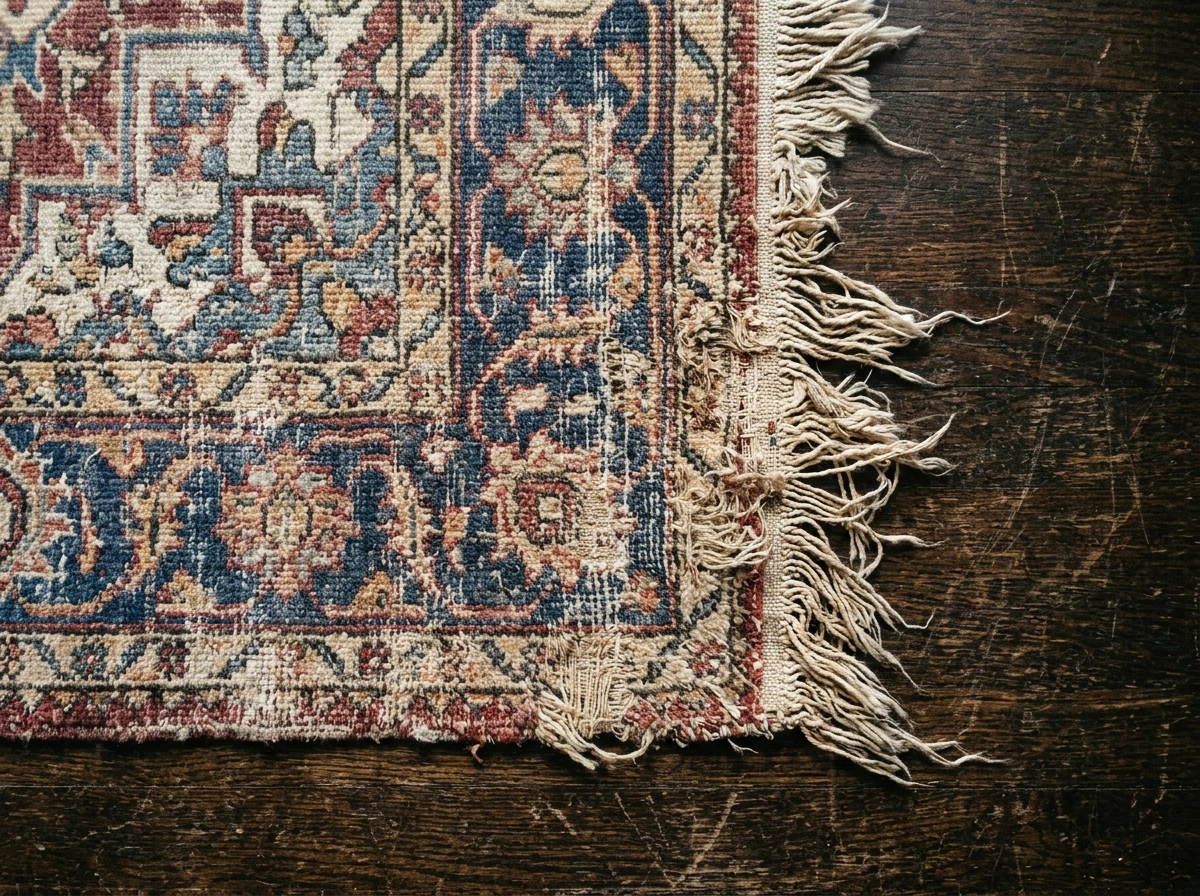
A worn Persian-style rug underfoot does more to soften a dark room than almost anything on the walls, because it absorbs sound and light in a way hard flooring never will. Choose one with a distressed, slightly faded pattern rather than a crisp new weave, since the muted colors read as older and blend better with dark walls. Layer it slightly under the bed frame rather than floating it in the center of the room, which grounds the whole layout the way real historic bedrooms were furnished. This is the heavy textile from the toolkit list doing its full job at floor level.
16. A Weathered Travel Trunk Doubling as a Side Table
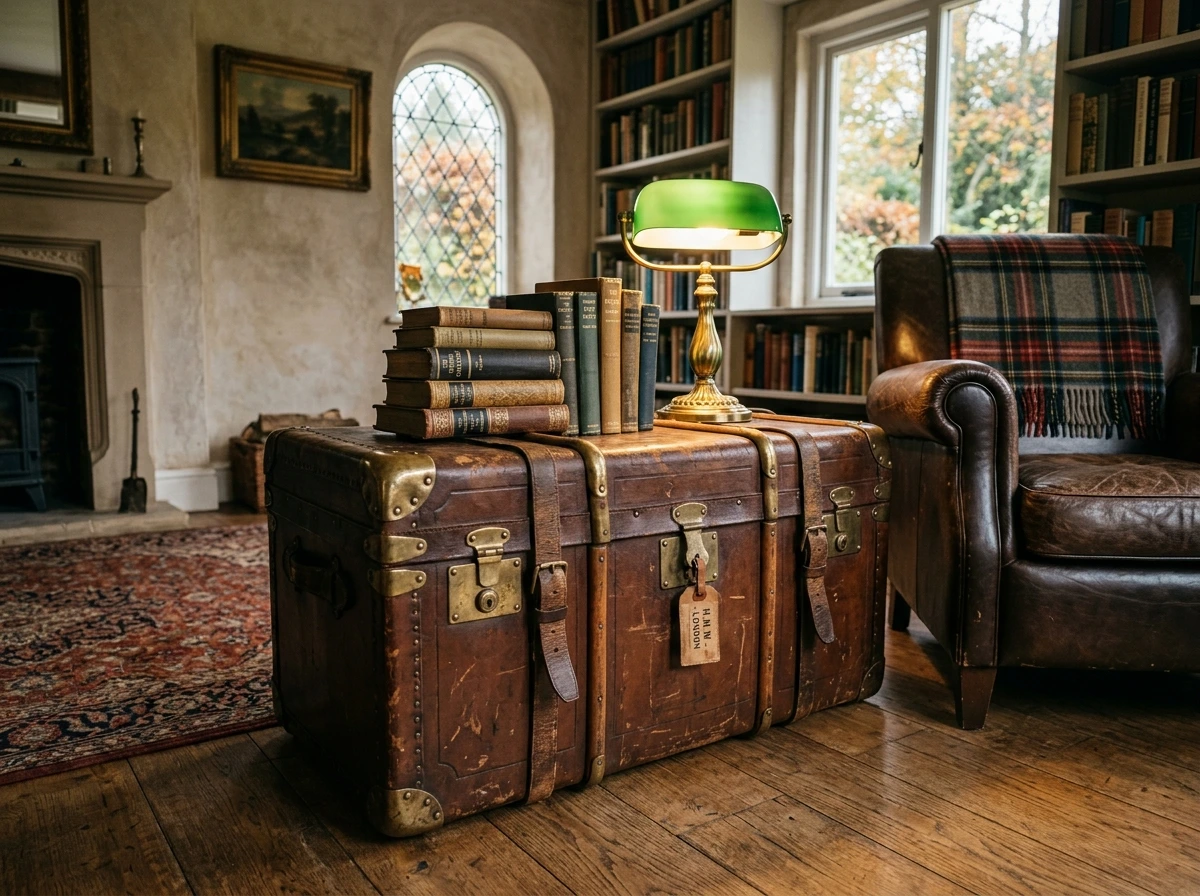
An old steamer trunk beside the armchair works as a side table, extra storage, and a genuine antique anchor piece all at once. Look for one with its original leather straps and metal corner guards still intact, even if they’re scuffed, since replacement hardware rarely matches the original patina. Set a single lamp and a small stack of books on top rather than styling it too precisely, because trunks read best when they still look like they’ve traveled. This is one of the more versatile pieces on this list, equally at home as a bench, a table, or extra blanket storage.
📜 Castle Vocabulary
- Tester bed – a canopy bed frame with a solid or fabric-covered top, the ancestor of the modern four-poster
- Wainscoting – wood paneling on the lower portion of a wall, historically used to insulate against cold stone
- Patina – the surface change a material develops with age and handling, prized over a fresh finish
- Foxing – the brownish spotting that develops on old mirror glass or paper over time
17. A Single Table Lamp With a Fringed or Fabric Shade
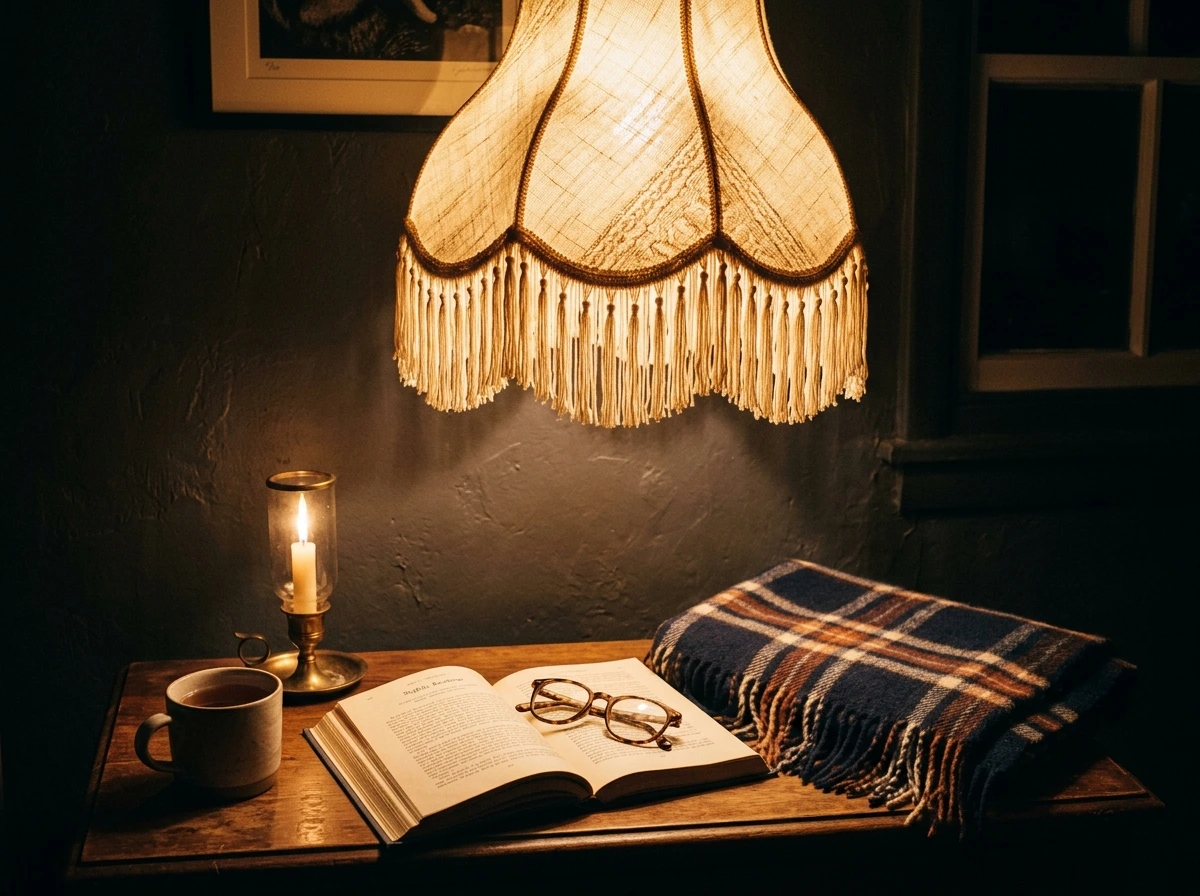
Skip the clean glass or metal lamp shade and choose a fringed or heavy fabric one instead, since it diffuses light the way old parlor lamps did before electric fixtures were standardized. A warm bulb behind a dark fabric shade throws light downward rather than out into the room, which is exactly the low, contained glow a reading corner needs. Brass or dark wood bases pair better here than anything chrome or brushed nickel. This is a small purchase that does an outsized amount of atmospheric work for its price point.
18. A Tapestry Wall Hanging Behind the Reading Chair
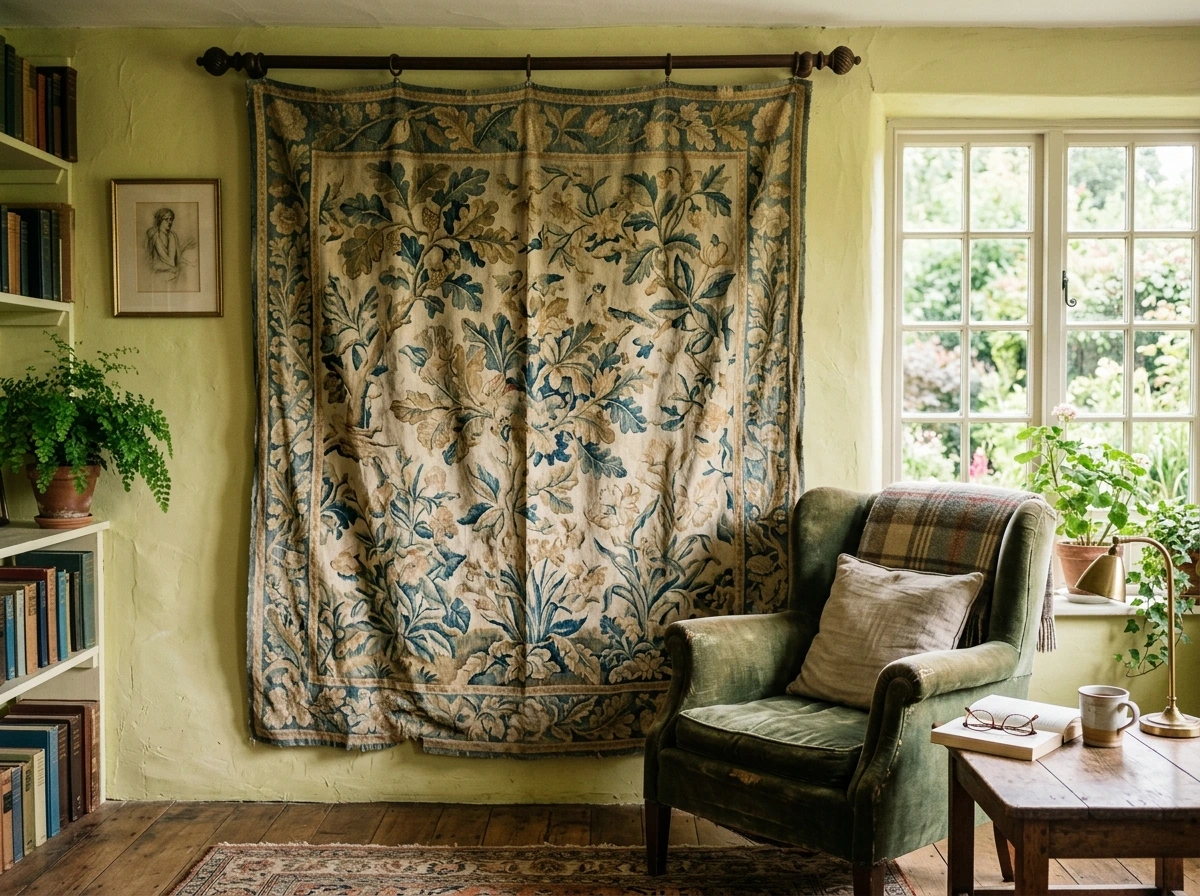
A large tapestry wall hanging behind the armchair fills wall space without the commitment of wallpaper or the cost of framed art in that quantity. Choose a botanical, medieval, or heraldic pattern in muted, faded tones rather than bright reproduction colors, since faded dye reads as older even on a newly woven piece. Hang it slightly loose rather than perfectly taut on a rod, letting a little natural drape show at the bottom edge. It’s an easy way to fold medieval-inspired decor into a corner that would otherwise just be bare wall.
Threshold & Finishing Touches
19. Vintage Hardware and Skeleton Key Details Throughout
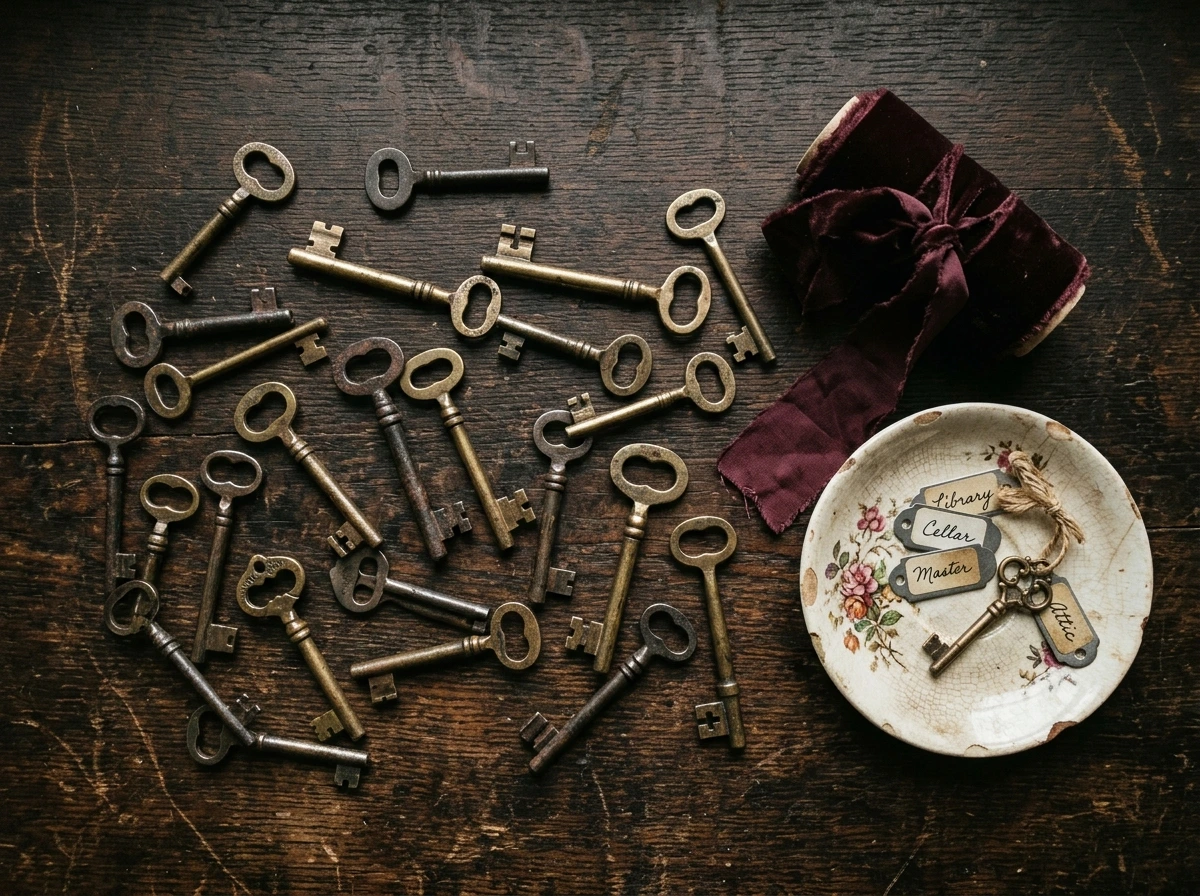
Small hardware details finish a room in a way large furniture can’t, so swap out modern cabinet pulls and doorknobs for aged brass or iron versions wherever you can. A decorative skeleton key hung on a ribbon from the dresser mirror, or a small bowl of them on the nightstand, adds texture without taking up real space. These are the cheapest items on this entire list and often the ones guests notice last, which is exactly why they matter; a room built entirely from big statement pieces without small human details can start to feel like a stage set.
20. Heavy Curtain Rods in Aged Iron or Bronze
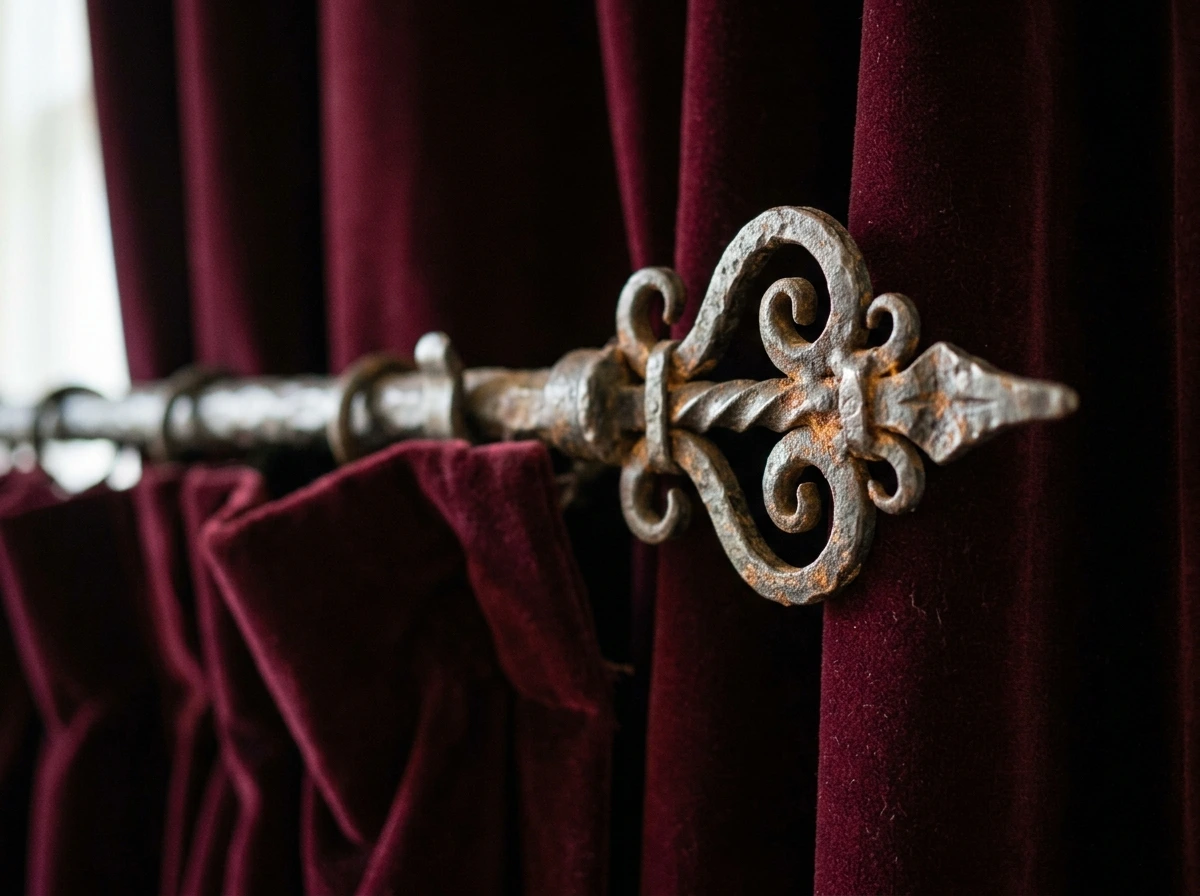
Swap any thin, modern curtain rod for a heavier one in aged iron or bronze with a decorative finial on each end, since the rod itself is visible real estate in a dark room where light is limited. Mount it a few inches above the window frame and wider than the window itself so the drapery panels can fully clear the glass during the day. This small structural change does more for old fashioned bedroom decor than people expect, because a flimsy rod undercuts even expensive drapery. It’s an easy swap most people skip simply because they don’t think about hardware until the panels are already hung.
✷ Source Notes
- Architectural salvage shops often sell rods separately from full window sets
- Iron finials can be bought individually and added to a plain rod for less money
- Hardware stores carry “oil-rubbed bronze” as a reliable modern stand-in for aged iron
- Estate sale decor ideas searches often turn up full curtain hardware sets cheap
21. A Candelabra-Style Chandelier Instead of a Modern Fixture
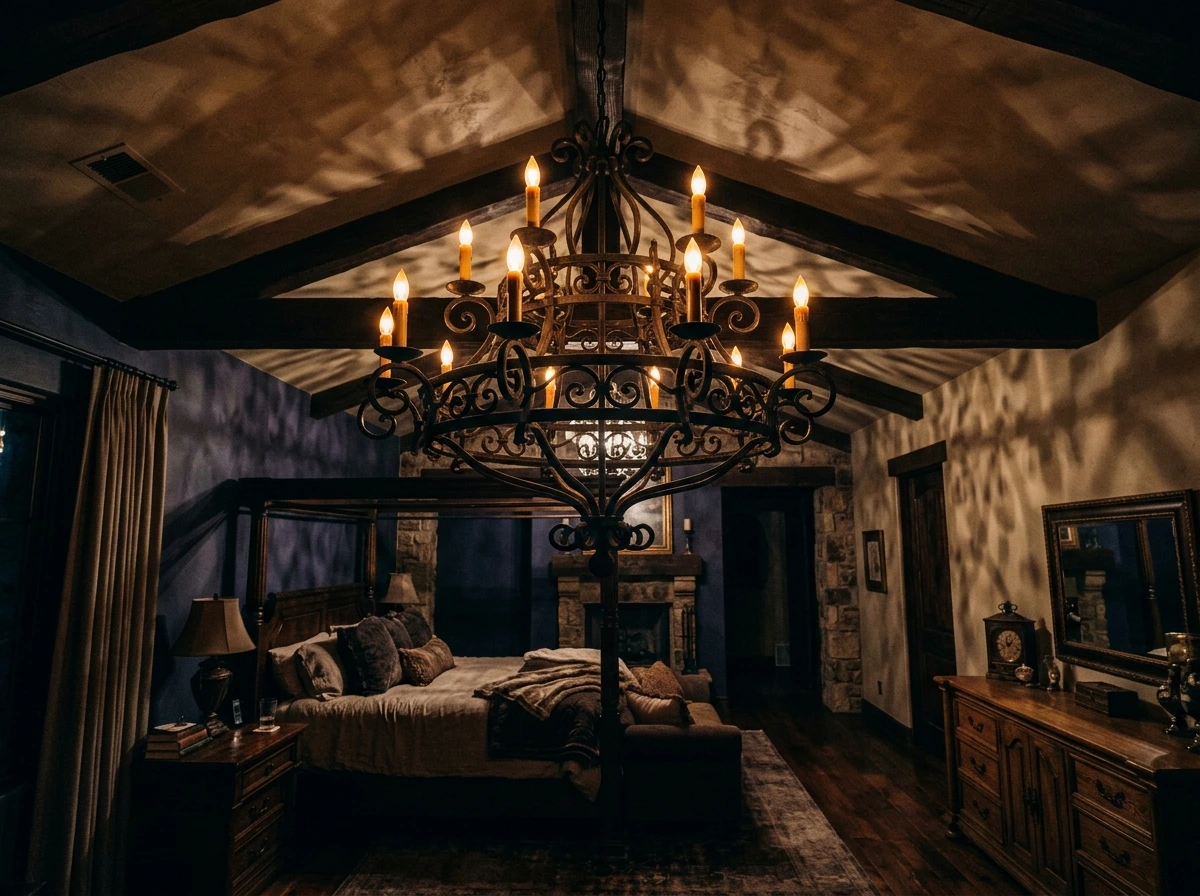
If your ceiling allows it, replacing a standard fixture with a wrought iron candelabra-style chandelier is one of the single biggest mood shifts you can make in a bedroom this size. Choose one with faux candle bulbs on a warm, low-wattage setting rather than bright LED replacements, and put the whole fixture on a dimmer if at all possible. The irregular, hand-forged arms of a real antique piece throw shadow in a way a symmetrical modern fixture never will. This is a bigger investment than most items on this list, but it’s the kind of castle inspired decor centerpiece that makes every other choice in the room look intentional by comparison.
🗝️ Patina & Aging Guide: Faking It Convincingly New brass and iron pieces read too shiny for this aesthetic straight out of the box, but you can age them at home. A mix of vinegar, salt, and a little hydrogen peroxide misted onto bare brass and left to dry will start a natural-looking oxidation within a day. For iron, a light coat of matte black spray paint followed by a dry-brushed layer of rust-toned craft paint mimics decades of wear in an afternoon. Always test on the underside first, since patina speed varies by metal composition and finish.
22. A Stone-Look Accent Wall for a True Castle Feel
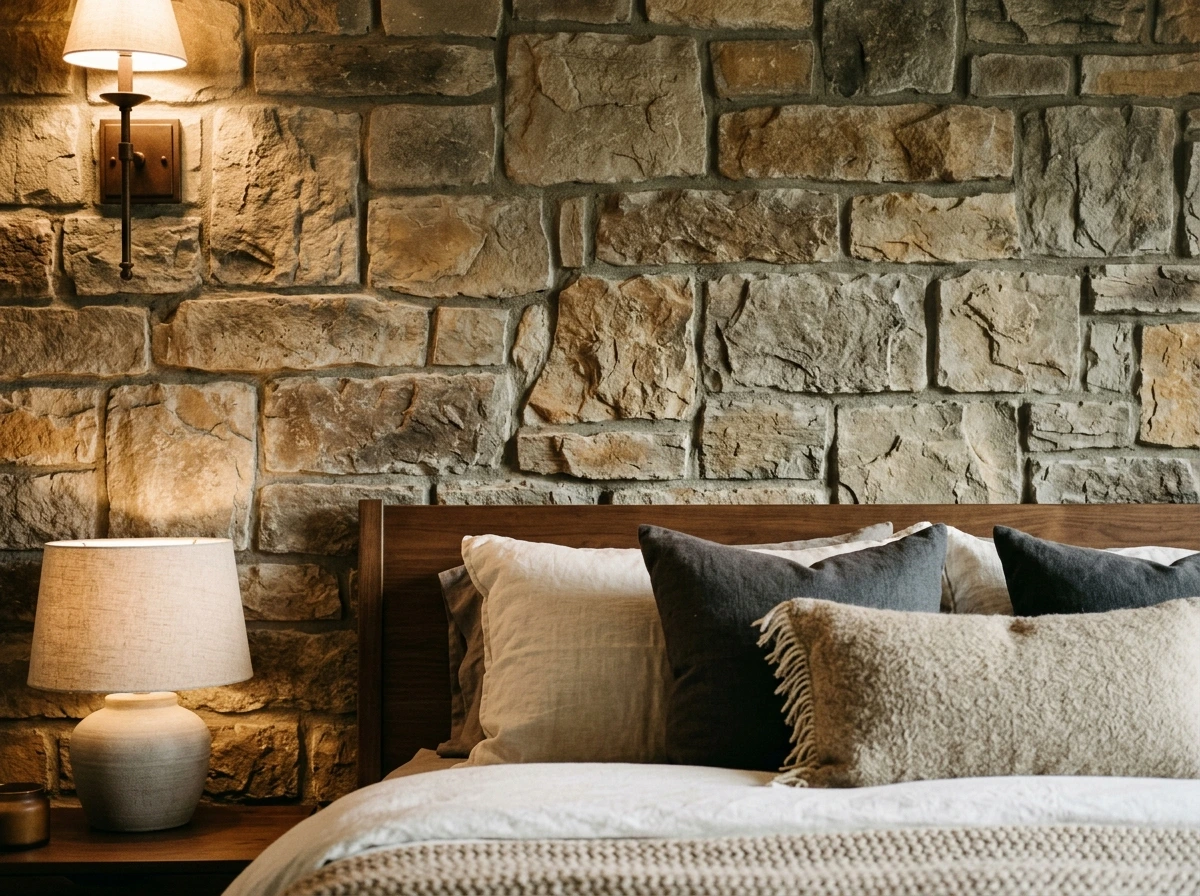
For readers chasing a fully immersive dark castle bedroom, a faux stone panel accent wall behind the bed gets closer to actual castle architecture than paint or wallpaper ever will. Lightweight polyurethane panels install over drywall without structural work and come in irregular, hand-carved-looking blocks rather than a repeating stamped pattern. Keep this treatment to a single wall so the room doesn’t tip from atmospheric into theatrical, since stone on every surface starts to feel like a set piece rather than a bedroom. It’s no surprise this same palette and texture shows up constantly in vintage wedding themes too, since both draw from the same old-world well of stone, candlelight, and dark greenery.
23. A Leather Trunk Bench at the Foot of the Bed
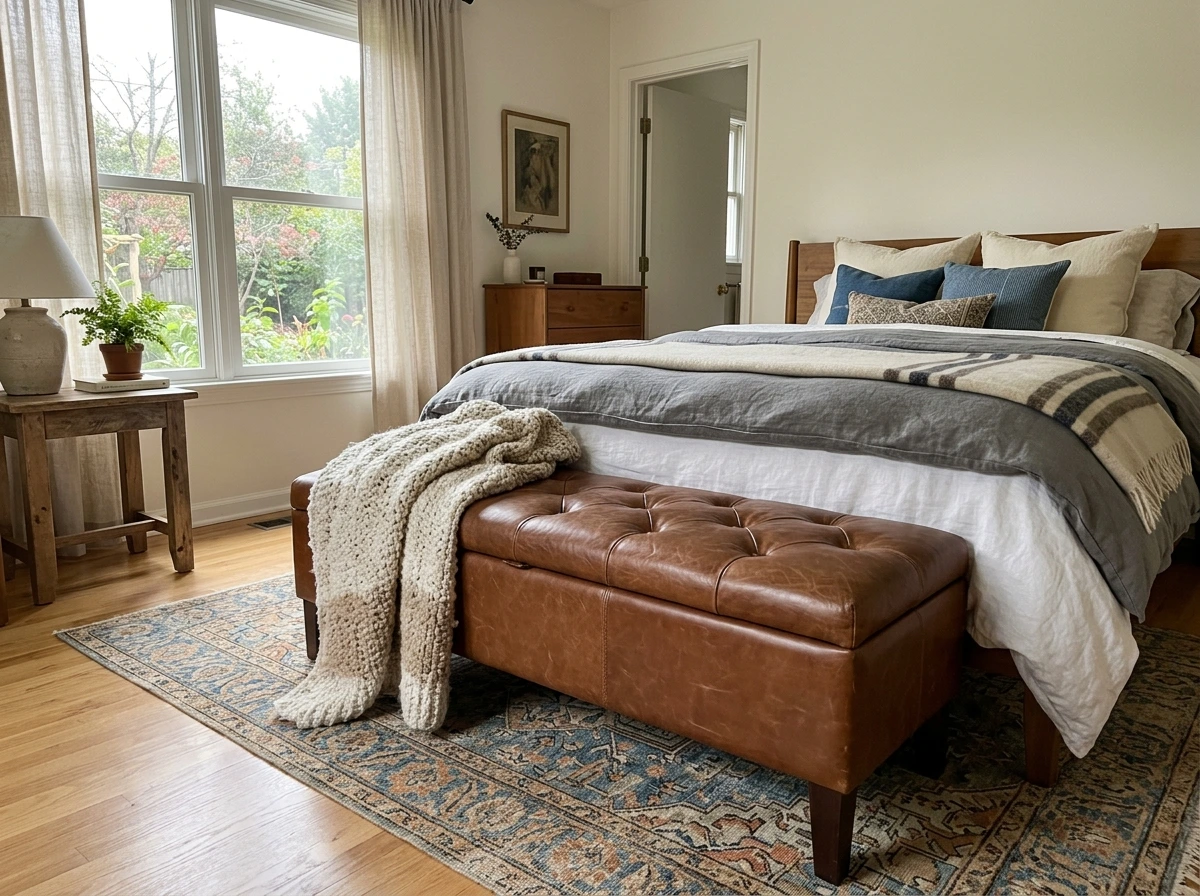
A low, leather-wrapped bench at the foot of the bed gives the room a functional landing spot for blankets or clothes while echoing the same worn-leather language as the reading chair across the room. Choose a piece with visible stitching and slightly uneven leather tone rather than a uniform factory dye job, since that variation is what reads as genuinely aged. This is also a smart spot to fold in that heavy textile requirement a second time, draping a wool throw over one end. A bench like this ties the sleeping and reading zones together visually without adding another large piece of furniture.
The Restorer’s Note: The most common mistake I see at the very end of a project like this is a client adding one too many “theme” pieces, like a plastic candelabra or a costume-store crown, right after the real furniture is in. Stop before you get there. A vintage moody bedroom stays convincing because every object could plausibly have a real history, and that illusion breaks the second something obviously didn’t.
24. Closing the Room With Layered Throws and a Final Textile Pass
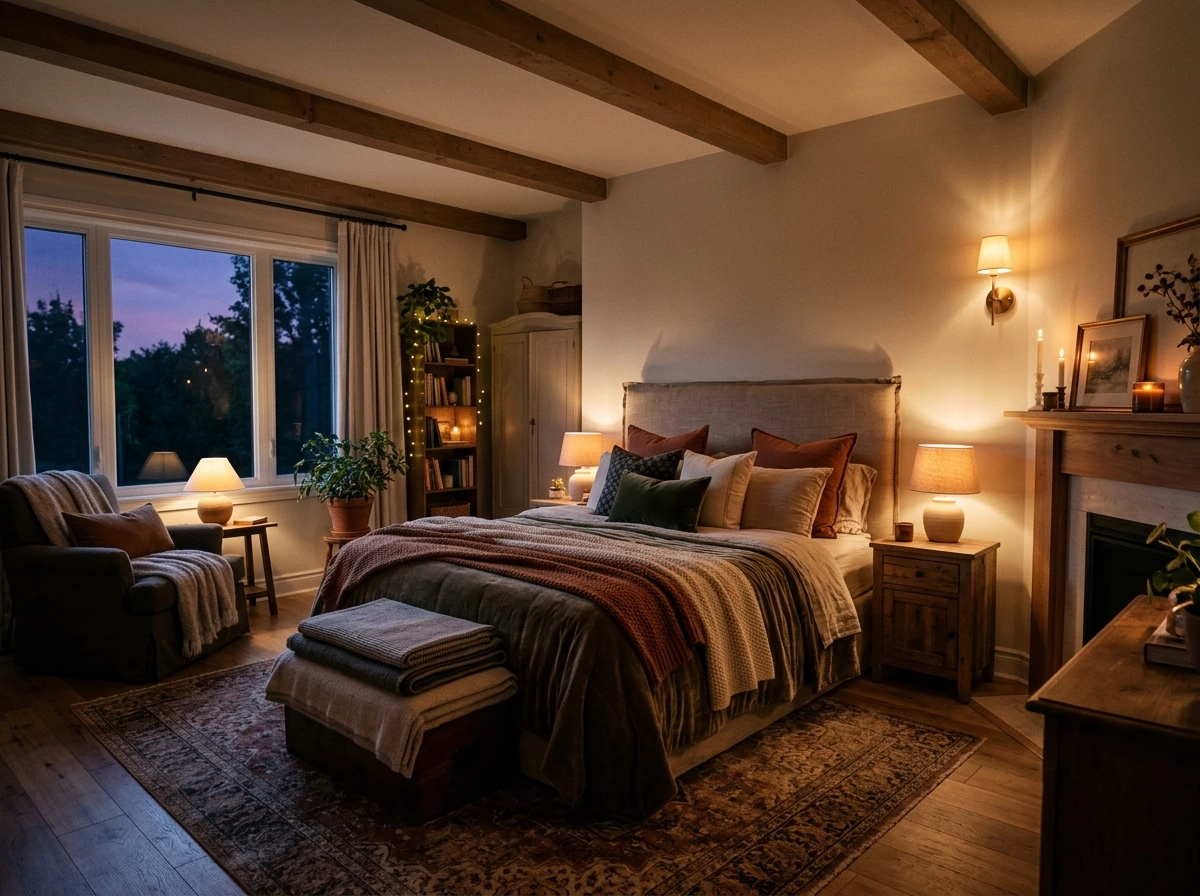
The very last step in any vintage moody bedroom is a second pass with textiles, adding one more throw, one more small rug, or a floor cushion in a fabric that doesn’t perfectly match anything else in the room. This is where moody vintage decor either comes together or starts to feel like separate purchases in the same space, so stand in the doorway and look for one spot that still feels too bare or too new. A worn wool or mohair throw folded loosely, rather than draped with precision, almost always solves it. I do this walk-through on every project I finish, and there’s always one more textile the room is asking for.
The Restorer’s Note: Give yourself permission to live with a room for a few weeks before declaring it finished. The best layering decisions I’ve made on client projects came from noticing, on a random Tuesday, exactly where the eye kept landing on something too plain.
Frequently Asked Questions
What makes a bedroom look vintage and moody?
A vintage moody bedroom comes down to a dark saturated base color, at least one genuine antique piece, warm metal accents, heavy textiles, and low layered lighting instead of a single overhead fixture. It’s the combination of all five that reads as intentional rather than any one item on its own. Skip even one, and the room tends to feel either too sparse or too costume-like.
How do you get a castle aesthetic in a modern bedroom?
Start with architectural gestures rather than accessories, like a stone-look accent wall, a wrought iron bed frame, or a candelabra-style chandelier, since these read as structural rather than decorative. Layer in real antique bedroom furniture wherever you can source it secondhand. The goal is a dark castle bedroom that feels built that way, not dressed that way after the fact.
Is dark academia decor still trending?
Yes, and it’s proven more durable than most bedroom trends because it’s rooted in real design history rather than a passing color palette. Search interest in dark academia bedroom styling has stayed consistently strong across seasons rather than spiking and disappearing. It’s aged into more of a genre than a fad at this point.
Where do you find real vintage bedroom furniture?
Estate sales are consistently the best source, followed by architectural salvage yards, local auction houses, and secondhand marketplace listings searched by material rather than style name. Avoid big-box “vintage-inspired” lines if you want real patina finish furniture, since factory distressing almost always looks too uniform up close. Give yourself time; the best pieces are rarely the first ones you find.
How do you mix antique pieces with modern furniture?
Anchor the room with one or two genuine antique statement pieces, like a bed frame or dresser, and let everything else stay simpler and more neutral so it doesn’t compete. A modern mattress or nightstand disappears easily under the right vintage bedroom aesthetic styling. The mismatch reads intentional as long as the antique piece is clearly the star.
Can you fake an aged patina on new furniture?
Yes, with the right technique for the material. Brass responds well to a vinegar and salt mixture left to oxidize, while iron ages convincingly with a matte black base coat and a dry-brushed rust layer on top. Always test in a hidden spot first, since results vary by finish.
Does a dark vintage bedroom feel too small?
Not if you manage light correctly. Layered warm lighting, a lighter ceiling treatment if the walls are very dark, and at least one reflective surface like a gilt mirror all keep a small room from feeling closed in. The mistake is relying on one dim overhead bulb instead of several low sources.
What colors work best for a gothic bedroom?
Bottle green, oxblood, aubergine, and near-black charcoal are the most reliable choices for gothic bedroom ideas, especially in a matte or eggshell finish. Pair any of these with warm brass or bronze rather than cool-toned metal for the truest old world bedroom aesthetic. Avoid true black on every surface, since it tends to flatten the room rather than deepen it.
Is this aesthetic affordable on a budget?
Genuinely, yes, since most of the atmosphere comes from paint, lighting, and secondhand furniture rather than expensive new pieces. Estate sale decor ideas can furnish an entire room for a fraction of retail cost if you’re patient about sourcing. The candlesticks and hardware swaps alone can shift a room’s whole feel for under fifty dollars.
How does this aesthetic show up outside the bedroom?
It’s the same instinct that draws someone toward deep hair color, a craving for something with more depth and history to it than a flat, bright default. That pull toward richness tends to show up across a person’s whole style, not just their walls. If this palette speaks to you at home, there’s a good chance moody trench styling already lives in your closet too.
The Keeper’s Farewell
A vintage moody bedroom, done honestly, isn’t a costume you put on for a season. It’s a slower argument for restraint, one dark wall and one real antique piece at a time, built by people willing to wait for the right estate sale find instead of the fastest checkout. I’ve watched enough rooms come together over fifteen years to know the ones that last are the ones where nothing was trying too hard, where the wrought iron bed frame and the tarnished brass candlesticks were allowed to just be old rather than performing “old” for a photo.
If you take nothing else from this field guide, take the order of operations: color first, one real anchor piece second, then metal, textile, and light layered in slowly after that. That’s the whole method, and it works in a Garden District cottage or a brand-new build a thousand miles from here. Here at The Muse Vale, we’d rather send you toward a room you’ll still love in ten years than one that peaks on moving-in day, and if the same instinct carries you toward gothic costume ideas come October, that’s a good sign this palette runs deeper than a trend for you.