
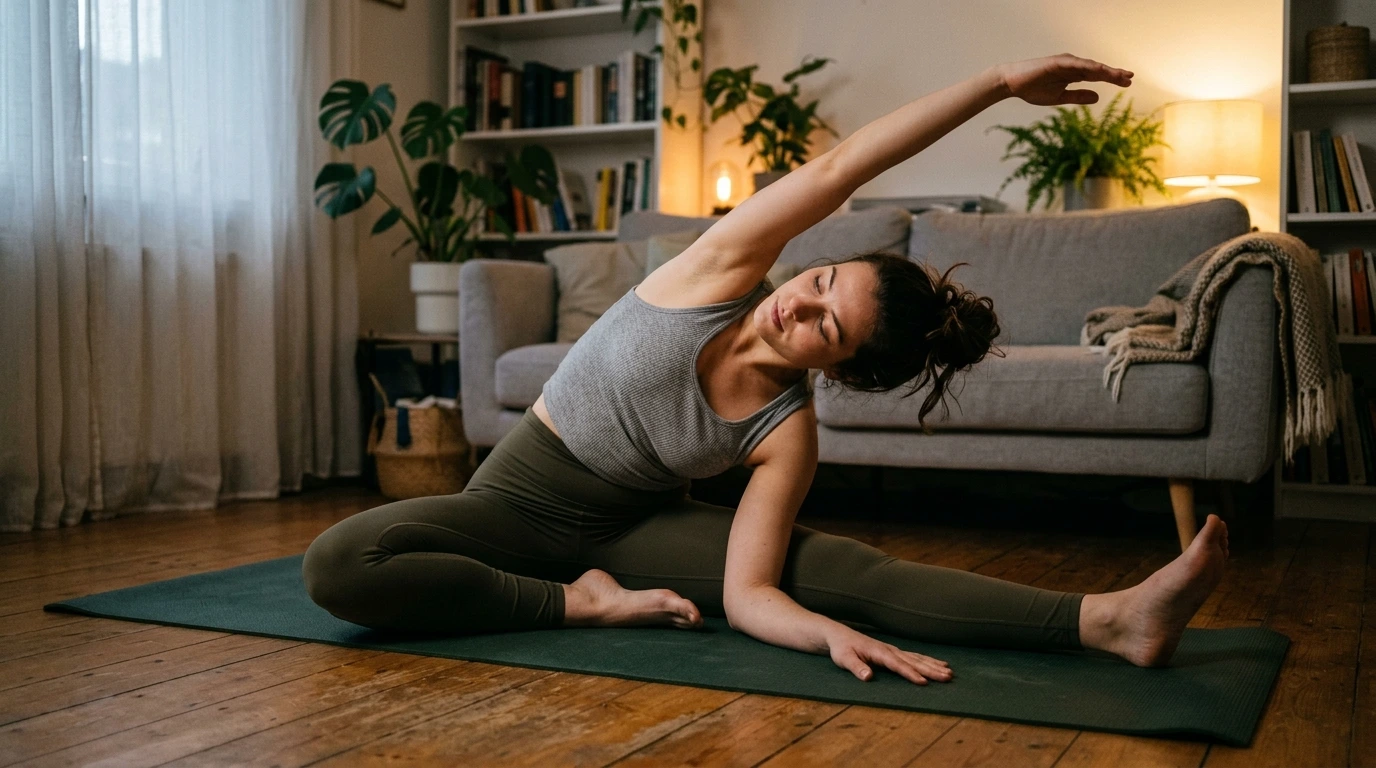
Take a second before you keep scrolling and notice how you actually feel right now, at the end of your day. Tight shoulders? A brain that’s still replaying your inbox? That’s the starting point for every client I work with, and it’s the starting point for building a real self care night routine instead of just copying whatever nine-step routine is trending this week. I spent four years as a labor and delivery nurse, which means I’ve watched a lot of nervous systems refuse to power down on command, and I’ve spent the years since helping people build evenings that actually let their bodies believe the day is over. This isn’t about buying more candles. It’s about picking the handful of habits that match how your specific nervous system unwinds, and building a nighttime self care routine you’ll still be doing in a month, not just tonight.
So before we go section by section, let’s figure out what your evenings are actually asking for.
Wind-Down Style Finder
Answer these the way you’d answer a friend, not the way you think you’re supposed to.
1. When you finally sit down at night, is your mind racing or is your body just heavy and tired? Racing mind → you lean Calming. Heavy, tired body → you lean Restorative.
2. Do you want your evening to feel like a treat, or do you want it over in ten minutes flat? A treat → you lean Cozy. Ten minutes flat → you lean Restorative.
3. Would you rather quiet everything down, or wrap yourself up in more comfort? Quiet everything down → you lean Calming. Wrap up in comfort → you lean Cozy.
Mostly Calming: Your wind down routine should center on nervous system regulation – dim light, quiet, breathwork, less input. Mostly Cozy: You’re a good candidate for a relaxing night routine built around texture, scent, and ritual objects you actually enjoy touching. Mostly Restorative: You need a short, efficient cozy night routine that does the job in fifteen minutes without becoming another task on your list.
Keep your result in mind. You don’t need all thirty-two ideas below – you need the ones that match your style.
I want to be upfront about something before we go further: not every trending ritual belongs in your nighttime self care routine, and some of what gets marketed as essential is honestly just noise. A twelve-step evening regimen isn’t more effective than a three-step one if you actually finish the three-step one every night. So as you read through each section, ask yourself the same question I ask clients: does this genuinely calm my body, or does it just look calming? That distinction matters more than any product on this list.
For the Overstimulated Brain: Screen and Stress Wind-Down
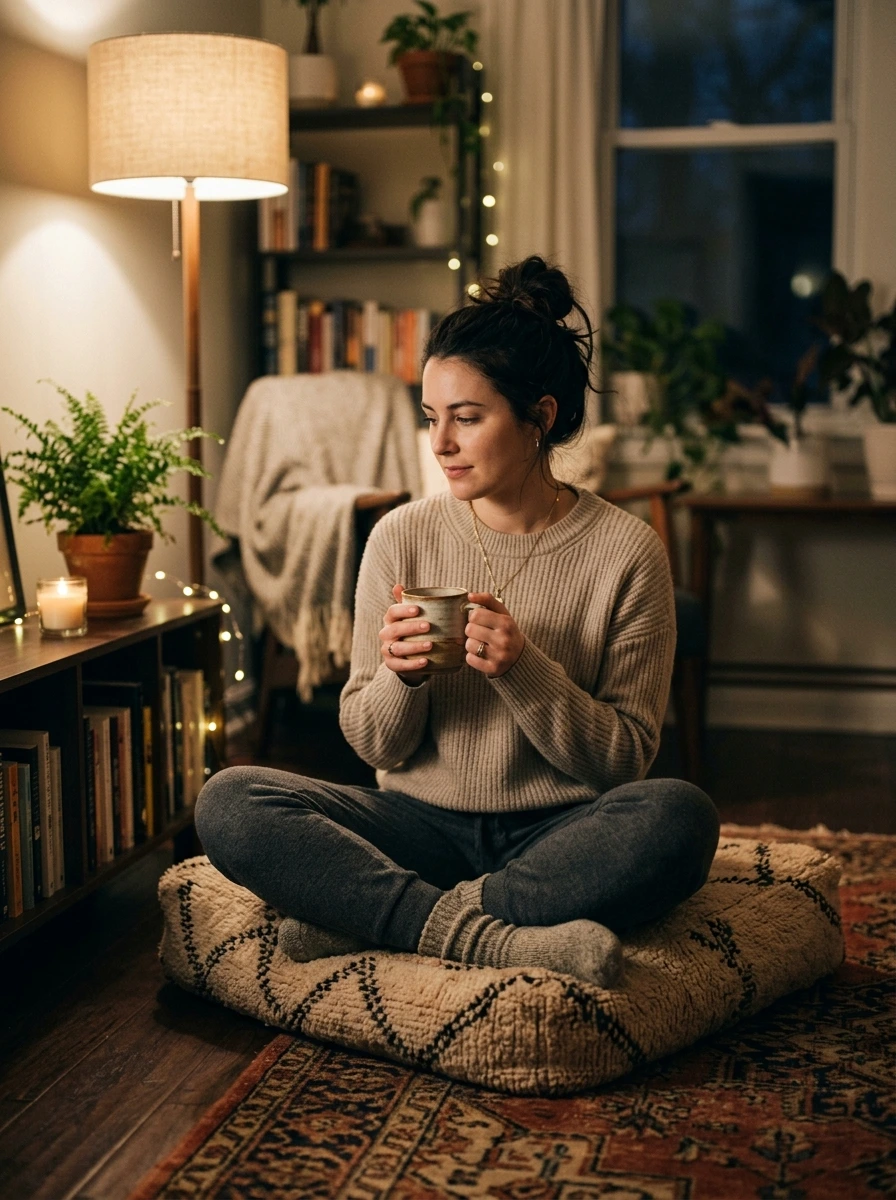
If your evenings feel like your brain never actually got the memo that work is over, this is your section. Blue light exposure from your phone and laptop keeps your brain producing stimulating signals long after you’ve closed the apps, which is a big part of why “just one more scroll” turns into forty minutes. A screen-free evening routine doesn’t have to be dramatic; it can be as simple as putting your phone in another room by 9pm and swapping your last hour of screen time for something with your hands instead, like folding laundry or doodling. This is one of the most reliable ways to start how to wind down after work, especially if your job keeps you staring at a screen until the moment you leave it. Notice how your jaw feels right now — if it’s clenched, that’s your nervous system still in work mode, and that’s exactly what this section is for.
✿ Try This Tonight
- Set a “phone bedtime” that’s thirty minutes before your own
- Do a two-minute brain dump on paper of anything still looping in your head
- Trade your last podcast episode for actual silence
- Dim every light in the house one notch lower than usual
Maren’s Notes: Most people scroll “just for five minutes” before bed — that’s the one habit worth breaking first, because it’s rarely actually five minutes, and it rarely actually relaxes you.
If you’ve tried a screen-free evening before and given up after a few nights, you’re not alone, and it’s not a willpower problem. Your brain has built a genuine habit loop around that last scroll, and habit loops take a couple of weeks of repetition to loosen, not a couple of nights. Give yourself permission to feel a little restless the first few times you swap your phone for a book or a stretch. That restlessness is actually a sign the change is working, not a sign it isn’t for you.
For the Space Around You: Setting the Room
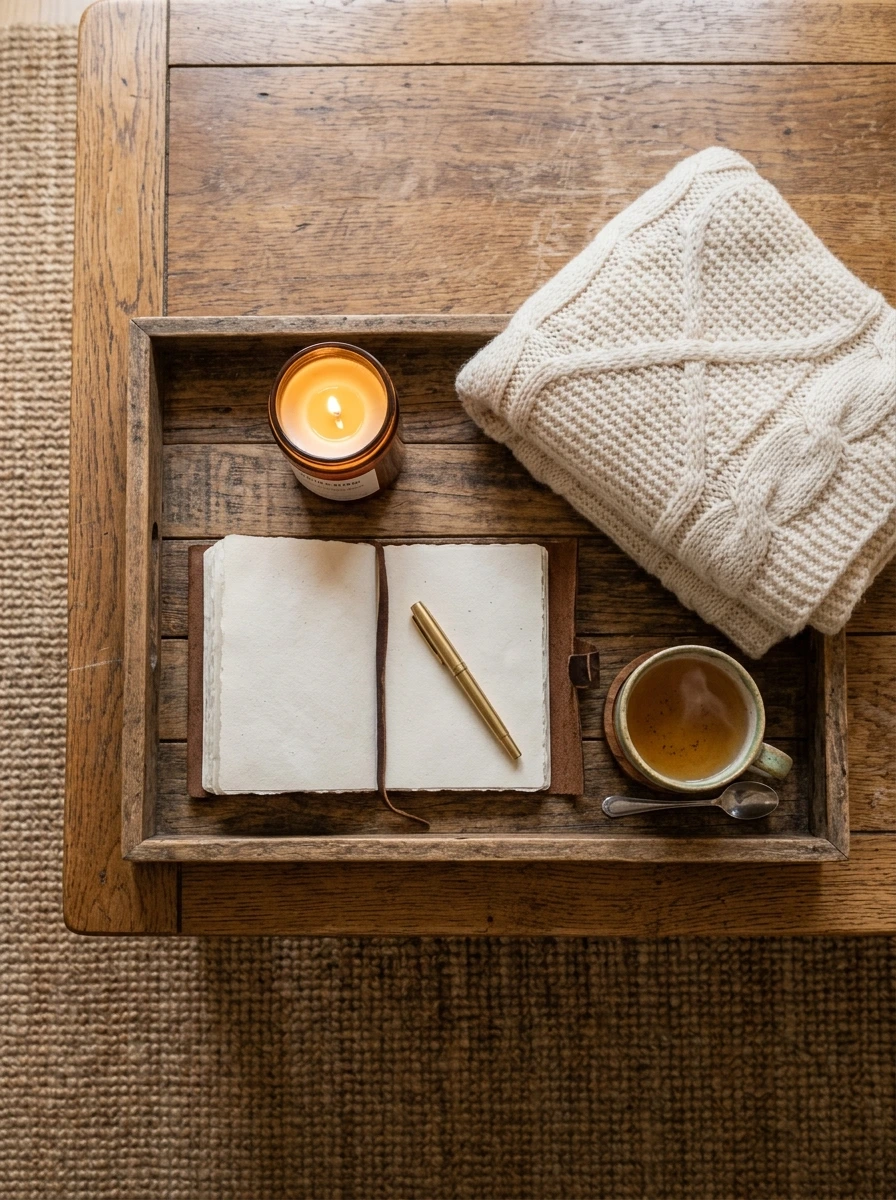
Your environment is doing more of the work than you think, and most people skip this step entirely because it feels less “productive” than a skincare routine. A few touches of fall living room decor – warm throws, low lamps, something soft underfoot – signal to your brain that the day is actually over, the same way certain music tells your body it’s time to dance. Try clearing your coffee table of daytime clutter around 8pm and replacing it with just two or three items you associate with rest. This single environmental cue is one of the simplest self care ideas at home because it costs nothing and takes under five minutes. A calming bedroom environment starts in the living room, not the moment you walk into your bedroom.
🕯️ Coffee Table Ritual Setup
- A table decor styling tray to corral your evening items
- Your tea or water, already poured
- A candle or diffuser, lit before you sit down
- One book or journal, not your phone
I’ll add one more thing here that clients are always surprised by: the visual clutter of a room affects your stress levels almost as much as noise does. A living room that still looks like the middle of a workday — mail piled up, shoes by the door, laptop still open — keeps a low hum of “unfinished business” running in the background of your evening. You don’t need to deep clean anything. A five-minute reset of just the surfaces you’ll actually look at while you relax does most of the work.
For the Senses: Lighting, Scent and Sound
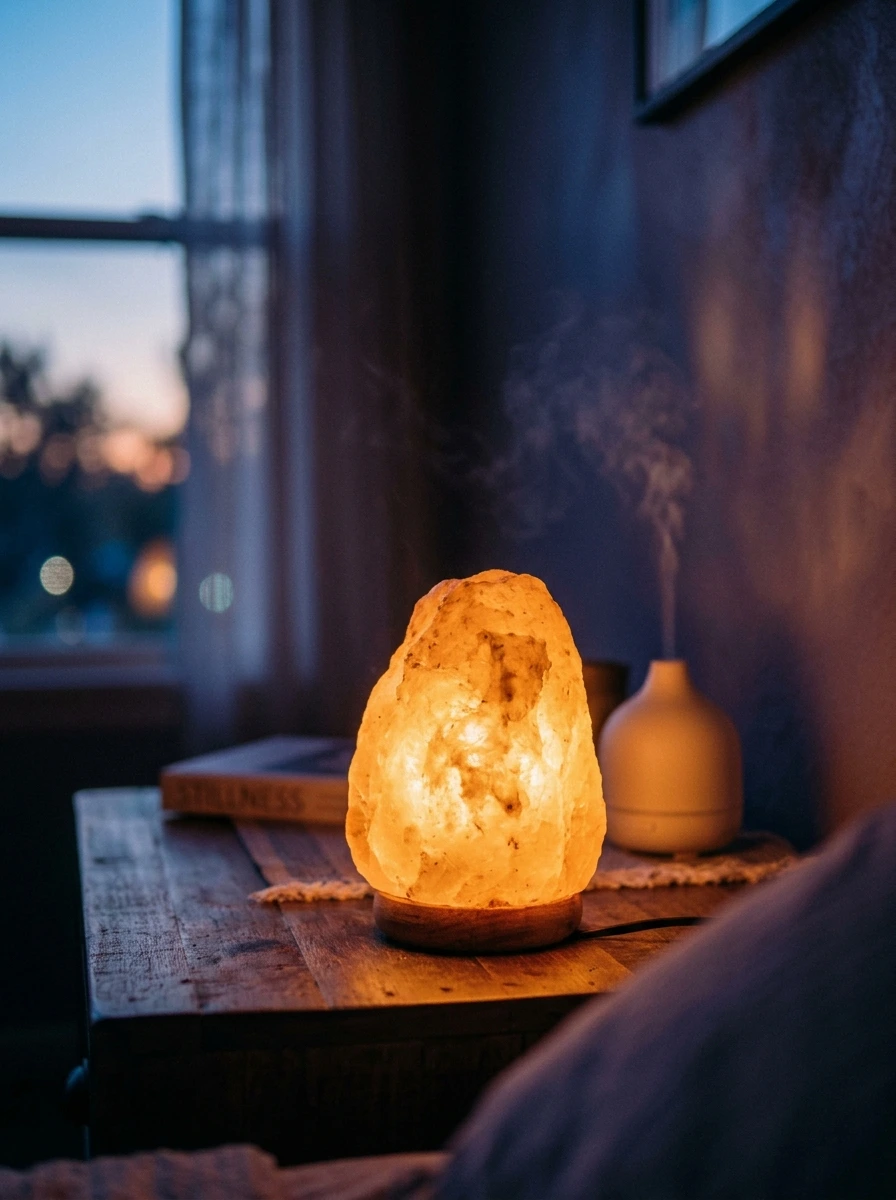
Your senses are the fastest route to your nervous system, faster than any amount of willpower or good intentions. Smart living room design choices, like moving your brightest lamp out of your sightline after 8pm, do more for your circadian rhythm than any supplement you could take. Warm, amber-toned light in the 2700K range tells your brain to start producing melatonin, while overhead white light does the opposite, so a few well-placed lamps can shift your whole evening. Add a sound layer too — a fan, a white noise app, or genuinely just quiet, whichever your Wind-Down Style Finder result points you toward. This is where aromatherapy for sleep earns its reputation; it’s not magic, but a consistent scent paired with rest, night after night, becomes a cue your body learns to trust.
🌙 Sensory Reality Check
- White noise: Depends. Helpful if outside noise wakes you, unnecessary if your room is already quiet.
- Essential oils: Yes, if you like the scent and use it consistently; skip it if it gives you a headache.
- Dim vs. fully dark: Depends. Dim works for reading and rituals; fully dark works best for actual sleep.
One more sensory detail worth mentioning: temperature and light work together more than people realize. A room that’s slightly too warm makes even the dimmest, most amber-toned lamp feel less restful, because your body is busy trying to cool itself down instead of settling in. If you’ve done everything right with lighting and scent and you’re still restless, check the thermostat before you troubleshoot anything else.
For Your Hair: A Low-Effort Nighttime Ritual

Your hair routine at night shouldn’t be another chore stacked on top of an already long day, and it doesn’t need to be. Low-maintenance styles like balayage hair mean your nighttime hair routine can stay genuinely simple — a brush-out and a silk wrap, nothing more. A silk or satin bonnet cuts down on frizz and breakage overnight, which means less time fighting your hair in the morning, and that’s a self-care win that pays off twice. If you’re due for a refresh, a seasonal fall hair color change is a low-effort way to feel refreshed without adding anything to your actual routine. This is one of the smallest self care night routine ideas on this whole list, and it’s also one of the most consistently skipped.
✿ Try This Tonight
- Detangle before bed, not in a rush the next morning
- Switch a cotton pillowcase for silk or satin
- Braid or loosely twist long hair to prevent tangling
- Keep a travel-size leave-in conditioner by your nightstand for dry ends
Hair care tends to get treated as purely cosmetic, but there’s a tactile, repetitive quality to brushing out your hair or braiding it before bed that functions almost like a mini massage. It’s slow, it’s rhythmic, and it gives your hands something to do besides reach for your phone. If nothing else on this list appeals to you tonight, this one takes under two minutes and still counts as a real self-care ritual.
For Your Skin and Hands: Simple Beauty Rituals
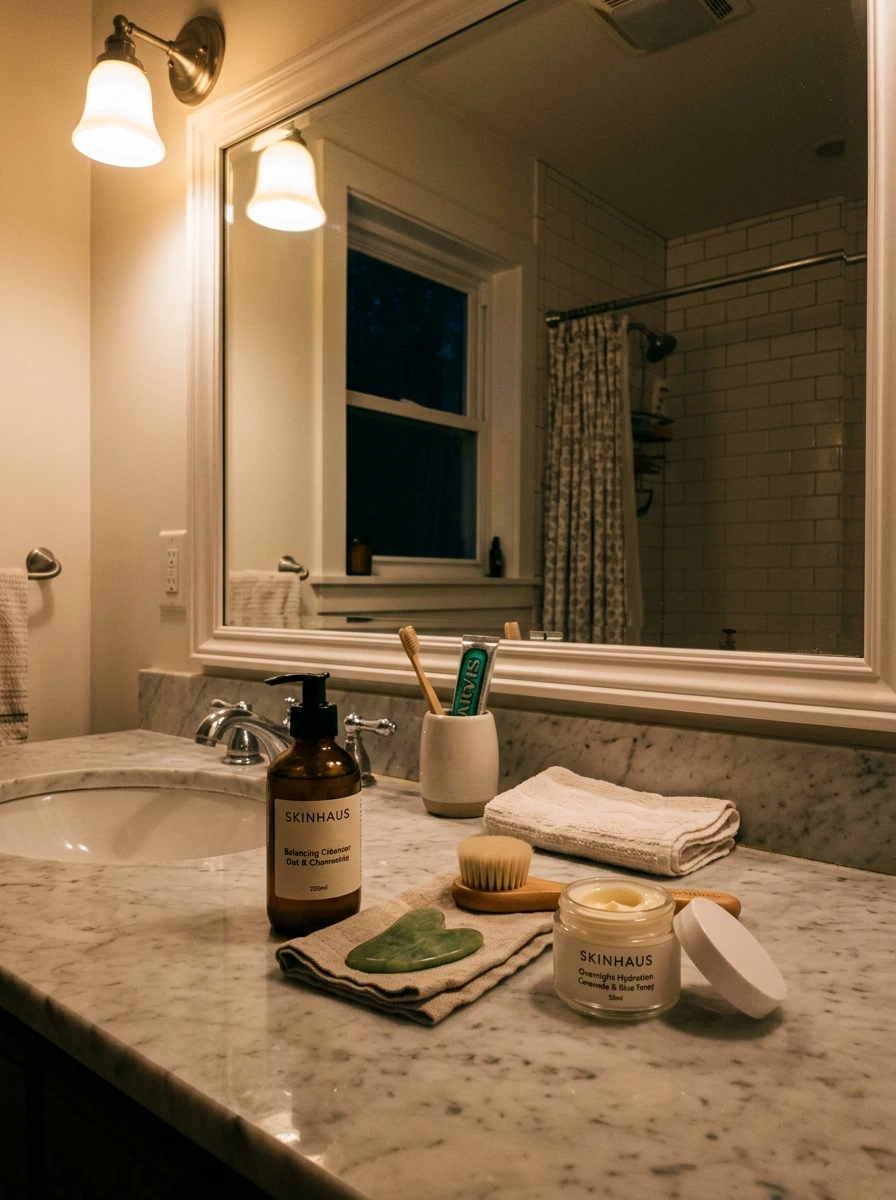
An evening skincare routine is often the entry point people use for self-care, and it earns that reputation because it’s tactile, quick, and genuinely does something. Cleanse, treat, moisturize — that’s skincare layering order in its simplest form, and you can build in a five-minute gua sha routine afterward to help with puffiness and give yourself an actual reason to slow down. Cozy sweater nails make a ten-minute at-home manicure feel like an actual treat, not a chore, especially once the weather turns and your hands are visible more than your face. If you want something more playful, animal nail art turns routine upkeep into a small creative outlet instead of one more task. This category is where self care rituals genuinely overlap with beauty care, and there’s no reason to separate the two if both make you feel more like yourself.
✿ Try This Tonight
- Double cleanse if you wore makeup or SPF that day
- Five minutes of gua sha along the jaw and under the eyes
- A hand cream massage while you watch something low-key
- A quick nail file and cuticle oil, even without full polish
A note on consistency here, because I get this question often: you don’t need a full skincare shelf to make this routine work. Three well-chosen products used every night will outperform ten products used inconsistently, every single time. If you’re building a self care routine for women who are short on time, cut the steps before you cut the consistency.
For Quiet Time: Reading and Screen-Free Activities

If your evenings feel rushed all the way until you collapse, this is the section that slows things back down. A worn armchair in a classic living room corner, away from the TV, becomes the spot your body learns to associate with slowing down, the same way your desk chair has come to mean “work” whether you like it or not. Reading before bed, even ten pages of something undemanding, gives your brain a slower rhythm to match than anything on a screen ever will. Puzzles, coloring, hand-lettering, or just sitting with your tea in actual silence all count as calming evening activities, and none of them need to look impressive to work. This is real stress relief before bed — not because the activity itself is relaxing, but because it isn’t asking anything of you.
Maren’s Notes: People treat “just sitting there doing nothing” like a failure, like they should be reading or journaling or doing something with a name — but staring at your ceiling for ten quiet minutes is still a screen-free evening routine, and it still counts.
I want to push back gently on the idea that quiet time has to be productive to count as self-care. Some of my clients feel guilty sitting still without a book, a show, or a task in front of them, as if rest needs to be earned through some other activity. It doesn’t. A slower pace, on its own, is the whole point of this part of the evening, and it’s often the piece people skip because it feels the least like “doing” anything.
For Physical Comfort: Coziness That Actually Helps You Relax
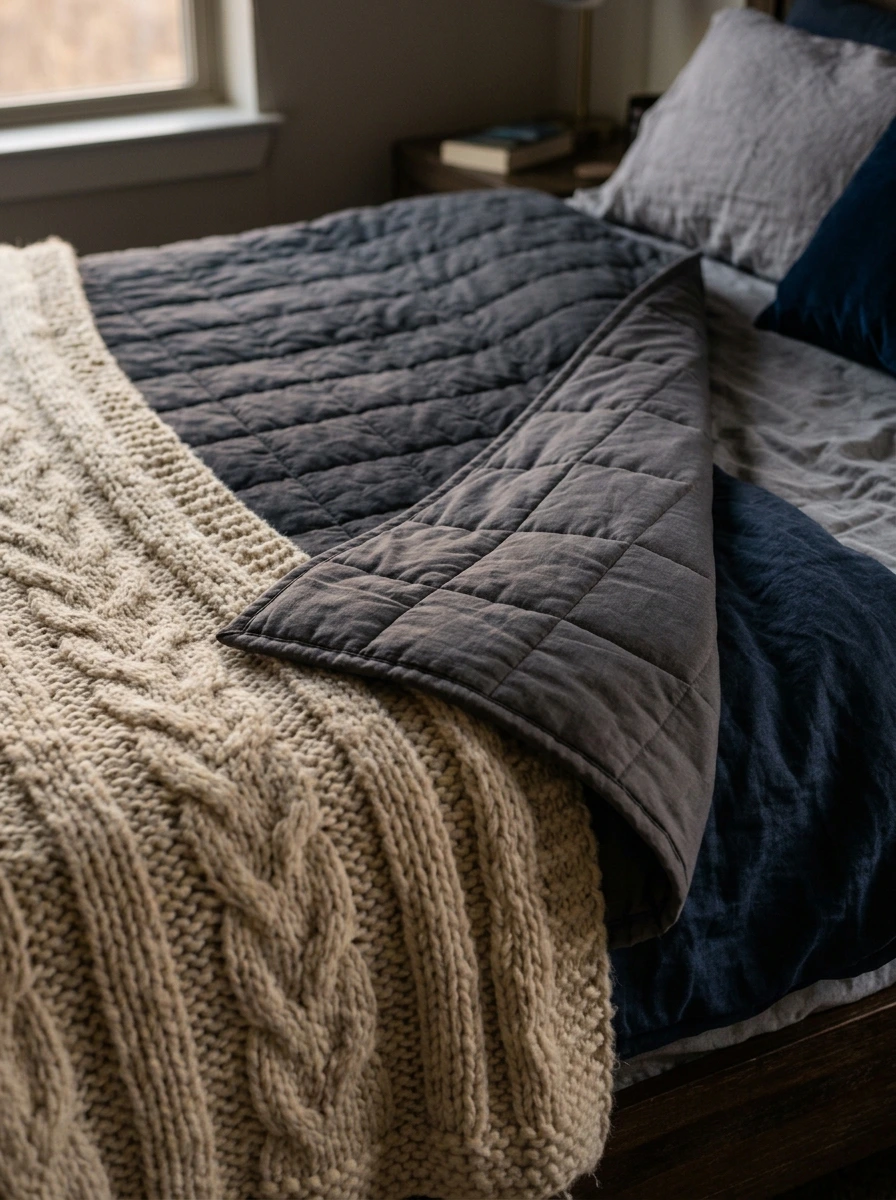
Comfort isn’t indulgent, it’s functional, and this is the section most people underrate because it feels too simple to matter. The right sofa ideas – deep cushions, a throw within reach – make the difference between actually resting and just sitting down, and your body can tell the difference even if your brain isn’t paying attention. A weighted blanket applies gentle, even pressure that can genuinely calm an anxious nervous system, which is why it’s become such a staple recommendation for anyone dealing with racing thoughts at night. Soft socks, an oversized sweater, a heating pad on tense shoulders — these are small, physical forms of self care rituals that work because your body responds to comfort before your mind catches up. Notice your shoulders again right now; if they’ve dropped even slightly since you started reading this, that’s the whole point of this section.
Maren’s Notes: Comfort gets dismissed as lazy self-care, but a genuinely comfortable body sends a genuinely calming signal to a genuinely tired brain — that’s not indulgence, that’s basic physiology.
I’ll also say this: coziness is one of the few self care rituals that requires almost no planning, which makes it a good starting point if the rest of this list feels like too much right now. You already own a blanket and a pair of socks. The habit isn’t acquiring the comfort item, it’s actually using it consistently instead of saving your nicest throw for guests who rarely come over.
For the Body: Gentle Movement and Breathwork
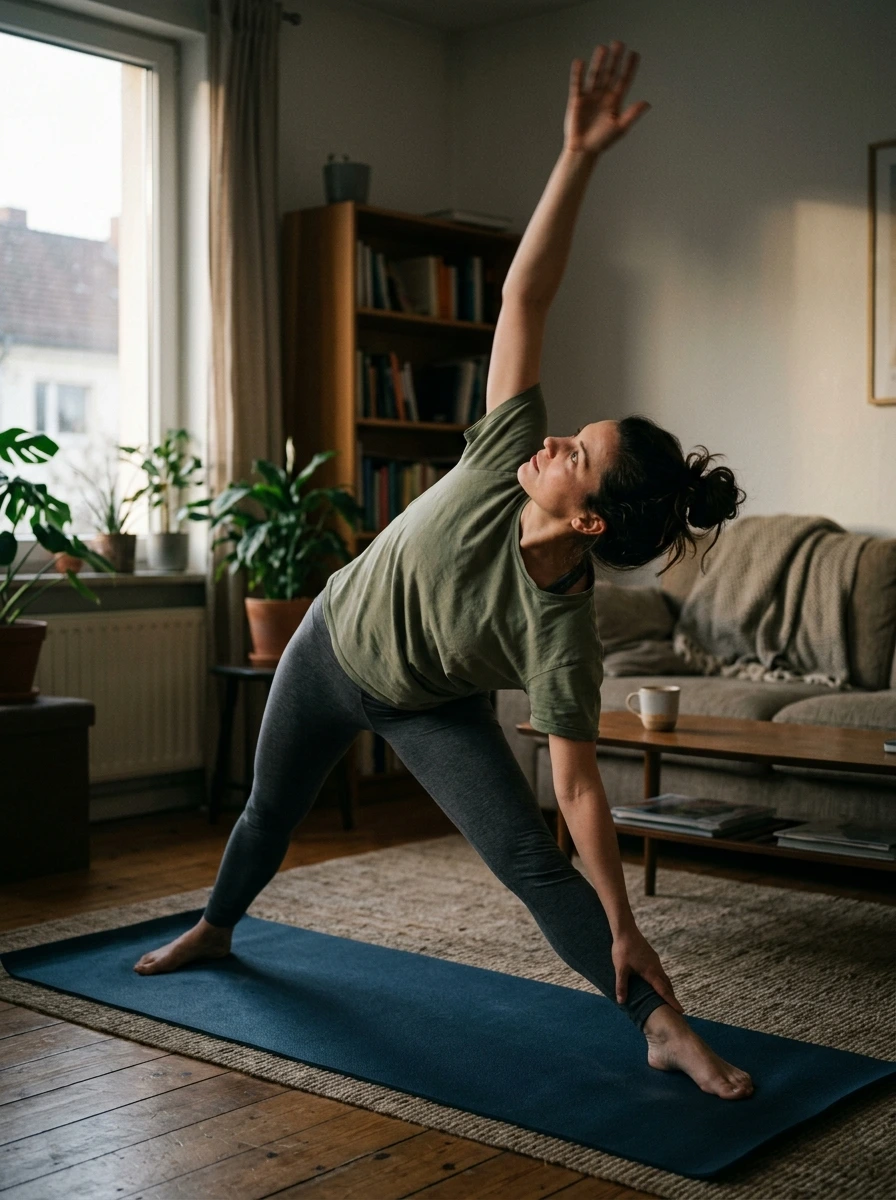
You don’t need a workout at 9pm, and honestly, a hard workout this late can backfire by raising your cortisol right when you want it dropping. Bedtime stretching — a slow forward fold, some gentle hip openers, ten minutes on the floor — helps release the physical tension your body has been holding since your first meeting of the day. Add a simple breathwork for sleep pattern on top, like inhaling for four counts and exhaling for six, and you’re actively telling your nervous system it’s safe to downshift. This combination is one of the most effective things you can add to a wind down routine if your particular flavor of stress lives in your body more than your head. Cortisol and sleep are deeply connected, and gentle movement is one of the few tools that lowers one while supporting the other.
Maren’s Notes: I still see people doing an intense stretch routine right before bed like it’s a workout to finish strong — slow it down, this isn’t the part of the day where you’re trying to accomplish anything.
A good gauge for whether your movement belongs in a wind down routine or a workout routine is your breathing rate afterward. If you’re still breathing hard, you’ve done exercise, and exercise is wonderful but it belongs earlier in your evening. If your breathing has slowed and your shoulders have dropped, you’ve done the kind of gentle movement that actually supports sleep hygiene tips like the ones in this article.
For Sleep Itself: What to Do in the Final 30 Minutes
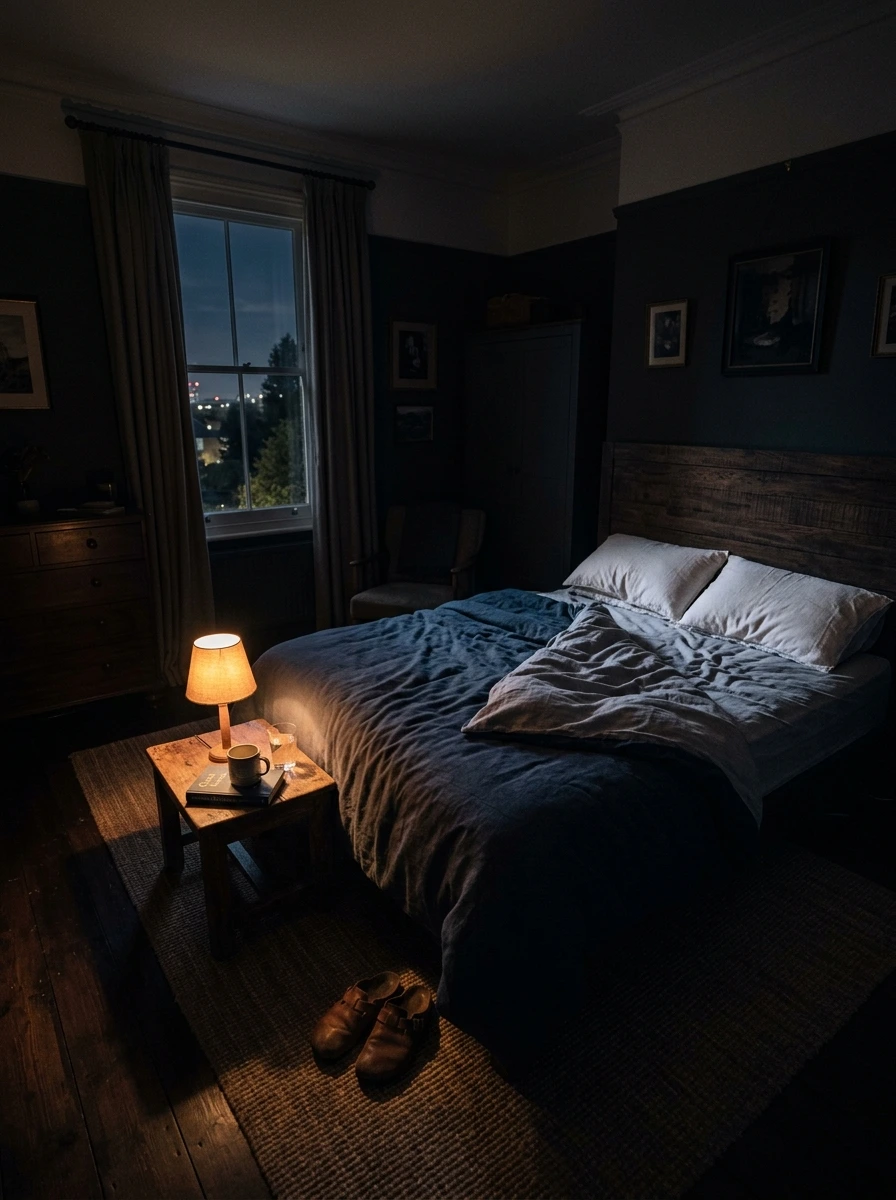
The last half hour before you actually try to sleep is where a lot of good work either gets locked in or gets undone by one more email check. This is where magnesium before bed often comes up in my sessions — some people find a magnesium glycinate supplement or a warm cup of herbal tea for sleep genuinely helps them settle, though it’s worth talking to your doctor before adding anything new. Journaling before sleep, even three lines about what went well today, can quiet the kind of mental replay that keeps people staring at the ceiling. If you’re wondering how to sleep better starting tonight, the answer is rarely one dramatic change — it’s this final, boring, consistent half hour done the same way most nights. Building a genuine self care night routine really does come down to protecting this last stretch of your evening more than any other.
😴 Sleep Hygiene Checklist
- Room temperature between 65–68°F
- Phone charging outside the bedroom, or at least across the room
- Same rough bedtime, even on weekends
- One calming activity, not three competing ones
- Lights dimmed at least twenty minutes before you actually lie down
If you only take one thing from this entire guide, let it be this checklist. It’s the part of a self care night routine that has the most direct research behind it, and it’s also the part people cut first when they’re tired, which is exactly backwards. The final thirty minutes deserve more protection than any other part of your evening, not less.
Frequently Asked Questions
What is a good self care night routine?
A good self care night routine matches your actual nervous system, not a trend — some people need quiet and dim light, others need coziness and ritual. Start with two or three habits from this list, not all thirty-two at once, and build from there.
How long should a night routine be?
Anywhere from ten minutes to an hour works, depending on your Wind-Down Style Finder result and how much time you genuinely have. A cozy night routine built for consistency beats a long one you only manage twice a week.
Is skincare or beauty care part of a self-care routine?
Absolutely part of it, when it makes you feel more grounded rather than like another obligation. Even something small, like a quick brow and lash tidy, can genuinely count if it makes you feel more like yourself before bed.
What helps you fall asleep faster?
Consistency helps more than any single product — the same rough bedtime, a dark and cool room, and a wind-down period free of screens. Magnesium before bed, herbal tea, and slow breathwork can all support this, but they work best layered onto habits you already do nightly.
Do I need a weighted blanket to relax at night?
No, but many people with racing thoughts or anxiety find the even pressure genuinely calming. It’s one option among several for stress relief before bed, not a requirement.
What’s the difference between a wind down routine and a bedtime routine for adults?
They’re mostly the same idea with different framing — a wind down routine often starts earlier in the evening, while a bedtime routine for adults usually refers to the final stretch right before sleep. Most people benefit from having both.
Can journaling really help me sleep?
Journaling before sleep gives racing thoughts somewhere to go besides your head, which can meaningfully reduce the mental loop that keeps people awake. Three lines is enough; it doesn’t need to be a full page.
Is a screen-free evening routine realistic if I use my phone for everything?
Start with just the last thirty minutes rather than the whole evening. A screen-free evening routine doesn’t have to be all-or-nothing to still lower your blue light exposure and help your body settle.
What are simple self care ideas at home that don’t cost money?
Bedtime stretching, a brain dump on paper, dimming your lights, and ten minutes of quiet reading all cost nothing and take almost no time. Some of the most effective self care ideas at home are the ones nobody’s trying to sell you.
How do I know if my routine is actually working?
You’ll fall asleep faster, wake up less through the night, or simply feel calmer by the time you lie down – give any new routine at least two weeks before judging it. A nighttime self care routine is a pattern your nervous system learns, not a switch that flips instantly.
The Session Close
A self care night routine doesn’t need to look like anyone else’s, and it definitely doesn’t need all thirty-two ideas we just walked through. Pick two or three that matched your Wind-Down Style Finder result, and give them two consistent weeks before deciding what stays. That’s the same advice I’d give any client sitting across from me: build the smallest version of this routine that you’ll actually keep doing, then let it grow from there if it wants to. Some nights that’ll mean the full ritual – skincare, tea, a few pages of a book. Other nights it’ll just mean phone in another room and lights turned down a notch, and that still counts.
I hope you found something here at The Muse Vale that feels doable tonight, not just aspirational. Notice how you feel once you’ve tried it, the same way I asked you to notice at the very start. That’s really the whole practice – paying attention, and adjusting gently from there.