
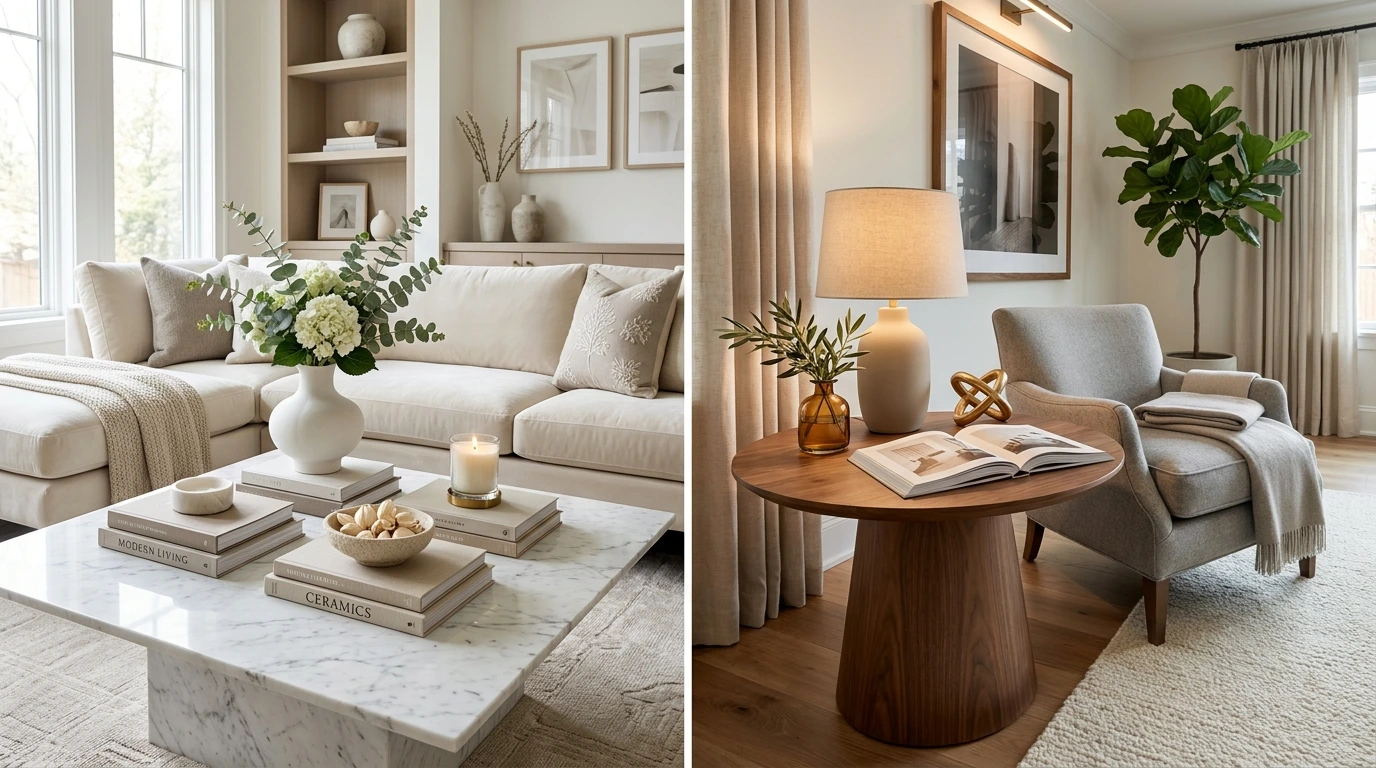
I walk onto a set and go straight for the tables before I even look at the sofa. That’s not an accident. A styled sofa reads as furniture, but living room table decor is where a room either clicks into place or falls apart into clutter. If you’ve already tackled your fall living room decor, the table is usually the last piece people forget, and it’s the piece a camera, or a guest walking in the door, notices first.
Here’s what I check first on any coffee table or accent table: height variation, one organic material, one piece with real texture, and enough negative space that the eye has somewhere to rest. Most tables I’m called in to fix have too many small objects fighting for attention and zero breathing room between them. That’s the whole problem, and it’s fixable in about ten minutes once you know the formula.
This roundup covers coffee table decor, accent table styling, and even the trickier stuff like round tables and nesting sets, broken into twenty specific living room table decor vignettes you can build today with things you likely already own. If you’ve been searching for how to style a coffee table without buying a single new object, or wondering what actually belongs on a small side table, this is the whole playbook in one place.
The Formula Decoder
Every vignette in this piece, no exceptions, is built on the same four-part structure I use on set:
- Height variation. At least two objects at different heights so your eye travels instead of landing flat.
- One organic element. A stem, a branch, a piece of dried grass, something that didn’t come from a factory.
- One textured element. Something with visual weight: raw wood, unglazed ceramic, woven rattan, aged brass.
- Negative space. Empty tabletop is not a failure. It’s what makes the styled part look intentional instead of accidental.
This table styling formula holds up across every table type in this piece. Get the height variation styling piece right and the rest tends to fall into place, while negative space styling is really just knowing when to stop adding objects. Memorize that formula and you can style any living room table styling project without a shopping list. Now, the twenty looks.
Coffee Table Looks
1. The Layered Book Stack With a Sculptural Topper
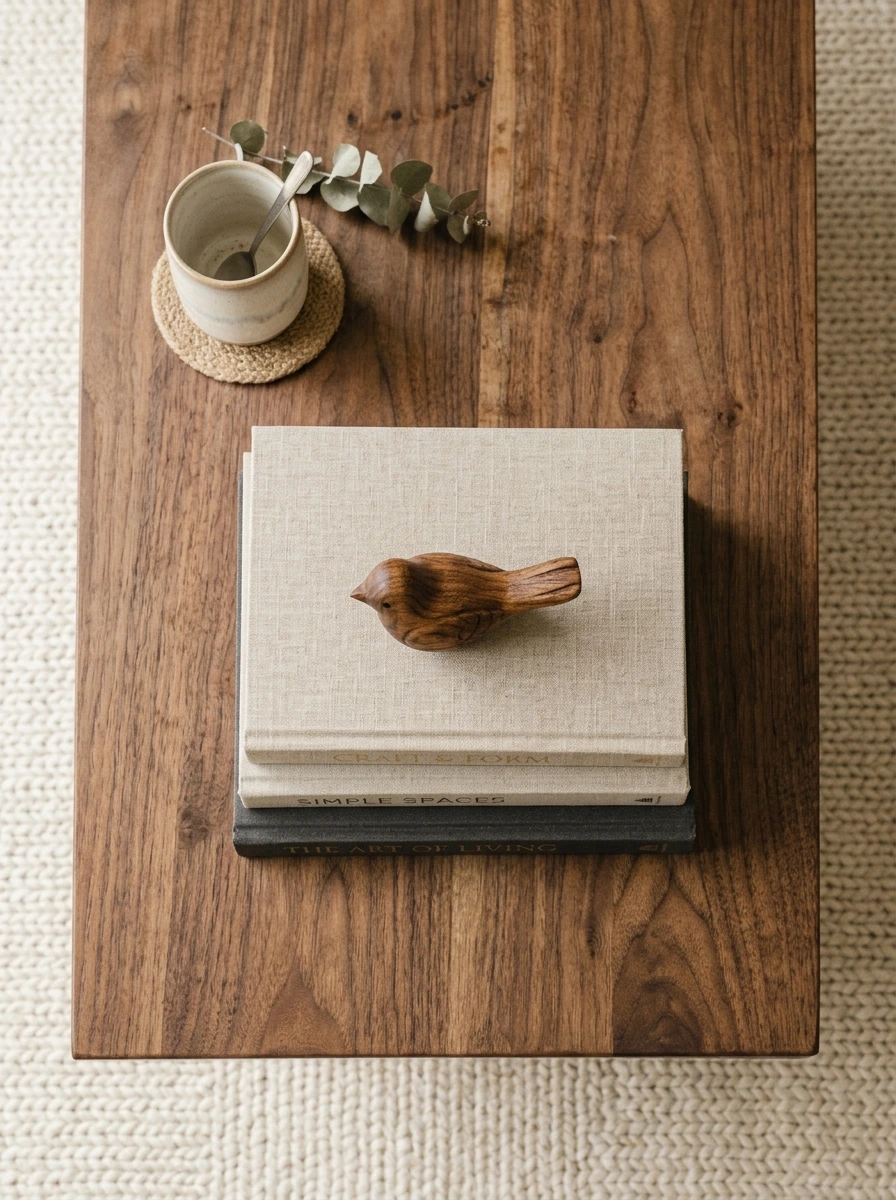
Start with three books, largest on the bottom, stacked slightly off-center rather than squared up like a library display. Set a small sculptural object, a carved wood form, a smooth stone bookend, anything with a curve, on top so the stack reads as one composed shape instead of a pile. Go for a mix of linen and cloth covers in a muted palette so the stack doesn’t compete with everything else on the table. This is coffee table books styling at its simplest, and it works because the topper gives the stack a reason to exist beyond holding your place in a novel. I’ve built this exact combination on a dozen shoots because it photographs well from every angle and nobody ever accuses it of trying too hard. A coffee table book stack like this only works with a topper. Left bare, it just reads as books someone forgot to shelve.
2. The Single Statement Bowl, No Distractions
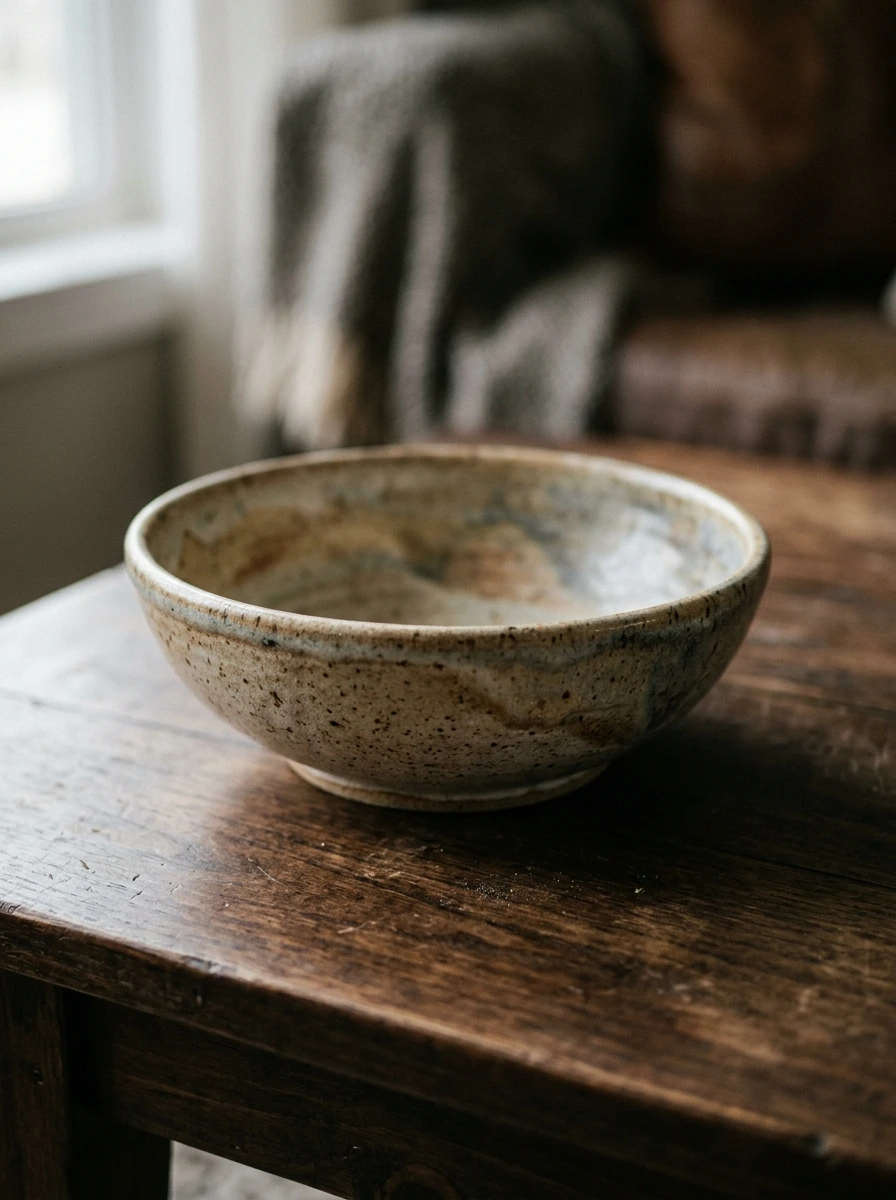
Sometimes the best coffee table styling ideas, and the easiest answer to how to style a coffee table on a tight schedule, involve doing less, not more. Center one wide, low ceramic bowl on the table and leave everything else clear. Choose a bowl with visible texture, like a reactive glaze or a hand-thrown rim, so it holds interest without needing company. A neutral clay tone or a soft matte white keeps it from feeling like a statement piece screaming for attention. This is the move I reach for when a client’s table is already busy with a remote, coasters, and mail, because a single confident object gives the eye a place to land amid the mess. This kind of ceramic bowl decor earns its spot precisely because it doesn’t need company.
📏 Height & Scale Check A bowl this low needs a friend with height, even a small one. Set a single taper candle or a slim bud vase just behind it so the vignette has a low point and a high point instead of sitting flat across the same plane. This one rule fixes ninety percent of the coffee table styling ideas that feel unfinished.
3. The Tray, Candle, and Bud Vase Trio
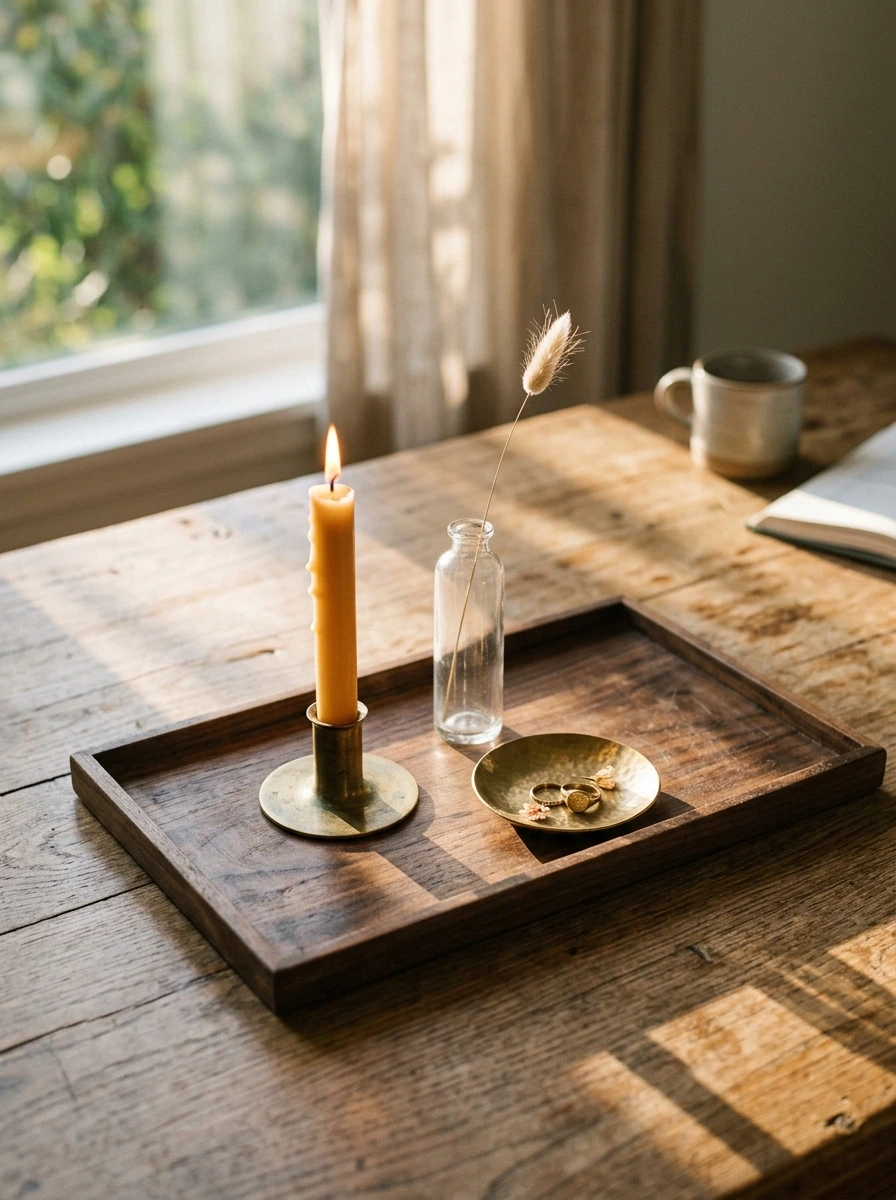
A tray is the single fastest way to make a cluttered table look composed, because it draws an invisible boundary around whatever sits inside it. Place a low candle, a slim bud vase with one or two stems, and a small dish for rings or coins onto a wood tray with a slight lip. Stick to warm woods and matte brass so the trio reads as a set rather than three random items that happened to land near each other. This is tray styling ideas and decorative tray styling in its most reliable form, and the odd number of three objects follows the odd number styling rule that keeps groupings from feeling too matched.
❃ What You’ll Need
- One wood or brass-rimmed tray, roughly 12–16 inches
- One taper or pillar candle in a low holder
- One bud vase with a single stem
- One small ring dish or catchall
4. The Coffee Table Books Meets Ceramic Object Pairing
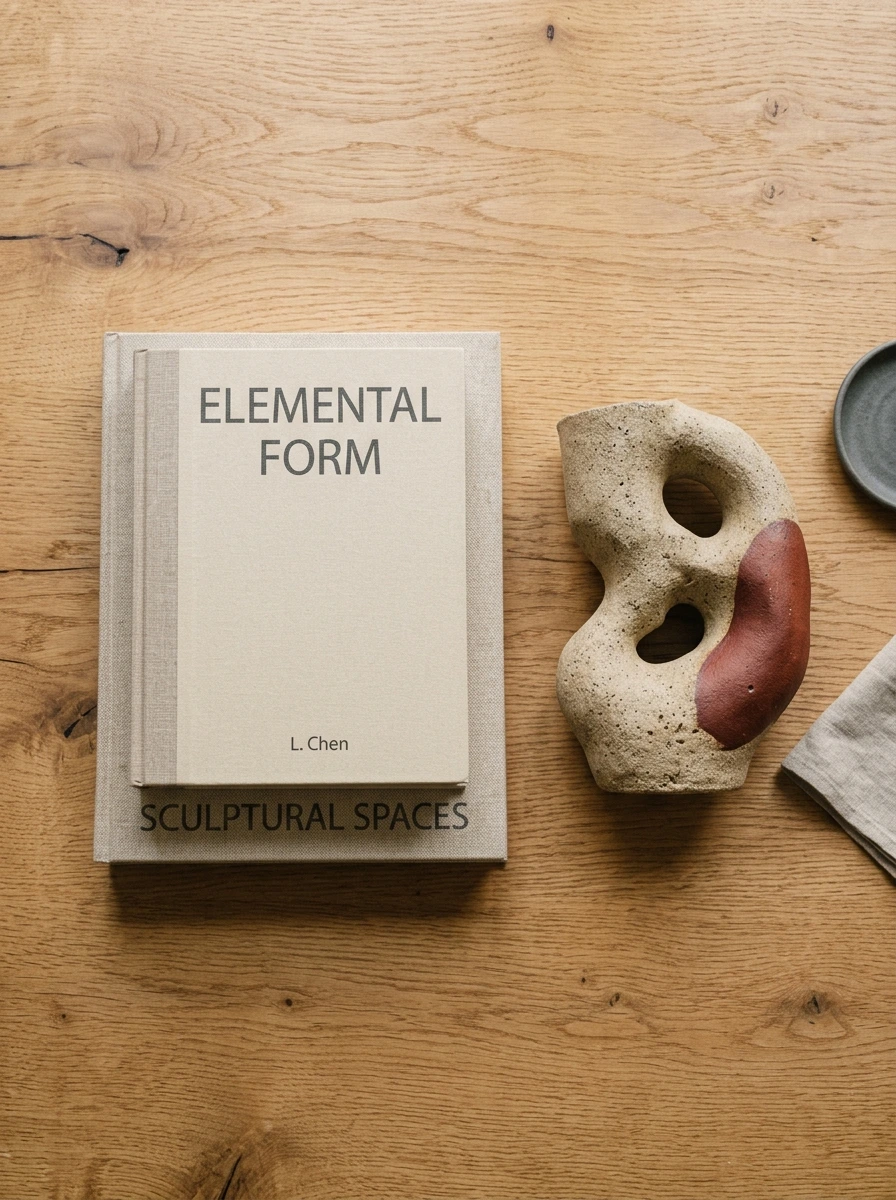
Pair a short stack of two books with one sculptural ceramic object set beside it, not on top, so both pieces get their own visual space. Angle the top book slightly against the bottom one to break up the perfectly squared look that reads as staged rather than lived-in. A raw or unglazed stoneware finish next to a smoother linen book cover gives you the textured element the formula calls for without adding a third object. Coffee table decor built this way photographs nicely in flat lay shots because the two groupings create a natural left-right balance. This is table vignette ideas territory more than it is coffee table books styling alone, since the ceramic piece is doing just as much work as the stack.
🖋️ Dahlia’s Styling Formula My ratio for any two-object pairing is 60/40 in visual weight, never 50/50. If the books take up sixty percent of the visual space, the ceramic piece should feel like the quieter forty, and vice versa. Identical weight is what makes a pairing look like it was bought as a matched set instead of curated.
5. The Low Floral Moment
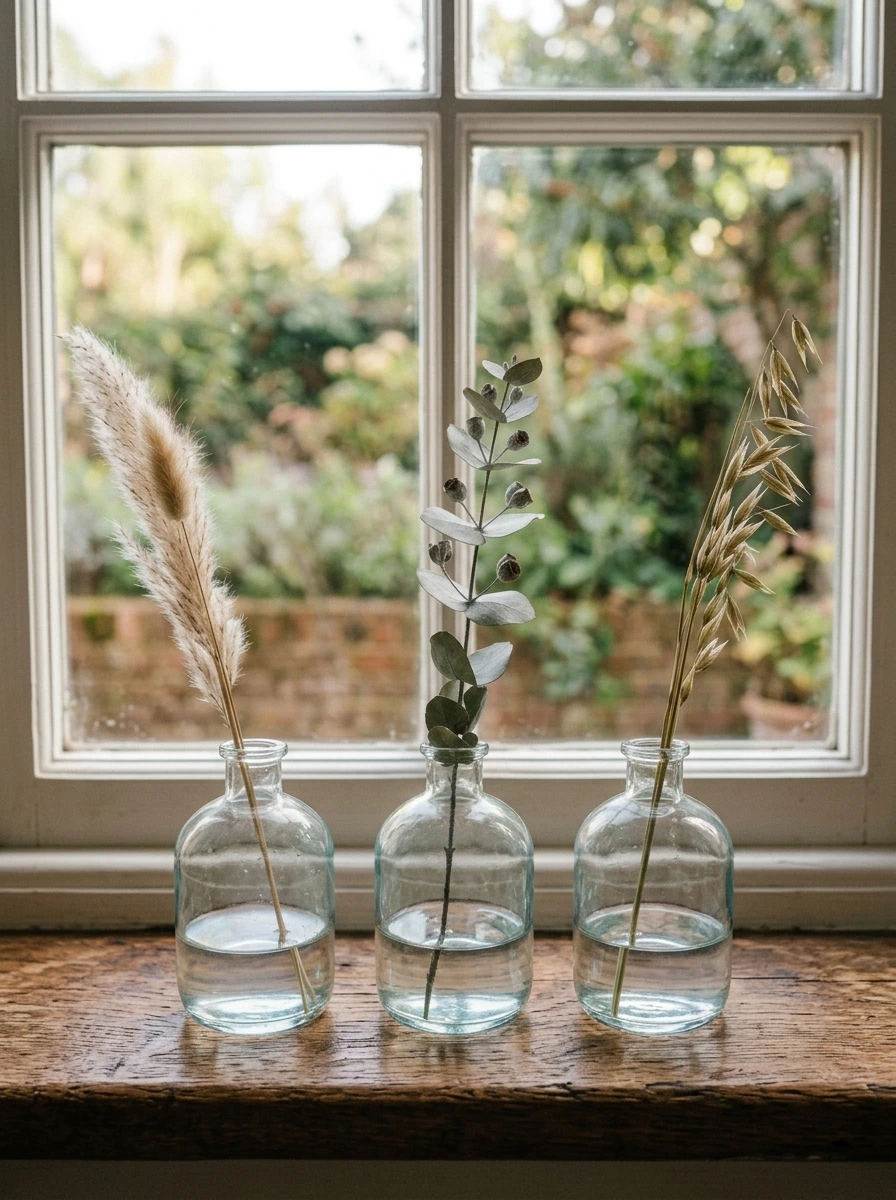
Skip the full centerpiece arrangement and go with two or three low stems in a single glass vessel instead. Trim the stems short enough that they sit just above the rim, which keeps sightlines open across the table during a movie night or a dinner conversation. Dried grasses, a few eucalyptus stems, or seasonal branches all work, and the low profile means you never have to move it out of the way. Borrow straight from fall wedding decor: a few stems in a low vase do more than a full centerpiece, and the same restraint applies whether you’re styling a reception table or your own living room. This small vase arrangement doubles as one of the simplest table centerpiece ideas on this whole list.
Round Accent Table Looks
6. The Off-Center Lamp and Stack Balance
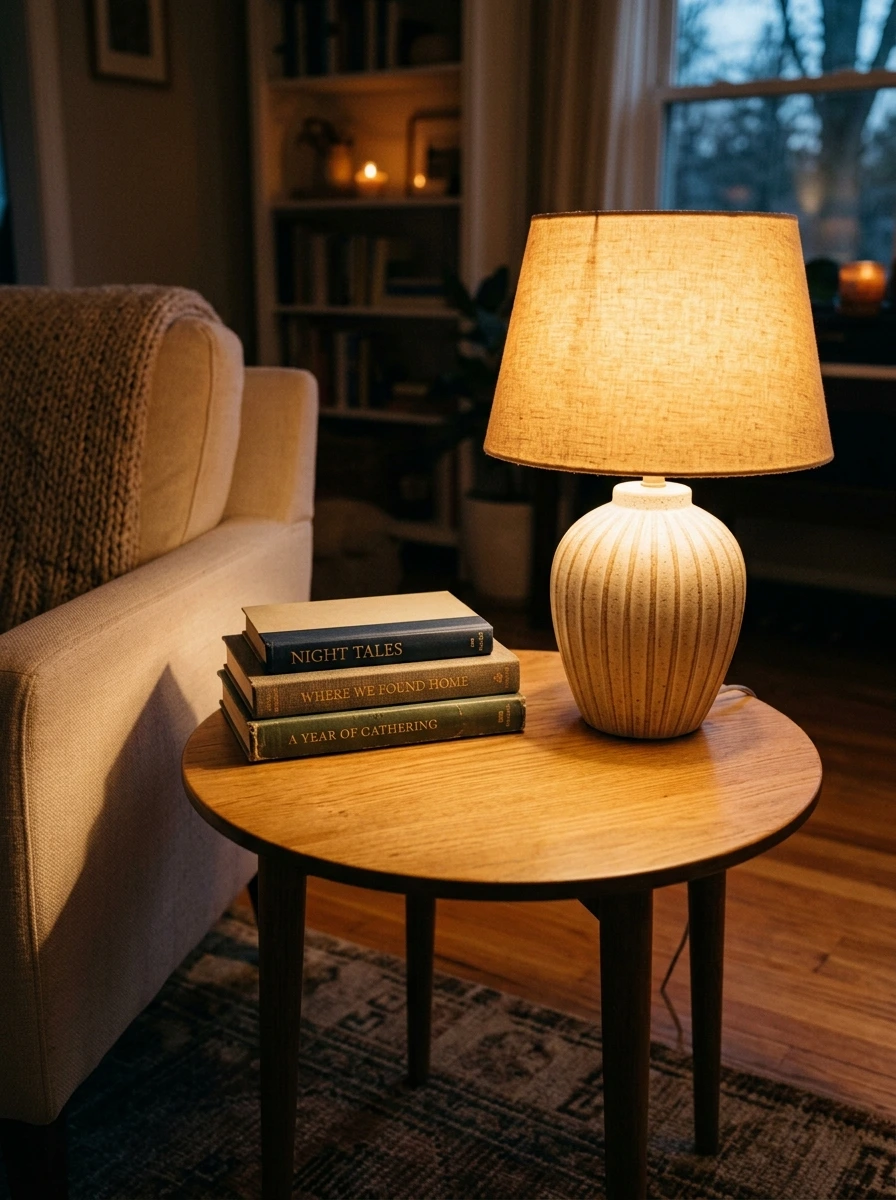
A round accent table has less real estate than a coffee table, so balance matters more than volume. Set a small lamp off to one side rather than dead center, then counter it with a short book stack or a single object on the opposite edge. This asymmetry is what separates good accent table styling and genuinely useful accent table decor ideas from a table that looks like it was set up by a furniture showroom. A fluted or ribbed lamp base adds the textured element without needing anything else on the table at all, and it’s a small move that upgrades the living room table decor around it too.
🕰️ Everyday to Elevated That lamp you already own probably just needs a shade swap. A linen or rattan shade instantly reads as more considered than the plastic one that came in the box, and it’s a five-minute change that upgrades the whole vignette without buying a single new object.
7. The Single Oversized Object Trick
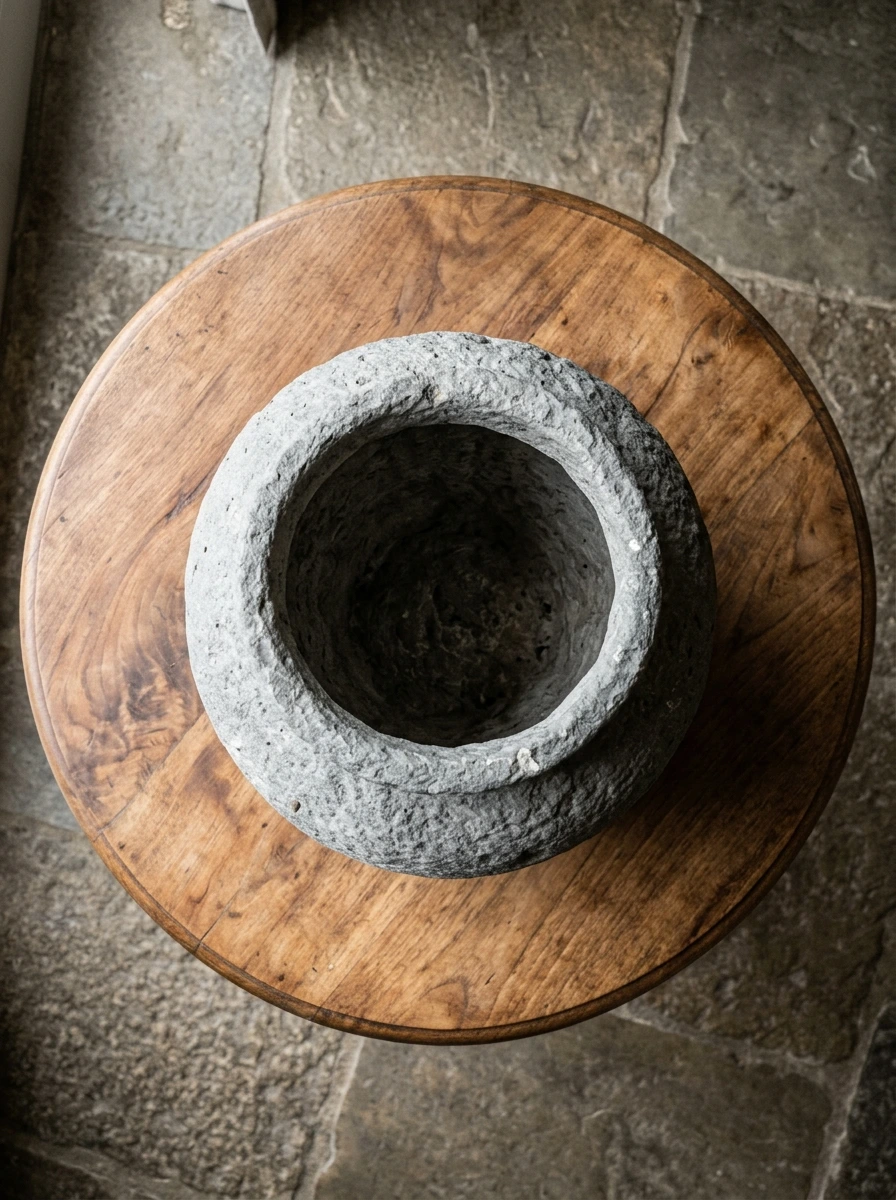
On a small round surface, one oversized object almost always outperforms several small ones. Choose a single vase or vessel with real presence, in stone, heavy ceramic, or textured concrete, and let it stand alone with nothing else competing for space. This works because a round coffee table decor or accent table has a smaller footprint to begin with, and a scattering of tiny objects just looks crowded. One strong silhouette does the job three or four small pieces would otherwise struggle to do, which is a lesson that applies to living room table decor of every shape.
8. The Layered Round Tray With Rings of Height
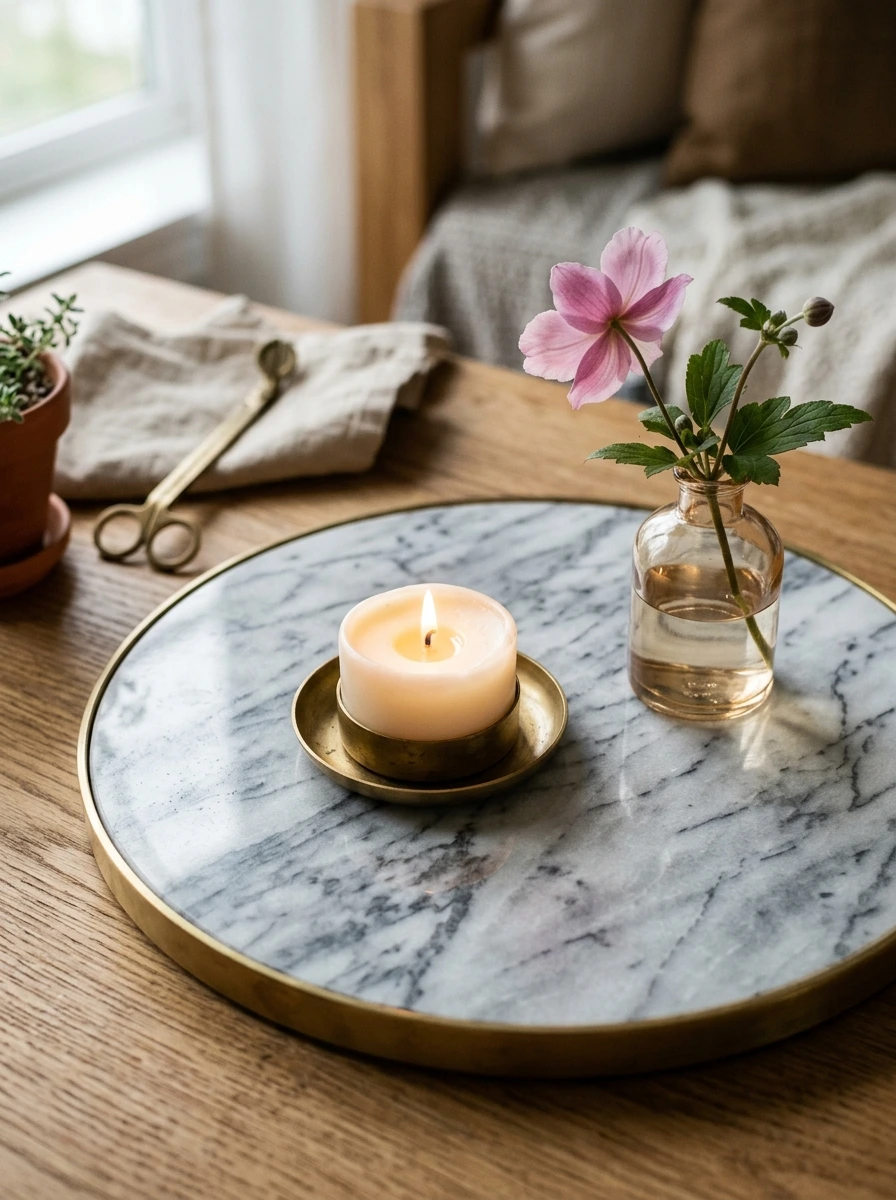
A round tray on a round table repeats the shape language of the surface itself, which is a trick I use constantly on shoots. Build up from the tray with a candle at the center, a small object at one edge, and let the tray’s own rim provide the lowest layer. A marble tray adds cool, veined texture that plays nicely against warmer wood table surfaces underneath it. This layered structure answers the “how do you style a round coffee table” question better than any single tip, because the roundness does half the visual work for you before you place a single object. If you’re after round coffee table decor that photographs well from directly overhead, a marble tray decor base is the fastest way there.
❃ What You’ll Need
- One round marble or stone tray
- One low candle for the center point
- One small object with height, like a bud vase
- One or two loose stems for softness
9. The Brass Candlestick Anchor
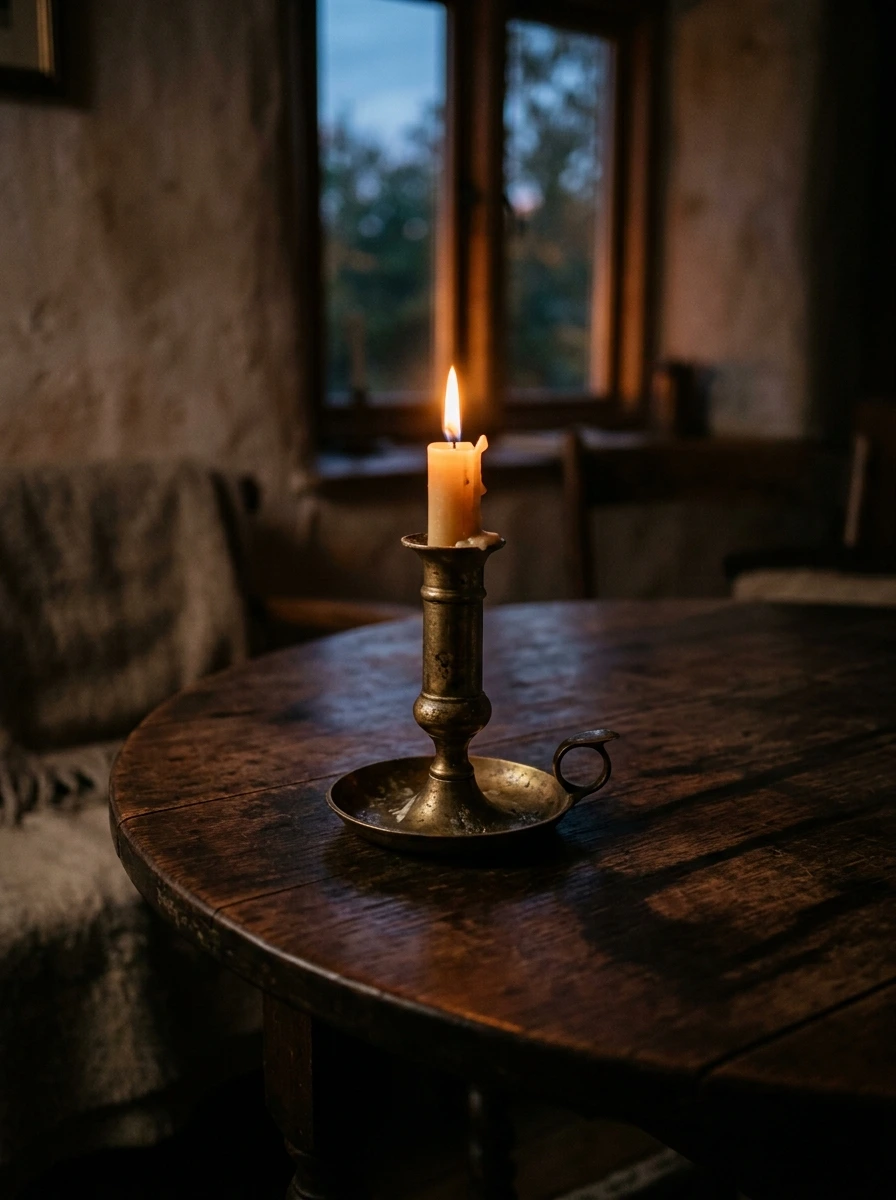
A single brass candlestick does the same work here that it does in a vintage moody bedroom instant weight, zero clutter. Set it slightly off-center on a small round table with nothing beside it but maybe a single stem in a narrow vase. The tarnished or antique brass finish gives you natural material accents without leaning on anything trendy, which is why this piece of living room table decor has held up in my portfolio for years. It’s one of the few table vignette ideas I’d call close to timeless, because the object itself never really goes out of style. This brass candlestick decor and candle holder arrangement combination is one I return to on nearly every shoot that calls for a little drama.
🖋️ Dahlia’s Styling Formula Height plus a shadow does more than height alone. A candlestick lit in the evening throws a shadow onto the wall or the table surface, which adds a second visual layer for free. This is the detail most people skip and the one that makes a vignette look considered after dark, not just during the day.
10. The Petite Vase and Matchbook Pairing
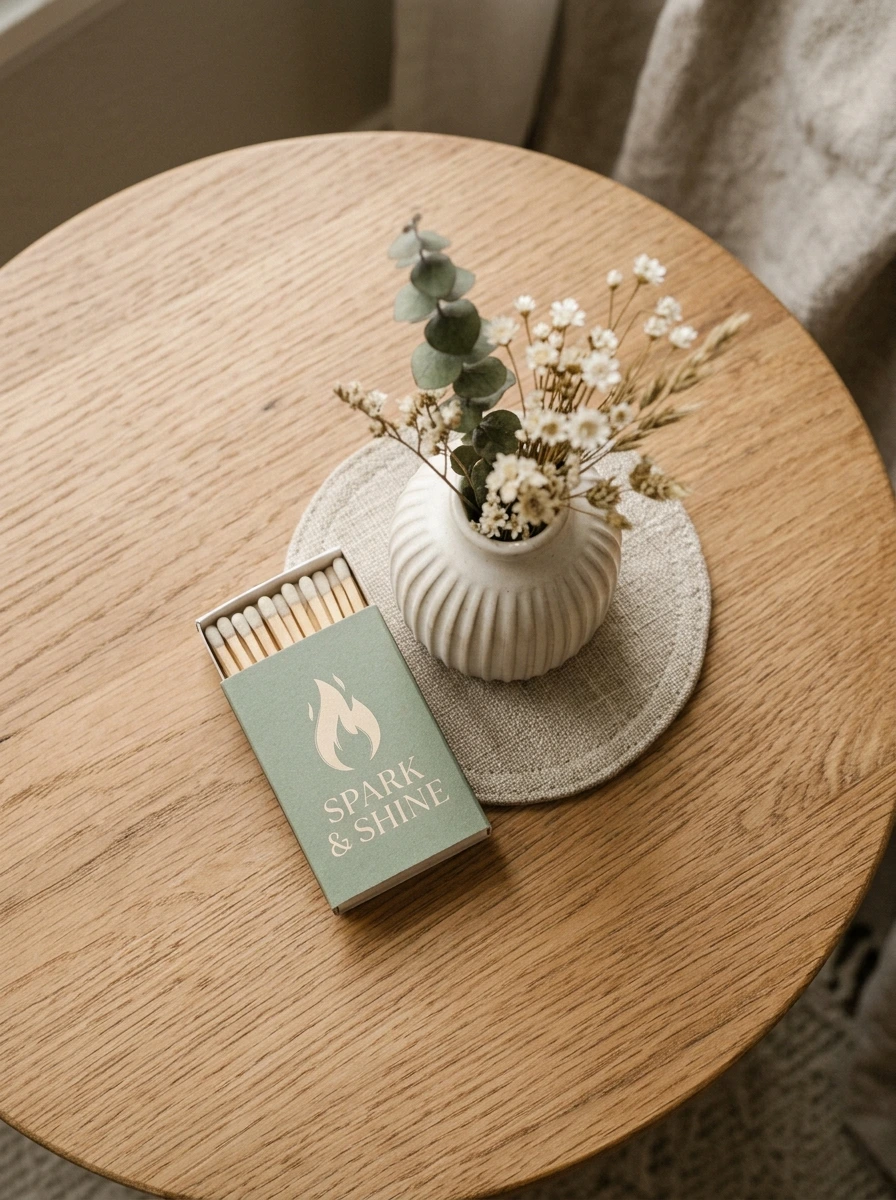
Small round tables reward restraint, so keep this one down to two objects total. A petite ribbed vase with a single stem, paired with a decorative matchbox or small dish beside it, fills the surface without crowding it. This pairing works especially well as one of the smaller table centerpiece ideas for side table decor wedged between two chairs, where anything larger would get knocked over constantly. Keep the color palette to two tones so the pairing reads as calm rather than busy.
Console-Adjacent Side Table Looks
11. The Lamp, Stack, and One Living Thing Formula
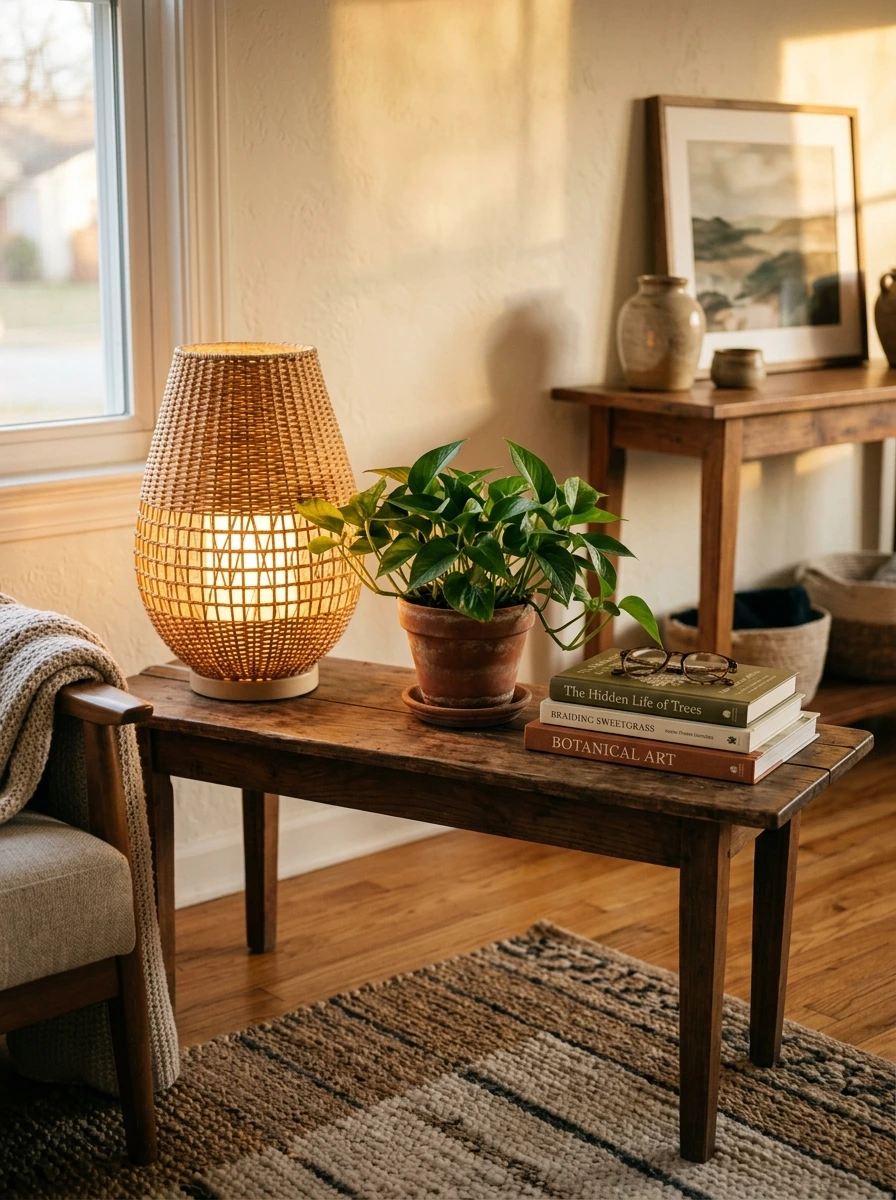
Side table decor near a console or sofa arm usually needs to do double duty, holding a lamp for actual light while still looking styled. Anchor the table with a lamp on one side, a short stack of two books on the other, and one small plant or stem tucked between them for the living element. A rattan or woven lamp base brings in the natural material accents that keep the whole grouping from feeling too polished. This three-part formula is the most requestable living room table styling combination I get from clients who want function first and style second.
🌿 Seasonal Refresh Swap the stem in that small vase every few months to keep the vignette feeling current without touching anything else. A single change like that carries the whole table through the year with almost no effort.
12. The Formal Tablescape Borrowed From Event Styling
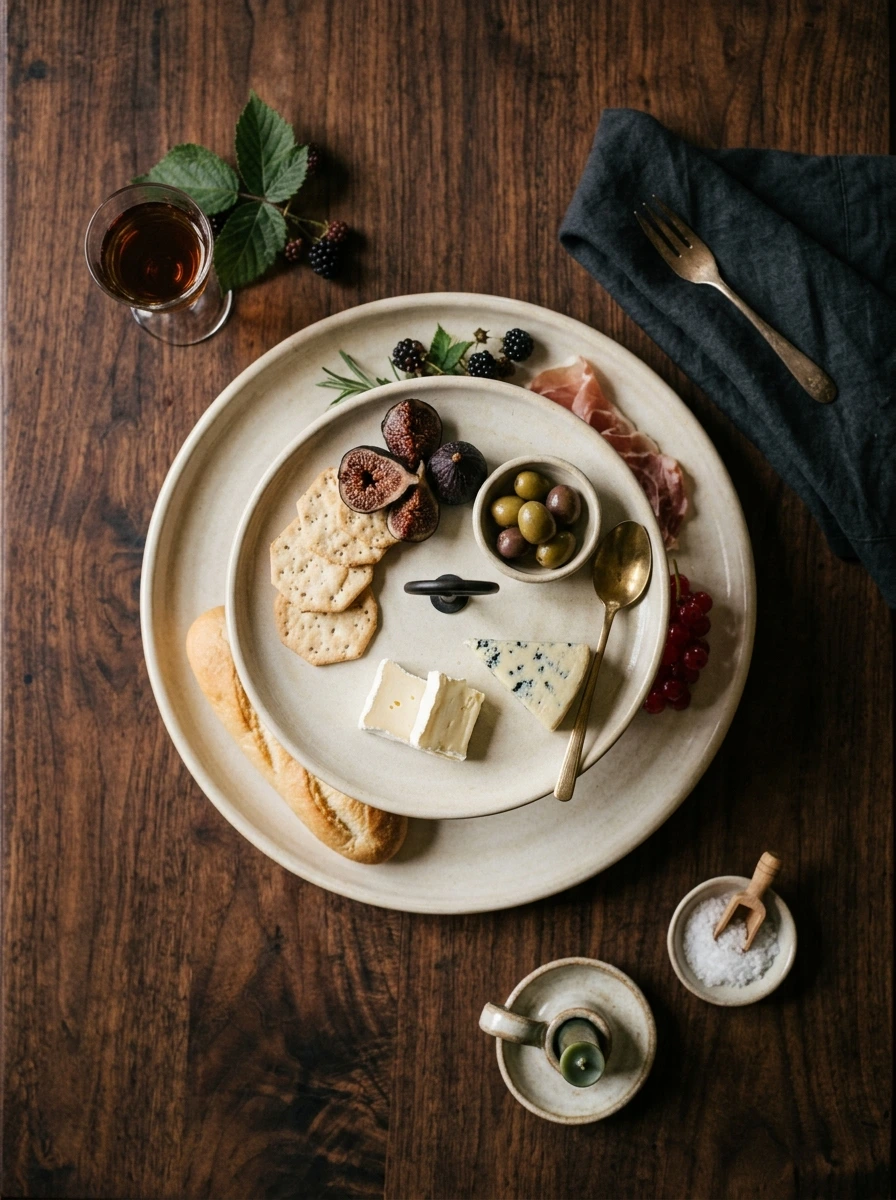
The same layering logic event stylists use for formal wedding reception themes scales down perfectly onto a coffee table or side table. Use a tiered stand or a taller vessel as your high point, then build outward with lower objects like a candle and a small dish. This gives you dramatic height variation in a single piece instead of stacking books to get there, which is a shortcut I use when a client wants a more formal, editorial feel for a dinner party console. It reads as elevated without requiring more than three objects total, and it’s one of my favorite table centerpiece ideas for anyone hosting more than a casual weeknight dinner.
13. The Warm Terracotta and Wood Grouping
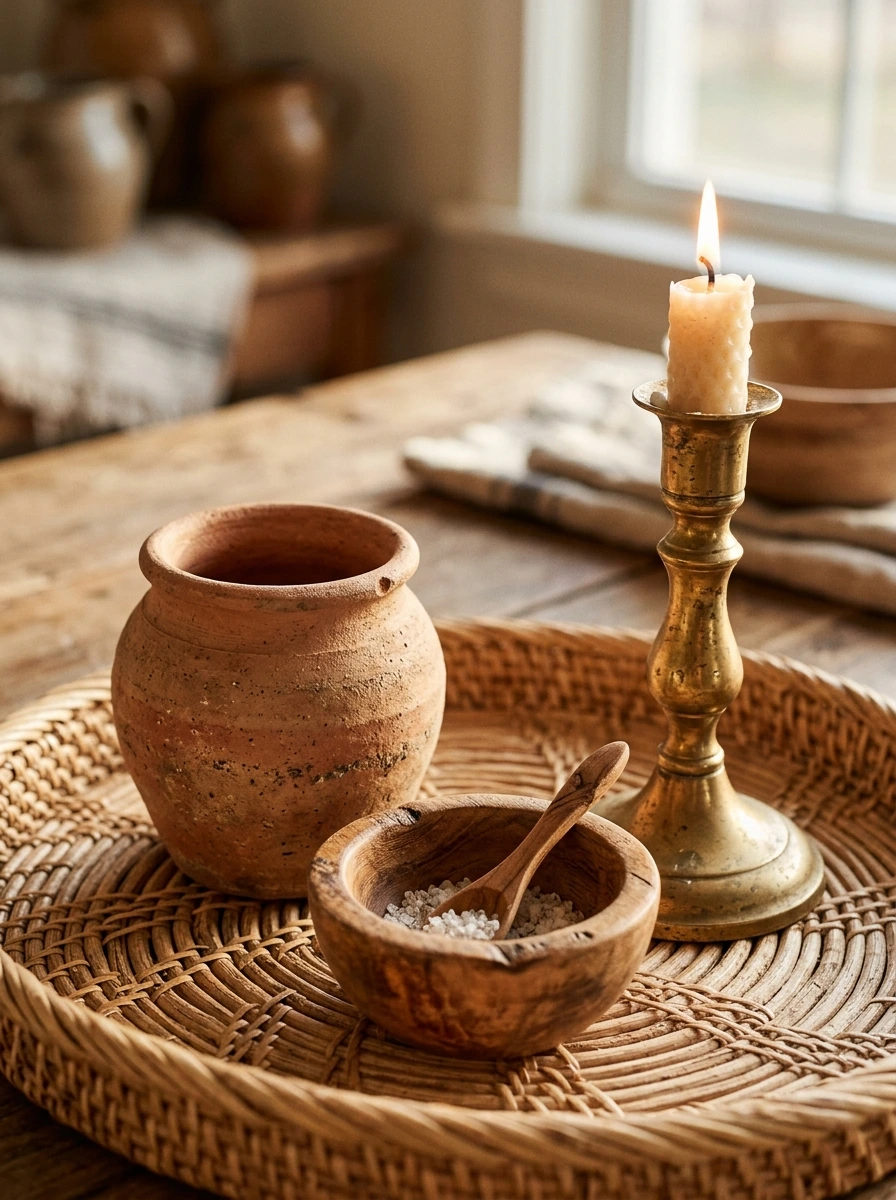
This clay-and-brass combination is the same one driving a warm bedroom aesthetic upstairs, and it translates just as well onto a living room table. Group a terracotta vessel, a wood bowl, and a small brass object together on a wood tray so the warm tones repeat across every piece. Keep the objects at slightly different heights, terracotta lowest, brass in the middle, wood bowl tallest, so the grouping has a clear visual order. This is minimalist coffee table styling with warmth built in, rather than the cool, stark version people usually picture when they hear the word minimalist.
❃ What You’ll Need
- One terracotta vessel or planter
- One small wood bowl or dish
- One brass object, candlestick or small tray
- One shared wood or woven base tray
14. The Moody Dark Surface Vignette
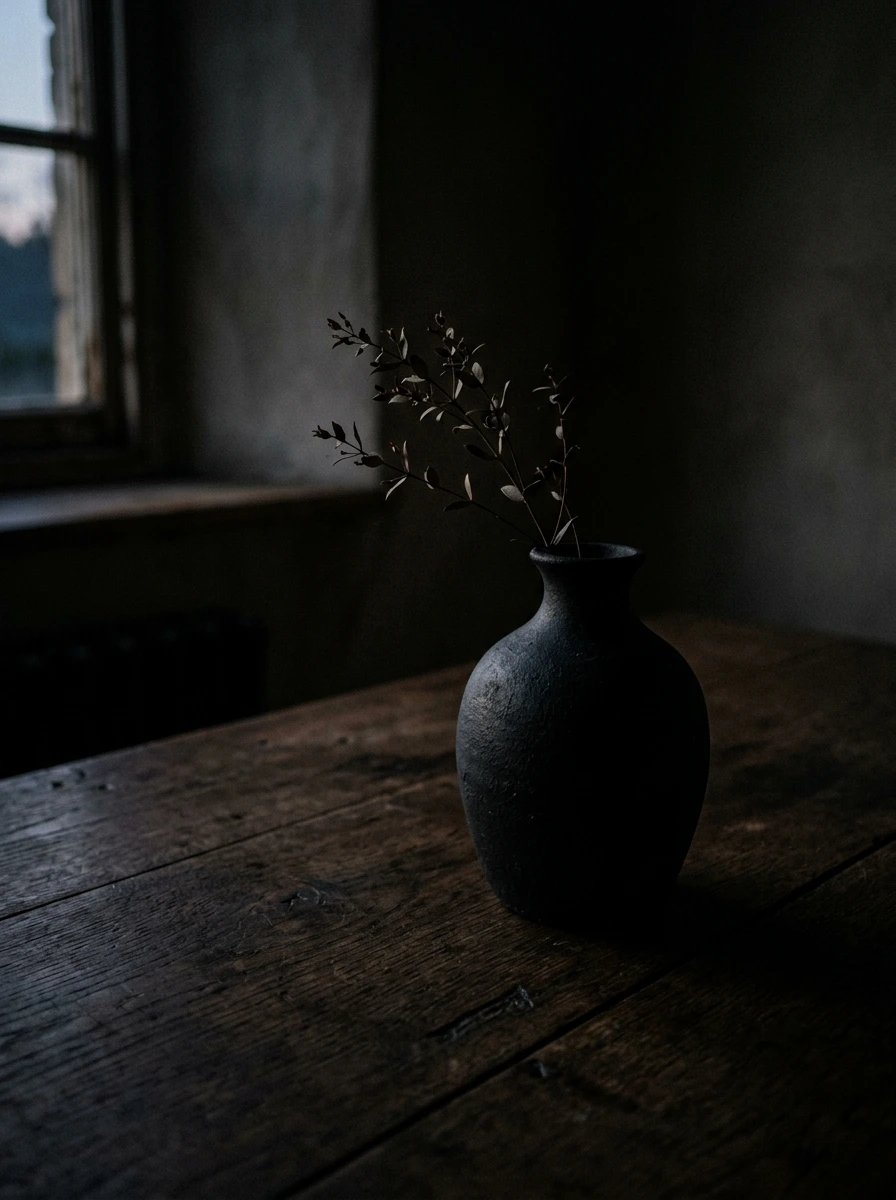
It’s the tabletop version of moody bedroom ideas, dark surfaces, low light, one dramatic object. Set a single matte black or deep charcoal vase against a dark wood table so the piece reads as sculpture rather than just another vase. Keep everything else off the table entirely, because moody styling depends on contrast and empty space more than any other look on this list. This is one of the more dramatic accent table decor ideas I pull out for evening-focused rooms, where the table needs to hold its own under lamp light instead of daylight.
🖋️ Dahlia’s Styling Formula Dark objects need more negative space around them than light ones, not less. A black vase on a busy table disappears into the clutter, but the same vase alone on a dark wood surface becomes the entire focal point of the room.
15. The Catch-All Tray for Keys and Objects
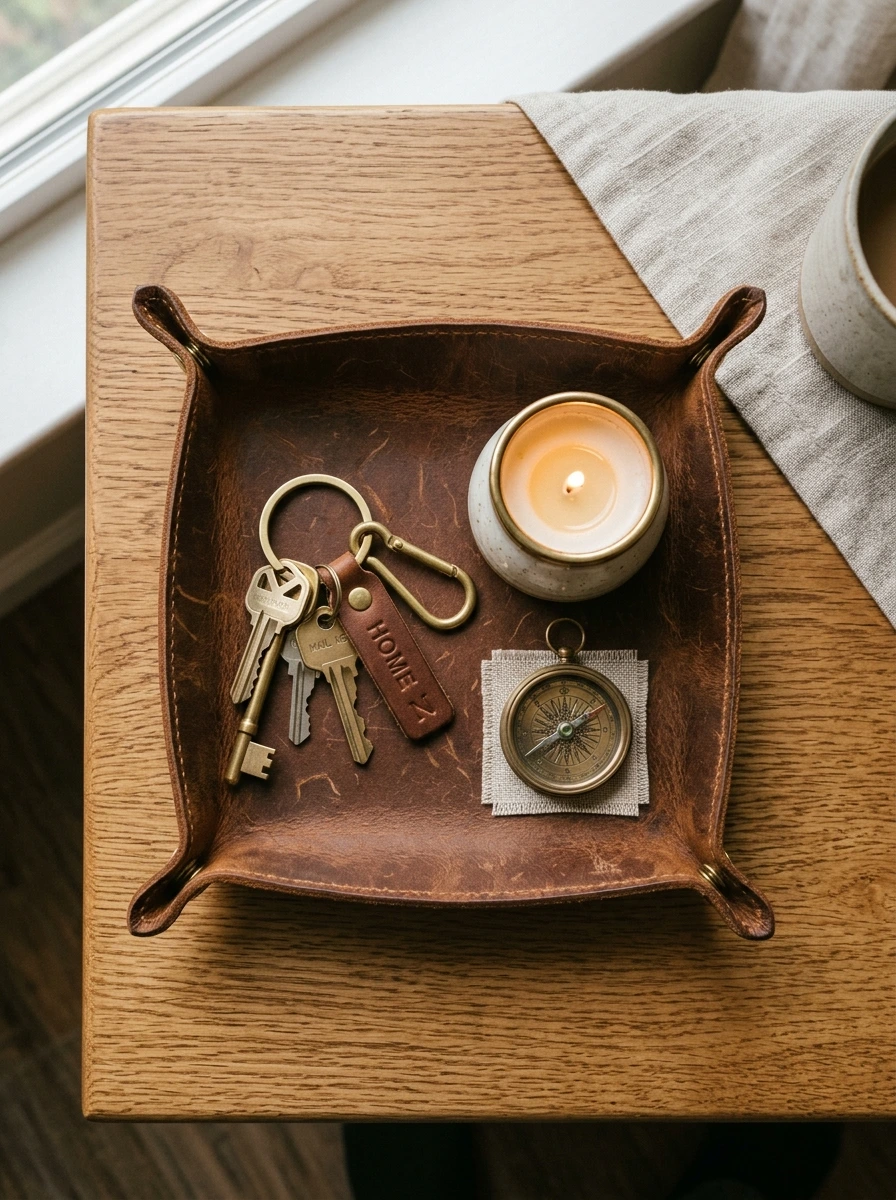
Not every side table needs to be precious, and this look is built for the one that actually gets used daily. A leather or wood valet tray holds keys, a candle, and one small decorative object so the practical stuff has a designated spot instead of scattering across the surface. This is the living room table decor equivalent of a junk drawer that’s actually organized, and it solves the real complaint I hear most from clients: their styled table stops looking styled after one week of actual living. Give the mess a container and the container becomes the style.
Nesting Table Looks
16. The Split-Level Object Distribution
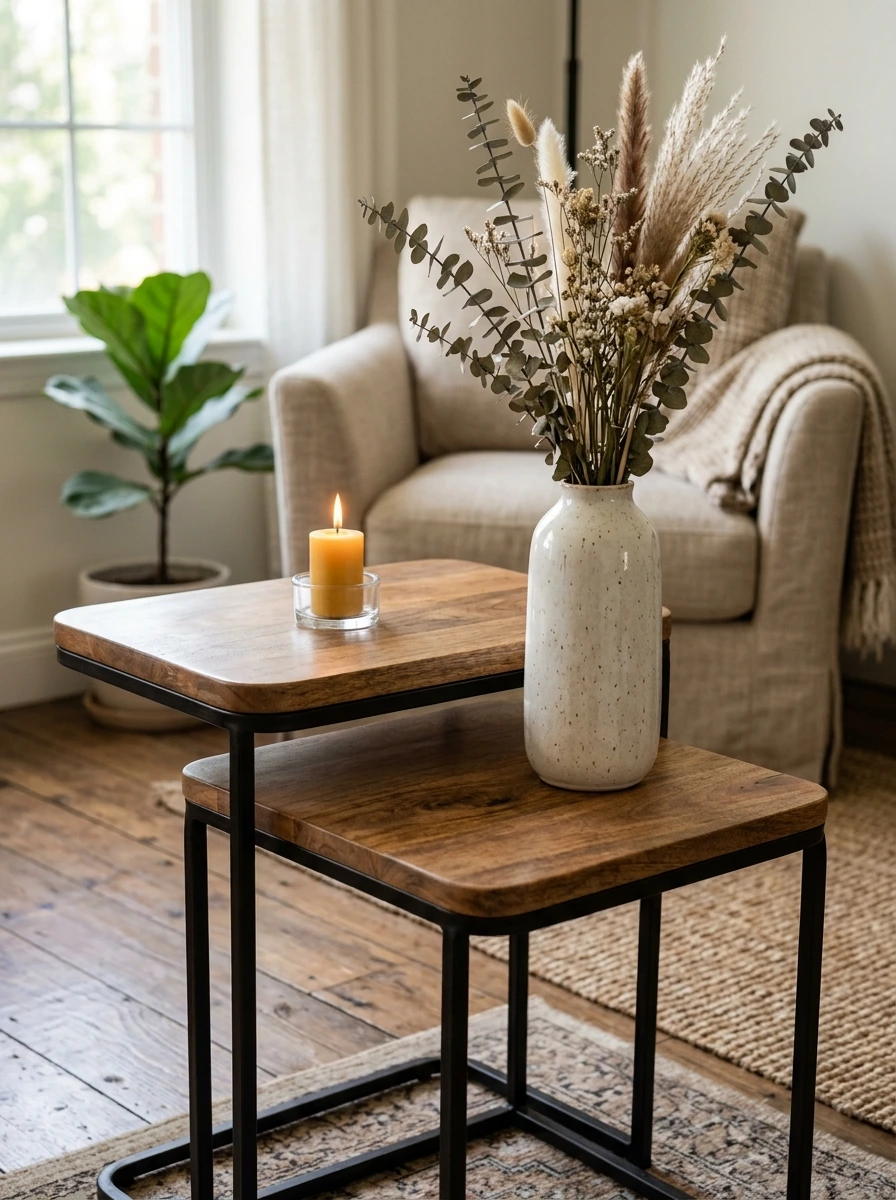
Nesting tables decor works best when you treat the two surfaces as one vignette split across two levels rather than two separate tablescapes. Put the taller object, a vase or a stack, on the lower table where it has room to breathe, and keep the top table nearly bare with just one small item. This automatically builds in the height variation the formula calls for, since the tables themselves are already staggered. It’s an easy fix for anyone who’s been piling both surfaces with unrelated objects and wondering why the corner of the room looks messy.
🧺 Tray Test Slide a small tray under whatever sits on the top nesting table, even if it’s just one candle. A tray anchors a single object so it reads as placed rather than left there, which matters even more on a small nesting table surface than on a full-size coffee table.
17. The Minimalist Two-Object Rule
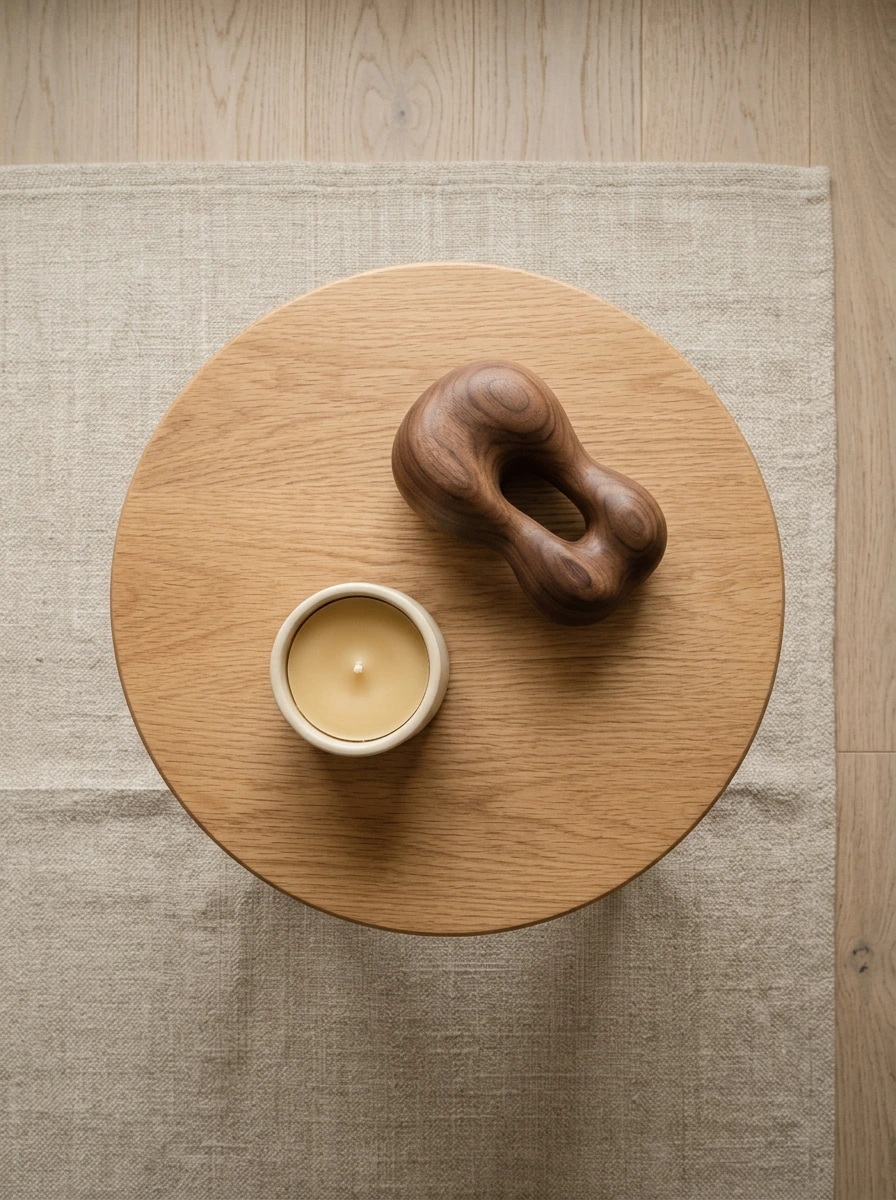
When space runs out, and nesting tables are usually where that happens, drop down to exactly two objects and nothing more. One small sculptural piece and one low candle is enough to make a table feel intentional instead of empty. This is minimalist coffee table styling taken to its logical end point, and it works because restraint photographs just as well as abundance when the two objects have real texture. A wood or matte ceramic piece keeps the pairing from feeling cold. Nesting tables decor rarely needs more than this to feel finished.
❃ What You’ll Need
- One small sculptural object, wood or ceramic
- One low candle in a simple holder
- Nothing else on the surface
18. The Small Space Nesting Solution
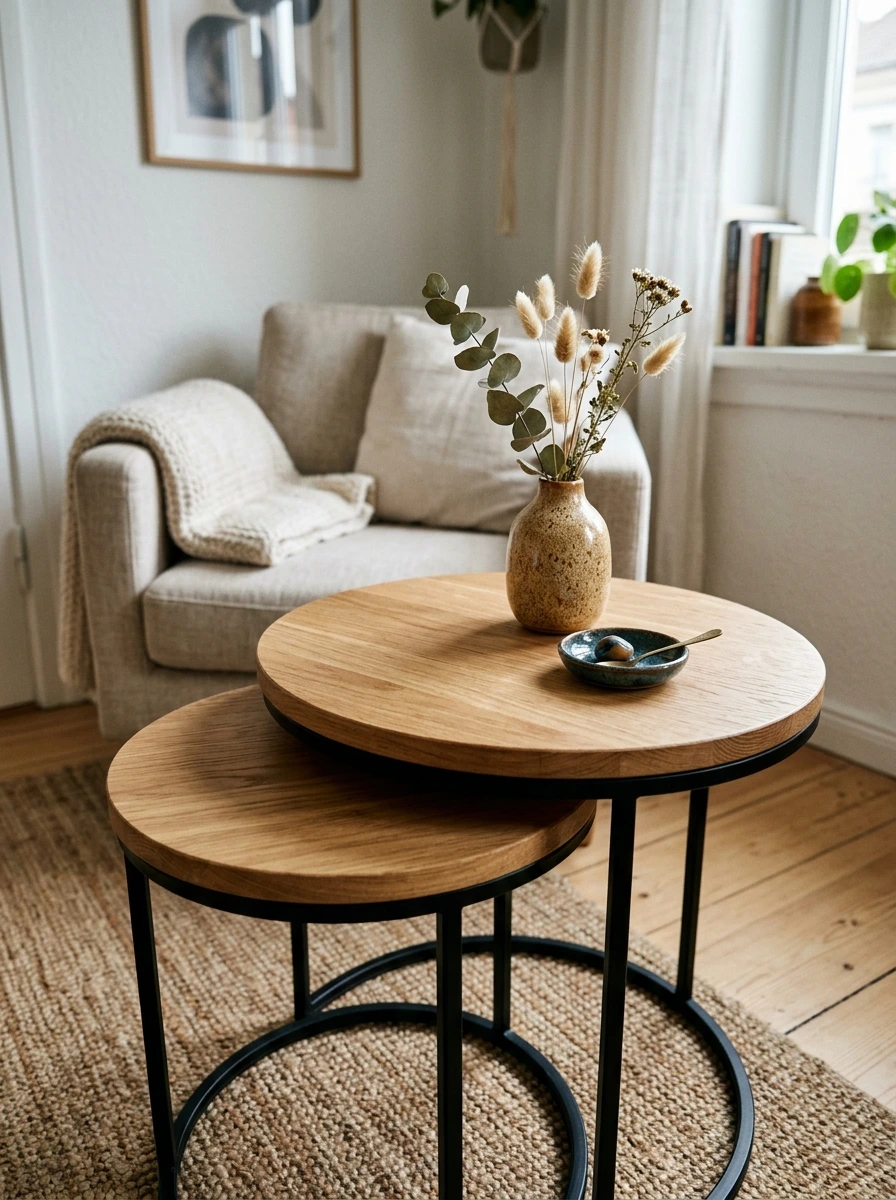
Small living room table decor has one rule above all others: scale down every object, not just the table itself. A miniature vase, a single coaster stack, and a tiny dish are proportional to a nesting table in a way that full-size versions never are. This solves the most common complaint I hear about small apartments, where a client bought living room-scale decor for a table that’s a third of that size. Once the objects match the scale of the surface, even a cramped corner reads as styled rather than crowded. Good nesting tables decor and small living room table decor both come down to the same instinct: shrink the objects before you shrink your standards.
19. The Textured Bowl and Bead Garland Combo
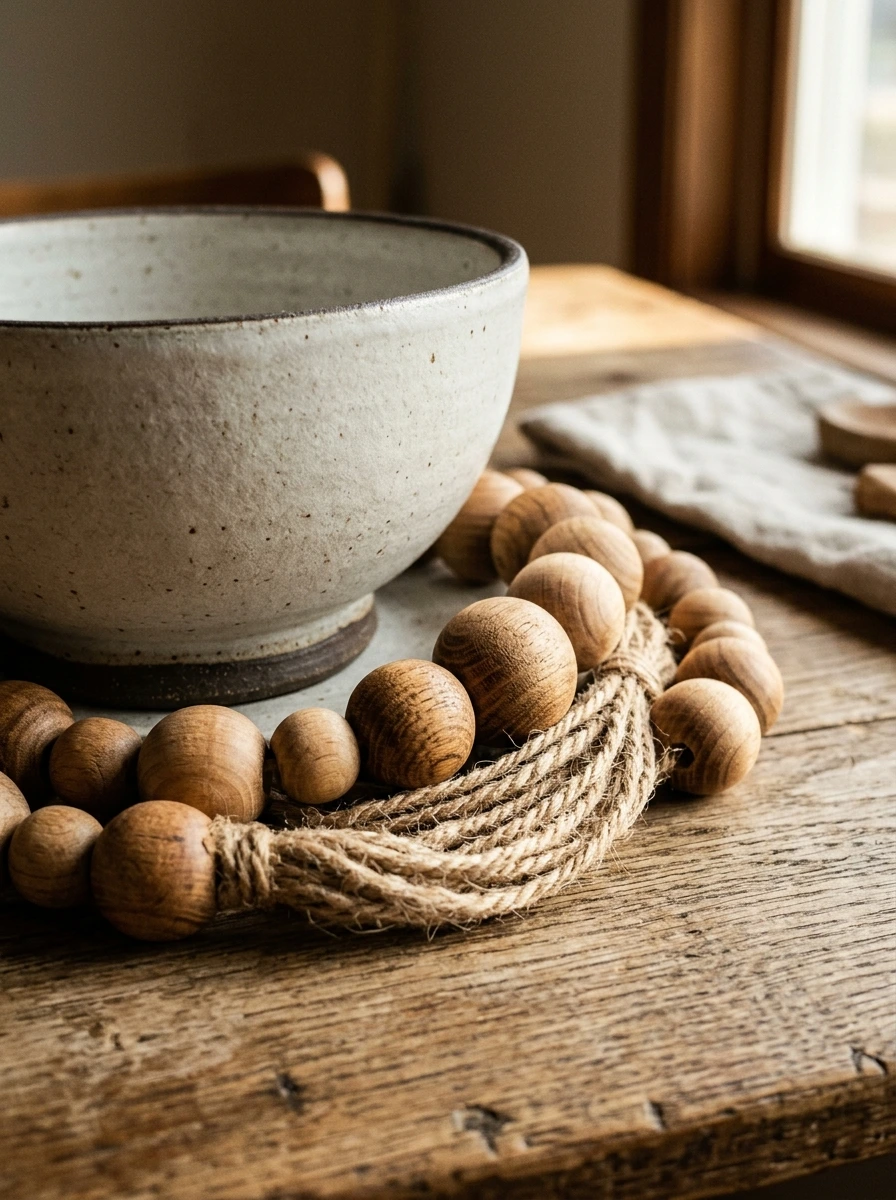
Drape a wood bead garland loosely around the base of a small textured bowl so the garland becomes part of the composition instead of an afterthought accessory. The garland’s organic, slightly irregular shape gives you the natural material accents the formula wants, without adding a full extra object to an already-small surface. Choose a bowl in a matte or unglazed finish so the wood tones of the garland don’t clash against a glossy surface. This sculptural object decor pairing has become one of my most requested looks for smaller tables because it takes up almost no space while still reading as fully styled.
🖋️ Dahlia’s Styling Formula A garland does the job of an entire second object when you loop it rather than lay it flat. Coiling it around the base of a bowl or vase gives you texture and a sense of movement in a footprint smaller than any additional item would take up.
20. The Everyday Reset Formula
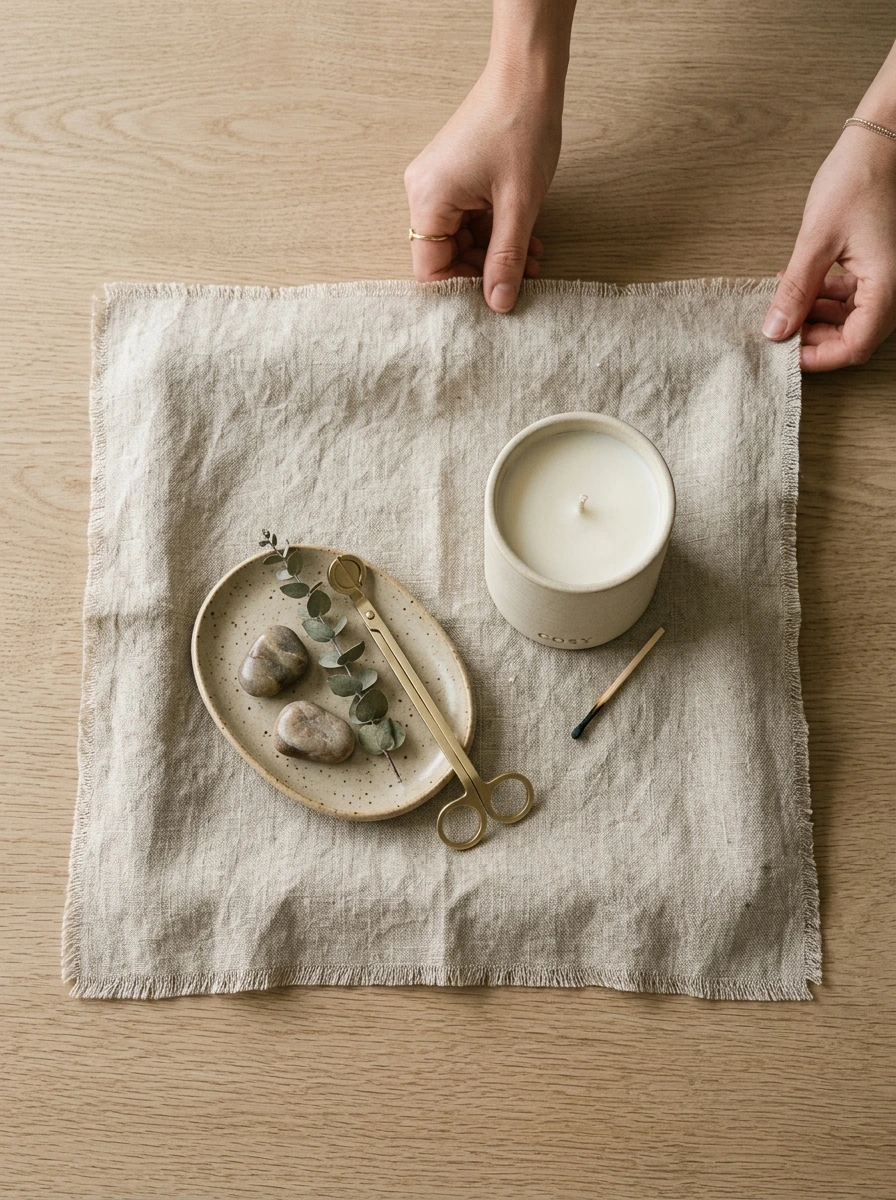
This last one isn’t a specific vignette so much as the habit that keeps every other look on this list intact past the first week. Once a week, clear the table completely, wipe it down, and rebuild the vignette from scratch using the same formula: height, one organic piece, one textured piece, negative space. A simple linen liner under whatever tray you’re using makes this reset faster because you’re really just repositioning three or four objects, not starting over. Living room table decor stays looking finished not because you found the perfect objects once, but because you keep tending to the small arrangement the same way you’d tend to anything else in the room.
Frequently Asked Questions
How do you style a coffee table like a designer?
If you want to know how to style a coffee table the way a designer would, start with the formula: one object with height, one organic element like a stem or branch, one textured piece, and enough open space that nothing feels crowded. Designers rarely use more than four or five objects total on a coffee table, and they group by odd numbers rather than pairs. The difference between designer living room table decor and an average table usually comes down to restraint, not budget.
What goes on a living room accent table?
A small accent table typically holds two to three objects: a lamp if it’s doing double duty, one decorative piece with height, and maybe a small dish or vase. Accent table styling works best when the table isn’t asked to hold more than it can visually support. Think of it as a supporting player, not the main event, which is really the heart of good living room table decor at any scale.
How many objects should be on a coffee table?
Most coffee tables look best with three to six objects, grouped into one or two vignettes rather than scattered individually. The odd number styling rule, using three or five pieces instead of two or four, tends to look more natural because it avoids a too-symmetrical, showroom feel. More than six objects usually tips a table into clutter territory.
Is coffee table styling still popular?
Yes, and it’s arguably grown more popular as people spend more time at home and want their everyday spaces to feel considered. Coffee table styling ideas have shifted toward warmer, more textured looks and away from the stark, all-white minimalism that dominated for a while. The core principles, height variation and negative space, haven’t changed even as the materials trending right now have.
How do you style a round coffee table?
Lean into the round shape by using a round tray as your base layer, which repeats the table’s own silhouette. Build height at the center or slightly off to one side, and keep the outer edge of the table clearer than you would on a rectangular surface. Round coffee table decor tends to look best with fewer, slightly larger objects rather than many small ones.
What’s the easiest way to style a table on a budget?
Use what you already own before buying anything new. A stack of books you already have, a bowl from your kitchen, and a candle from a drawer can build a full vignette using the same formula as an expensive one. The trick that event stylists use for wedding reception themes applies here too: it’s the layering and restraint that reads as expensive, not the price tag on any single object. This is honestly the whole secret behind budget-friendly living room table decor.
Do you need a tray to style a coffee table?
You don’t need one, but a tray makes the job considerably easier because it draws a visual boundary around your objects. Tray styling ideas work by containing a grouping so it reads as one composed moment instead of several unrelated items. If your table already has strong shape or material of its own, you can skip the tray and let the surface do that job instead.
How do you keep a styled table looking lived-in, not staged?
Leave one object slightly imperfect: a book stack angled instead of squared, a stem that’s a touch too long, a candle that’s clearly been lit before. It’s the tabletop version of moody bedroom ideas a little imperfection reads as more real than a scene that looks untouched. A table that’s too precise usually signals “no one is allowed to use this,” which isn’t the goal for most living rooms.
What’s the rule of odd numbers in table styling?
Grouping objects in threes or fives, rather than twos or fours, tends to feel more natural to the eye because it avoids perfect symmetry. This odd number styling rule shows up constantly in table vignette ideas because even-numbered groupings can start to look like a matched set from a store display. It’s a small detail, but it separates styled living room table decor from a table that just has stuff on it.
How often should you refresh table decor?
A light refresh, like swapping a stem or rotating a book, works well every few weeks, while a fuller reset makes sense once a season. Seasonal swaps keep a vignette feeling current without requiring new objects most of the time. The goal isn’t constant change, it’s just enough movement that the table never goes stale.
The Set Stylist’s Close
Living room table decor isn’t about finding the one perfect object. It’s about a handful of pieces that respect each other’s height, texture, and space, arranged with just enough intention that the table looks considered without looking untouchable. Every vignette in this list traces back to that same formula, and once it clicks, you’ll start seeing it everywhere, on shoots, in stores, in other people’s homes.
Start with one table, not all of them at once. Pick the coffee table or the console-adjacent side table decor that bothers you the most, apply the formula, and let it sit for a week before you touch it again. If you’ve got the wedding reception themes piece bookmarked for other rooms in the house, the same instinct for layering and restraint carries straight through here.
I’ve styled hundreds of tables for The Muse Vale readers and clients alike, and the ones that hold up longest are never the most expensive. They’re the ones built on a formula simple enough to repeat without thinking, which is really the whole point of good living room table decor in the first place.