
Dear Fireplace Owner,
Your fireplace living room is sitting there right now, half-finished, waiting on you to notice what it’s already telling you. Maybe you just moved in and the brick hearth came with the house, or the sofa is still parked in the dent-marks from the movers, and you have no idea where to hang a mirror or which direction the room is even supposed to face. I’ve spent years sitting in front of fireplaces like yours, in New England colonials and California bungalows and apartments with an electric insert that still does the job, and I’ve learned that a hearth centered living room has rules nobody writes down. This letter covers all twenty-five of them, from the mantel to the rug to what you do with the room once the leaves turn. Pull up a chair. We’re starting at the mantel, because that’s where your room starts too.
What Your Fireplace Is Already Telling You About the Room
Before you buy a single throw pillow, look at what you already have. Every fireplace living room has a personality built into its bones, and your fireplace room decor should work with that personality instead of fighting it. Here’s what five common hearths are telling you, whether you’ve noticed yet or not.
🔥 THE BRICK COLONIAL HEARTH What it tells you: This room wants warmth, texture, and a little bit of history in the furniture. What it needs most: Furnishings with weight, wood tones, and worn-in fabric that can sit next to raw brick without looking staged. What it cannot carry: Anything glossy, ultra-modern, or chrome. A brick fireplace living room resists cold materials on principle.
🔥 THE MARBLE SURROUND FIREPLACE What it tells you: The room already has a formal center, and everything else needs to rise to meet it. What it needs most: Restraint. Marble does the talking, so furniture and accessories should support it, not compete. What it cannot carry: Clutter. A marble surround reads as fussy the moment you overload the mantel above it.
🔥 THE MODERN CONCRETE FIREPLACE What it tells you: This is a modern fireplace living room built on clean lines and quiet materials. What it needs most: Negative space. Concrete wants air around it, not a wall of framed art crowding the surround. What it cannot carry: Ornate or antique pieces. They’ll look like they wandered in from a different house.
🔥 THE ELECTRIC FIREPLACE INSERT What it tells you: You’re working with flexibility, not permanence, and the room can lean into that. What it needs most: A surround that gives it visual weight, because an electric insert alone often reads thin against a wall. What it cannot carry: Skipping the surround altogether. Without one, the fireplace looks like an appliance instead of a hearth.
🔥 THE PAINTED WHITE WOOD MANTEL What it tells you: This is the most forgiving hearth in American homes, and it wants to be styled, not overhauled. What it needs most: Contrast. Dark art, brass hardware, or a bold rug keeps a white mantel from disappearing into the wall. What it cannot carry: An all-white room around it. The mantel needs something to stand against.
Before anyone sits down on your sofa or notices your rug, they read your mantel. It’s the first thing people look at when they walk into a room like this, and it either tells them the room has been considered or it tells them nothing has happened here yet. This chapter is about getting that first sentence right.
1. The Empty Mantel Is Doing More Work Than You Think
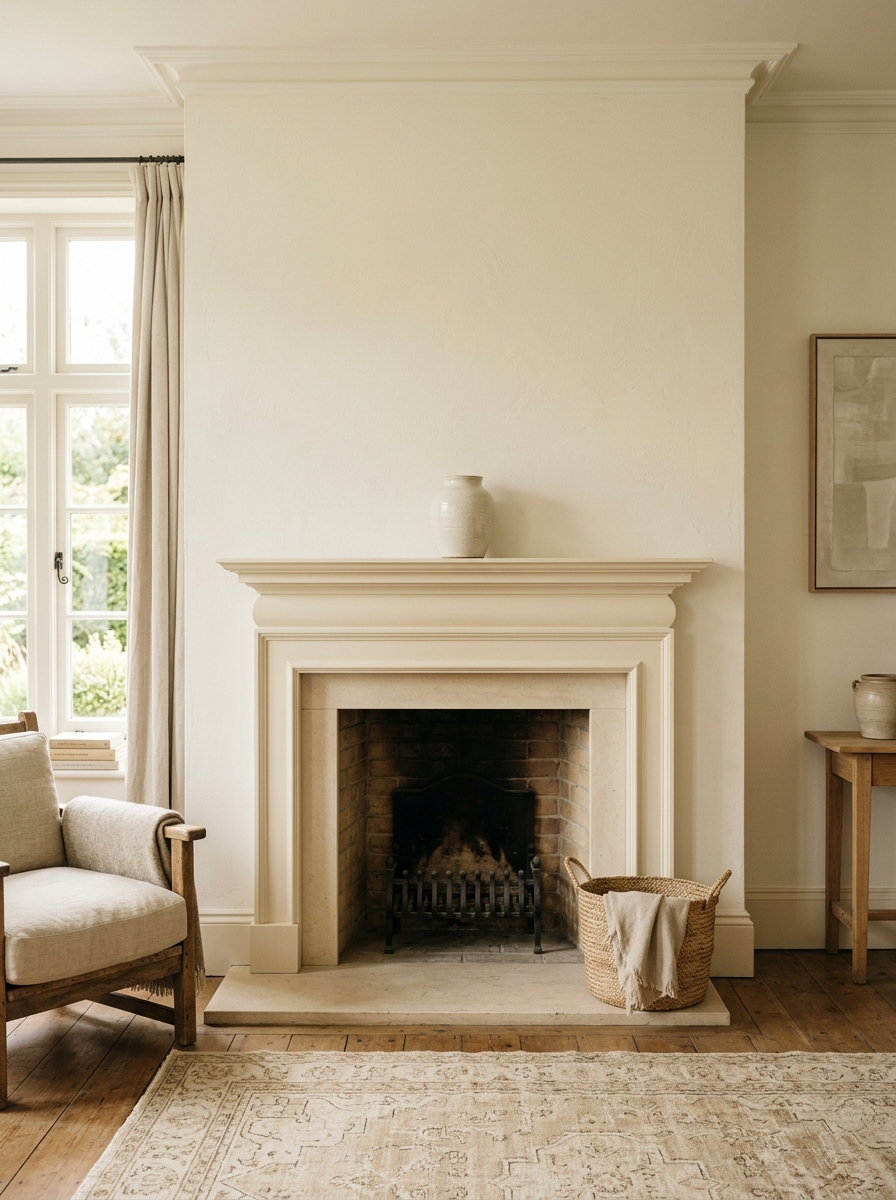
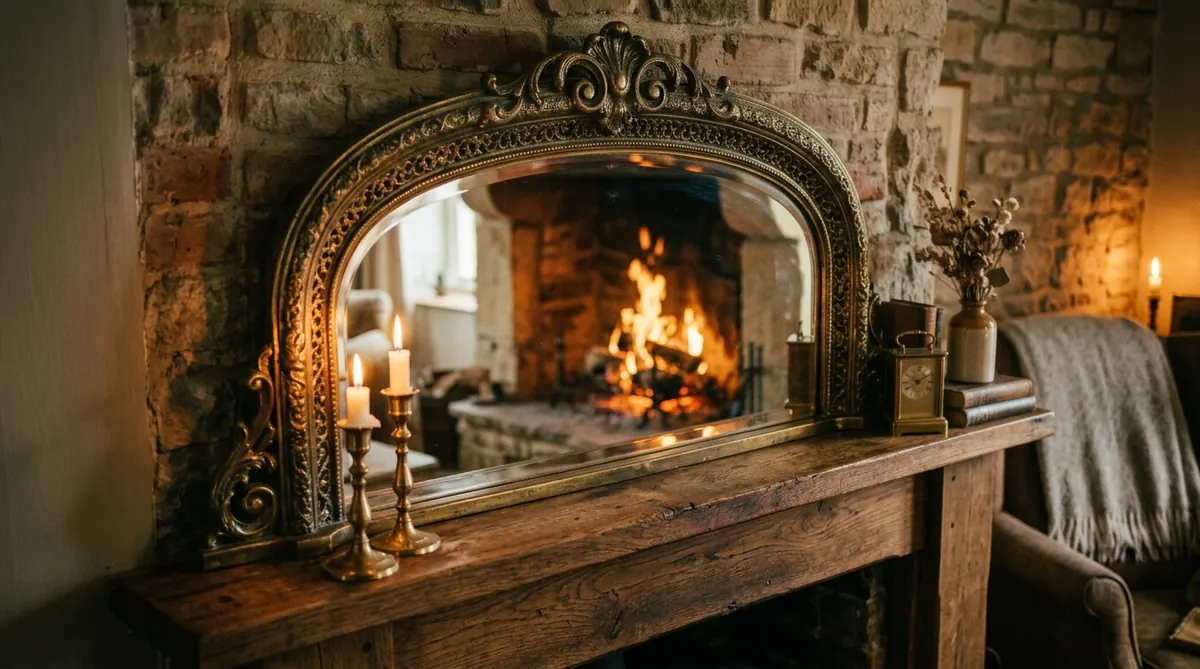
An empty mantel isn’t a blank slate. It’s a decision, and most people don’t realize they’ve made it until a guest asks if they’re still moving in. Start with one anchor piece centered on the shelf, then build outward in odd numbers rather than pairs, since asymmetry reads as intentional in a way perfect symmetry rarely does on a first try. Skip the mantel entirely and the rest of the room has nothing to orient around, which is why so many otherwise well-furnished rooms feel unfinished. Layer height with a mantel vignette styling approach, mixing one tall piece with two or three shorter ones. I’ve watched people spend months on the sofa and the rug and never touch the mantel, and it’s always the first thing I fix.
2. Your Mantel Mirror Is Either Too Small or You Already Own the Right One
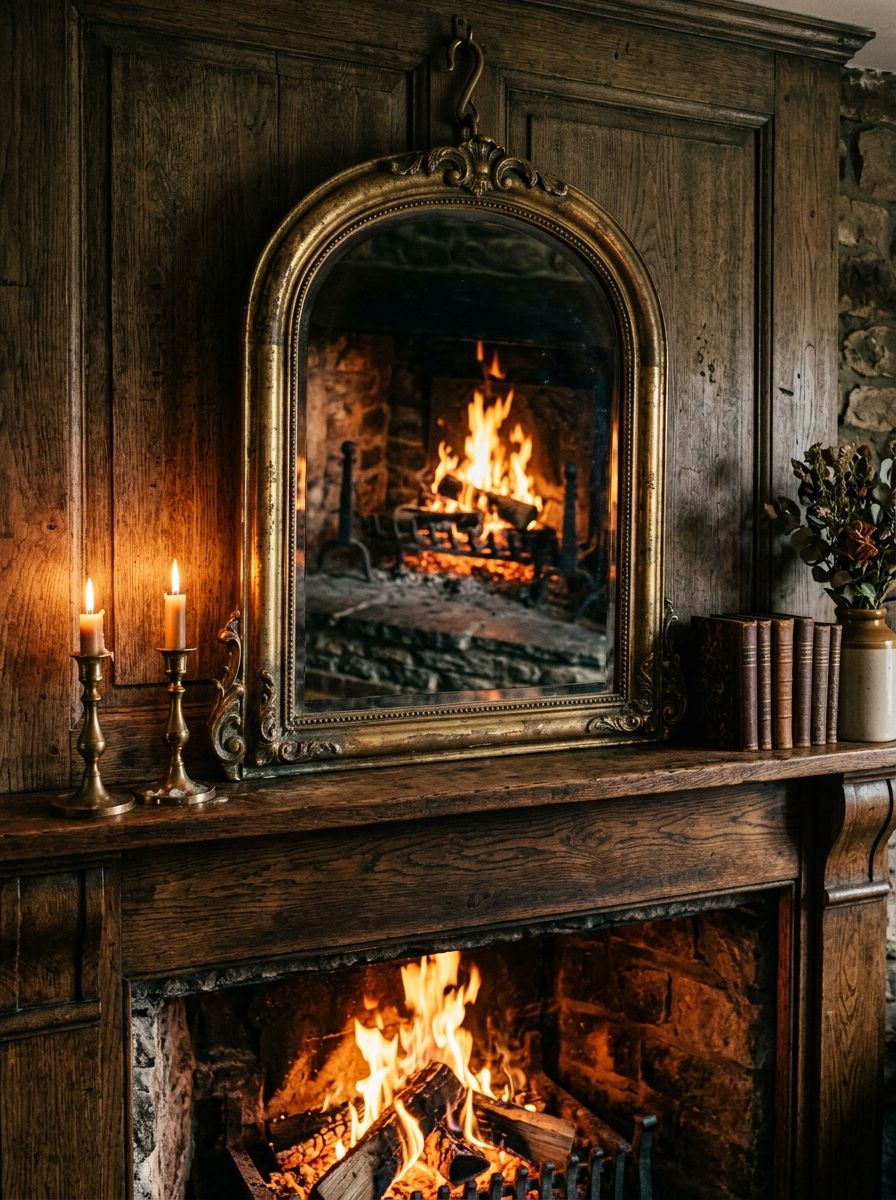
A mantel mirror has one job, and it’s not to be pretty. It needs to fill roughly two-thirds the width of the mantel shelf below it, because anything narrower floats awkwardly and anything wider overwhelms the surround. Most people buy a mirror sized for a bathroom and hang it over a fireplace, and it looks borrowed rather than built for the room. RH and Pottery Barn both carry arched and leaning mirrors sized specifically for a living room fireplace wall, which solves the proportion problem before you even measure. In every hearth centered living room I’ve styled, the mirror is the piece that gets replaced first once someone finally sees it done right.
A Note on This: Proportion Changes Everything
- ⬡ The mirror’s bottom edge should sit four to six inches above the mantel shelf, never resting directly on it.
- ⬡ McGee and Co.’s leaning floor mirrors work when a hanging mirror feels too formal for the room.
- ⬡ The most common mistake is centering a small round mirror alone on a wide mantel; flank it with sconces to fill the width instead.
- ⬡ HomeGoods restocks oversized arched mirrors seasonally, and they’re the easiest budget fix for this exact problem.
3. The Height Rule for Art Above the Fireplace Nobody Explains
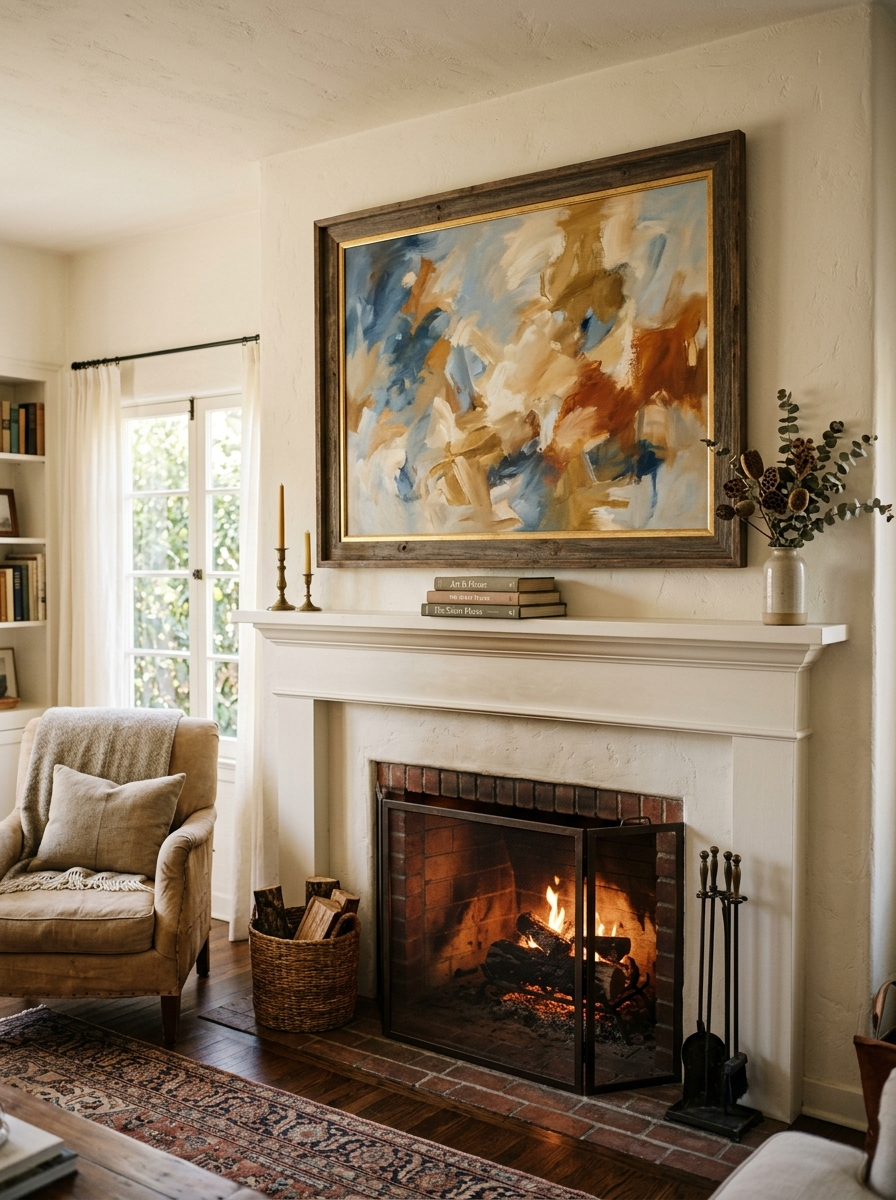
Art above a fireplace gets hung too high nine times out of ten, because people measure from the floor instead of from the mantel. The bottom edge of the frame should sit no more than eight inches above the mantel surface, close enough that the two feel like one composition instead of two separate decisions stacked on a wall. Hang it higher and the fireplace and the artwork stop talking to each other, which leaves an awkward gap of bare wall doing nothing for the room. A single oversized piece almost always outperforms a gallery wall in this exact spot, since one strong piece tends to read cleaner on a fireplace wall than several competing frames. I’ve corrected this height problem in more living rooms than any other single fix on this list.
4. What Stays on the Mantel All Year and What Only Gets to Visit
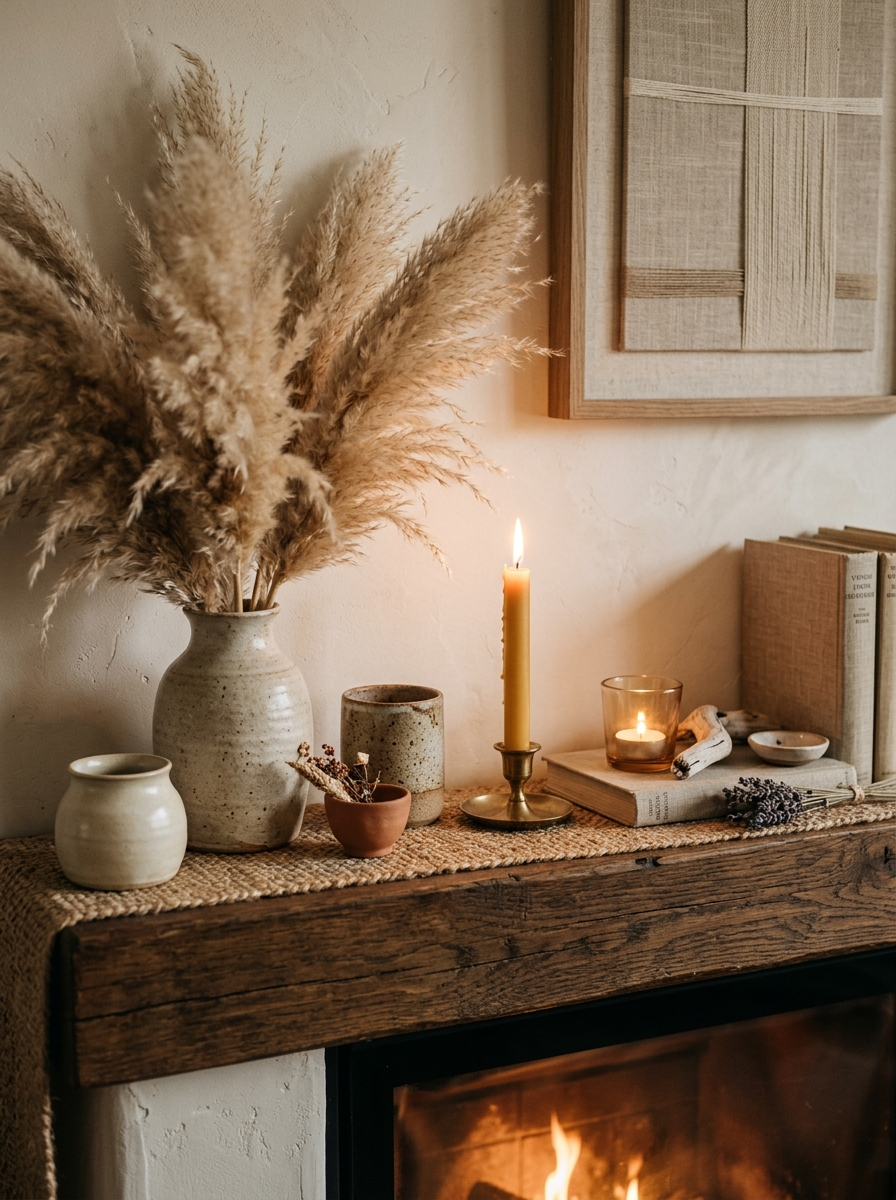
A seasonal mantel vignette works best when you decide what’s permanent before you decide what rotates. Your anchor piece, whether it’s a mirror, a piece of art, or a large object, stays put across every season and gives the eye something consistent to return to. Everything else, the candles, the greenery, the small ceramics, gets to rotate as fall moves into winter and back again, and that layering is what keeps a mantel vignette feeling current without a full redo. Swap every single object seasonally and the mantel never develops a personality of its own, which is the mistake I see most in rooms that otherwise look put together. Keep one thing constant and the mantel feels like it belongs to you, not to a display.
5. The Bookshelf Beside the Fireplace Needs Its Own Rules, Not the Mantel’s
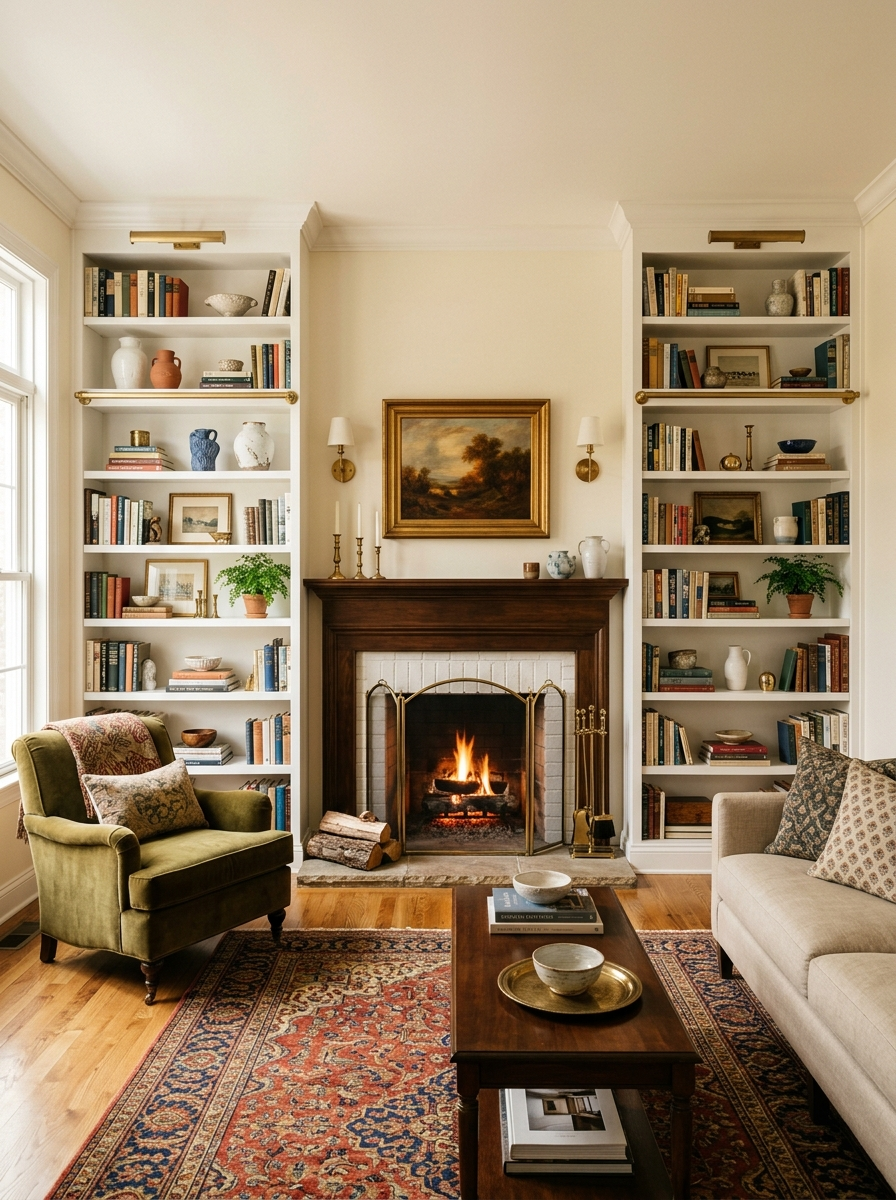
Built-in bookcase fireplace styling gets treated like an extension of the mantel, and that’s where it goes wrong. A mantel is a single horizontal line meant to be read at a glance, while a bookshelf is a vertical grid that needs rhythm across multiple shelves, not one tidy row of matching objects. Fill every shelf edge to edge with books and the fireplace disappears into a wall of clutter, so leave breathing room on at least half of each shelf for a vase, a stack of horizontal books, or nothing at all. Mirror the styling loosely on both sides rather than matching it exactly, because identical bookshelves flanking a fireplace tend to look like a furniture showroom instead of a lived-in room. The bookshelf is doing a different job than the mantel, and treating them the same is the most common styling mistake I still see.
6. Sometimes One Object on the Mantel Is Exactly Enough
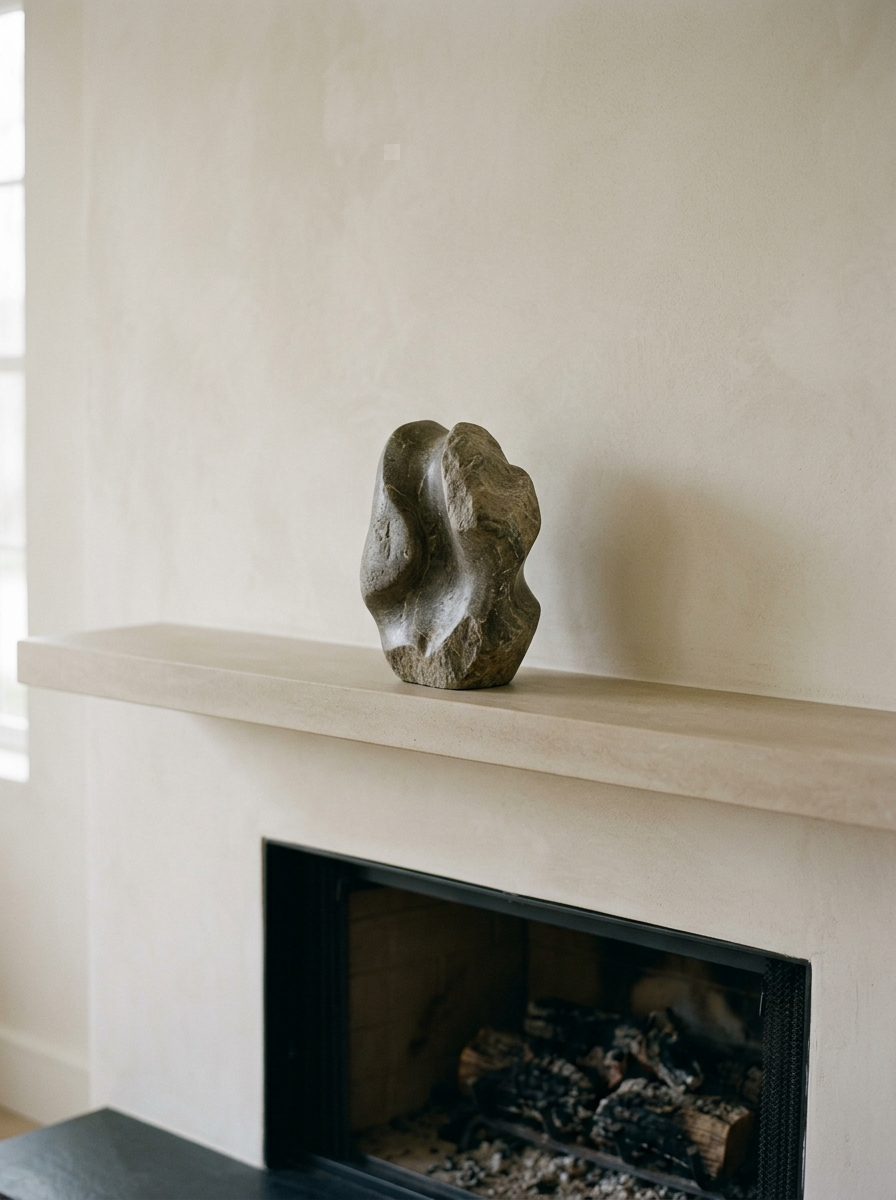
A minimalist mantel isn’t an unfinished one, though it’s often mistaken for that. One well-chosen object, centered or slightly off-center, can carry an entire room if the object itself has enough presence, whether that’s a large sculptural piece, a single framed photograph, or nothing but the mirror. This works especially well with a modern concrete fireplace or a marble surround, where the fireplace itself is already the star and the mantel just needs to let it be. Crowd a minimalist hearth with small objects and you fight the very quality that made it feel calm in the first place. I’ve seen more rooms ruined by an overfull mantel than by an empty one, and that’s the truth nobody tells you until you’ve lived with both.
🕯️ The Mantel Styling Formula: What Goes Where and Why the Order Matters
ANCHOR PIECE (center): A mirror, large art, or one sculptural object, sized to roughly two-thirds the mantel width and never more than eight inches above the shelf.
LEFT SIDE ITEMS: A stack of two or three objects graduating in height, tallest closest to the anchor piece, to build visual movement without competing with center.
RIGHT SIDE ITEMS: One or two objects at a different height than the left side, since matching pairs on both ends make the whole vignette feel stiff rather than lived-in.
THE FOREGROUND: A low, horizontal object, like a small tray or a short stack of books, that sits in front of the taller pieces and keeps the shelf from feeling like a straight row.
WHAT TO REMOVE: Anything purely functional left sitting out, like a remote control or a candle lighter. Fireplace mantel decor ideas fall apart the moment a utility object sneaks into the vignette.
This same layering logic is what separates a mantel that photographs well from one that just holds objects, and it’s a principle borrowed directly from classic living room style, where balance has always mattered more than symmetry.
The sofa and the fireplace are always negotiating for the same attention, and in most rooms one of them loses. Get the furniture arrangement right and the two stop competing and start working together, which is the difference between a room people admire and a room people actually sit in.
7. The Sofa Has to Sit Close Enough to Actually Feel the Fireplace
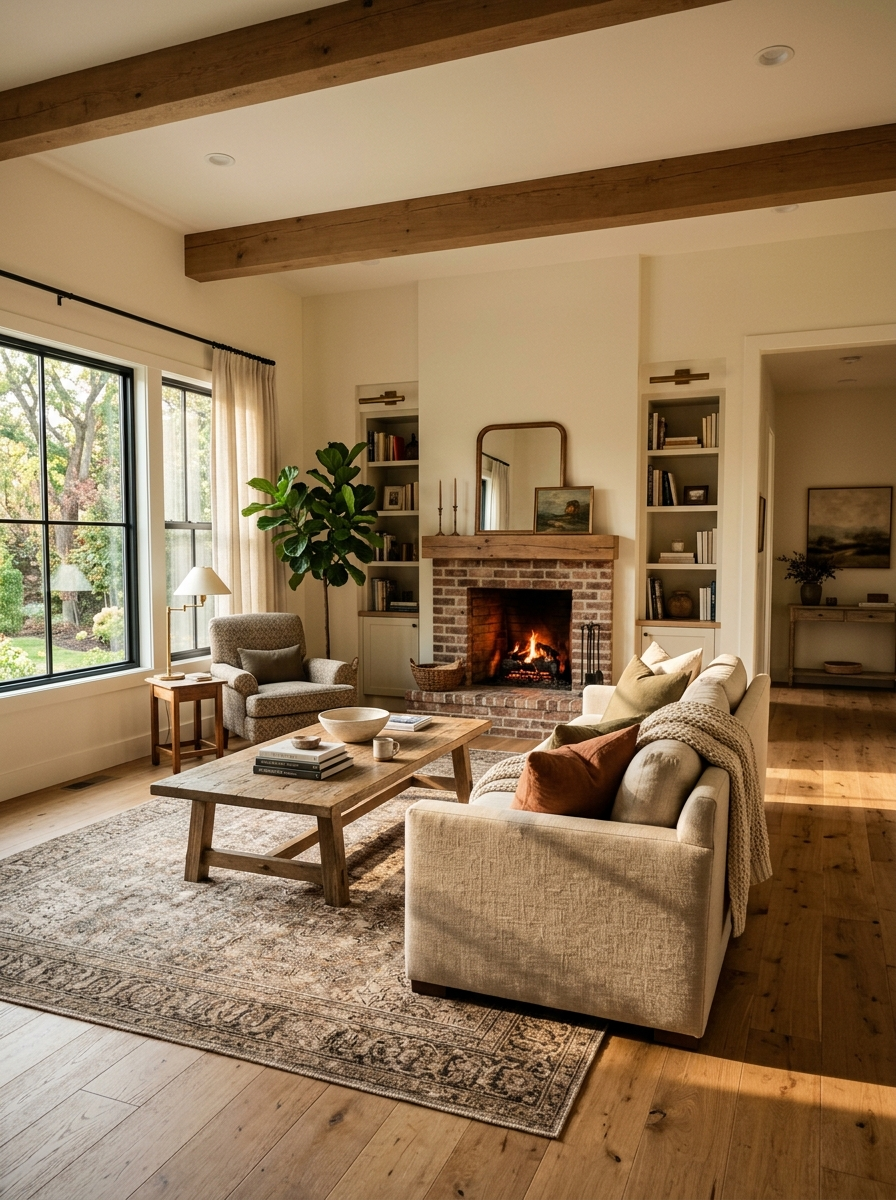
Every sofa facing fireplace layout only works within a specific distance, and most people push their sofa too far back against the opposite wall out of habit. Eight to ten feet between the sofa and the hearth is the range where you can still feel warmth from the fire and hold a conversation without raising your voice, and going wider than that turns the fireplace into a piece of art you look at rather than a source of heat you feel. Push the sofa flush against the far wall and you gain floor space but lose the entire relationship the room is built around. Fireplace focal point furniture should always be measured from the hearth outward, not the wall inward, which is a small mental shift that changes the whole layout. I’ve moved sofas eighteen inches closer to a fireplace and watched the room feel like a different house entirely.
8. Two Sofas Facing the Fireplace Is a Formal Promise Your Room Has to Keep
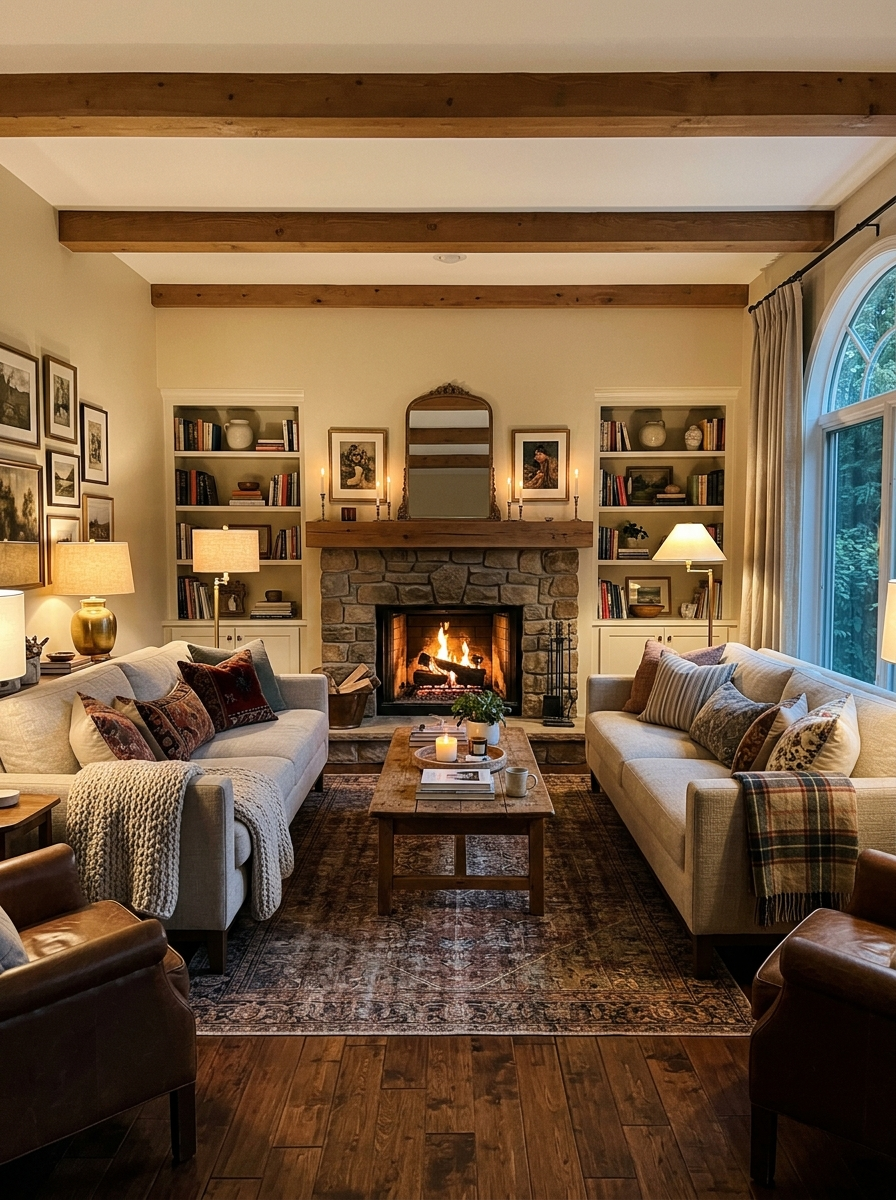
Two matching sofas flanking a fireplace create a symmetry that reads as elegant when the rest of the room supports it, and slightly stiff when it doesn’t. This layout works best in a room with enough width to let both sofas breathe, roughly twelve feet or more of clear wall-to-wall space, because in a tighter room the symmetry starts to feel like a formal dining set rather than a place to relax. Break the formality on purpose with mismatched throw pillows, a single oversized ottoman instead of two matching coffee tables, or one sofa in a different fabric than its twin. Skip that softening step and even a beautiful room can feel more like a hotel lobby than a home. Two sofas is the most ambitious version of this layout, and it’s worth doing only when the room genuinely has the scale for it.
A Note on This: Symmetry Needs Softening
- ⬡ Leave at least four feet of walking clearance on either side of each sofa so the room doesn’t feel boxed in.
- ⬡ West Elm’s track-arm sofas are sized well for this layout since their lower profile keeps sightlines to the fire open.
- ⬡ The common mistake is matching every accessory on both sides; vary the throw pillows and lighting to break the mirror effect.
- ⬡ A budget version uses one sofa and one pair of matching armchairs instead of two full sofas, which softens the formality automatically.
9. One Armchair, Angled Right, Changes the Whole Room
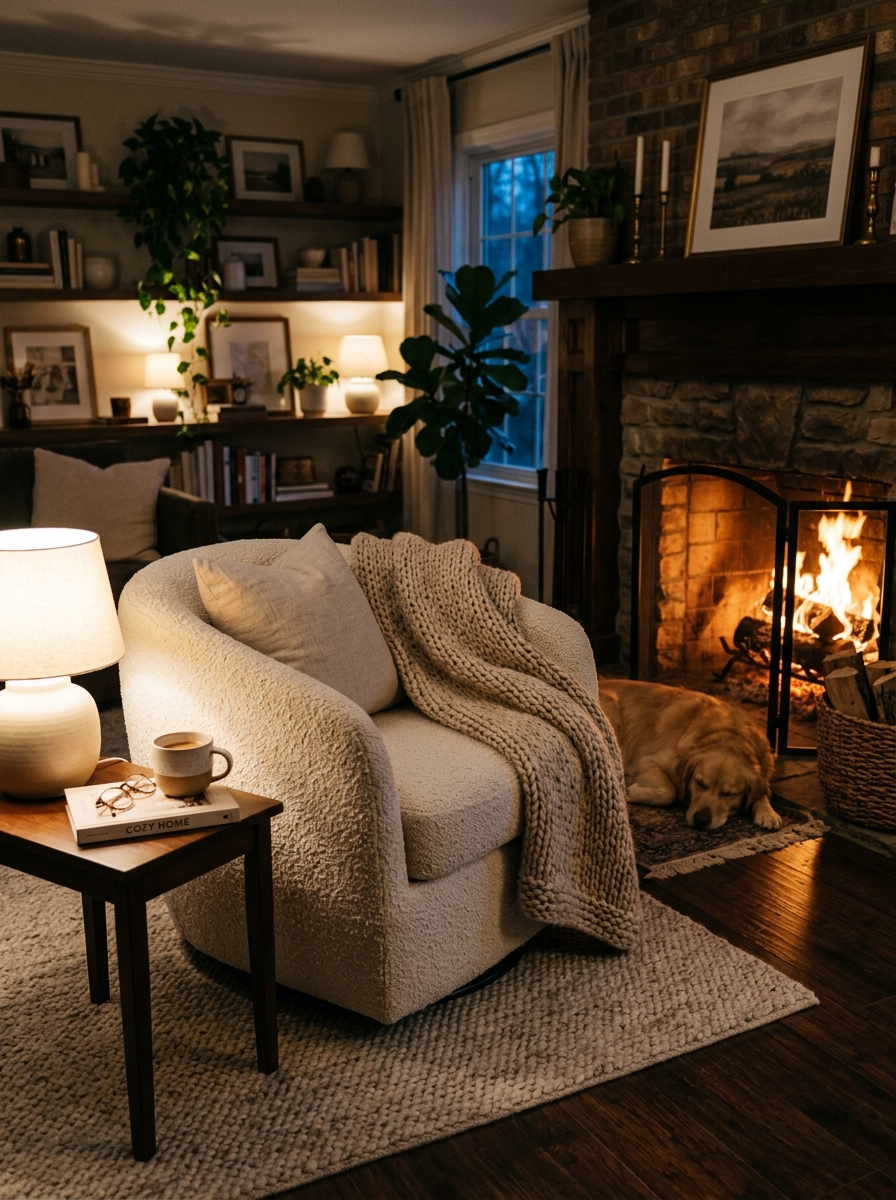
An armchair placed at an angle to the fireplace, rather than facing it head-on, does more for a room’s warmth than almost any other single piece. Angling the chair somewhere between thirty and forty-five degrees toward the hearth lets a person face both the fire and the rest of the room at once, which is exactly how conversation actually happens in a lived-in space. A hearthside seating arrangement that only faces the television or the sofa misses the whole point of having a fireplace in the room to begin with. A swivel chair solves this even more completely, since it lets one seat serve both the fire and the rest of the gathering depending on the moment. I’ve added a single well-angled chair to rooms that felt finished and watched them come alive in a way nothing else had managed.
10. An Open-Plan Fireplace Living Room Still Needs a Defined Room Inside It
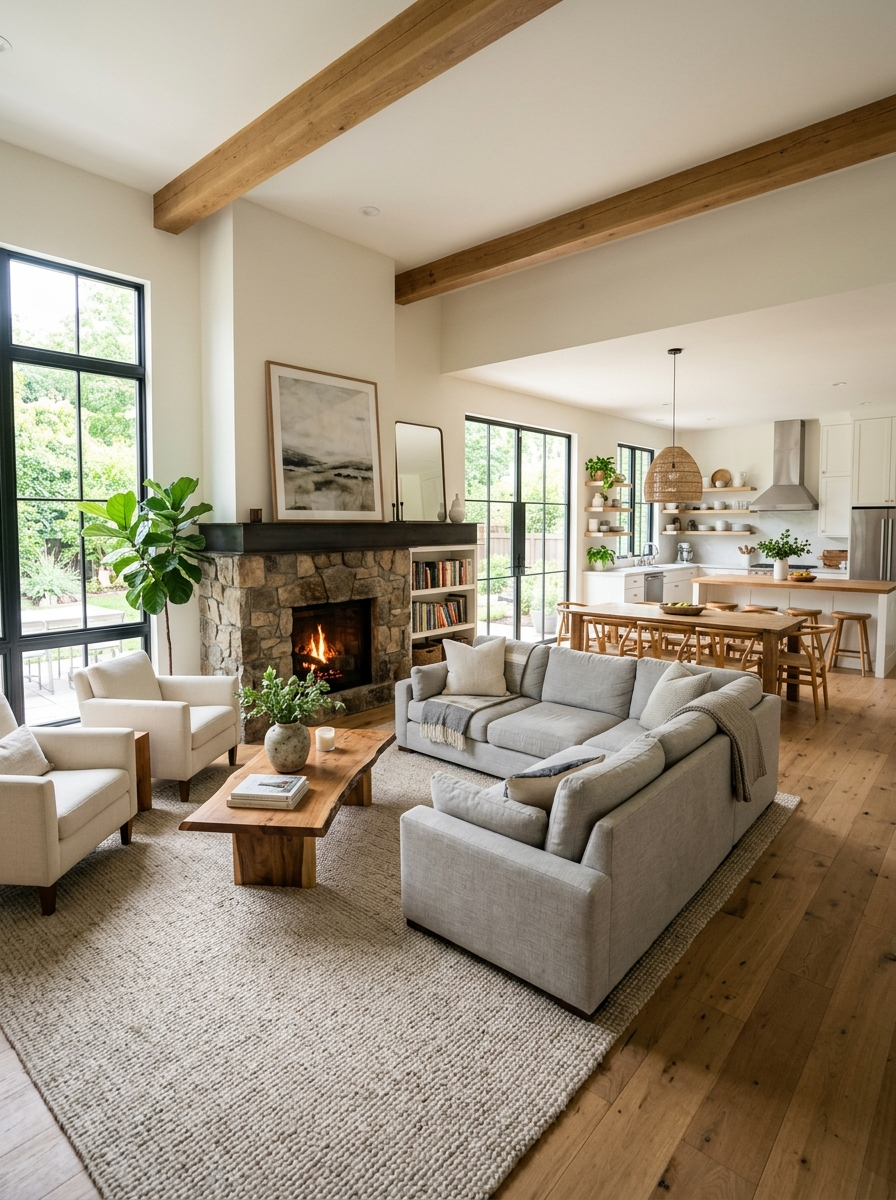
Furniture layout gets harder in an open floor plan, where the hearth has to anchor a seating area without the help of four walls to define it. The rug becomes the substitute for those walls, marking out exactly where the seating area begins and the kitchen or dining area ends. Float the furniture too far from the fireplace in an open plan and the seating area feels disconnected from its own focal point, drifting toward whatever the next open zone happens to be. Anchor every major piece of furniture, sofa, chairs, and coffee table, to the same rug, and the eye reads the space as one cohesive room even without walls to prove it. This is the single biggest layout challenge in newer American homes, and the rug is almost always the fix.
11. The Coffee Table Between You and the Fire Cannot Be an Afterthought
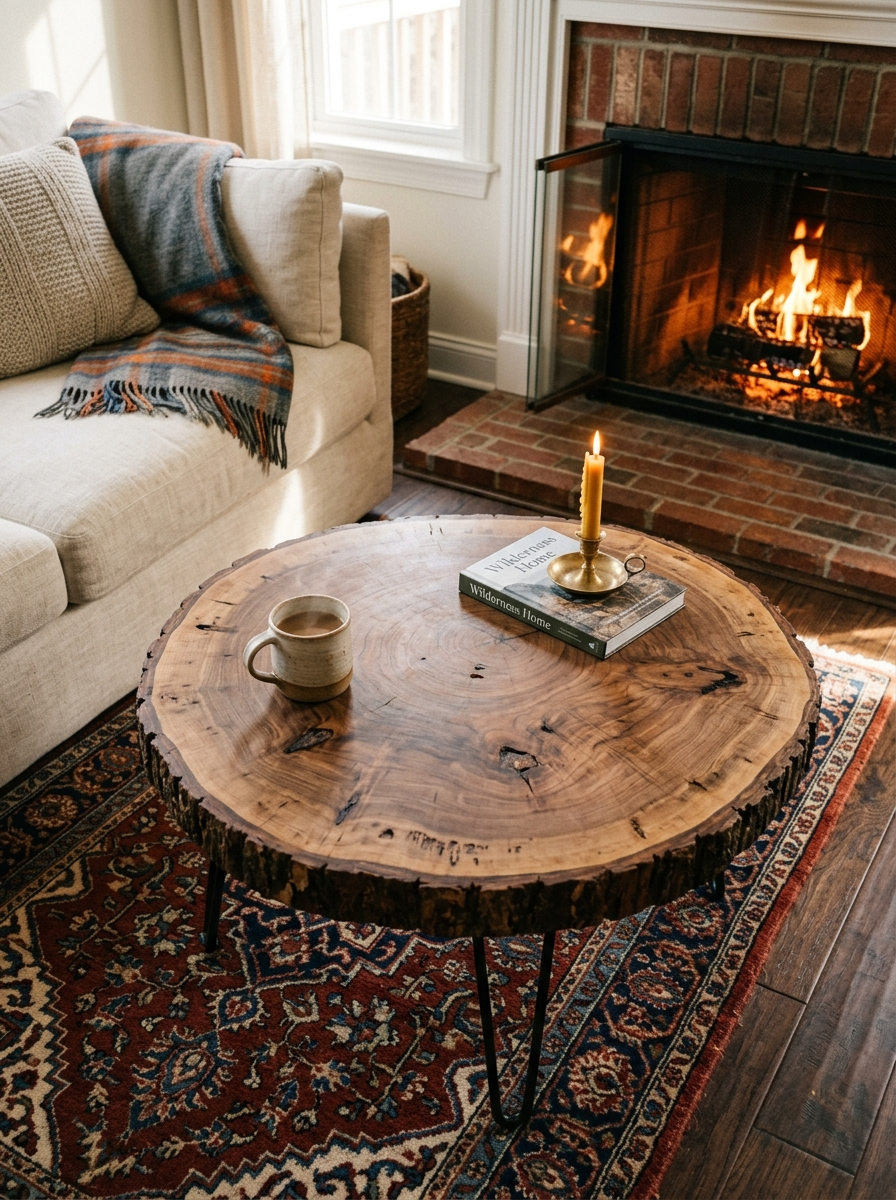
The coffee table sits directly in the sightline between the sofa and the fireplace, which makes its scale more important here than in almost any other room in the house. A round or oval table works better than a sharp rectangle in this specific spot, since rounded edges keep the path to the fire feeling open rather than obstructed. Set the table too high and it blocks the visual line to the flames when you’re seated; set it too low and it reads as an afterthought rather than a considered piece. This is a small decision most people rush, and it shows the moment you sit down.
12. A Short Wall Fireplace and a Long Wall Fireplace Are Not the Same Layout Problem
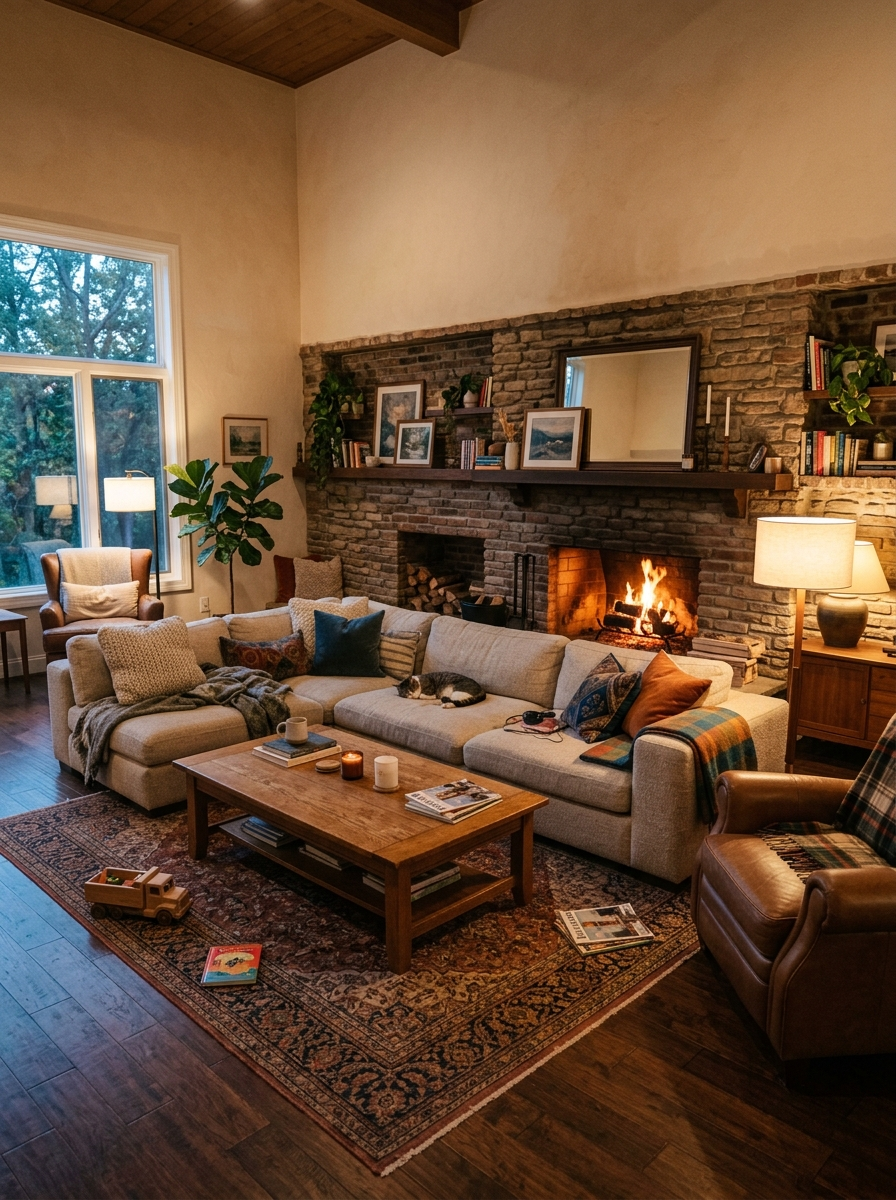
A fireplace centered on a short wall almost always wants a single sofa facing it directly, since the narrow wall naturally limits how much furniture can flank the hearth without crowding it. A fireplace on a long wall has more room to work with and can usually support a full seating arrangement, sofa, two chairs, and a sectional, all oriented toward the same point without feeling packed in. Treat both layouts the same way and the short wall version ends up cramped while the long wall version feels sparse and underused. Suburban brick hearths tend to sit on shorter walls, while many modern builds put the fireplace on a longer feature wall, so American homes genuinely split between these two problems. Measure the wall first, then choose the layout, not the other way around.
🛋️ The Fireplace Living Room Furniture Distance Guide: The Exact Measurements That Make or Break the Layout
SOFA TO FIREPLACE: Eight to ten feet, measured from the front edge of the sofa to the face of the surround.
COFFEE TABLE TO SOFA: Fourteen to eighteen inches, close enough to reach a mug without leaning far forward.
RUG EXTENSION BEYOND SOFA: At least eight to twelve inches past the front legs of every major seating piece.
ARMCHAIR ANGLE: Thirty to forty-five degrees toward the hearth rather than facing it directly.
MINIMUM CLEARANCE FROM HEARTH: Thirty-six inches of open floor directly in front of a working fireplace, both for safety and to keep the mantel visible from the seating area.
THE RULE OF THUMB: If you can’t feel the fire’s warmth from your usual seat, the sofa facing fireplace layout needs to move closer, not the fireplace.
These measurements sound rigid on paper, but they’re really just the starting point. Our living room design principles guide covers how to adapt them once your room’s actual proportions come into play.
The mantel and the furniture get all the attention, but the hearth itself, the rug beneath it, the surround, the little accessories, are where the room either feels finished or feels like it’s still in progress. This chapter is the fine print.
13. The Rug Has to Reach Past the Furniture, Not Just the Hearth
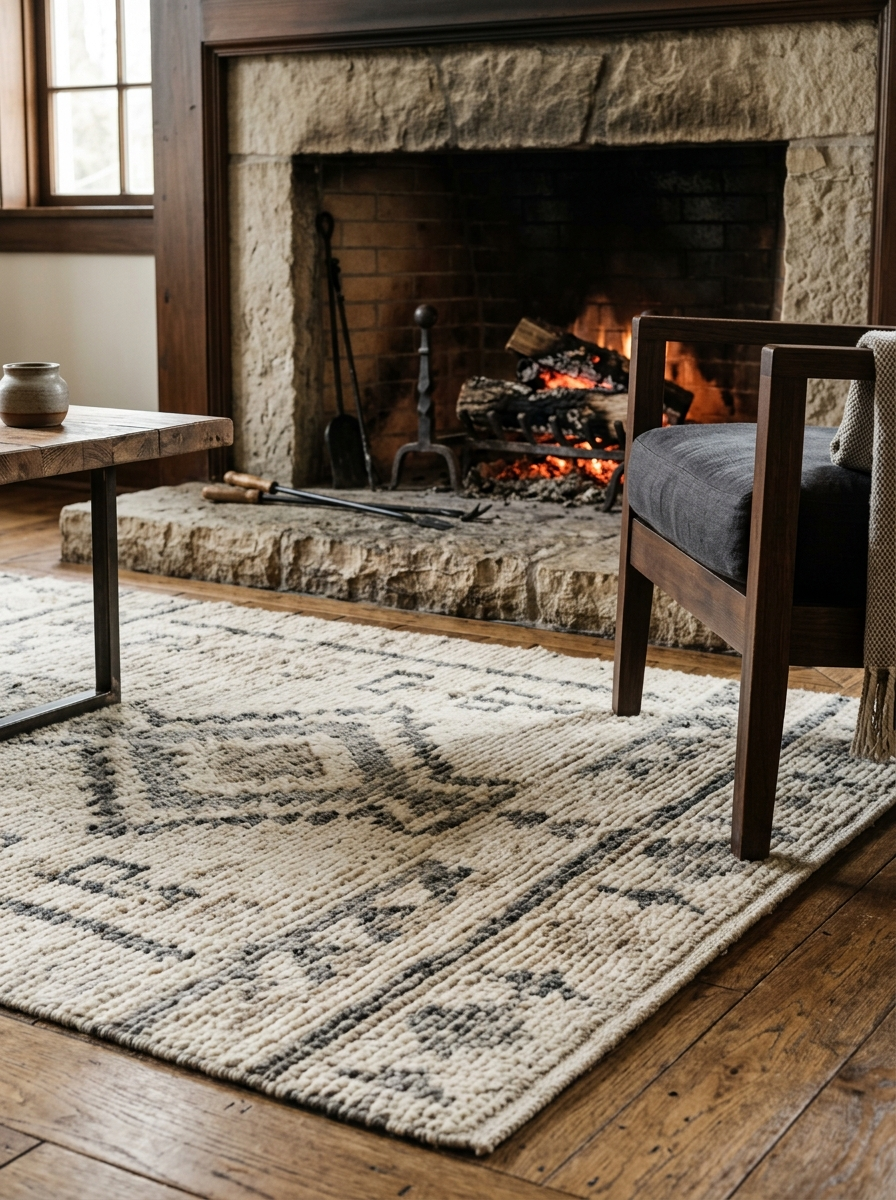
Fireplace rug placement is the measurement most people get wrong, because they size the rug to the hearth instead of to the furniture sitting around it. The rug needs to extend at least eight to twelve inches beyond the front legs of the sofa and any flanking chairs, which pulls the whole seating group together instead of leaving furniture legs stranded off the edge. A rug that only covers the space directly in front of the fireplace looks like a bath mat rather than a foundation for the room. Wool holds up best in a room like this specifically, since it resists the occasional stray ember or ash better than synthetic fibers do. I’ve walked into rooms with beautiful furniture and a rug two sizes too small, and it’s the first thing that makes the whole space feel unresolved.
14. Tile Can Rescue a Brick Fireplace That Stopped Feeling Right
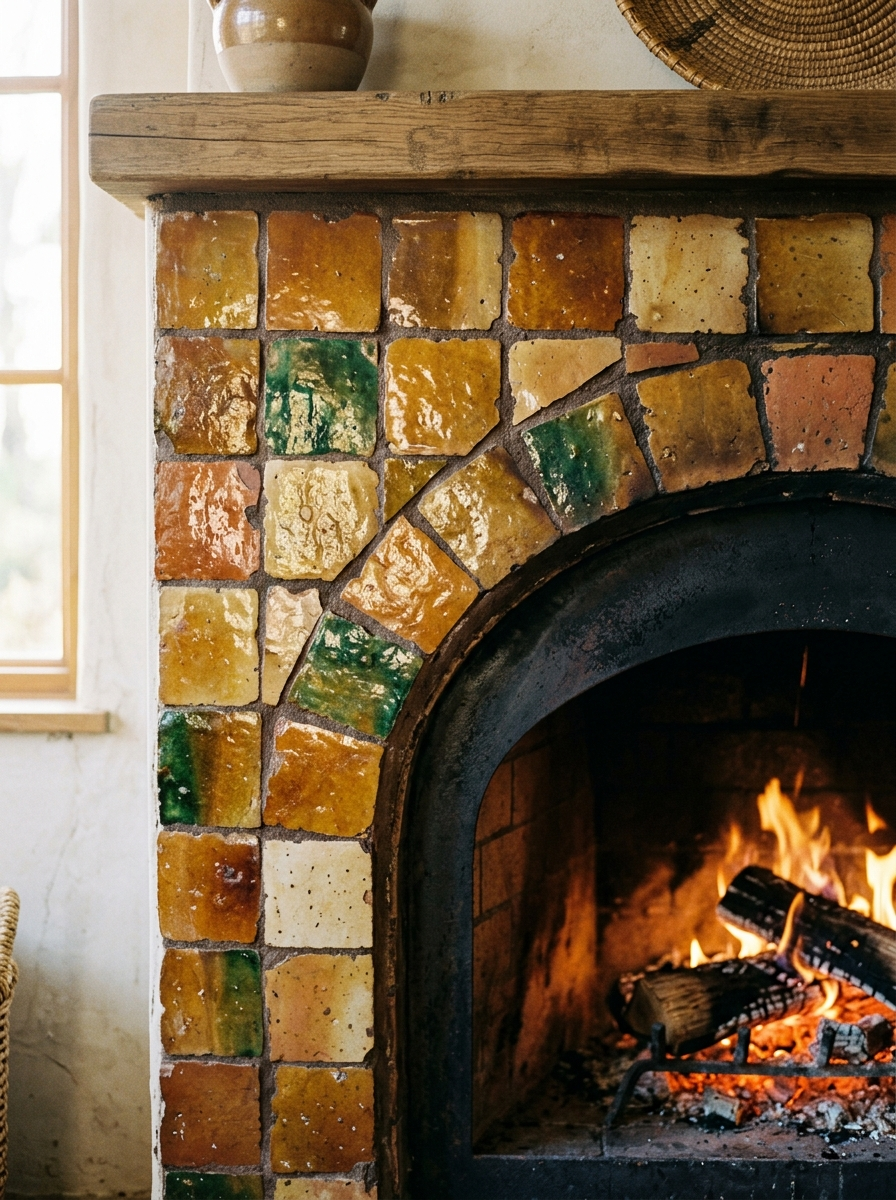
A brick fireplace doesn’t always need a full renovation to feel current again. Fireplace surround tile ideas, from handmade zellige in a warm neutral to a simple limewash over the existing brick, can transform the surround without touching the structure underneath it. Painting brick a flat white is the fastest fix, but tile adds texture that flat paint can’t, which matters more in a room that relies on the hearth as its main visual anchor. Skip the surround and address only the mantel above it, and the fireplace still reads as dated no matter how well the rest of the room is styled. This is the single highest-impact update available to anyone living with an outdated brick hearth.
15. A Fireplace Screen Is Decor Only If You Treat It Like Decor
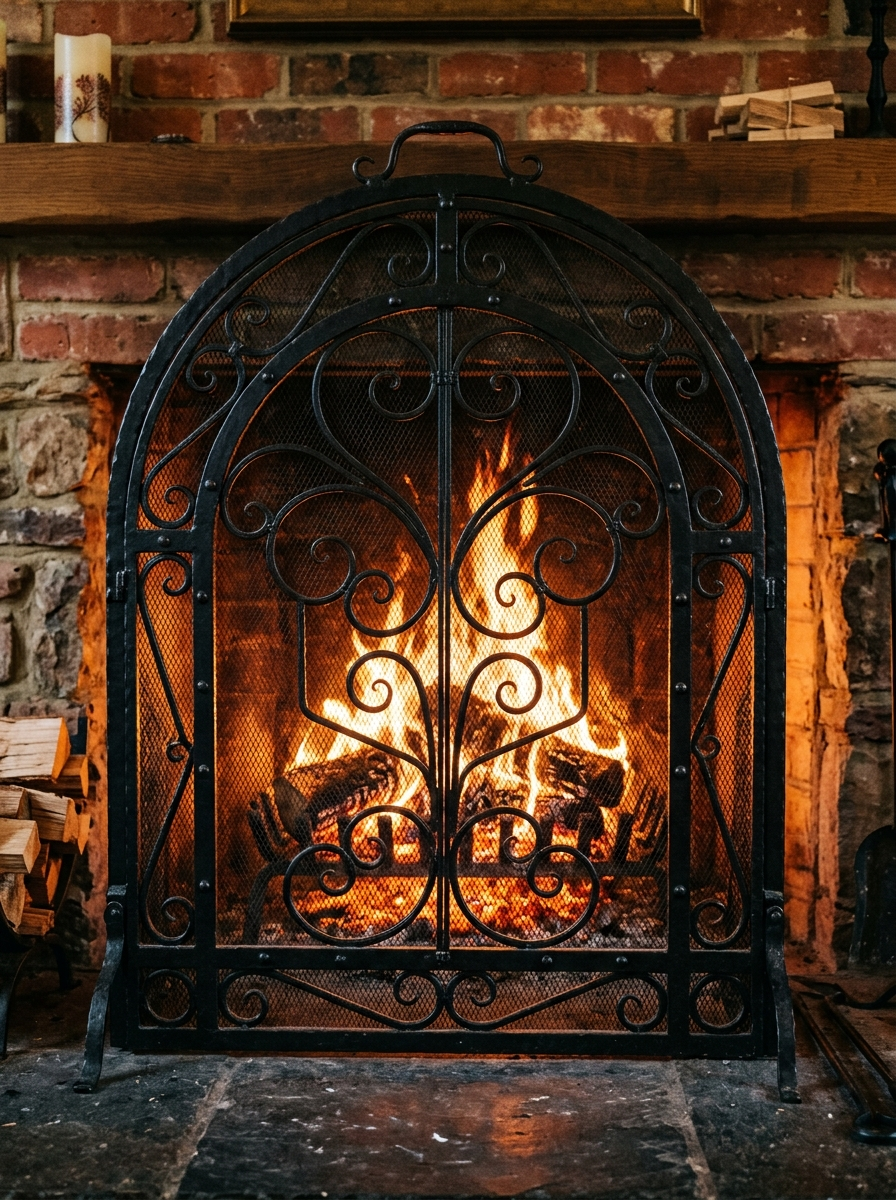
Fireplace screen styling gets treated as purely functional in most homes, propped in front of the opening and never considered again. An arched iron screen or a folding brass version does the same protective job while actually contributing to the room’s style, especially against a brick or marble surround where its shape echoes the fireplace opening itself. Choose a screen that matches the metal finishes already in the room, brass with brass, black iron with black iron, rather than treating it as a separate purchase disconnected from everything else. Leave a mismatched or purely utilitarian screen in place and it reads as an obstacle rather than a design choice every time someone looks at the hearth. This is a small object that earns a surprising amount of attention once you actually choose it on purpose.
16. The Log Basket Sitting Empty by the Hearth Is Still Doing Its Job
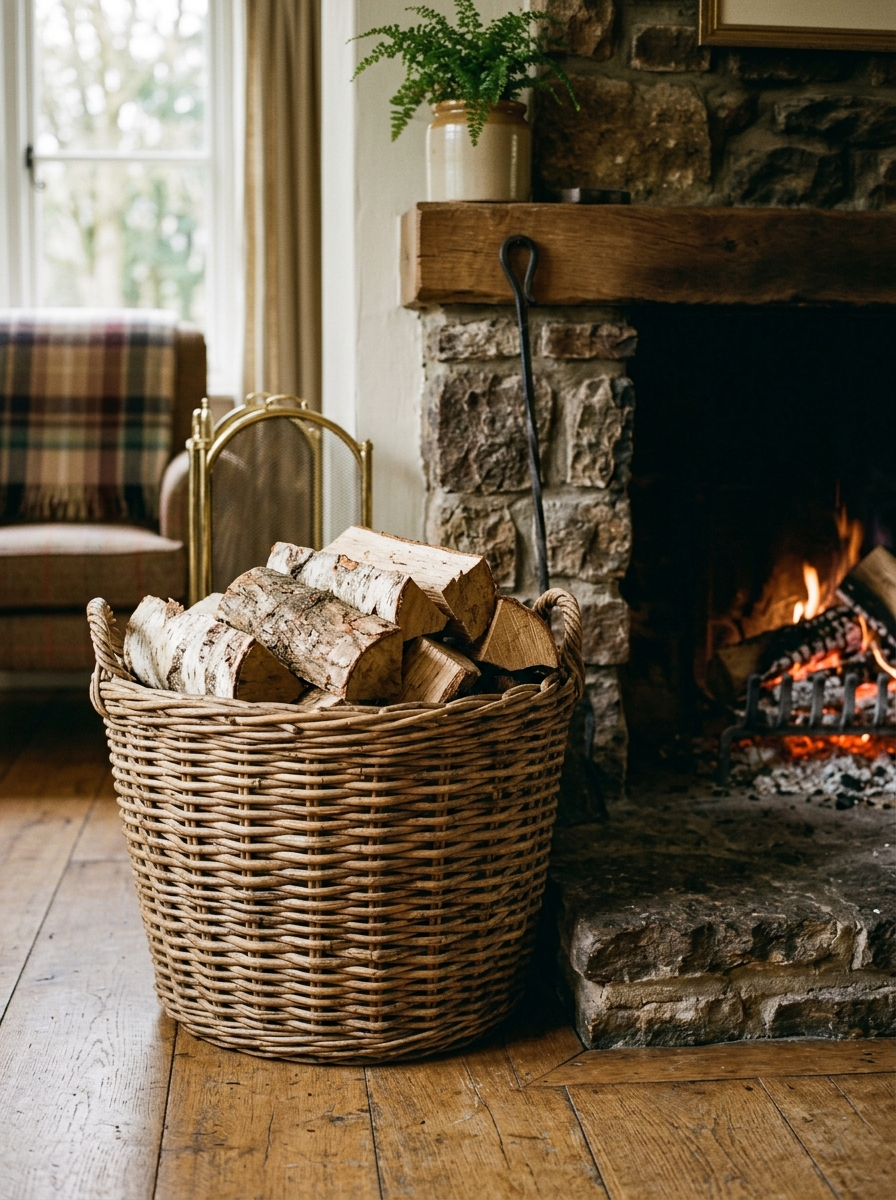
A log basket hearthside accessory works even when it isn’t full, which surprises most people who assume it’s purely functional storage. An empty woven basket beside the fireplace still signals that the hearth is used, lived with, and cared for, rather than untouched and purely decorative. Choose a basket with texture, natural rattan or woven seagrass, since it softens the hard edges of brick, tile, or stone surrounding most fireplaces. Leave the hearth completely bare with no basket, no tools, nothing suggesting the fire ever gets lit, and the fireplace starts to feel more like a wall feature than an actual working part of the room. This is a small, inexpensive addition that does more for a room’s lived-in feeling than almost anything else on this list.
17. Candles Can Fill a Fireplace That Will Never Hold a Fire Again
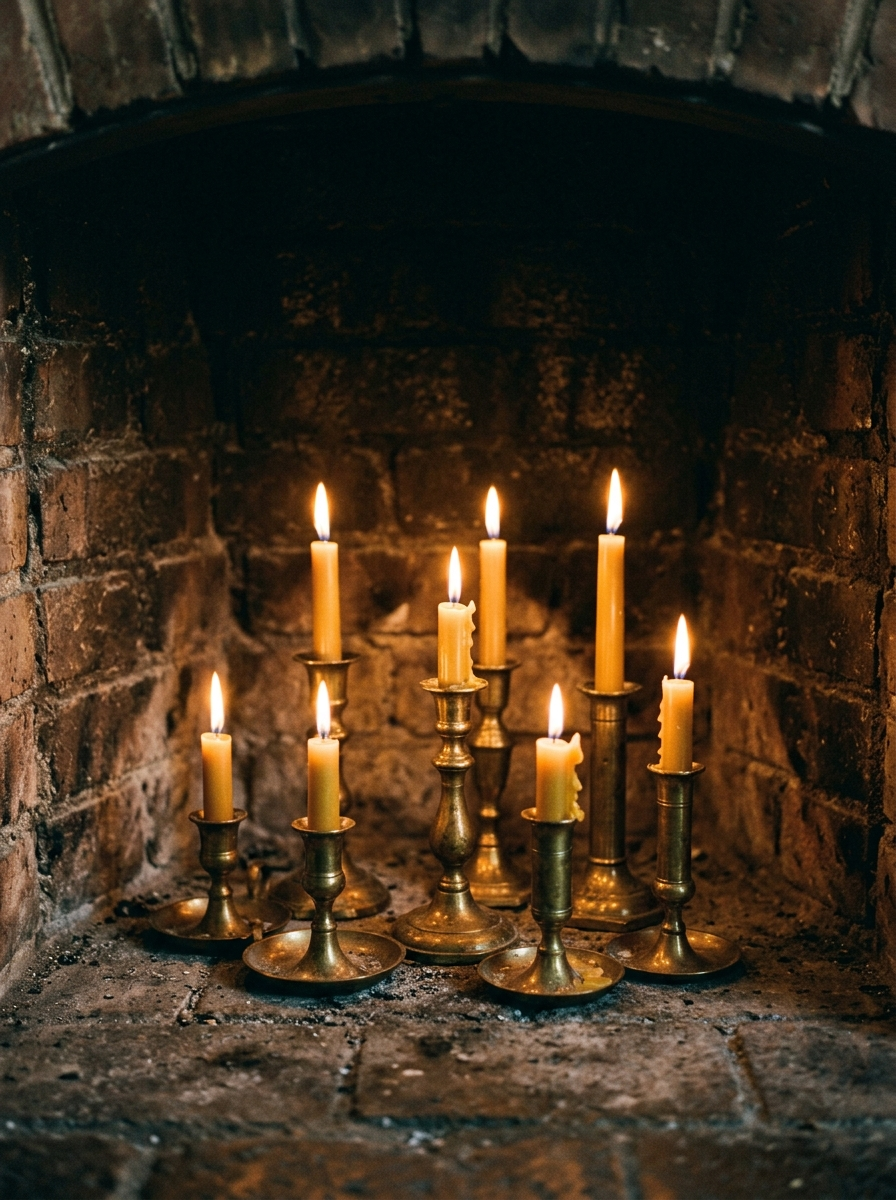
The right fireplace candle arrangement is the single best solution for a non-working or purely decorative hearth, giving it back the glow it can no longer produce on its own. Group pillar candles of varying heights directly inside the firebox, or line brass taper holders along the hearth floor, and the fireplace regains a sense of purpose even without an actual flame. Skip this step entirely and a non-working fireplace often sits dark and empty, which draws attention to what’s missing rather than what’s there. Battery-operated flickering candles solve the safety question for households with kids or pets while still delivering the same warm glow at night. This fix costs very little and changes how the entire hearth reads within minutes of setting it up.
🔥 The Non-Working Fireplace Guide: How to Make It Feel Like the Real Thing
STEP 1: Clean the firebox completely, removing old soot or debris so the interior reads as intentional rather than neglected.
STEP 2: Layer three to five pillar candles of different heights directly inside the opening, using a heatproof tray underneath them.
STEP 3: Add a fireplace candle arrangement of brass taper holders along the hearth in front of the firebox for extra glow at eye level.
STEP 4: Style the mantel exactly as you would for a working fireplace, since the surround still does the same visual job either way.
STEP 5: Finish with fireplace screen styling in front of the opening, both to hide any cords from flameless candles and to keep the composition consistent with a working hearth.
THE RESULT: A fireplace that no longer works can still anchor the room the same way one that does, once every other layer is treated with the same care.
Getting this right often comes down to the small surfaces around it, and our table styling around the hearth guide has more on how those pieces support a non-working fireplace specifically.
A hearth can only do so much on its own. The walls, the light, the built-ins, and the overall footprint of the room either lift the fireplace up or leave it working twice as hard, and this chapter is about making sure the room is pulling its own weight.
18. The Color on Your Walls Either Supports the Hearth or Competes With It
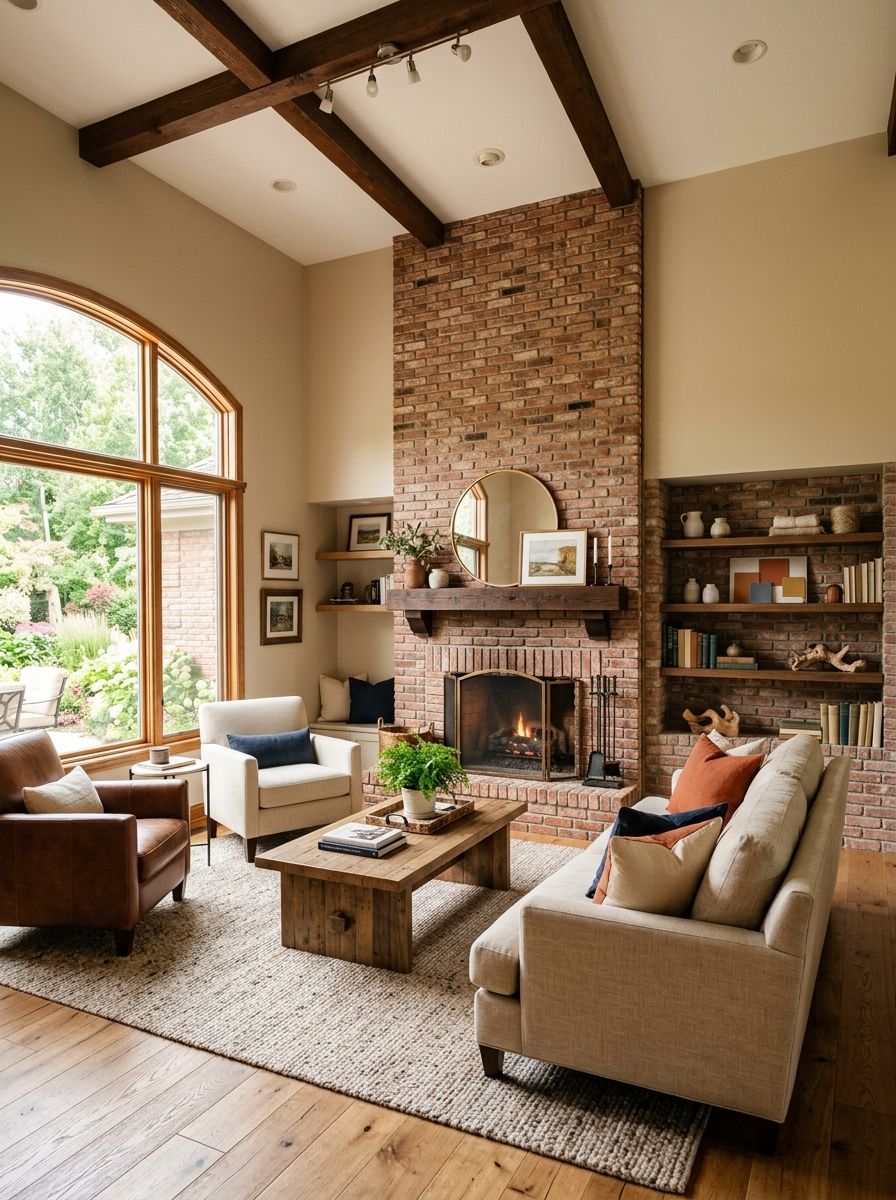
A color palette built around a fireplace needs to be chosen around the hearth’s own material, not around a trend seen somewhere else. Warm neutrals, soft greiges, and deep clay tones tend to work with nearly every type of surround, letting the fireplace stay the visual anchor rather than fighting the walls for attention. Choose a bold, saturated color without considering the fireplace first, and you risk creating two competing focal points in a room that only has space for one. Cool grays can work too, but they need warmth introduced somewhere else in the room, through wood tones or brass fixtures, or the whole space reads flat next to the fire. Getting this decision right early saves you from repainting later, which is a mistake I’ve made in my own house more than once.
A Note on This: Undertone Matters More Than Shade
- ⬡ Test paint swatches directly beside the fireplace material itself, not on a separate wall, since undertones shift dramatically next to brick or stone.
- ⬡ McGee and Co.’s curated neutral palettes are built specifically to sit well against warm materials like brick and wood.
- ⬡ The common mistake is choosing a paint color under artificial light in a store rather than in the room at the time of day it’s actually used.
- ⬡ A budget alternative is a large peel-and-stick paint sample held against the surround for a full day before committing to a gallon.
19. Lighting a Fireplace Room Means Working With the Fire, Not Around It
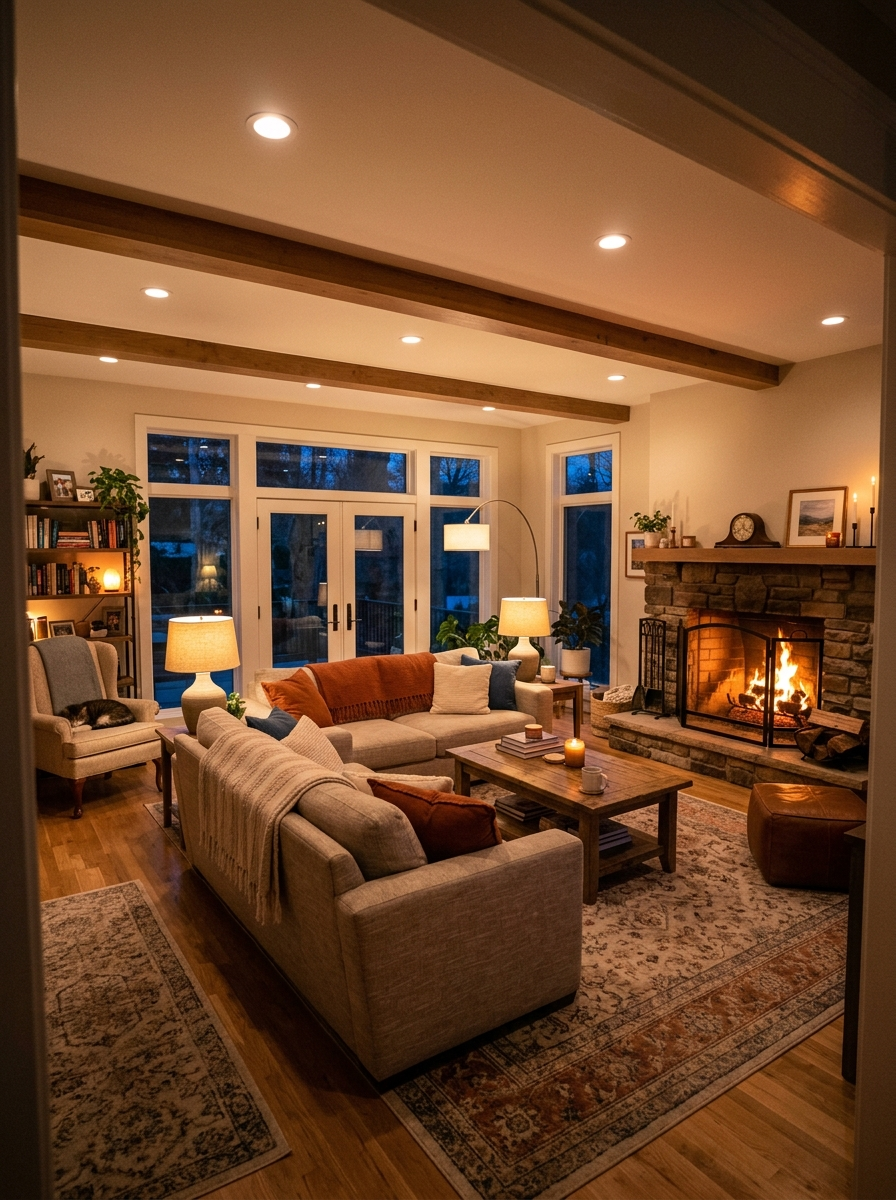
Layered lighting matters most once the fire is lit, and the flames themselves are one of those layers, not a substitute for the others. Overhead lighting should stay dim or off entirely once the fire is lit, letting table lamps and the flames themselves carry the room’s ambient light instead. Rely only on a single overhead fixture and the warmth of the fire gets flattened out by light coming from the wrong direction and the wrong height. Place at least two table lamps at seating height on either side of the room, so the light sources sit roughly level with the flames rather than washing down from the ceiling. When the fire is lit, this layered approach is what makes a room feel like it’s glowing rather than simply lit.
20. Paneling Around a Fireplace Wall Turns a Feature Into a Foundation
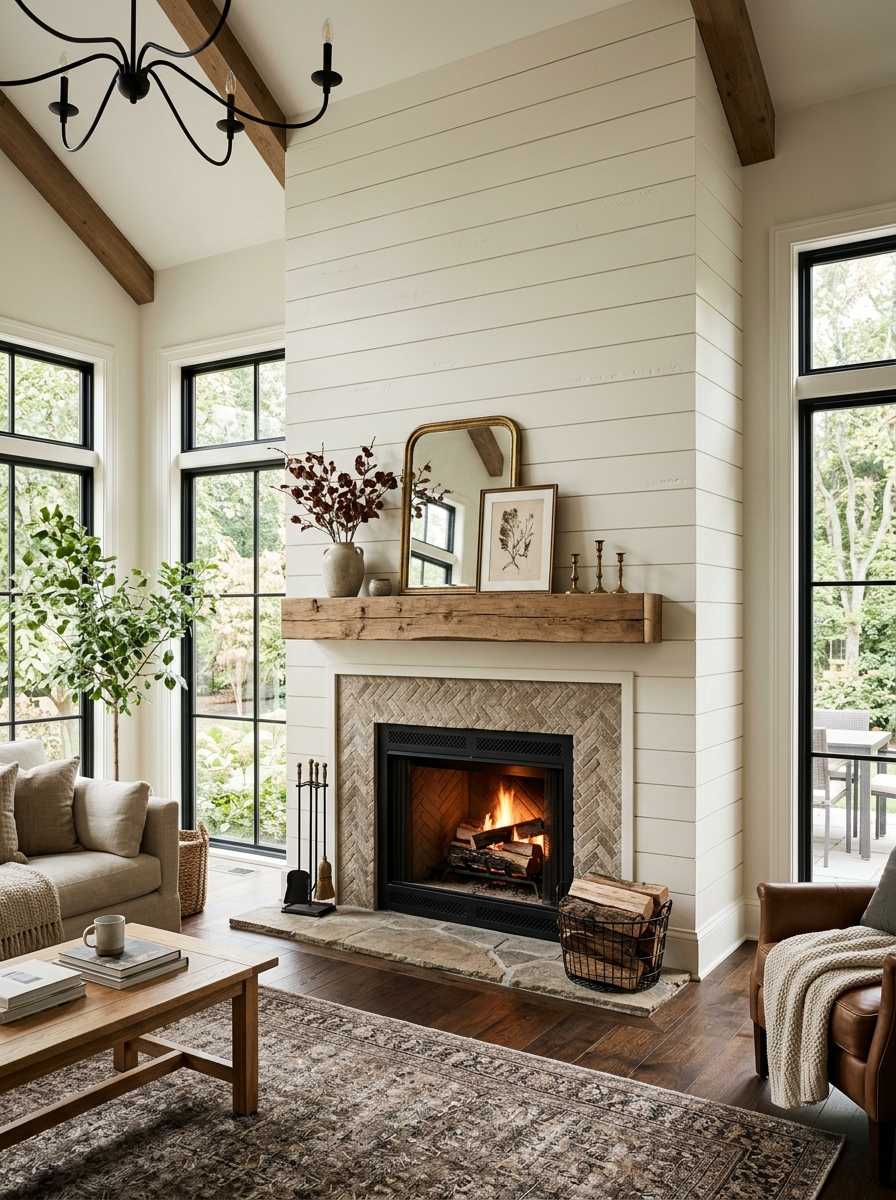
Fireplace wall paneling ideas take a single feature and extend it across the entire wall, which changes how the whole room reads at a glance. Board-and-batten or shiplap running floor to ceiling around the fireplace gives the hearth a sense of architecture rather than leaving it looking like an appliance bolted onto a flat wall. Stop the paneling right at the edges of the surround instead of carrying it across the full wall, and the fireplace ends up looking boxed in rather than integrated into the room. Painted a single warm white or a deep, moody color, paneling also hides minor wall imperfections that become obvious the moment a fireplace draws the eye toward that section of the room. This is a bigger project than most on this list, but it’s the one that makes a rental-grade fireplace look custom-built.
21. Built-In Bookcases Beside a Fireplace Need Room to Breathe, Not Just Shelves to Fill
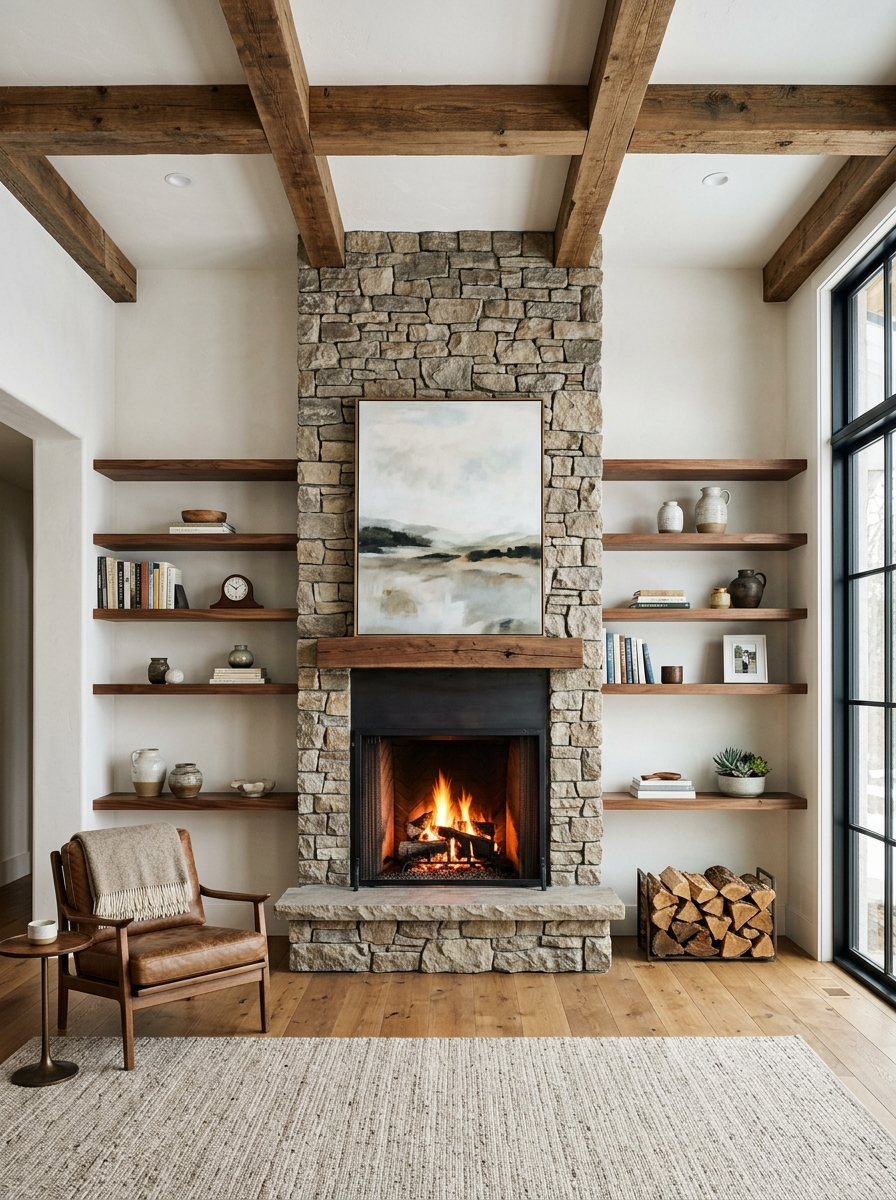
A built-in bookcase flanking the fireplace works best when its proportions echo the fireplace itself rather than simply filling the available wall space. Shelves that run the full height of the room, matching the mantel’s centerline, create a sense of intention that a random arrangement of stock shelving never quite achieves. Build shelving too shallow to hold anything but paperbacks, or too deep for the room’s scale, and the built-ins end up looking like an afterthought rather than a considered architectural feature. A gap of six to eight inches between the top shelf and the ceiling keeps the whole unit from feeling like it’s straining against the room. Done well, this is one of the few upgrades that increases a home’s value while also making the room genuinely more useful.
22. A Small Fireplace Living Room Has to Choose What Matters First
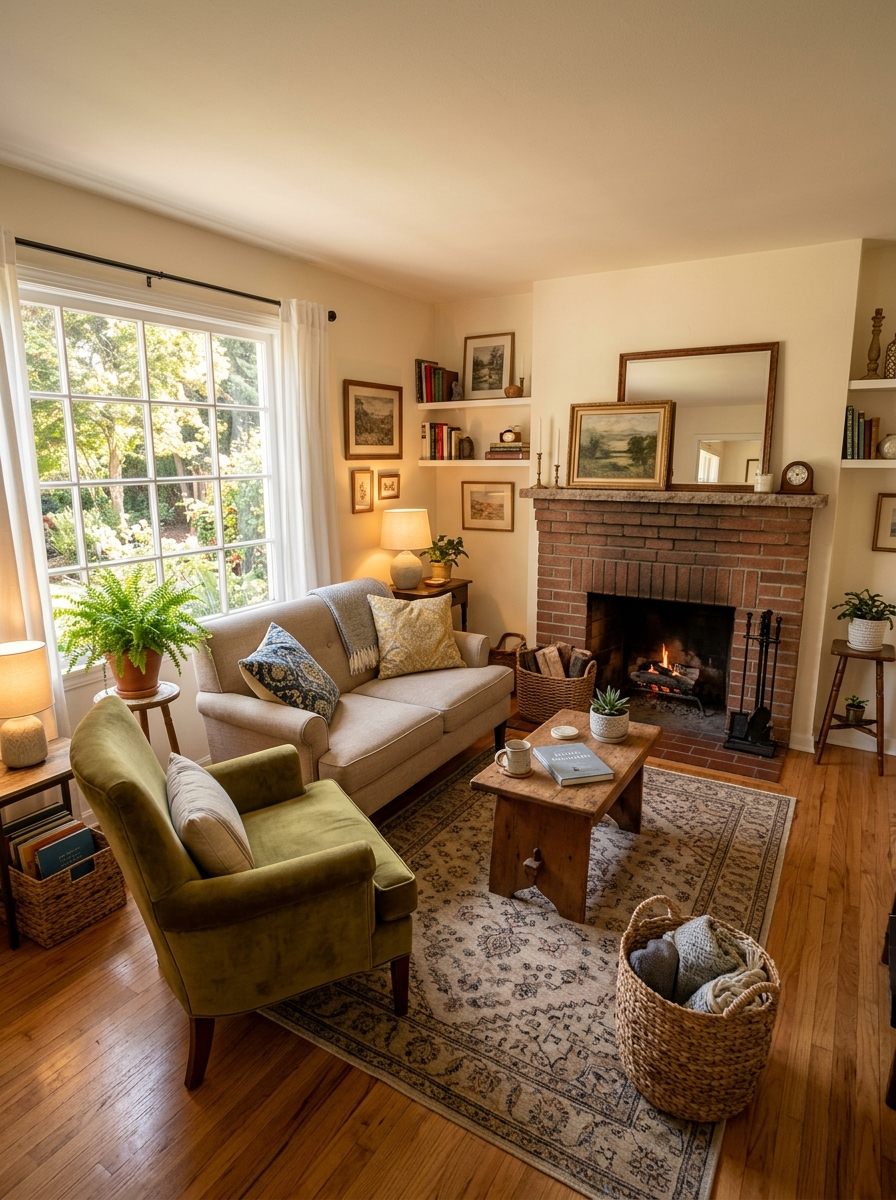
Small spaces like this can’t fit every idea on this list, and trying to force all of them in is exactly what makes a small room feel crowded instead of considered. Prioritize the mantel and the seating closest to the fire first, since those two elements do the most visual work in a tight footprint, and treat everything else as optional. A loveseat and a single well-angled armchair often outperform a full sectional in a small room, leaving enough floor space to actually move around comfortably. Skip the oversized coffee table in favor of a smaller round one, or nesting tables that tuck away when the room needs more open floor. Small spaces reward restraint far more than they reward more furniture, and that’s the hardest lesson for most people to accept.
🎨 The Fireplace Living Room Color Guide: What Works With Every Type of Hearth
WITH A BRICK FIREPLACE: Warm white, soft terracotta, and deep forest green all pull the natural red and orange tones out of the brick instead of fighting them.
WITH A WHITE PAINTED HEARTH: Soft greige, dusty blue, and warm black work well, since the white mantel already provides contrast on its own.
WITH A MARBLE SURROUND: Pale gray, warm cream, and muted sage let the marble’s veining stay the visual focus without competing colors nearby.
WITH A MODERN CONCRETE HEARTH: Charcoal, warm taupe, and soft clay introduce warmth that raw concrete lacks on its own.
A fireplace living room color palette should always account for how the room shifts across the year, and our fall living room guide covers how to layer a fireplace living room neutral palette with seasonal texture without ever needing to repaint.
Everything up to this point has been about getting the room right on paper. This last chapter is about what happens once you’re actually living in it, season after season, with people gathered around the fire instead of just admiring it from the doorway.
23. Fall Changes a Fireplace Living Room More Than Any Other Season Does
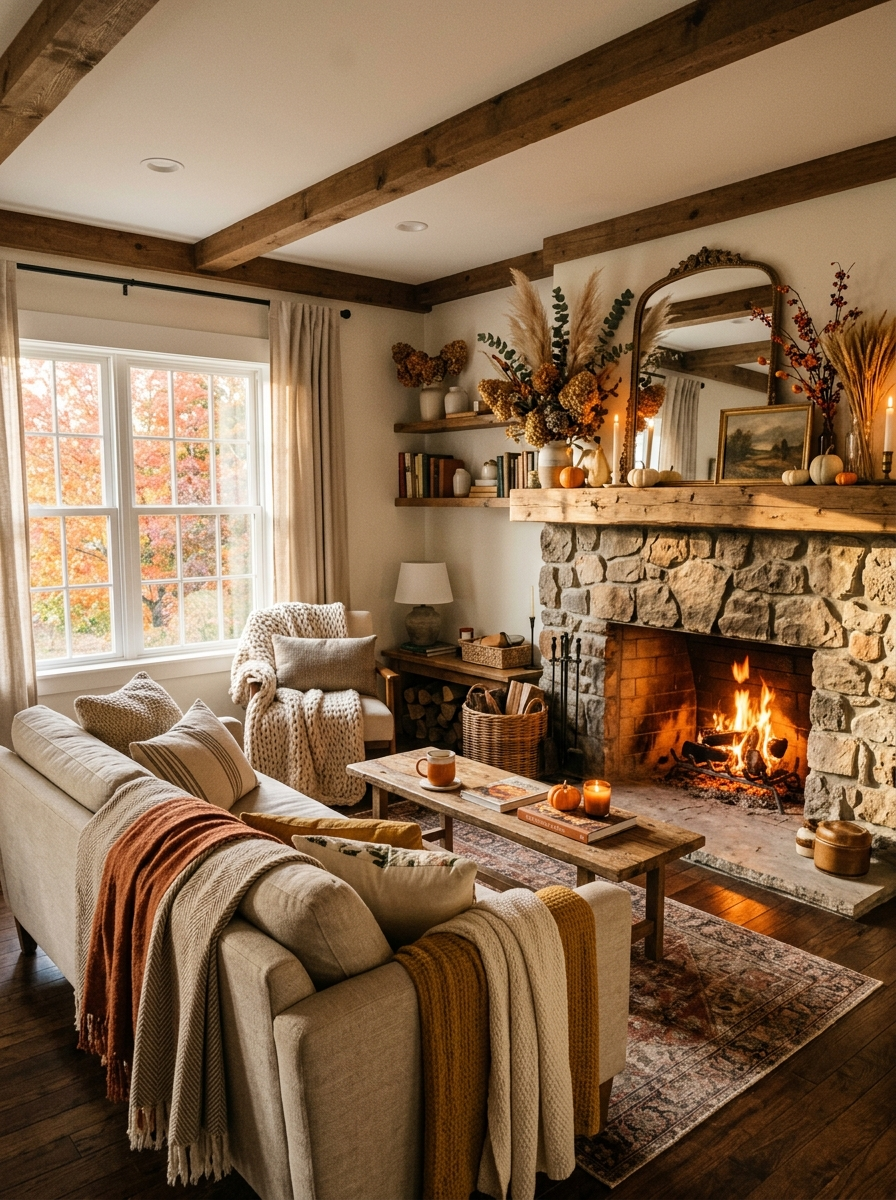
A room built around a fireplace reaches its fullest potential in fall, when the fire finally gets lit again and the whole room shifts around that single change. Swap lighter throws and slipcovers for heavier wool and boucle textures, and bring in a fireplace room seasonal styling approach on the mantel with dried florals, pumpkins in muted tones, or simple greenery instead of anything glossy or bright. Skip this seasonal shift entirely and the room can feel disconnected from the actual season happening outside the window, especially once the fire is lit and the rest of the room hasn’t caught up. Every year I notice the same thing: the room feels different the moment the first fire of the season gets lit, and the styling should feel different too.
A Note on This: Layering Beats Swapping
- ⬡ Add one heavier textile per season, like a wool throw, rather than replacing every accessory at once.
- ⬡ West Elm and HomeGoods both restock seasonal throws and pillow covers that work specifically with warm, hearth-adjacent palettes.
- ⬡ The common mistake is over-decorating the mantel for fall and leaving the rest of the room untouched.
- ⬡ A budget version rotates just three items, a throw, a mantel accent, and one seasonal candle scent, for the entire transition.
24. Nothing Gathers People Faster Than a Lit Fireplace and a Reason to Sit Down
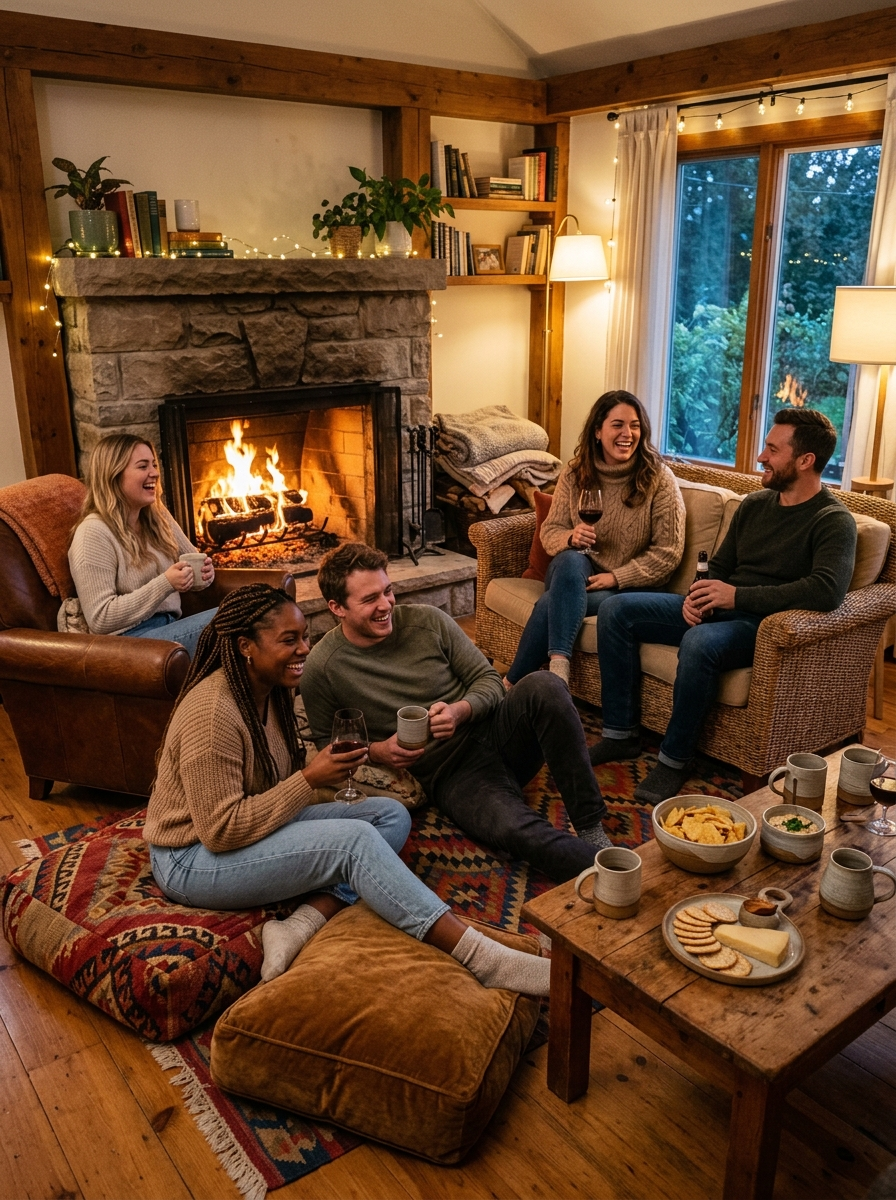
Entertaining in a room built around a fireplace does something no other element can replicate, since a lit fire gives guests an automatic reason to sit down and stay a while instead of hovering near the kitchen. Arrange extra seating, floor cushions, a bench, or folding chairs, within the same eight to ten foot radius as the permanent furniture, so the whole gathering stays oriented toward the fire rather than splitting into separate conversations. Skip this consideration and guests naturally drift toward wherever the food is, leaving the room’s most inviting feature completely underused during the exact moments it should shine. I’ve hosted the same dinner in rooms with and without a fire going, and the difference in how long people stayed was never subtle.
25. A Fireplace Living Room at Its Best Is a Room Where Everything Agrees
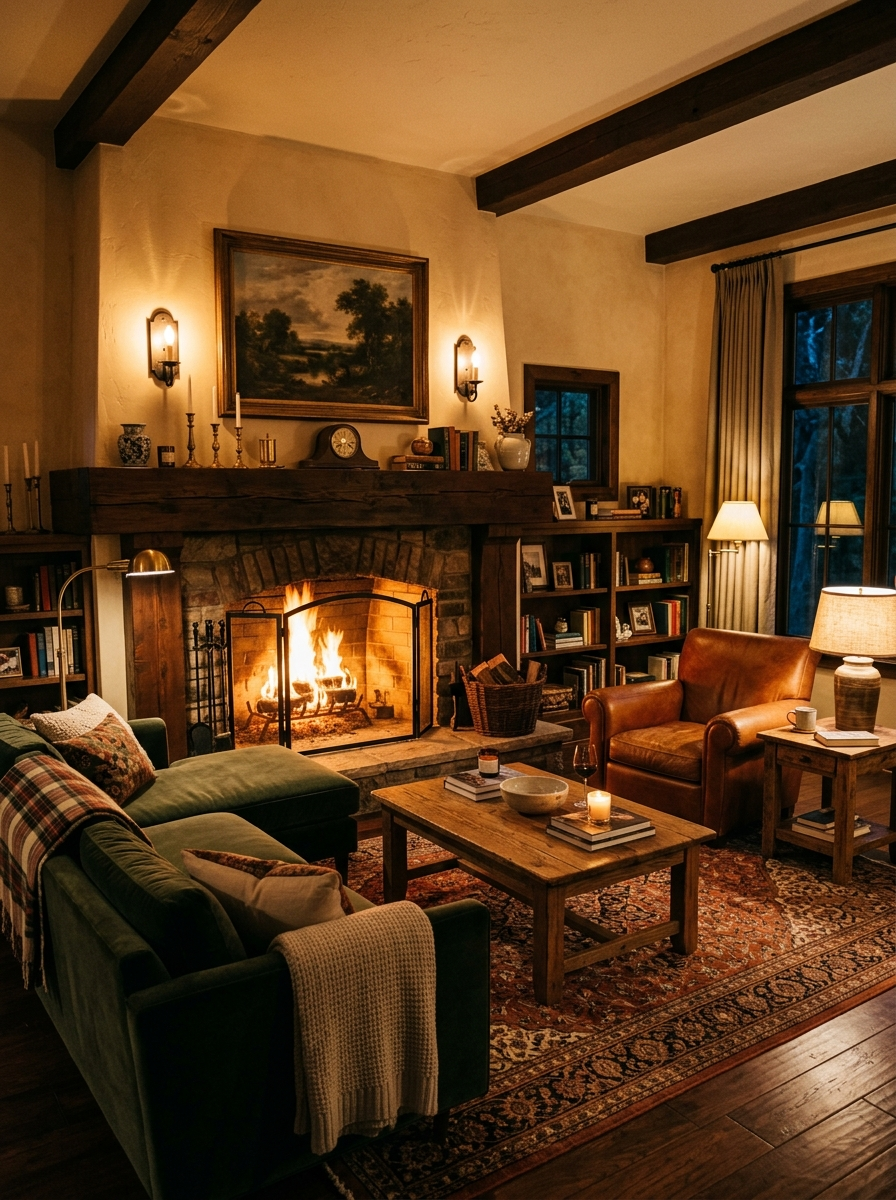
A room built around a fireplace, at its best, doesn’t have one standout feature; it has twenty-five small decisions that all point in the same direction. The mantel supports the furniture, the furniture supports the rug, the rug supports the color palette, and none of it fights for attention because none of it needs to. This is the version of the room I picture when I think about a hearth centered room done well, not a single dramatic moment but a whole space that feels considered from every angle. Skip even a few of these decisions and the room can still look nice, but it won’t feel finished the way a room does when the hearth and everything around it are working as one. When every element agrees, the fireplace stops being a feature of the living room and simply becomes the reason the room works at all.
Fireplace Living Room Questions, From One Hearth Lover to Another
How do I arrange furniture in a living room with a fireplace?
Start with the sofa eight to ten feet from the hearth, facing it directly or at a slight angle, then build the rest of the fireplace living room furniture layout outward from there. Add one or two chairs angled toward the fire rather than facing straight on, and keep the coffee table close enough to reach without blocking the sightline to the flames. In an open floor plan, use a large rug to define the seating area so it reads as its own defined space even without walls.
What do I put on my fireplace mantel?
A strong mantel starts with one anchor piece, a mirror, large art, or a sculptural object, centered or slightly off to one side. From there, layer two or three smaller objects at varying heights on either side, following basic fireplace mantel decor ideas like odd numbers and asymmetry rather than a perfectly matched pair. Among all the fireplace living room ideas on this list, a well-styled mantel does the most to make the whole room feel finished.
How far should a sofa be from a fireplace?
In most living room with fireplace layouts, eight to ten feet between the sofa and the hearth is the range that lets you feel the fire’s warmth while still holding a normal conversation. Push it much farther and the fireplace becomes something you look at rather than something you feel, which defeats the point of the sofa facing fireplace layout in the first place. Every room’s proportions are a little different, so treat that range as a starting point rather than a strict rule.
What rug should I use in a fireplace living room?
Choose a wool or wool-blend rug large enough to extend at least eight to twelve inches past the front legs of your sofa and chairs, since the fireplace rug placement rule is about the furniture, not just the hearth. Neutral tones with subtle texture or a soft geometric pattern tend to age well in a fireplace living room, especially once seasonal styling starts layering in around it. Our seasonal home styling guide has more on choosing textiles that carry a room through every holiday gathering without needing to be replaced.
How do I style a non-working fireplace?
A non-working fireplace benefits most from a fireplace candle arrangement placed directly inside the firebox, using pillar candles at varying heights or a set of battery-operated flameless versions for households with kids or pets. Clean the interior of the firebox first, then style the mantel exactly as you would for a working fireplace, since good fireplace room decor doesn’t depend on an actual flame to feel warm. A fireplace screen placed in front of the opening finishes the look and keeps the composition consistent with a working hearth.
What colors work best in a fireplace living room?
A fireplace living room color palette should be chosen around the material of the hearth itself, with warm neutrals and soft, muted tones working well against nearly every surround type. Brick tends to pair best with warm whites and deep greens, while marble and concrete both lean toward cooler, quieter neutrals that let the material stay the focus. A cozy fireplace living room almost always comes back to warmth somewhere in the palette, whether that’s in the wall color, the textiles, or the wood tones nearby.
How do I modernize a brick fireplace living room?
The fastest update for a brick fireplace living room is a limewash or a flat matte paint in warm white, which softens the brick’s texture without hiding it completely. For something with more texture, fireplace surround tile ideas like handmade zellige or large-format stone tile can transform the surround entirely while leaving the structure untouched. Pairing either update with more current furniture and lighting finishes the transformation without requiring a full renovation.
What should I put above my fireplace?
Large-scale art or a properly proportioned mirror both work well above a fireplace, as long as the bottom edge sits close to the mantel rather than floating high on the wall. A fireplace mirror above mantel placement should measure roughly two-thirds the width of the shelf below it, which keeps the proportions feeling intentional rather than mismatched. Our hearthside gathering ideas guide touches on how this same wall becomes the backdrop for entertaining once guests are gathered in the fireplace living room.
Can I have a fireplace living room in a small space?
Yes, and an electric fireplace living room is often the easiest way to make it work, since an electric insert doesn’t require the clearance or venting a wood-burning fireplace needs. Good fireplace living room design in a small space means prioritizing the mantel and the seating closest to the fire, then treating everything else as optional rather than trying to fit every idea into a limited footprint. A loveseat and a single chair usually outperform a full sectional in this scenario.
How do I decorate a fireplace living room for the seasons?
The easiest approach to fireplace room seasonal styling is rotating a small set of items, a mantel accent, a throw blanket, and one textile, rather than redecorating the entire space every few months. Keep your anchor pieces, the mirror or art above the mantel and the core furniture layout, consistent year-round, and let the smaller details carry the seasonal change. A fireplace living room feels most alive when the styling shifts along with the season the fire itself is responding to.
The Last Page of This Letter
A fireplace living room isn’t made by the fireplace alone. It’s made by twenty-five small decisions working together: a mantel that says something, a sofa close enough to feel the warmth, a rug that reaches far enough to matter, and a room willing to be lived in rather than just looked at. Your fireplace doesn’t make your living room worth having; your room makes the fireplace worth having, and that’s the truth I wish someone had told me the first time I stood in front of one wondering where to start.
A fireplace living room is the heart of a home that knows how to gather people, and The Muse Vale has the living room, entertaining, and seasonal guides to help you build everything around it.
Come back to The Muse Vale whenever your hearth needs a new idea. We’ll have the inspiration and the guidance ready for every season you sit in front of it.
With warmth, The Muse Vale…