
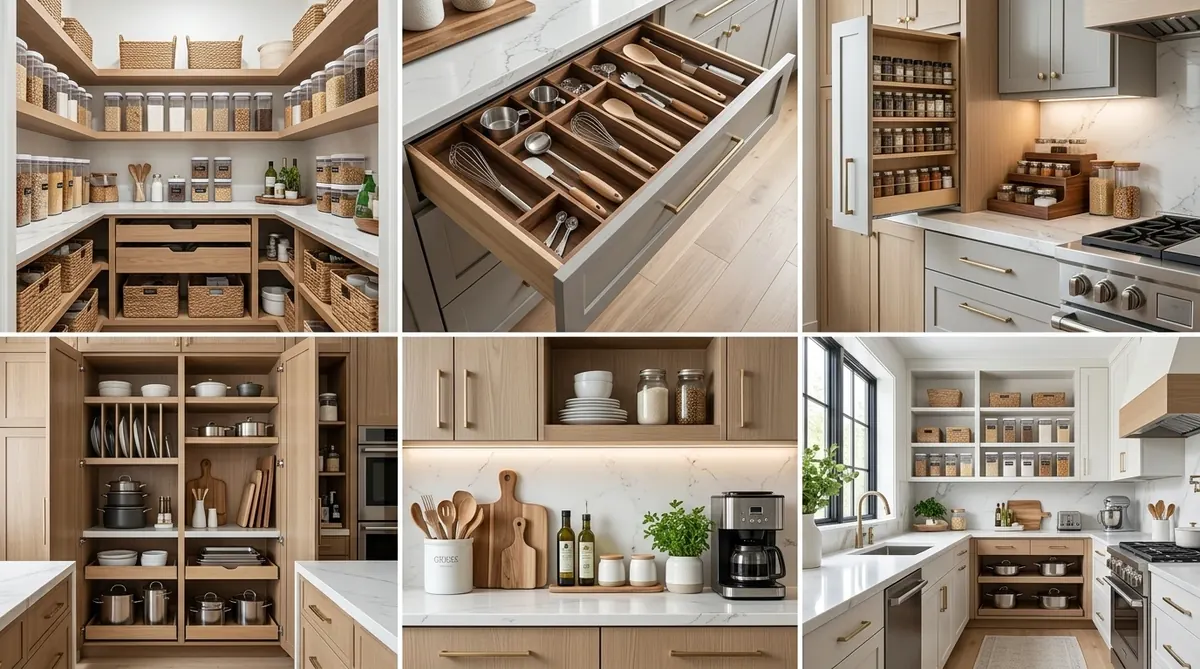
Kitchen organization ideas almost always start in the wrong place. Most people begin with categories: pots go here, spices go there, snacks go in that bin. But categories aren’t why a kitchen works. Workflow is. Every kitchen I’ve reorganized, from a narrow New York galley to a wide-open California layout, tells the same story: the counter isn’t messy because you own too much, it’s messy because things live where they’re easy to store instead of where they’re actually used. That single flip, from organizing by category to organizing by a kitchen zones organization method, changes everything downstream. This piece walks through thirty specific system reveals across your counters, cabinets, pantry, and drawers, the moments where one small adjustment to the triangle workflow kitchen layout between your stove, sink, and prep space turns a kitchen you avoid into one you actually want to cook in. None of it requires a renovation. It requires attention to why your kitchen behaves the way it does.
The 60-Second Kitchen Diagnosis: Which of These Problems Is Actually Yours?
Before you touch a single cabinet, it helps to know which problem you’re actually solving. Most kitchen organization ideas fail because they treat the symptom instead of the system, so here’s a fast, honest look at the five most common versions of aesthetic kitchen organization gone wrong.
▣ THE COUNTER THAT IS ALWAYS MESSY NO MATTER HOW OFTEN YOU CLEAR IT
What it looks like: you clean it Sunday night and by Tuesday it’s covered again.
What it is actually caused by: the counter has no zones, so every item defaults to the same open surface.
The reveal: once each zone has one job, things stop migrating back to the counter.
▣ THE CABINET YOU AVOID OPENING
What it looks like: you own a second set of measuring cups because you can’t find the first.
What it is actually caused by: the cabinet was organized by category instead of by frequency, so daily items got buried behind seasonal ones.
The reveal: a frequency-based triangle workflow kitchen layout puts what you touch daily at hand height, permanently.
▣ THE KITCHEN THAT LOOKS ORGANIZED BUT COOKING STILL FEELS HARD
What it looks like: every shelf is tidy, but you still walk back and forth six times to make dinner.
What it is actually caused by: the kitchen was organized for appearance, not for the actual path you walk while cooking.
The reveal: matching storage to your real kitchen zones organization method fixes the walk, not just the look.
▣ THE PANTRY THAT RUNS OUT OF THINGS YOU DEFINITELY BOUGHT
What it looks like: you buy a backup, then find three open bags of the same item.
What it is actually caused by: no visibility system, so duplicates hide behind full containers.
The reveal: once everything is visible at a glance, the guessing stops.
▣ THE KITCHEN THAT NEVER LOOKS LIKE THE PICTURES YOU SAVE
What it looks like: you buy the same bins as the photo and it still looks cluttered within a week.
What it is actually caused by: the photo solved for aesthetics only, with no system underneath holding it together.
The reveal: the look only lasts when a working system is doing the actual work underneath it.
Before I touch anything else in a kitchen, I stand at the counter and watch how someone actually moves through it for five minutes. Almost every client is shocked that the mess they blame on “too much stuff” is actually a workflow problem hiding in plain sight.
1. The Reveal: Why Kitchen Organization Ideas Start With Zones, Not Space
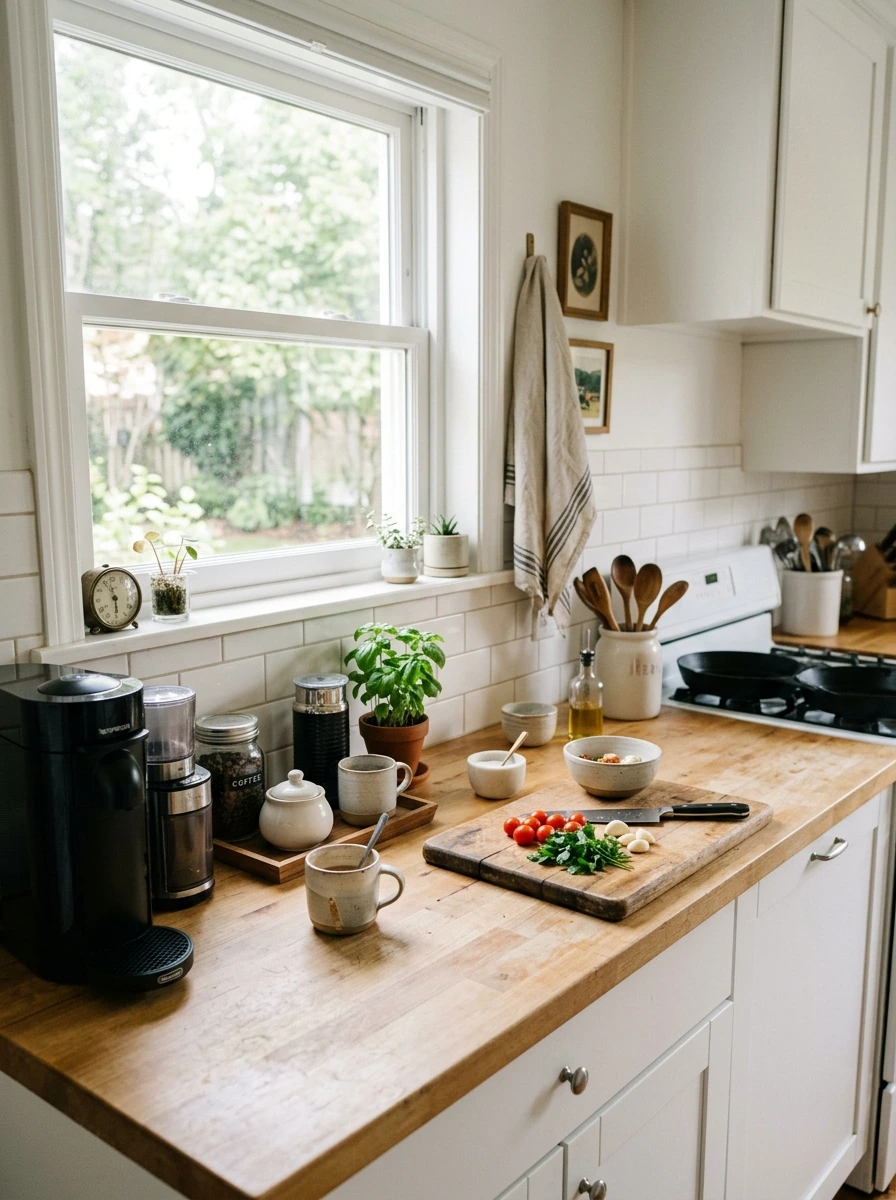
Most people try to fix a messy counter by clearing it off, which lasts about a day. The real system assigns each section of counter a single job: cooking, prep, coffee, or cleanup, so an item only earns a spot if it belongs to that zone’s task. Once zones are set, things stop drifting toward the middle of the counter because there’s no longer a neutral space for them to land in. This is the foundation of most kitchen organization ideas for small kitchens, where every inch of counter has to justify its use. A counter that looks empty but has no assigned zones will fill back up within a week, while one with clear zones and some visible items stays functional far longer.
2. Your Kitchen Coffee Station Is Doing More Work Than You Think
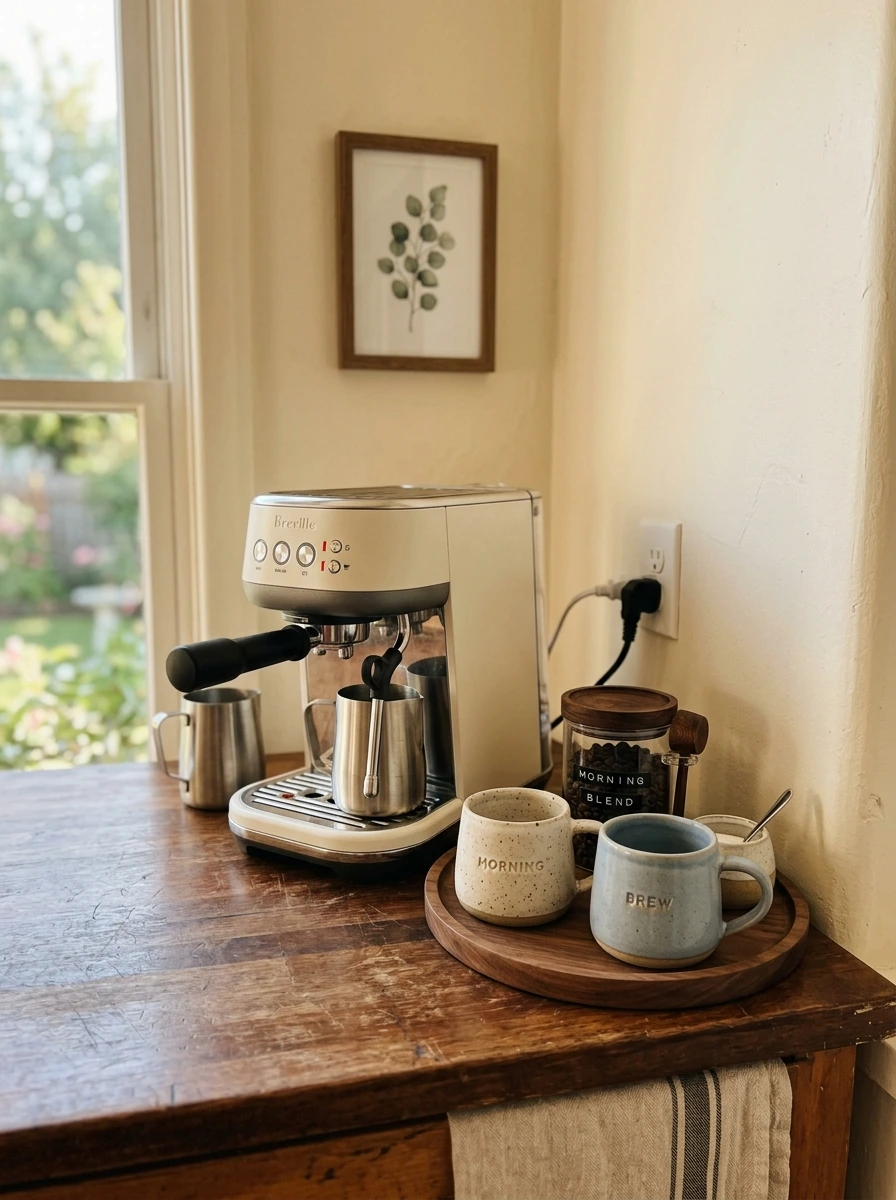
The coffee corner sets the tone for the entire morning, which is why it deserves its own small system instead of sharing space with everything else. Group the machine, filters, mugs, and syrups within one arm’s reach, using a small tray to define the footprint so it never expands into the rest of the counter. When this zone is contained, the morning scramble shrinks from a five-step hunt to a thirty-second routine before the coffee even finishes brewing. This is one of the simplest kitchen organization ideas for small kitchens to implement, and it pairs naturally with a morning kitchen ritual that starts the day on the right foot. The version that looks good but fails is an open shelf of mismatched mugs; the fix is picking one mug style to display and keeping the rest in a cabinet.
3. The Counter Appliance Rule: What Actually Earns a Spot in Your Kitchen
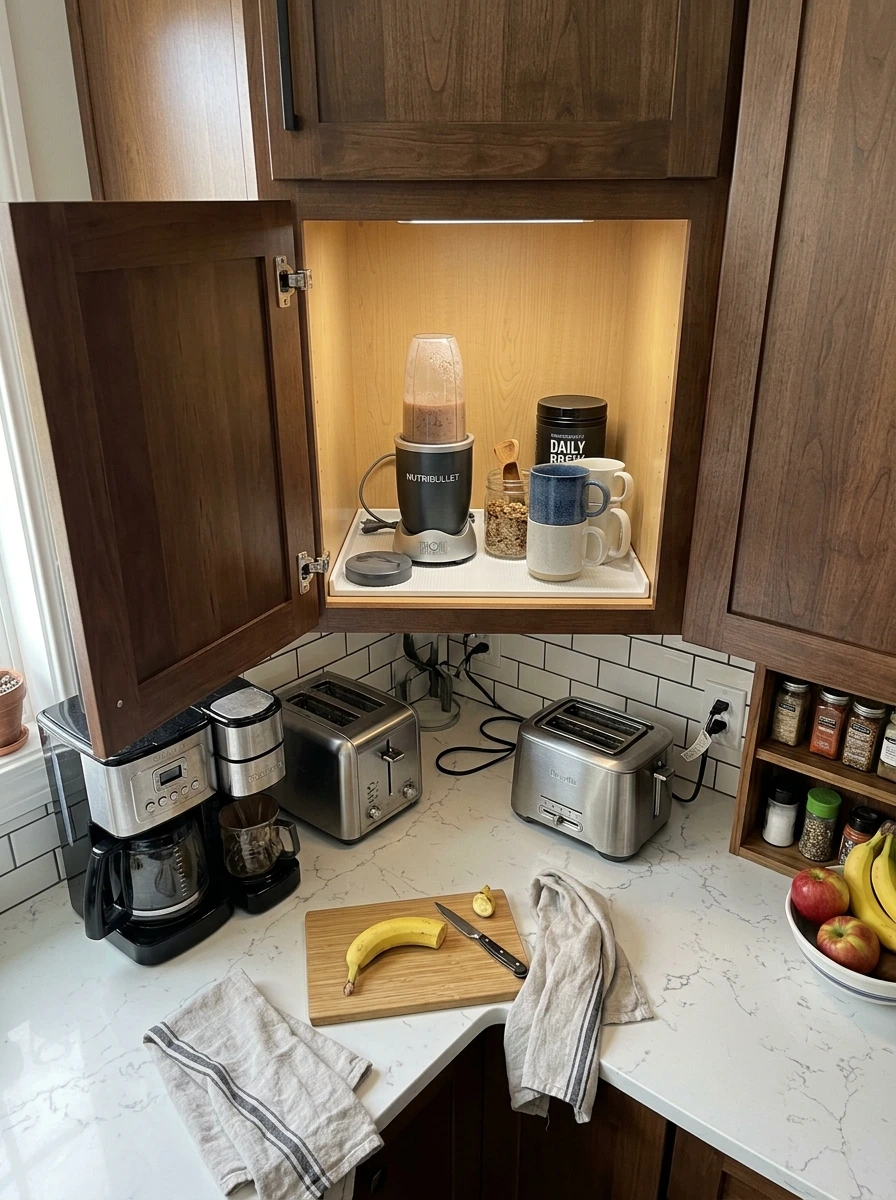
Not every appliance deserves counter real estate, and this is the rule most kitchens get wrong first. An appliance earns a permanent spot only if you use it at least four times a week; everything else lives in a cabinet or pantry shelf, even if it’s pretty. This single rule is responsible for more countertop appliance organization success than any bin or tray, because it solves the actual problem instead of just hiding it. A blender used twice a month does not need to live next to the stand mixer used daily, and moving it frees up visual and physical space immediately. The honest failure mode here is keeping every appliance out because it was expensive, which is exactly how a counter fills up again within a month.
The System Logic: Earn The Spot
❋ Anything used fewer than four times a week moves to a cabinet, no exceptions for price or gift status.
❋ The common mistake is displaying appliances by matching color instead of by use frequency; sort by habit, not by finish.
❋ This single filter saves roughly two feet of counter space in an average kitchen.
4. Where Your Cutting Board Lives Changes Every Meal You Cook
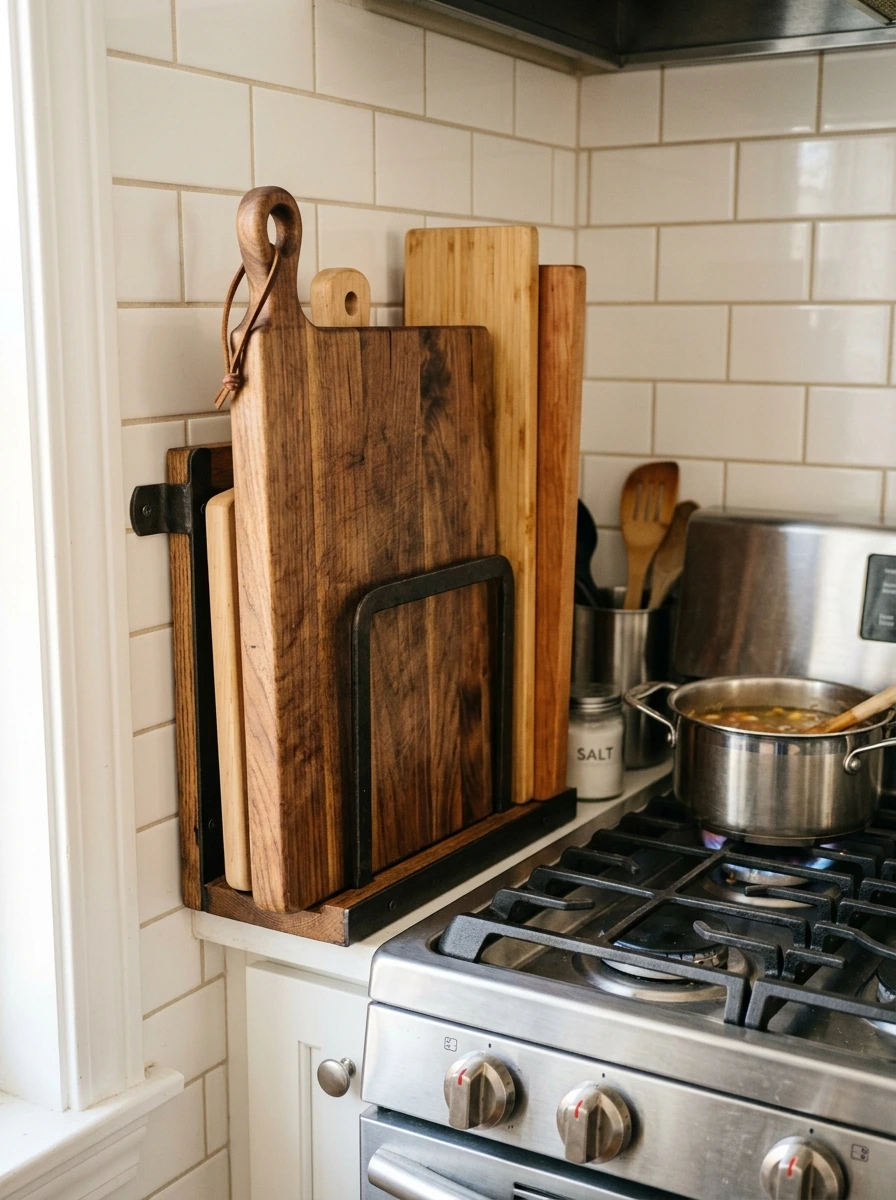
Storing your cutting board flat in a lower cabinet means lifting three other things to reach it every single time you cook. A vertical slot near the prep zone, whether that’s a narrow rack or a slim divider insert, keeps the board upright and grabbable in one motion. That small change alone saves close to three minutes per meal once you count the searching, lifting, and re-stacking it replaces. Pairing this with a nearby knife block keeps your entire cutting board storage kitchen setup within a single step of the stove. The version that fails is stacking boards inside a deep drawer under pans, since it guarantees the board you need is always on the bottom.
5. An Aesthetic Kitchen Counter Display That Still Works for Dinner
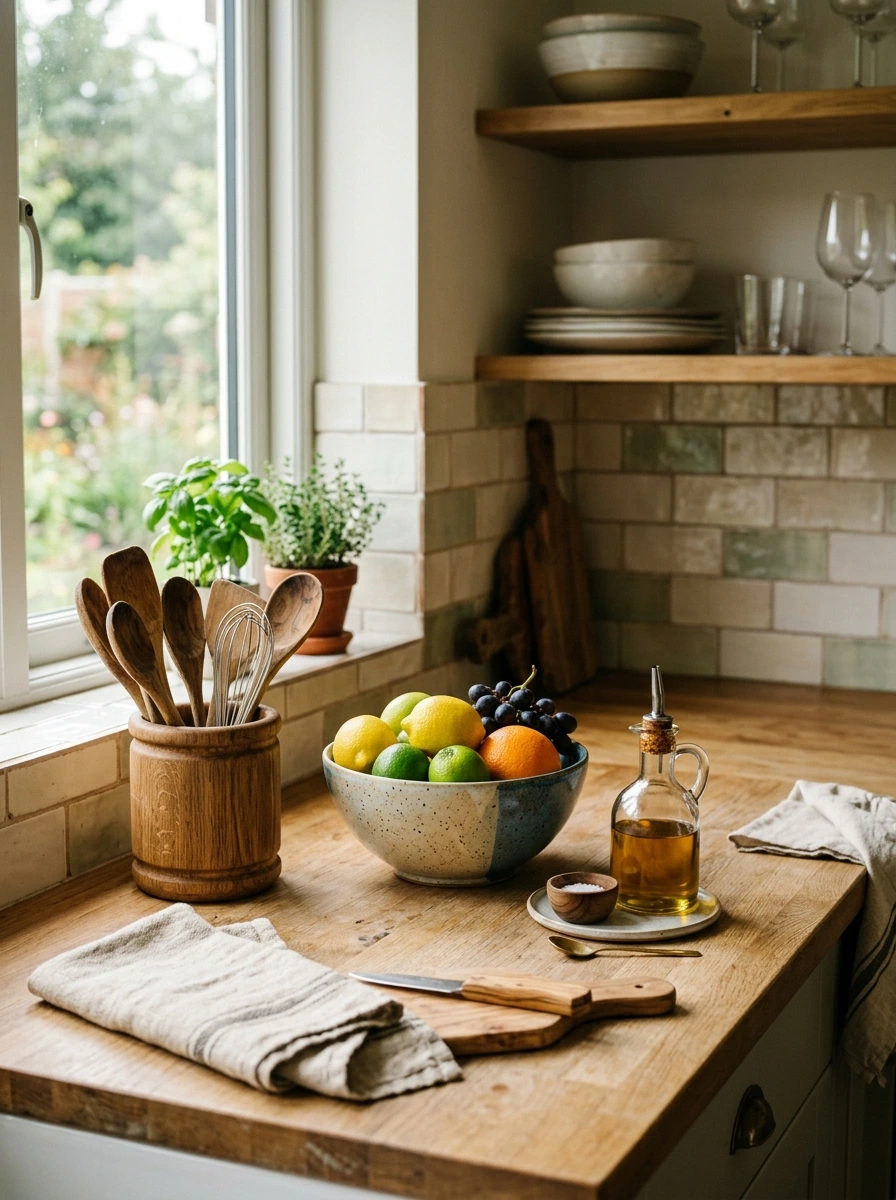
A counter display only earns its place if the items on it are things you reach for weekly, not things chosen purely for looks. A fruit bowl, a small oil cruet, and a wooden utensil crock cover most kitchens’ daily needs while still reading as intentional kitchen counter organization ideas rather than clutter. Because these items are already in use, nothing new gets added to the pile, which keeps the display from creeping outward over time. Choosing one material family, like wood and ceramic together, keeps the display visually calm even when it’s fully functional. Where this goes wrong is filling the display with decorative items that never get touched, since untouched objects collect dust and eventually get pushed aside anyway.
6. The Reveal: The Kitchen Sink Area Everyone Sees and No One Organizes
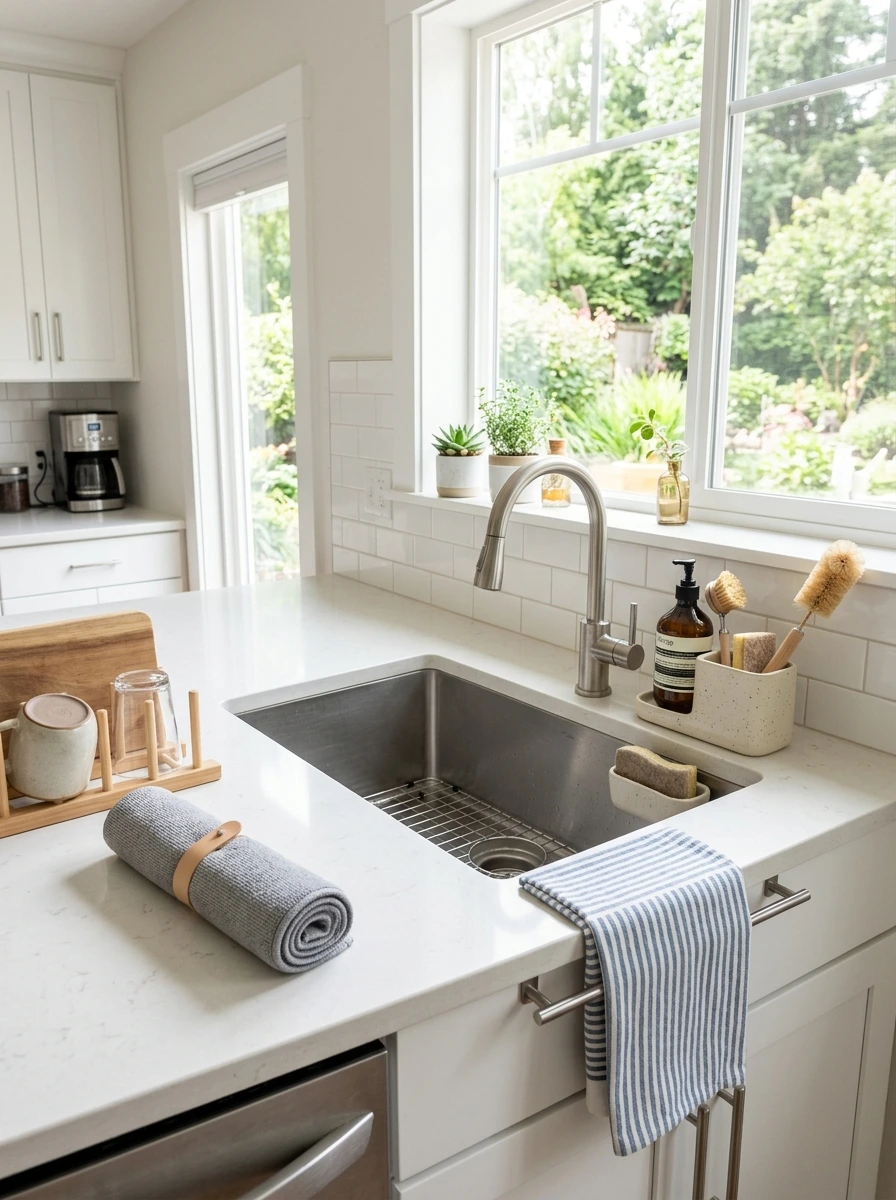
The sink area gets more daily visual traffic than almost any other spot in the kitchen, yet it’s usually the last thing anyone organizes. A small caddy for soap and sponge, a folded towel on a bar instead of the counter, and a drying mat that rolls up when not in use keep this zone from becoming a permanent wet pile. Fixing kitchen sink organization changes how the whole kitchen reads, since a clean sink area visually anchors everything around it as tidy even on a busy day. This is one of the fastest aesthetic kitchen storage ideas to execute because it requires almost no new purchases, just a redefined footprint. The mistake most kitchens make is leaving the dish soap bottle in its original packaging on full display, when a simple pump dispenser solves the same problem more quietly.
7. Why an Organized Kitchen Counter Still Feels Wrong Under Bad Light
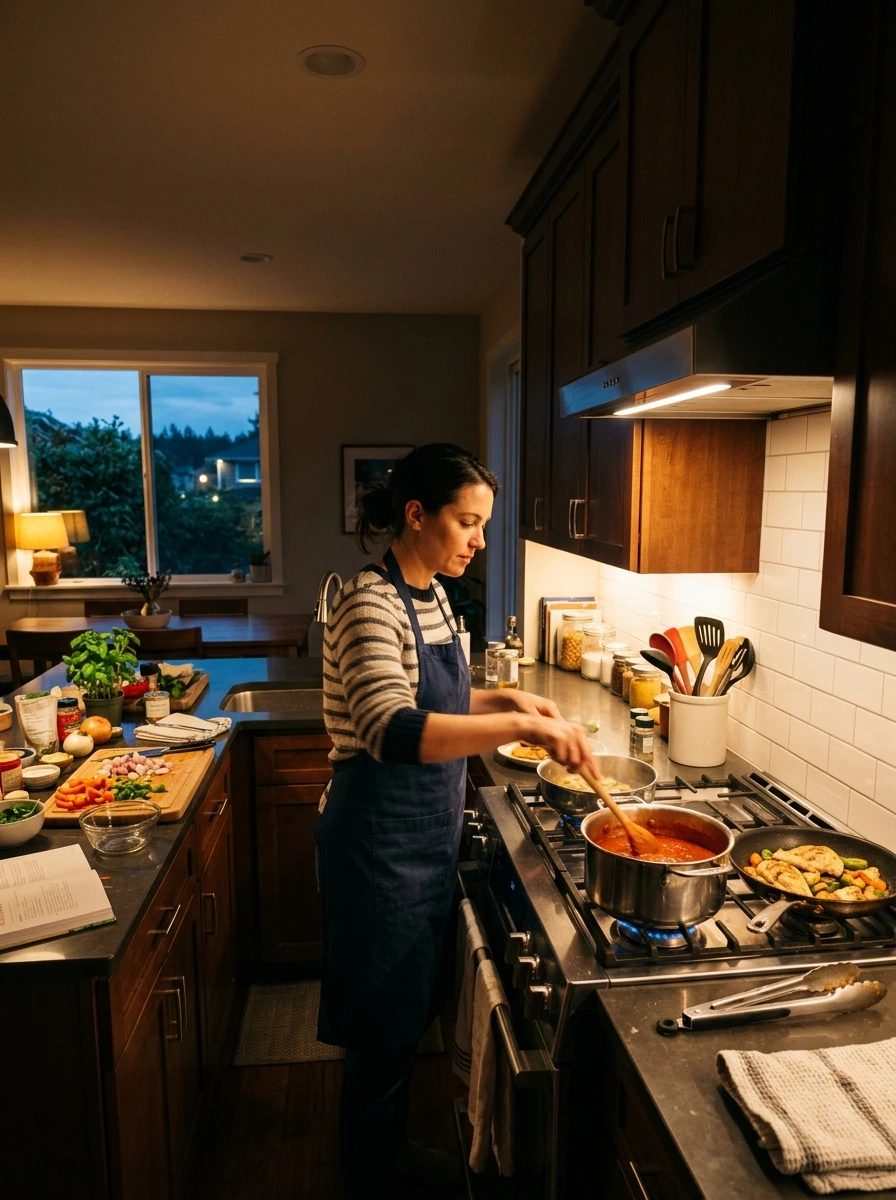
You can organize a counter perfectly and it will still feel off if the lighting above it is flat, yellow, or coming from the wrong angle. Under cabinet lighting aimed directly at the prep and cooking zones removes shadows cast by your own body while you work, which is a bigger comfort factor than most people expect. Adding this single fixture makes an already-organized counter feel finished instead of merely functional, closing the gap between a system that works and a kitchen that feels good to stand in. It’s a natural extension of your kitchen lighting aesthetic ideas beyond the overhead fixture most kitchens rely on alone. Skipping this step is the most common reason a well-organized kitchen still photographs and feels slightly unfinished.
🍳 The Counter Zone Map: What Goes Where Based on How You Actually Cook
COOKING ZONE (by stove): oils, salt, a spoon rest, and your most-used pan lid. These items get touched mid-recipe, so they can’t require a cabinet trip.
PREP ZONE (largest clear space): the cutting board and knife, kept clear otherwise. This space earns its size by staying empty until it’s in use.
COFFEE AND BREAKFAST ZONE: machine, mugs, and daily syrups, contained to one tray. This is the zone most closely tied to a morning kitchen ritual that actually holds up on weekday mornings.
CLEANING ZONE (by sink): soap, sponge, and a folded towel, nothing else. Anything unrelated to washing up gets relocated immediately.
THE DEAD ZONE: most kitchens put junk mail or extra takeout menus in the far counter corner; that space should hold your fruit bowl or a single plant instead, since it’s usually the most visible corner from the doorway.
These seven shifts are the backbone of aesthetic kitchen organization at the counter level, and they set up everything the cabinets need to do next.
Cabinets are where organizing systems usually go to die quietly, since nobody opens them in front of guests so nobody fixes them. I always start by asking one question: what do you reach for without thinking, and is it anywhere near your hand?
8. The Reveal: One Rule Replaces Every Cabinet Organization System
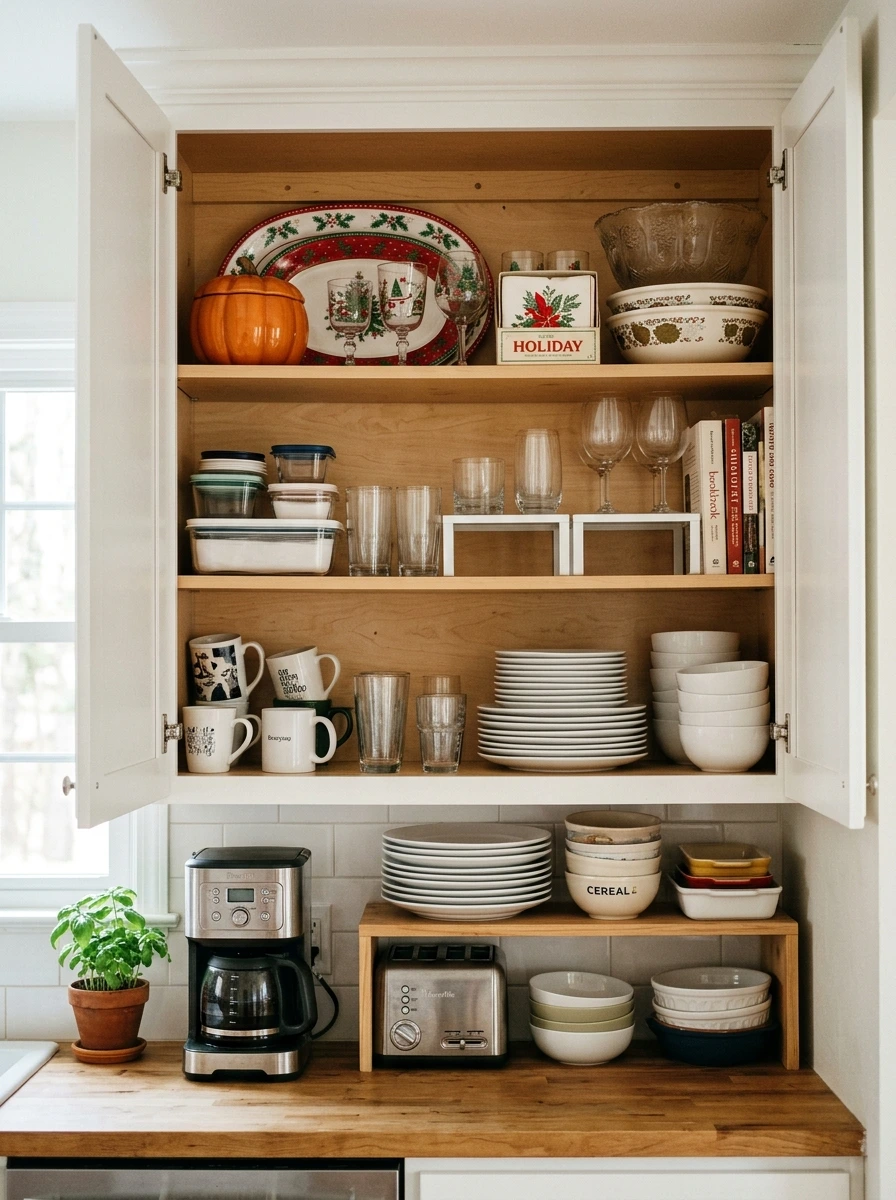
Forget matching categories to shelves; the only rule that matters is organizing by how often you use something, full stop. Daily items go at hip to shoulder height, weekly items go slightly above or below that, and anything used less than monthly moves to the highest or lowest shelf in the cabinet. This single frequency rule solves more kitchen cabinet organization ideas problems than any labeled bin system, because it matches storage to behavior instead of theme. Once frequency drives placement, you stop bending, stretching, or digging for the things you use constantly. The honest failure here is organizing by “type of dish,” which looks tidy on install day but ignores that a mixing bowl used daily shouldn’t share shelf height with one used twice a year.
9. Pot and Pan Organization That Ends the Cabinet Avalanche
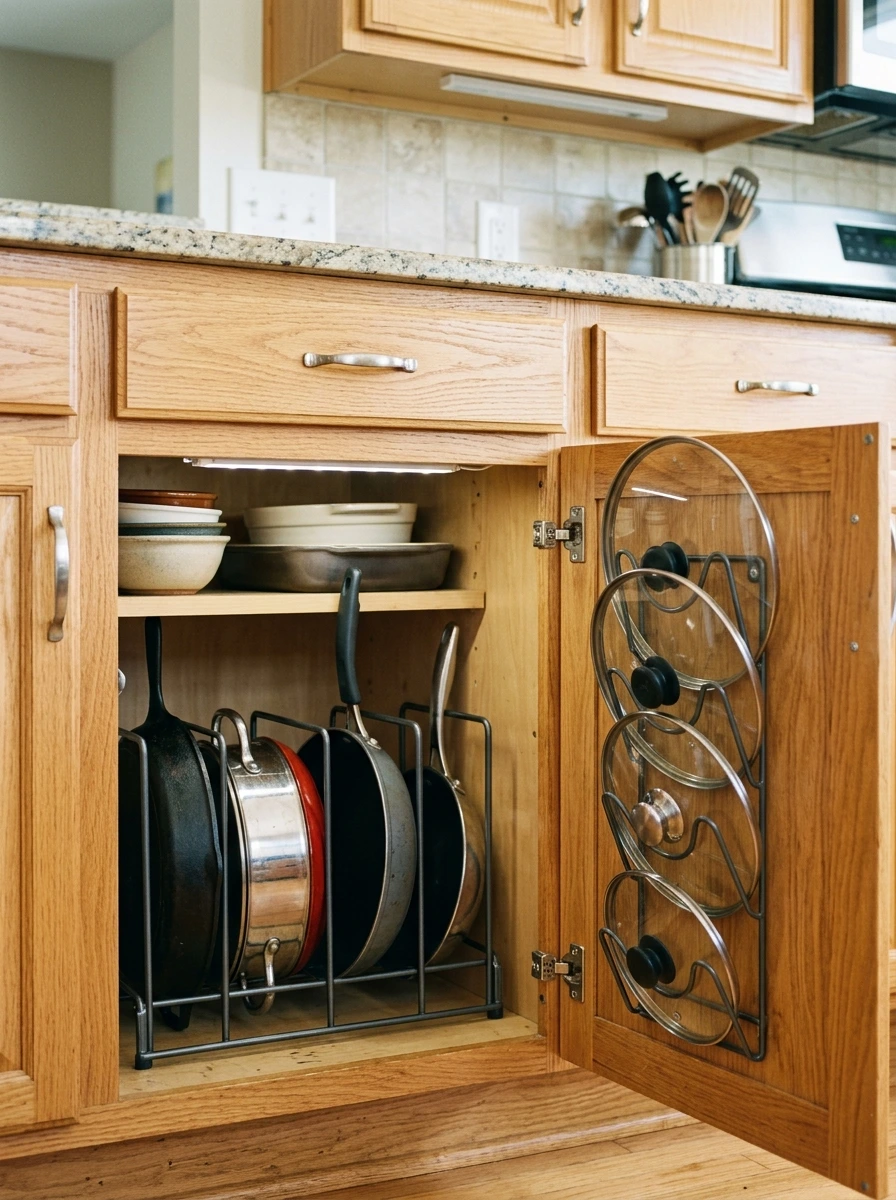
Stacked pots with loose lids are the single most common cause of a cabinet avalanche, since pulling one pan out shifts the entire stack. A vertical divider rack lets each pan slide out independently, while a separate lid organizer keeps lids upright instead of piled loose on top. This pot and pan organization fix means grabbing the pan you need no longer requires unstacking three others first. It’s a natural companion to a strong meal prep system guide, since fast access to the right pan matters most on the busiest cooking nights. The version that fails is nesting pans without dividers “to save space,” which saves space on paper but costs time and noise every single time you cook.
10. The Kitchen Cabinet Door You’ve Been Wasting This Whole Time
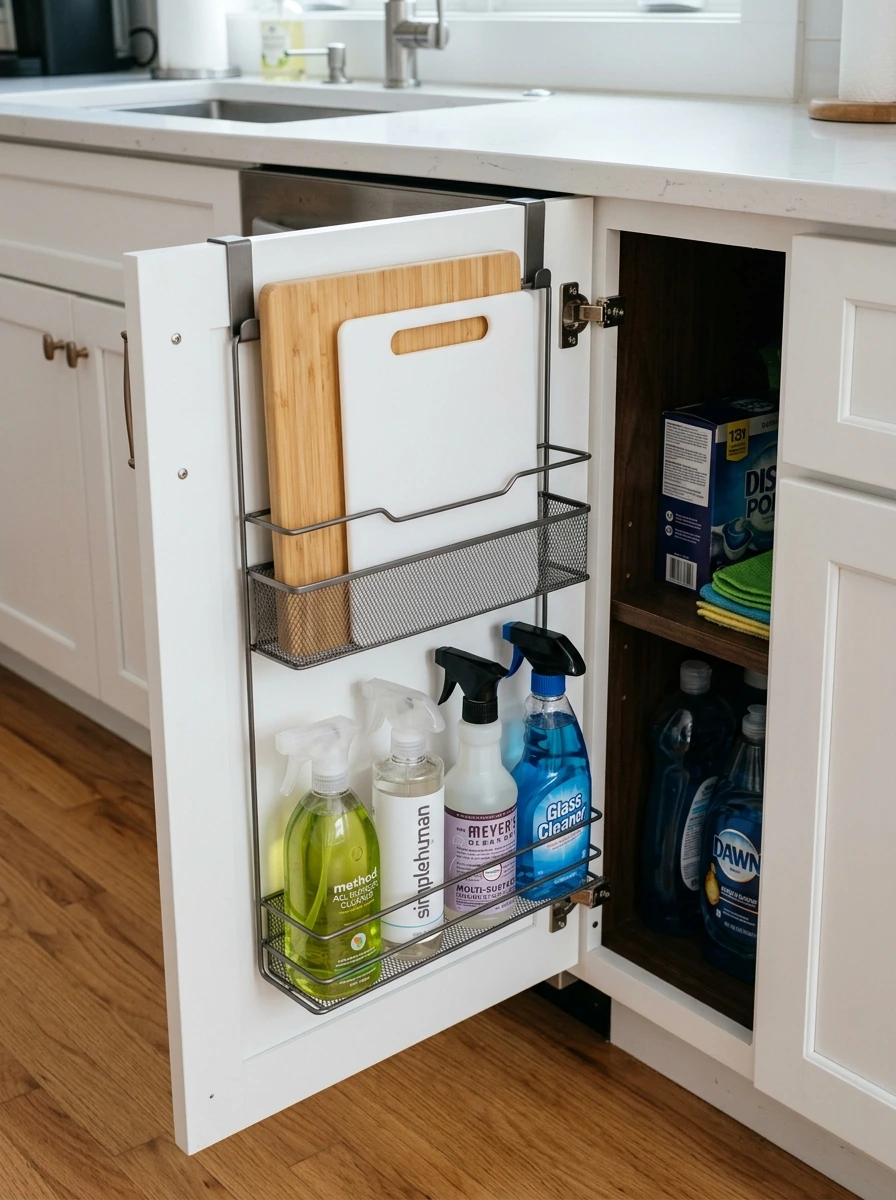
The inside of a cabinet door is flat, vertical, and almost always empty, which makes it one of the most wasted surfaces in an average kitchen. A slim door-mounted rack can hold cutting boards, spray bottles, or foil and plastic wrap rolls, items that otherwise take up shelf depth they don’t need. This kind of kitchen cabinet door organization effectively adds a half shelf worth of storage without touching the cabinet’s actual interior. Once this surface is in use, the shelves behind it can hold fewer, larger items instead of being crammed with flat ones. Skipping this space is the most common reason a cabinet feels too small when it’s actually just poorly used.
11. The Reveal: One Insert Fixes Your Worst Kitchen Cabinet
Every kitchen has one deep, dark cabinet where things go to disappear, usually the one beside the stove or under a bulky corner. A pull out drawer cabinet insert turns that blind space into a fully visible shelf that slides forward, so nothing sits unreachable at the back anymore. This single purchase resolves the one cabinet that no organizing method has ever managed to fix through bins alone. Once it’s installed, that cabinet usually becomes one of the most-used spots in the kitchen instead of the most avoided. The honest limitation is that it requires a cabinet with enough depth to accommodate the slide mechanism, so measure before buying.
12. Making the Dead Corner Cabinet Actually Work in Any Kitchen
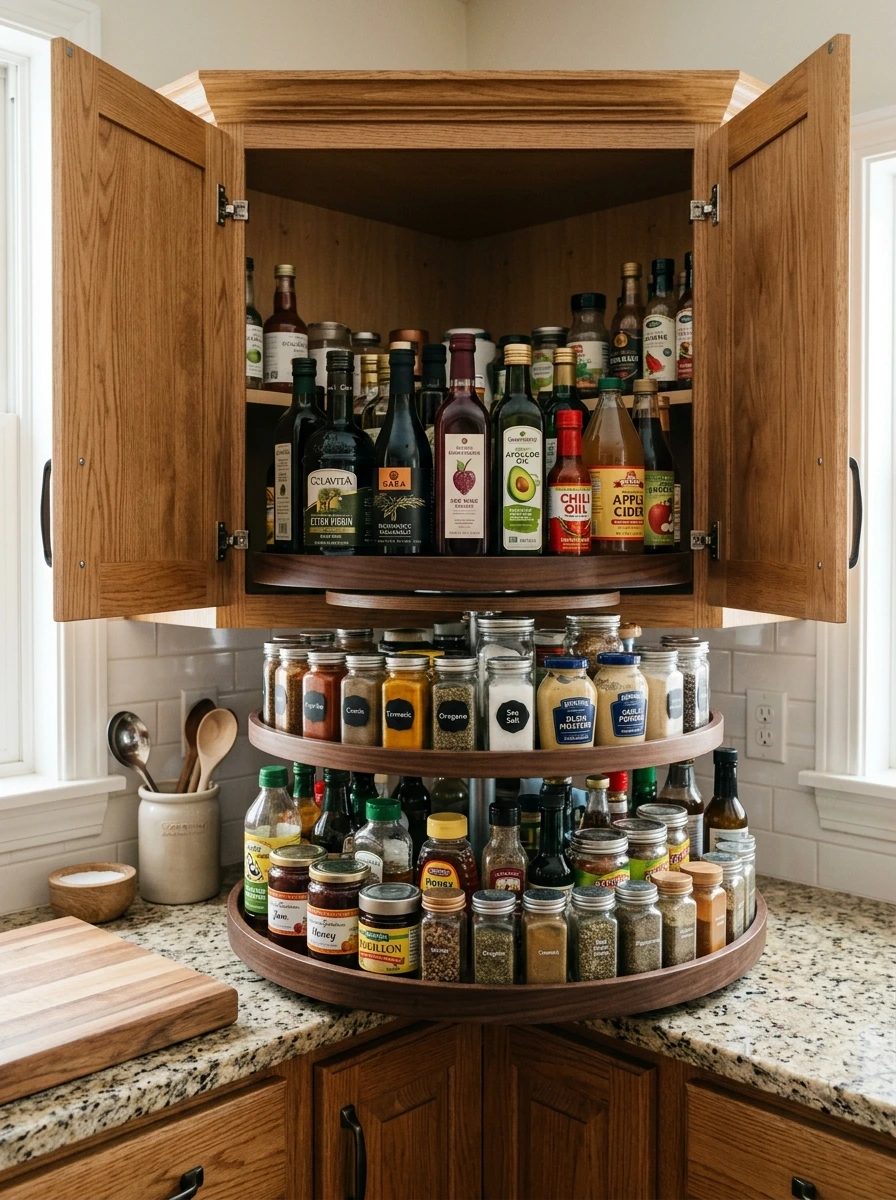
Corner cabinets waste more usable space than any other cabinet shape, because the deepest section is nearly impossible to reach without crawling in. A lazy susan cabinet organizer solves this by rotating the entire contents forward, so nothing sits permanently out of reach in the back corner. This lazy susan corner cabinet fix means oils, vinegars, or bulky appliances can actually live in a space that used to be functionally dead. Once it’s spinning freely, that corner often becomes one of the most efficient storage spots in the whole kitchen rather than the one everyone avoids. The mistake to avoid is overfilling the turntable with tall items that snag on the shelf above, which jams the rotation and defeats the entire point.
13. Upper Kitchen Cabinet Organization by Height and Habit
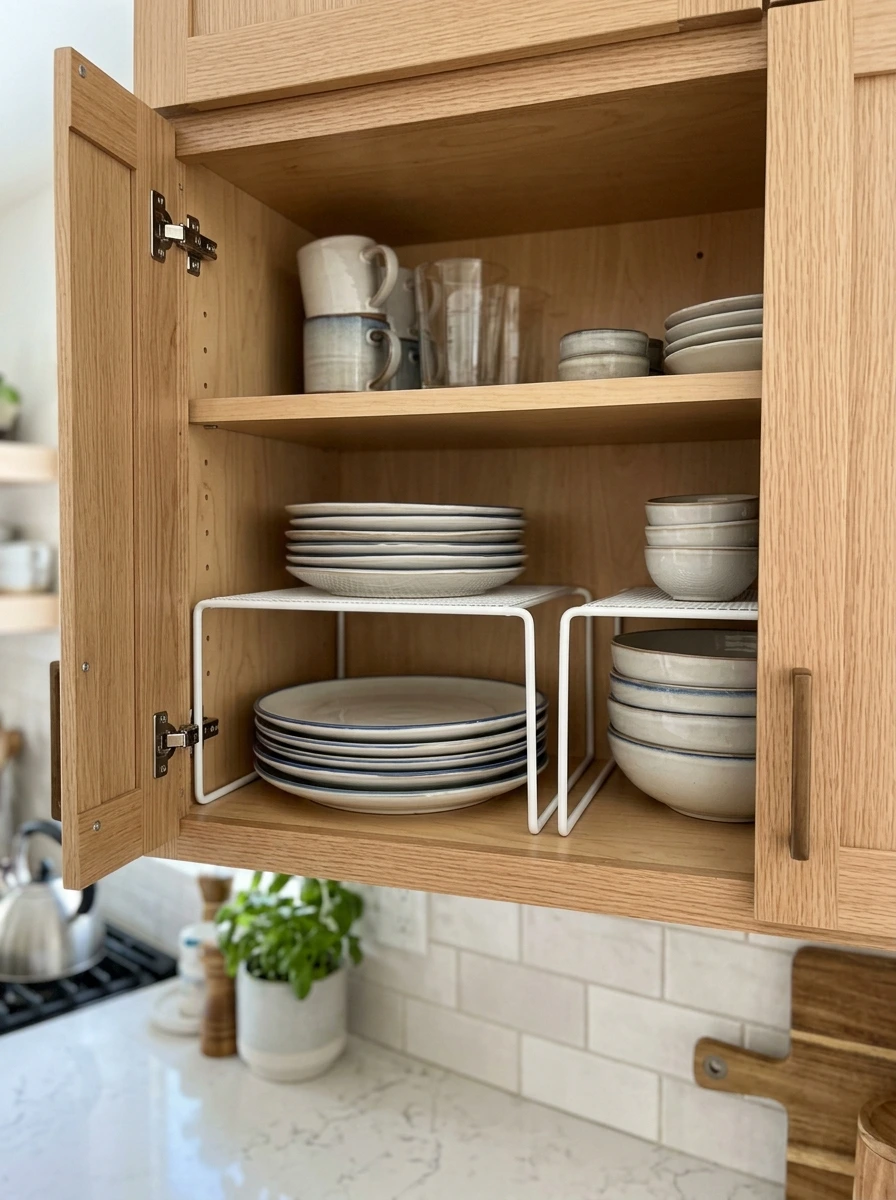
Upper cabinets closest to the ceiling should hold the items you touch least, like holiday serving dishes or a stand mixer bowl attachment, while the shelves at eye level hold daily glassware and mugs. A shelf riser lets you stack shorter items like plates in two visible tiers instead of one blind stack, so nothing hides beneath something else. This approach to upper cabinet organization means you’re never dragging a step stool out for something you need on a Tuesday. It works especially well in kitchen organization ideas for small kitchens, where every cabinet has to serve double duty by height. The failure mode is storing daily glasses on the top shelf simply because that’s where they fit when you moved in, rather than reassessing the layout once you know your actual habits.
🚪 The Cabinet Frequency Rule: A System for Deciding What Goes Where Without Thinking About It Again
DAILY USE → hip to shoulder height, front of the shelf, nothing stacked in front of it.
WEEKLY USE → the shelf directly above or below daily items, still within easy reach without a stool.
MONTHLY USE → top shelf or a labeled bin toward the back, since occasional retrieval is fine here.
SEASONAL USE → highest shelf or a designated seasonal bin, pulled out and swapped a few times a year.
RARELY USE → the honest move is to ask whether you need it at all before giving it permanent cabinet space.
THE ONE EXCEPTION: heavy items like cast iron always go low regardless of frequency, since lifting them from a high shelf is a real safety risk.
This same frequency logic is what makes a meal prep system guide actually work in practice, since your weekly containers and tools need to be exactly where your hands expect them, every single time.
The pantry is the room where good intentions and real behavior split apart the fastest. I’ve opened hundreds of pantries that looked flawless on install day and were chaos three weeks later, and the pattern is always the same.
14. The Reveal: The Kitchen Organization Ideas That Work Versus the Ones That Just Photograph Well
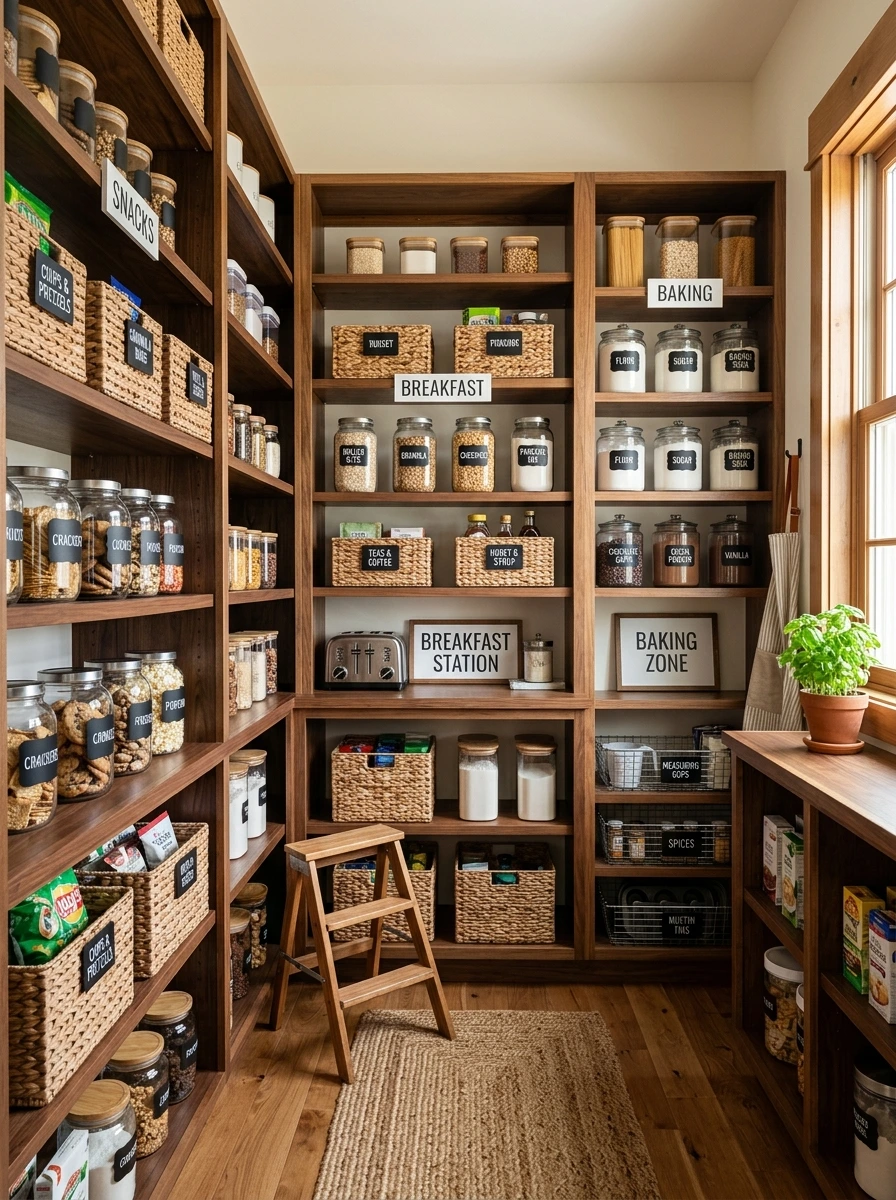
A pantry organized purely for a photo groups items by color and container style, which looks calm but ignores how you actually shop and cook. A pantry organized by zone, such as baking, breakfast, snacks, and canned goods, matches the categories you already think in when you’re reaching for something mid-recipe. This is the difference between kitchen organization ideas that survive real use and ones that only survive a single afternoon of styling. Once zones match your actual habits, restocking becomes intuitive instead of requiring you to remember an arbitrary system you set up once. The honest failure is copying someone else’s pantry zones exactly, when your household’s actual cooking patterns might call for a completely different layout.
The System Logic: Function Beats Photos
❋ Group pantry zones by how you cook, not by container color or shelf symmetry.
❋ The common mistake is decanting everything uniformly; some items work better in their original packaging, covered next.
❋ Zone-based pantries typically cut grocery shopping time by several minutes per trip, since you already know what’s missing at a glance.
15. Decanting Your Pantry: When It’s Worth It and When It Isn’t
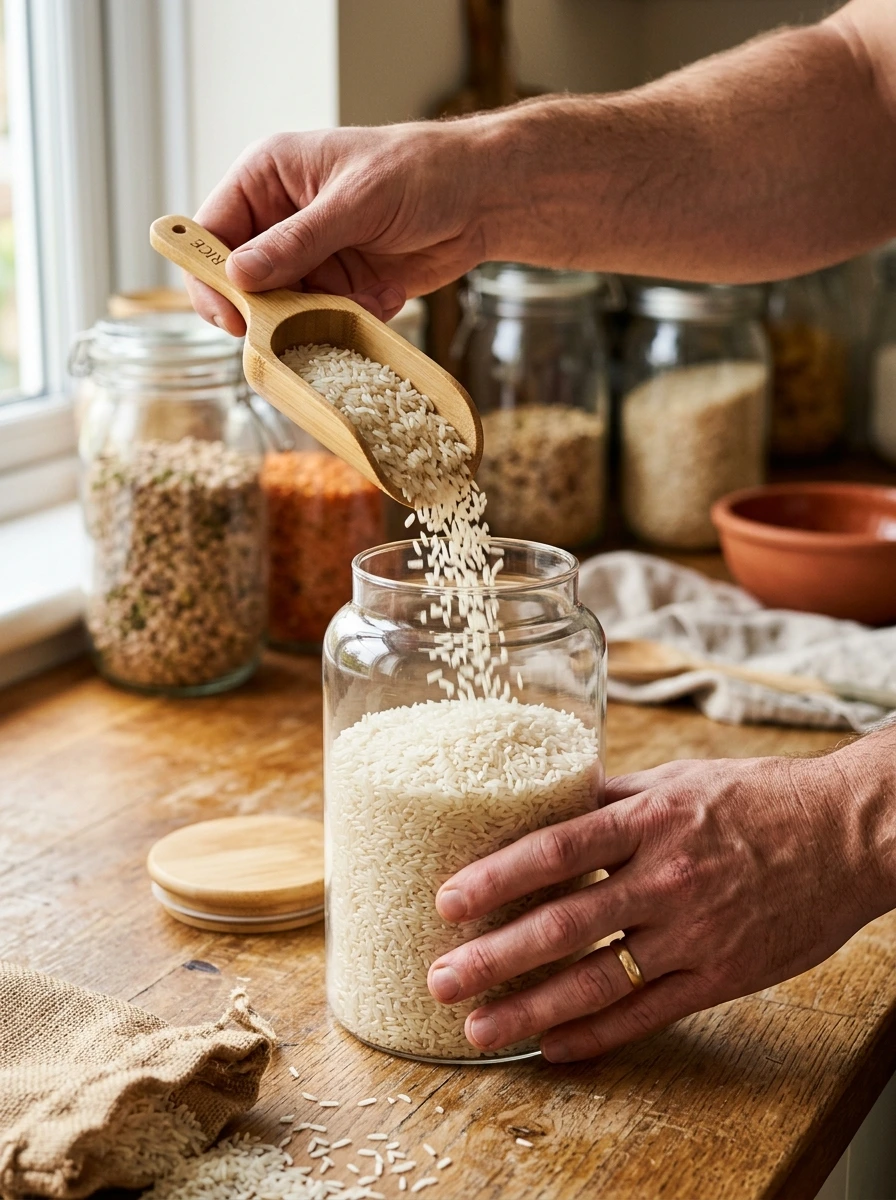
Decanting isn’t a universal rule, and treating it as one is why so many pantry projects fail within a month. Items with high turnover and awkward original packaging, like flour, rice, cereal, and pasta, benefit most from a matched container because they get refilled often and stay fresher sealed. Once these staples are decanted, you can see remaining quantity at a glance instead of shaking a bag to guess what’s left. This kind of decant and label system is only worth the effort for items you buy on repeat, not for a can of specialty spice you’ll use twice a year. The version that fails is decanting everything uniformly regardless of use, which just adds an extra step of transferring product with no real functional payoff.
16. The Clear Pantry Containers That Survive Month Two
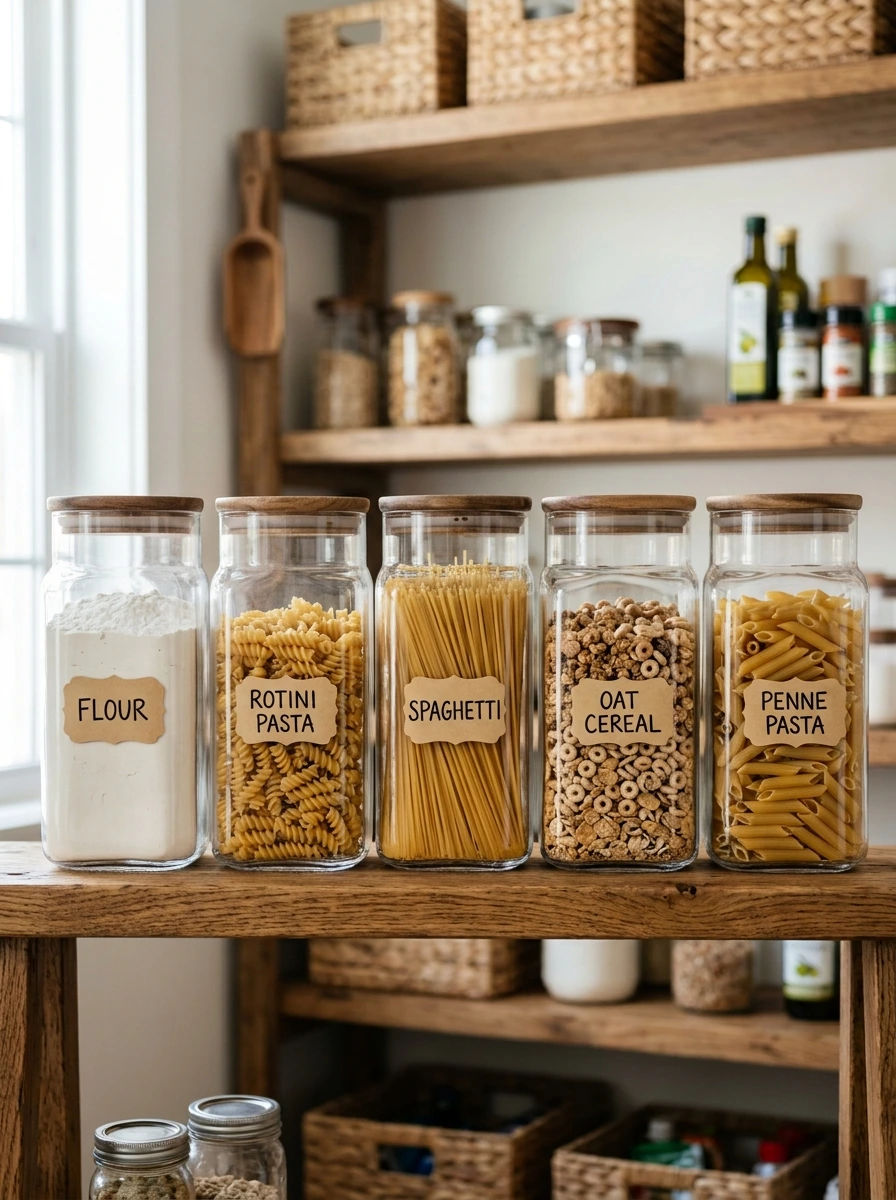
The pantry containers that survive long-term use are the ones with wide openings and airtight, one-hand lids, not the narrow decorative jars that look best in a flat lay photo. A clear pantry container set with a flip or clamp lid gets used consistently because refilling it takes seconds instead of a full unscrewing process. This detail is the actual reason some pantries stay organized for years while others revert to chaos within eight weeks. Glass container kitchen storage also holds up better over time than plastic, since it doesn’t stain, warp, or hold onto old smells the way some plastics eventually do. The honest note here is that a beautiful narrow-necked jar is nearly impossible to fill without spilling, so save those for display items rather than daily staples.
17. The Reveal: The Pantry Door No One Organizes
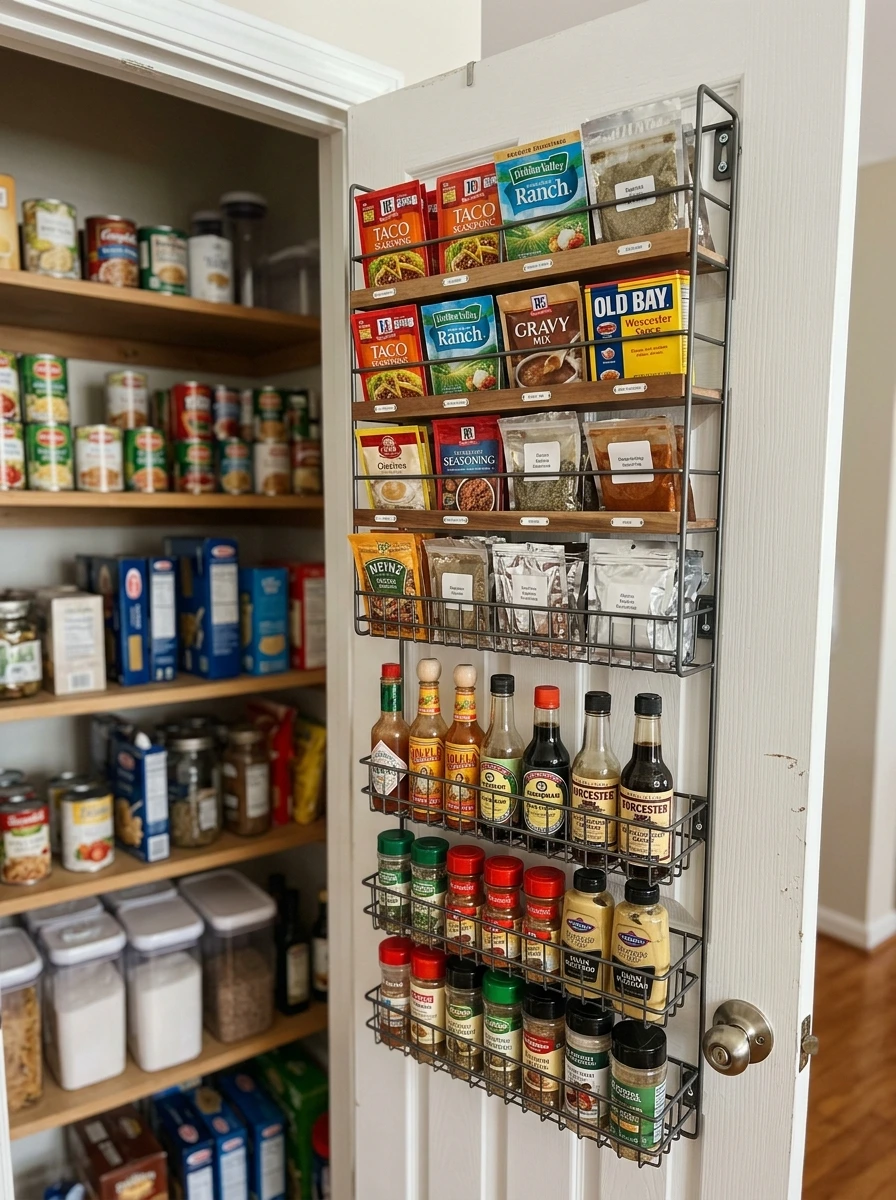
The back of a pantry door is flat, unused vertical space in almost every kitchen, and it’s usually the last surface anyone thinks to organize. A slim door-mounted rack or pocket organizer can hold snack packets, spice packets, or small condiment bottles that otherwise clutter a shelf. This approach to pantry door organization effectively adds an entire extra shelf of storage without removing a single inch of floor space. Once this surface is working, the shelves behind it can hold larger, bulkier items instead of getting crowded with small loose packets. Skipping this space is one of the most common reasons a small pantry feels tighter than it actually is.
18. Tiered Shelves Solve the Depth Problem in Your Kitchen Pantry
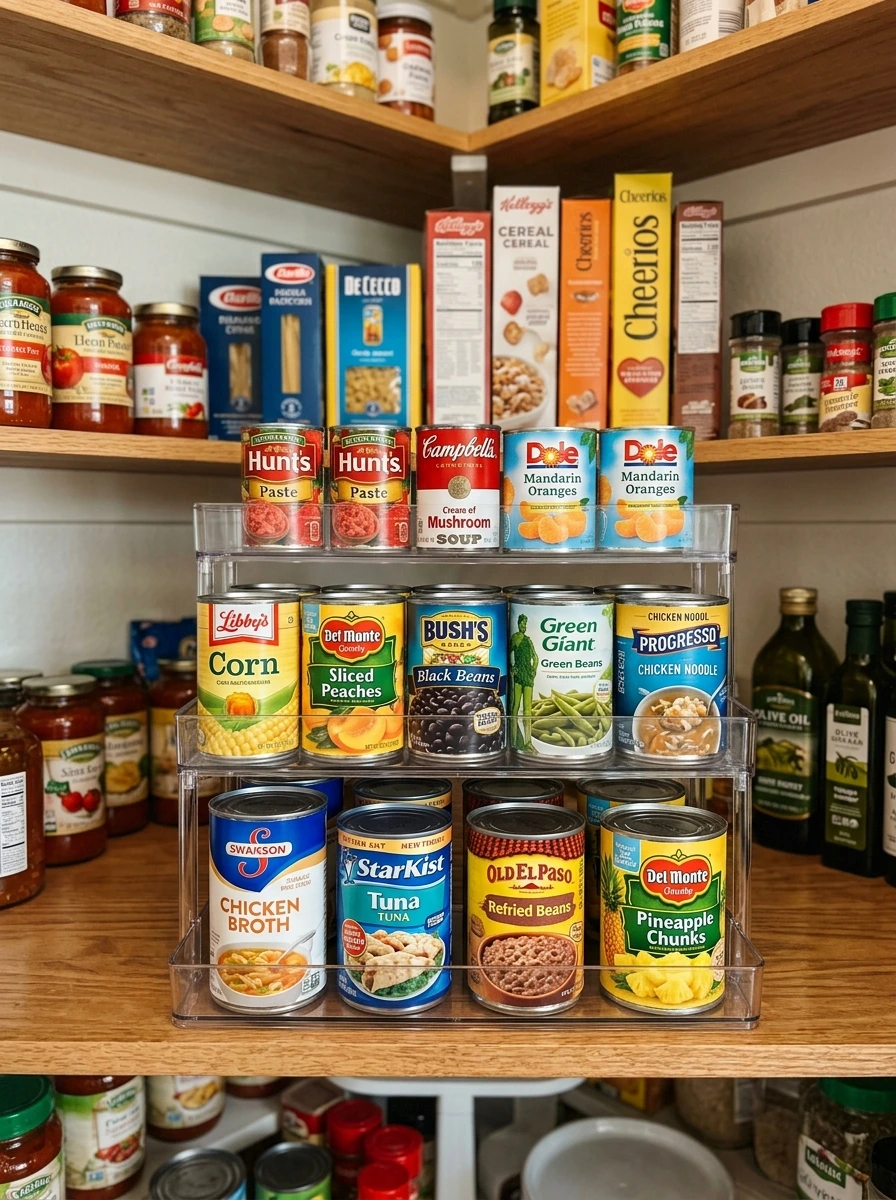
Deep pantry shelves hide items at the back where they’re invisible and eventually forgotten, which is exactly how duplicate cans end up buying themselves. A tiered shelf organizer for pantry cans and jars angles the back row upward so every item is visible from the front, with nothing hidden behind a taller can. This solves the depth problem that causes most of the “I definitely bought this” pantry frustration in the first place. Once everything is visible, you naturally rotate stock front to back instead of stacking new purchases in front of older ones. The mistake to avoid is buying a tier that’s too shallow for your shelf depth, which just creates a second hidden row behind the first.
19. Baking Supplies Are Taking Over Your Pantry. Here’s the Fix
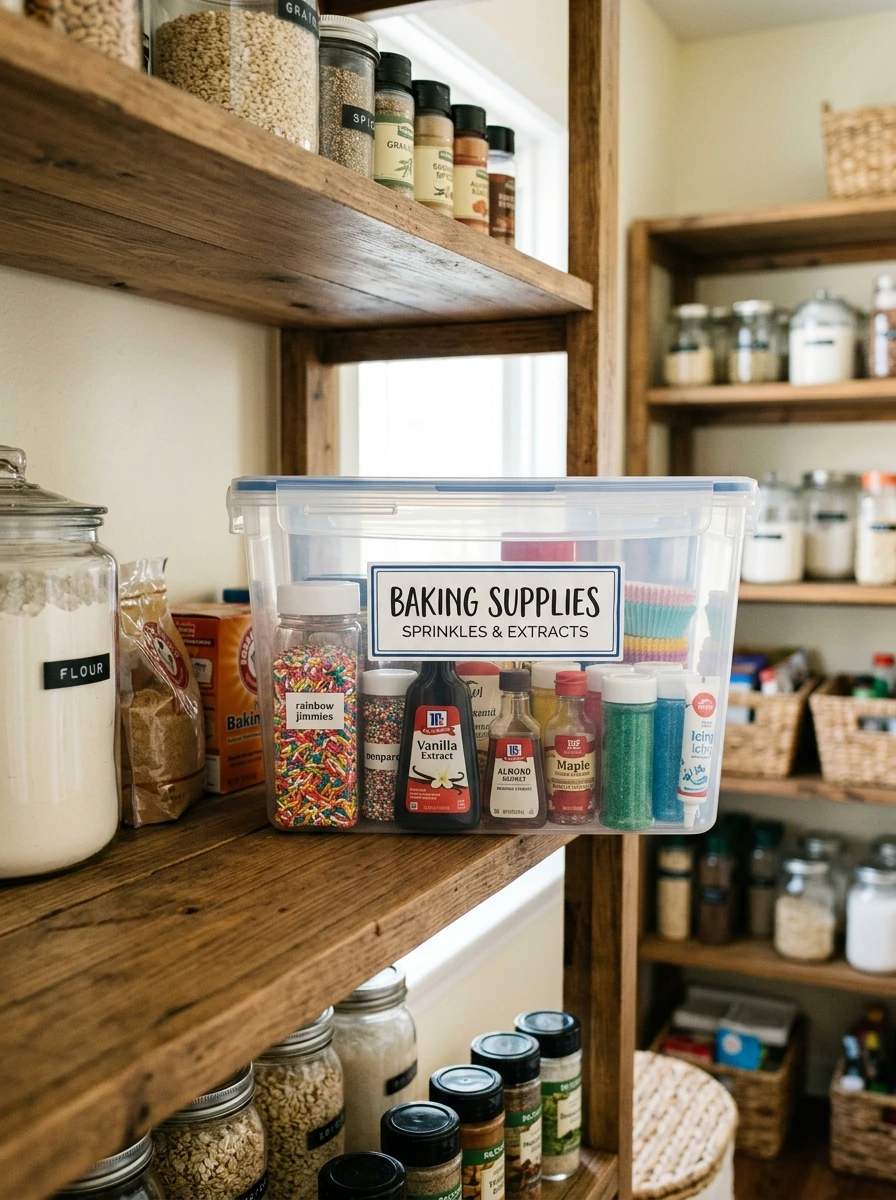
Baking supplies multiply faster than almost any other pantry category, since sprinkles, extracts, and specialty flours accumulate for recipes made once a year. Corralling everything into a single labeled bin, rather than letting individual items spread across multiple shelves, contains the sprawl to one designated footprint. This approach to baking supplies organization means the whole category can be pulled out as one unit on the rare occasion you actually need it. Once it’s contained, the rest of your pantry gains back the shelf space these small, scattered items used to eat up individually. The honest note is that baking supplies rarely need daily-use shelf height, so this bin belongs on a higher or less convenient shelf than your everyday staples.
📦 The Pantry Decant Decision: What to Decant, What to Leave in the Package, and What the Difference Costs You
ALWAYS WORTH DECANTING: flour, rice, pasta, and cereal, since all four are bought often and stay fresher in an airtight container.
NEVER WORTH DECANTING: single-use spice packets, specialty sauces you use rarely, canned goods, and anything with a short shelf life once opened, since decanting these adds effort with no real benefit.
DECANT IF YOU COOK IT WEEKLY: oats, coffee beans, and snack mixes, since frequent use is what makes the extra container worthwhile.
THE CONTAINER RULE: size the container to roughly one shopping cycle of product, not to whatever size looked nicest on the shelf.
LABEL RULE: only label containers holding a product you’d otherwise struggle to identify by sight, since over-labeling adds visual clutter rather than removing it.
Getting this pantry system running well genuinely changes your evenings, too. An organized kitchen makes the end-of-day reset take five minutes instead of forty-five, and our evening reset routine shows how a kitchen system that works fits naturally into a wind-down that actually restores you.
Drawers tell the truth about a kitchen faster than any other surface, because there’s nowhere for a bad system to hide once you pull one open. If I only had one drawer to judge a kitchen by, I’d pick the one closest to the stove.
20. The Reveal: Three Compartments End the Kitchen Utensil Jumble
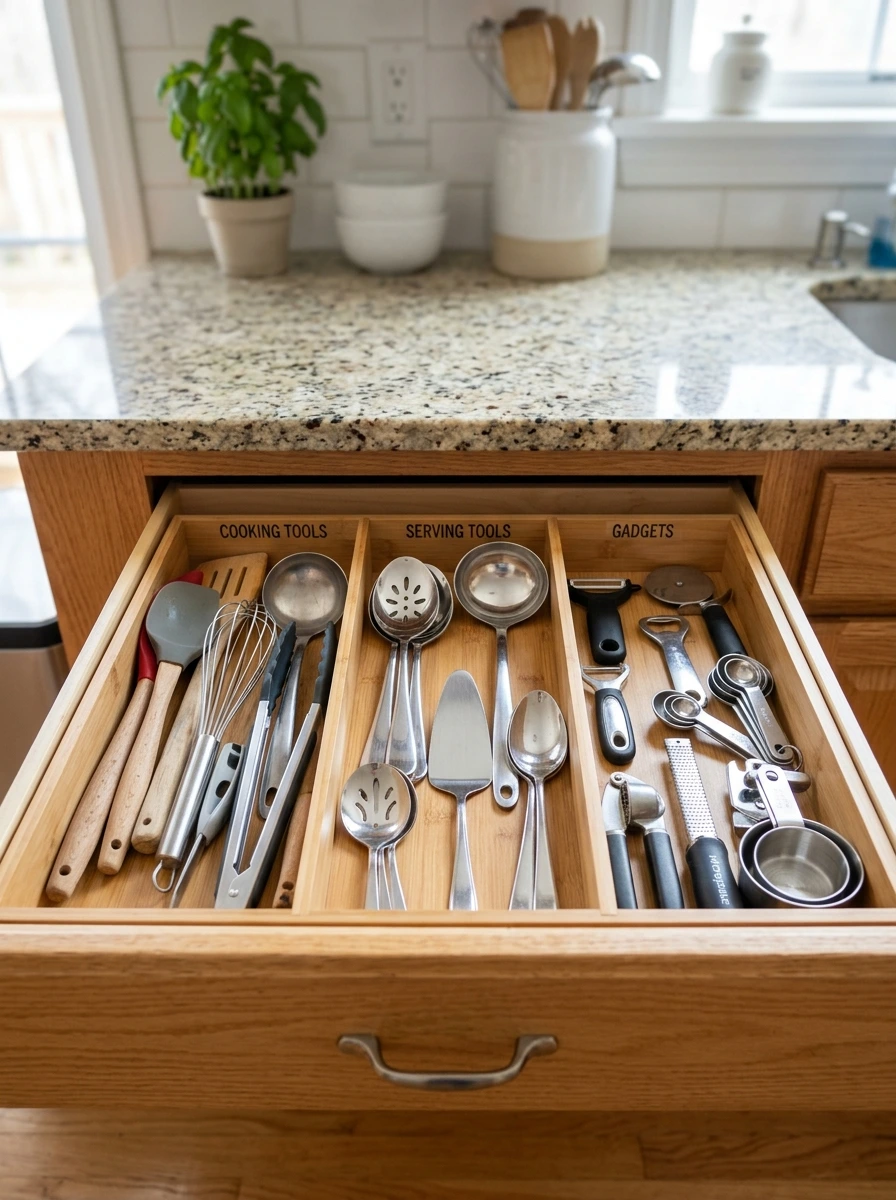
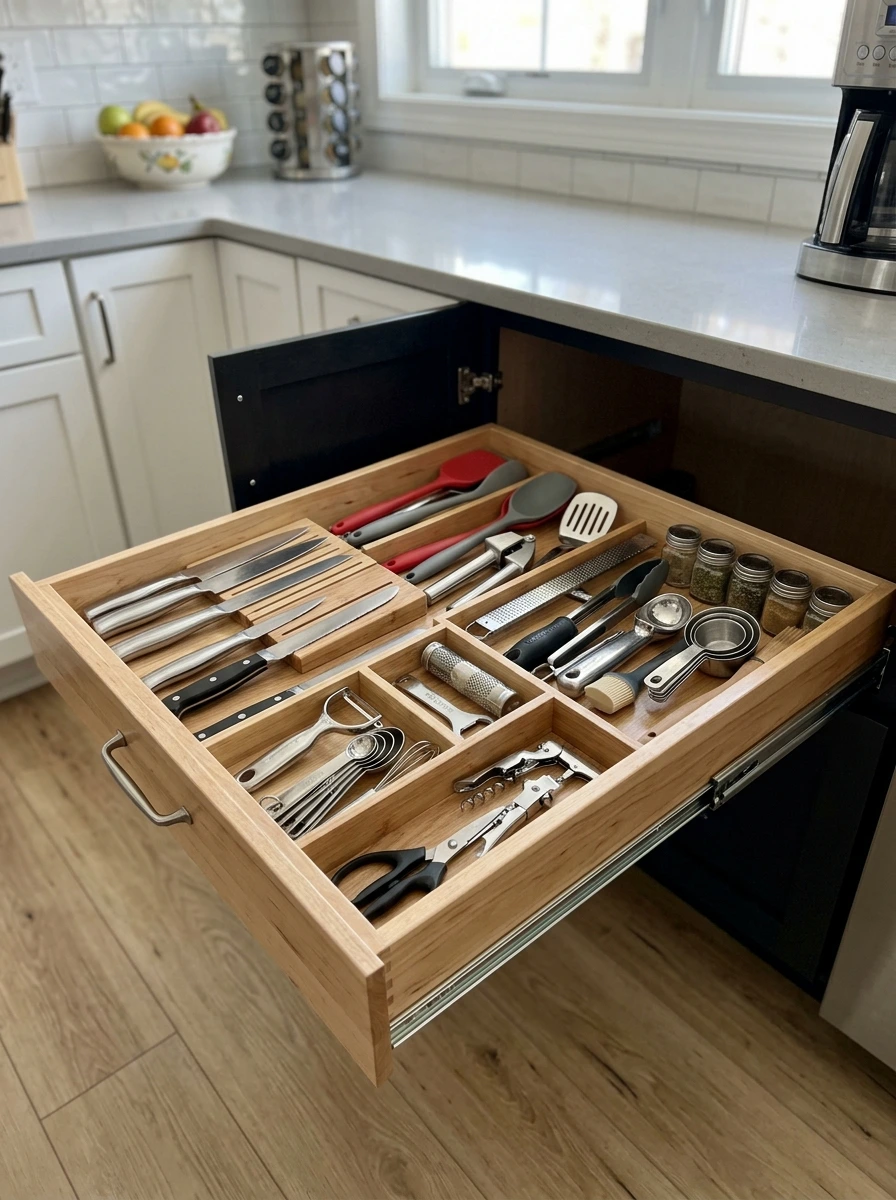
A single open drawer for all utensils guarantees a jumble, since nothing has a defined slot and everything ends up tangled together. Splitting the drawer into three compartments, cooking tools, serving tools, and gadgets, gives each category its own footprint so items stop competing for the same space. This kitchen drawer organization fix means you can find a specific spatula in seconds instead of digging through a pile of look-alike handles. Once compartments are set, putting things away actually takes less effort than tossing them in loose, which is what makes the system stick long term. The version that fails is buying an organizer with too many tiny slots for too few items, which just adds more edges for things to get stuck between.
21. The Kitchen Spice Drawer System That Beats the Rack
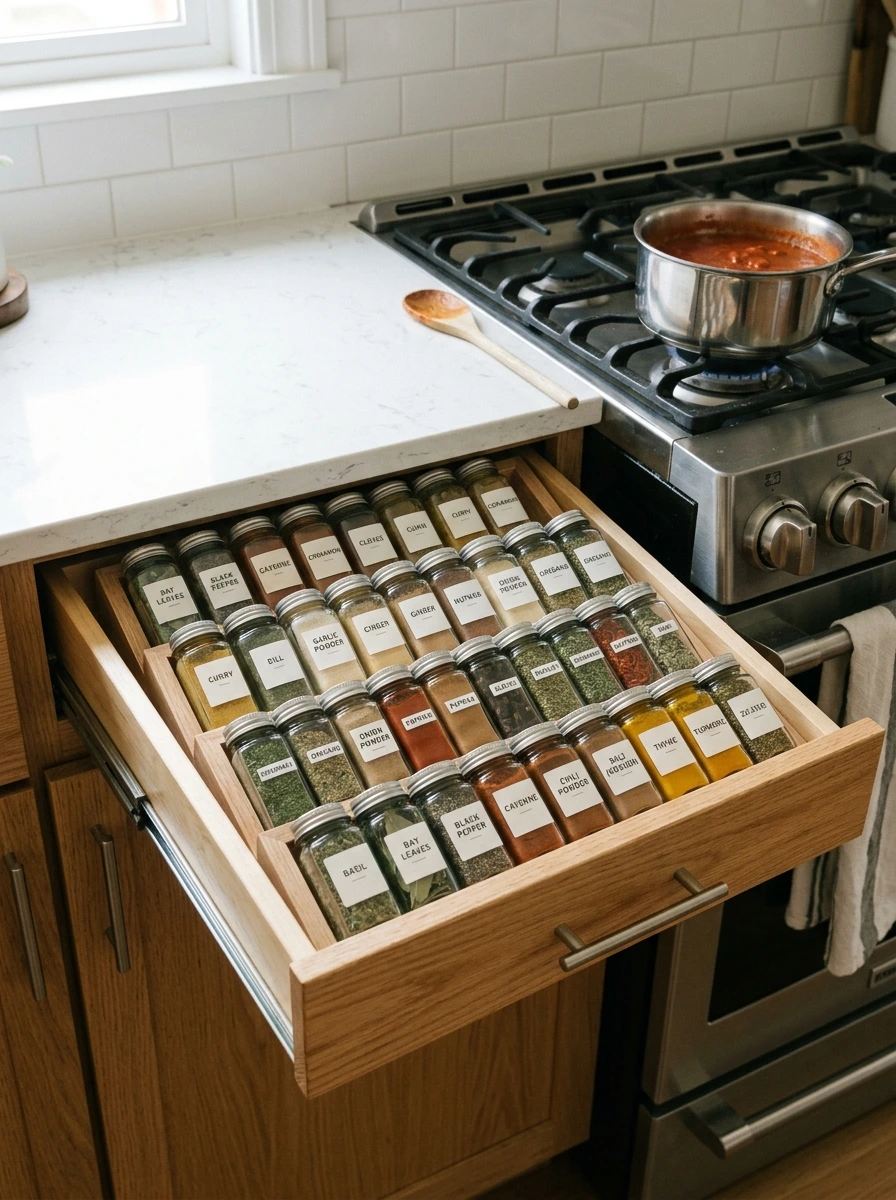
A shallow drawer near the stove, fitted with an angled insert, lets every spice jar sit label-up and fully visible at a single glance. This beats a wall-mounted rack because it keeps spices within arm’s reach of the stove instead of across the kitchen, and it keeps them out of direct light, which actually preserves flavor longer. This kitchen spice organization approach means mid-recipe searching disappears completely, since you can see every label without picking up a single jar. A magnetic spice rack kitchen setup works well for small kitchens without drawer space, but the drawer version wins whenever the option exists. The honest trade-off is that a drawer insert only works with matching jar sizes, so decanting into a uniform set matters more here than almost anywhere else in the kitchen.
The System Logic: Reach Before Thought
❋ Store spices within one step of the stove, angled so labels face up.
❋ The common mistake is alphabetizing instead of grouping by how often a spice gets used mid-cook.
❋ This setup typically saves ten to fifteen seconds per use, which adds up fast on a weeknight scramble.
22. The Kitchen Junk Drawer, Kept Honest
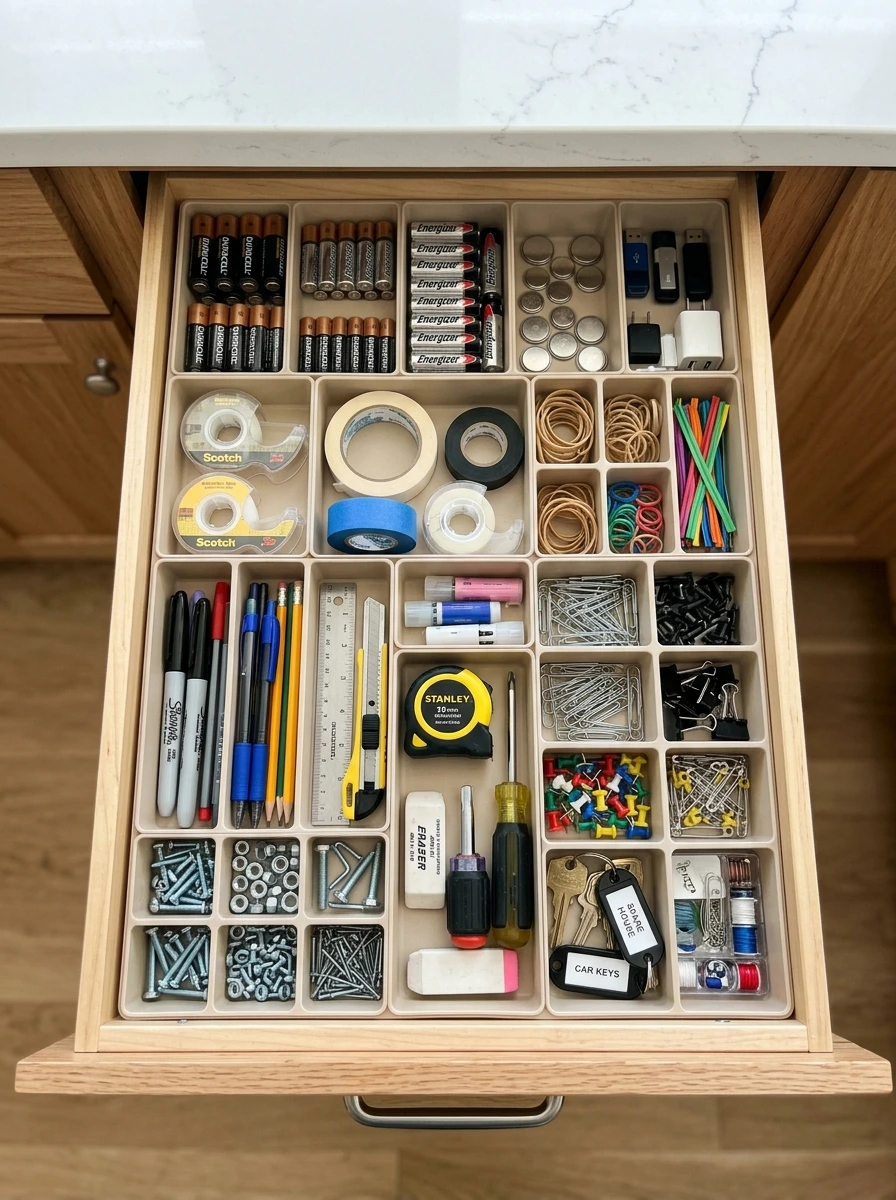
Every kitchen is allowed exactly one junk drawer, but even that drawer needs boundaries to stay functional instead of becoming a second one by accident. A shallow divider tray splits the space into small sections for batteries, tape, and loose odds and ends, so nothing forms a single tangled pile at the bottom. This honest approach to the junk drawer transformation means you can still close it fully and find what you need within a few seconds. Once boundaries are set, the drawer stops slowly annexing counter space for overflow items that no longer fit inside it. The failure mode is letting a second drawer become an unofficial junk drawer too, since two undefined drawers spread the same chaos across double the space.
23. The Reveal: Knife Drawer or Knife Block, Settled for Your Kitchen
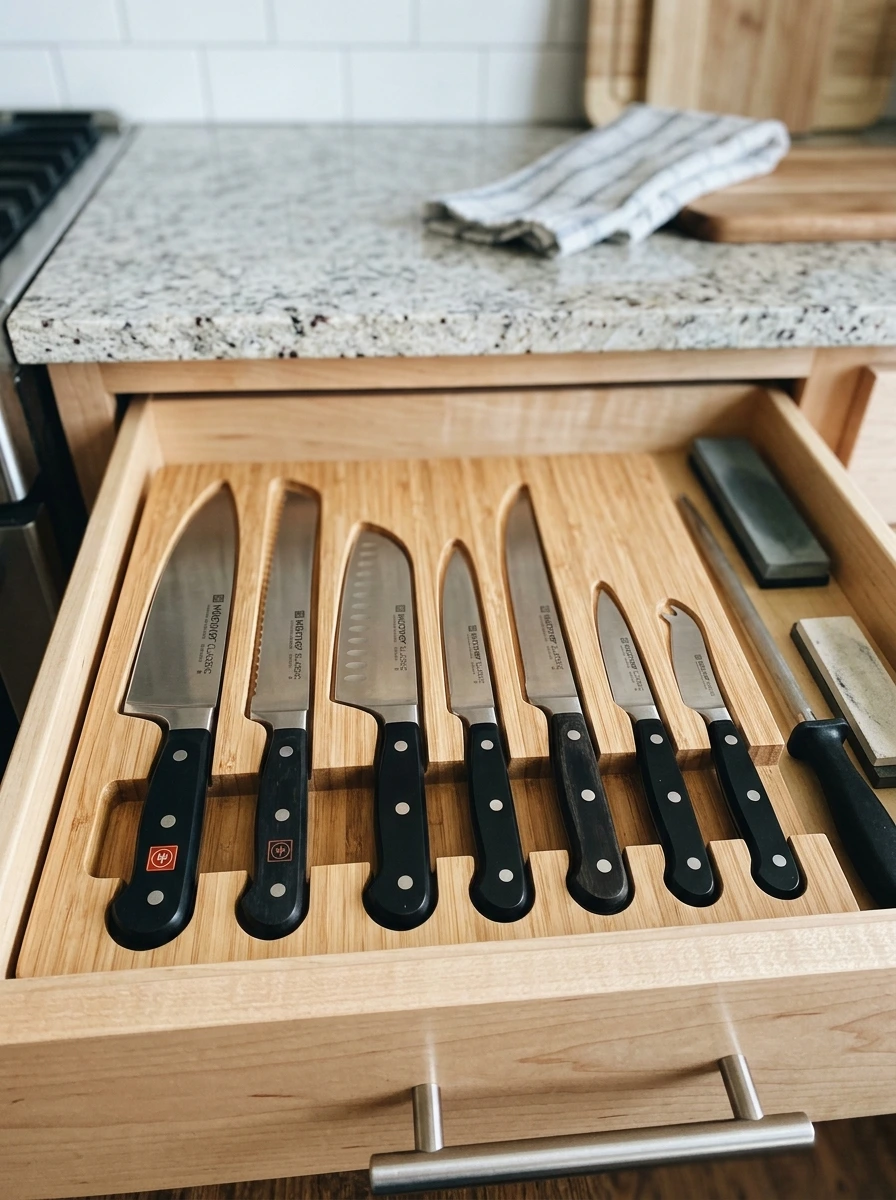
A countertop knife block takes up permanent prime real estate, while an in-drawer knife insert frees that space for your actual prep zone. For most kitchens, especially smaller ones, an in-drawer version wins because it keeps blades protected and separated without sacrificing a single inch of counter. This settles the knife drawer versus knife block debate in favor of drawers for anyone tight on counter space, with the block remaining the better choice only in kitchens with counter space to spare and cooks who want knives visible for daily grabbing. Once knives are drawer-stored, that section of counter typically becomes part of your prep zone instead of a display shelf. The one real risk with drawer storage is placing it somewhere unsafe for reaching hands, so keep it away from a drawer children can access.
24. The Kitchen Drawer Idea Almost No One Uses
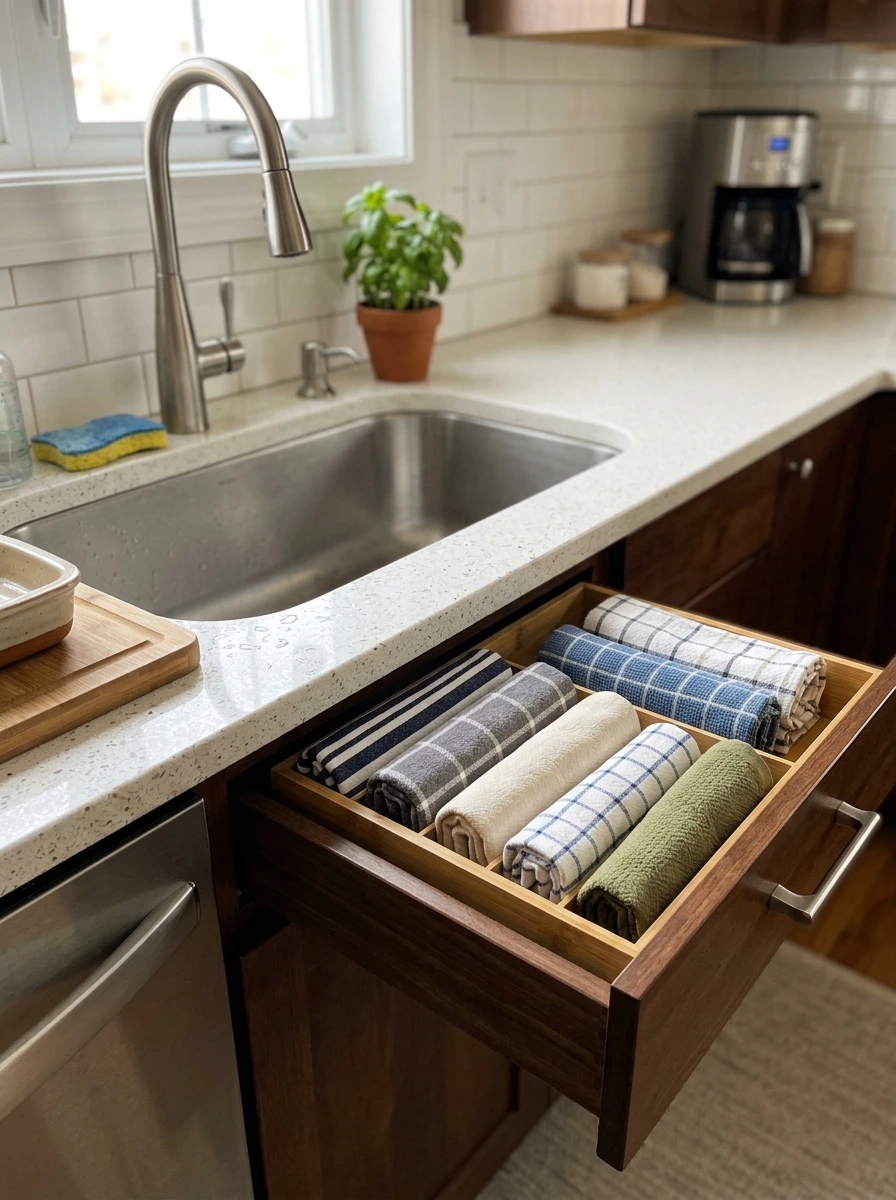
A shallow drawer near the sink is one of the most underused spots in an average kitchen, often sitting nearly empty or filled with random loose items. Fitting it with a slim organizer for trash bags, dish towels, or cleaning cloths gives this overlooked drawer an actual job instead of leaving it as dead space. This hidden kitchen drawer idea effectively adds a functional storage spot without touching a single cabinet or shelf elsewhere. Once it’s in use, items that used to live under the sink in a tangled pile move somewhere far more convenient to reach. The honest note is that this only works in drawers with enough depth for the organizer to sit flush, so measure before buying anything specific.
🥄 The Drawer Audit: Open Every Drawer Right Now and Answer These Questions
QUESTION 1: Can you close this drawer fully without pushing anything down first?
WHAT YES MEANS: the drawer is within its actual capacity; leave it as is.
WHAT NO MEANS: something inside needs to move out permanently, not just get rearranged.
QUESTION 2: Could you find a specific item in this drawer in under five seconds?
WHAT YES MEANS: the current system is working; don’t fix what isn’t broken.
WHAT NO MEANS: the drawer needs compartments, not more items removed.
QUESTION 3: Does everything in this drawer belong to the same general task?
WHAT YES MEANS: the drawer has a clear job and should stay that way.
WHAT NO MEANS: split it, since mixed-purpose drawers are the ones that revert to clutter fastest.
QUESTION 4: Have you used everything in this drawer in the past few months?
WHAT YES MEANS: keep the contents exactly where they are.
WHAT NO MEANS: relocate the unused items to a lower-priority drawer or donate them.
An organized kitchen makes healthy cooking fast enough to actually happen on a busy schedule, and our active lifestyle guide covers the other side of that lifestyle with the same attention to making things work in real life.
Once the workflow is fixed, the last layer is making the system look like it belongs in the kitchen instead of like a garage bin got relocated. This is the part where function and an aesthetic finally stop competing with each other.
25. The Reveal: Open Shelf Kitchen Organization That Stays Organized Past Week One
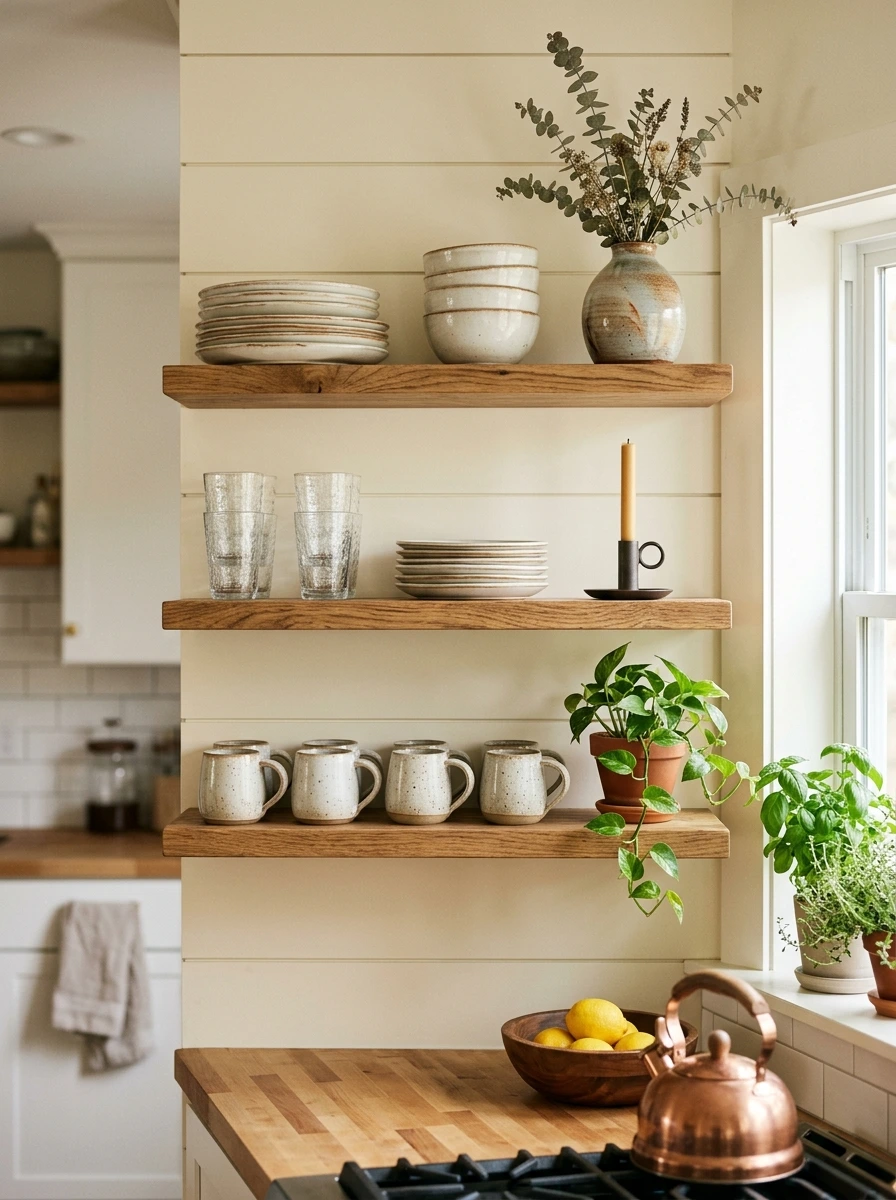
Open shelving fails most often because everything is left visible, which turns the shelf into a display of daily clutter rather than a curated one. A working version limits each shelf to a small number of items, usually daily dishware plus one or two decorative pieces, so the eye has somewhere to rest. This kind of open shelf kitchen organization photographs well precisely because it’s genuinely restrained, not because of any particular styling trick. Once the item count per shelf is capped, new purchases naturally get stored elsewhere instead of crowding onto the display. The honest failure is trying to store everything you own on open shelves for convenience, which guarantees visual chaos within a few weeks no matter how nice the individual pieces are.
26. Bins and Baskets That Make Kitchen Storage Look Intentional
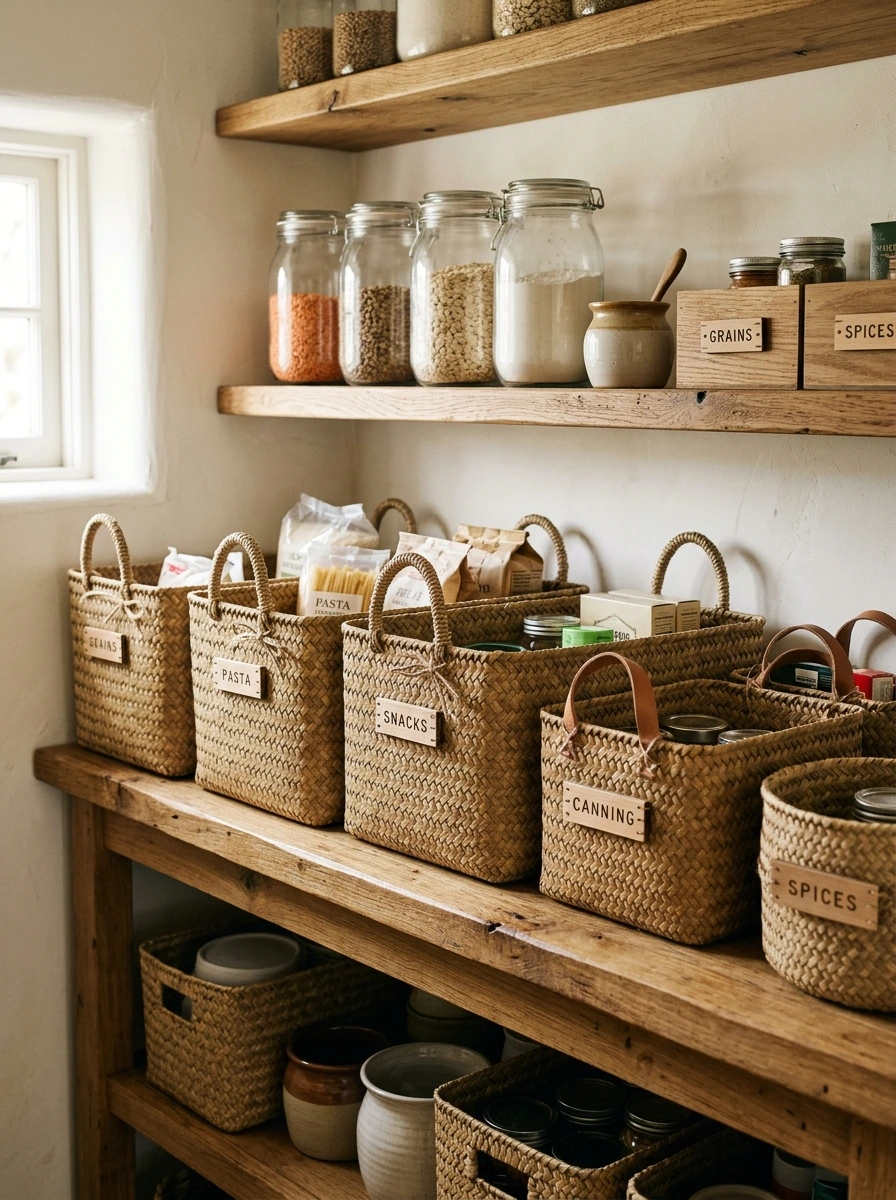
Loose items on a shelf read as clutter, while the same items grouped into a matching basket read as an intentional kitchen bin and basket system. Choosing two or three materials, like woven seagrass and simple wire, and repeating them throughout the kitchen keeps the whole space feeling cohesive instead of mismatched. This grouping instantly upgrades a shelf of loose snack bags or produce into something that looks deliberate rather than accidental. Once baskets are labeled or sized consistently, restocking becomes a simple swap instead of a full reorganization each time. The mistake to avoid is buying baskets in random sizes that don’t nest or stack, since mismatched dimensions create the same visual chaos the baskets were meant to solve.
27. Kitchen Pegboard Organization as Wall Art
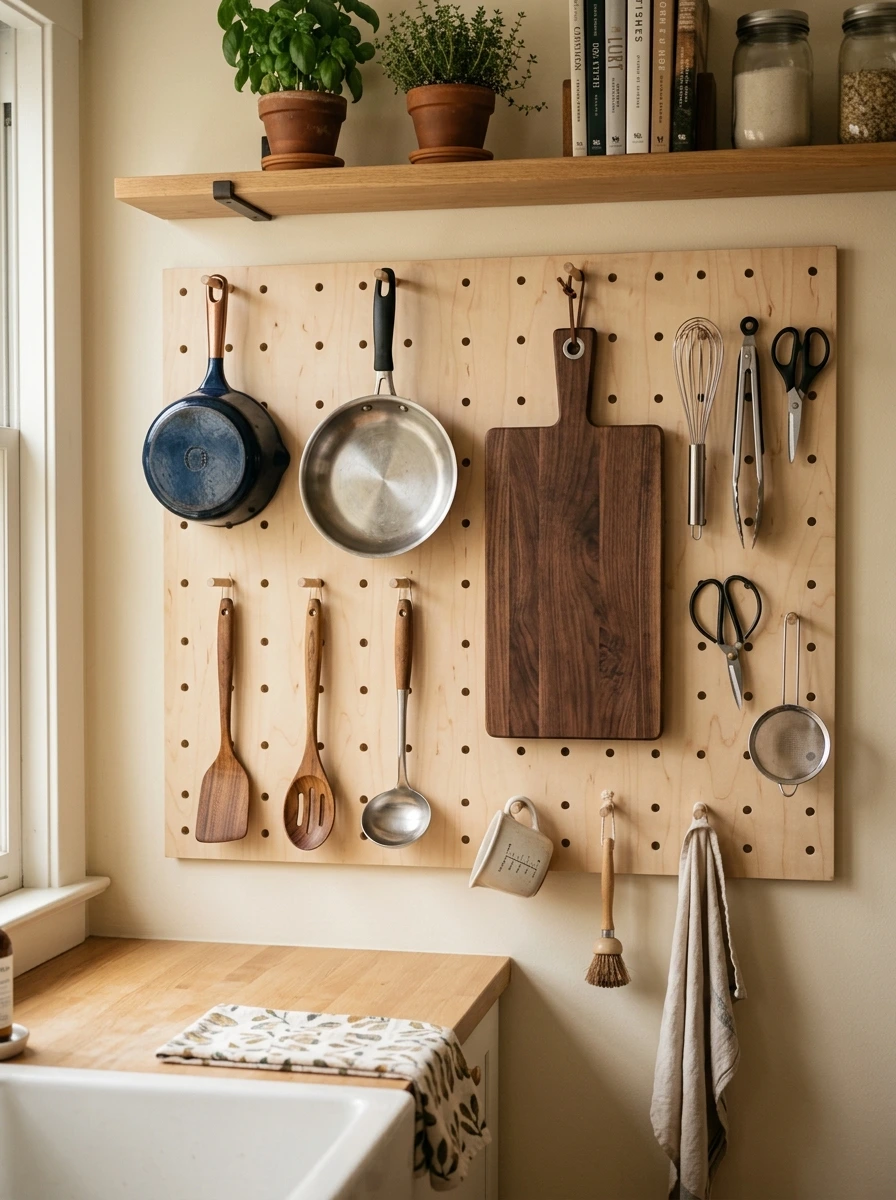
A pegboard mounted above a prep counter or stove turns your most-used tools into a functional piece of wall art instead of hiding them in a drawer. Hanging pots, utensils, and cutting boards on hooks keeps them within immediate reach while clearing an equivalent amount of drawer and cabinet space elsewhere. This kitchen pegboard organization approach works especially well in small kitchens, where vertical wall space is often the only storage left untouched. Once hooks are arranged by size and frequency, the board reads as a designed feature rather than a utilitarian rack. The honest limitation is that pegboards need a clear wall with enough depth clearance for hanging items, so measure the space before drilling anything.
The System Logic: Walls Become Storage
❋ Use vertical wall space near the stove for your most-used pots and utensils.
❋ The common mistake is overcrowding the board immediately; leave visible gaps for breathing room.
❋ A well-placed pegboard can free up an entire drawer’s worth of space elsewhere in the kitchen.
28. The Reveal: A Refrigerator System So You Always Know What Your Kitchen Has
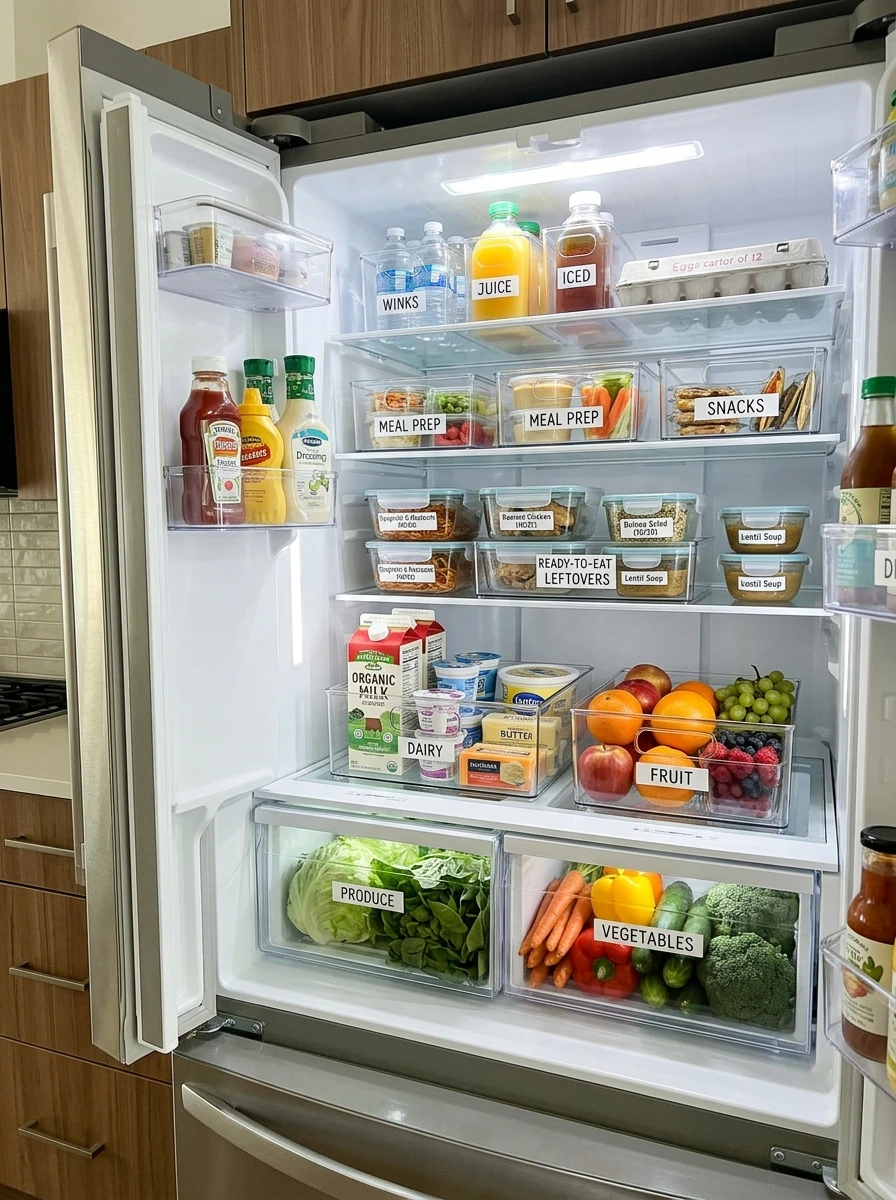
A refrigerator with no system hides food behind other food, which is the single biggest driver of forgotten leftovers and unnecessary food waste. Clear bins assigned to categories, like a dairy bin, a produce bin, and a ready-to-eat bin, keep everything visible the moment the door opens. This refrigerator organization approach means you can see at a glance what needs to be used soon instead of discovering it a week too late. Once bins are in place, pulling one entire category out at once for meal prep becomes simple rather than a shelf-by-shelf search. The honest note is that overpacking any bin defeats the purpose, since a bin that’s too full hides its contents just as effectively as no system at all.
29. The Kitchen Organization Ideas That Cost Fifty Dollars and Actually Work
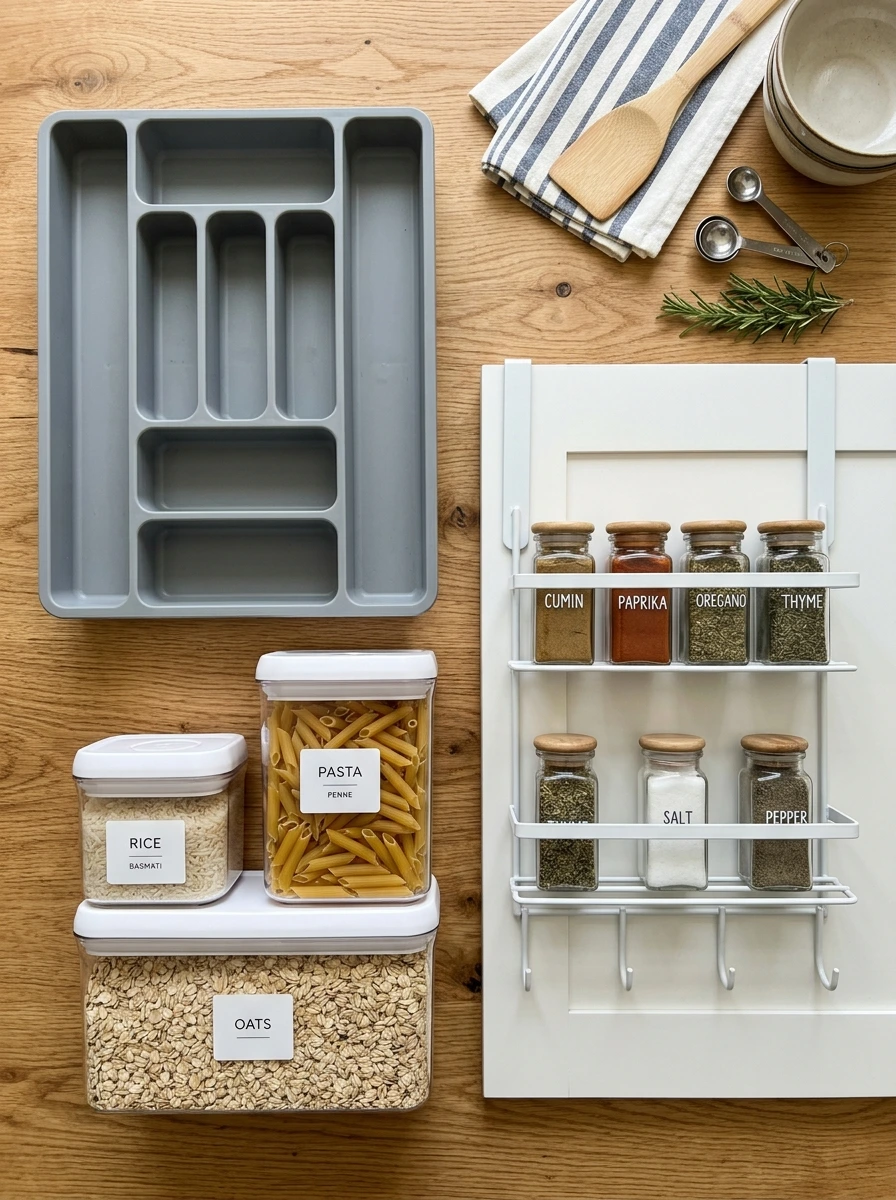
You don’t need a full kitchen renovation to see a real difference; a handful of targeted purchases solves most of the problems covered in this piece. A drawer divider tray, a few clear pantry containers, and a slim door-mounted rack cover the counter, pantry, and drawer systems for well under fifty dollars total. This version of kitchen organization on a budget proves that the frequency-based logic matters more than the price of the containers holding it together. Once these few pieces are in place, the improvement in daily function is noticeable well before anything looks fully finished. Retailers like The Container Store, Target, and IKEA all carry versions of these basics, so the budget constraint rarely limits the system itself.
30. The Reveal: Every Kitchen System, Working Together
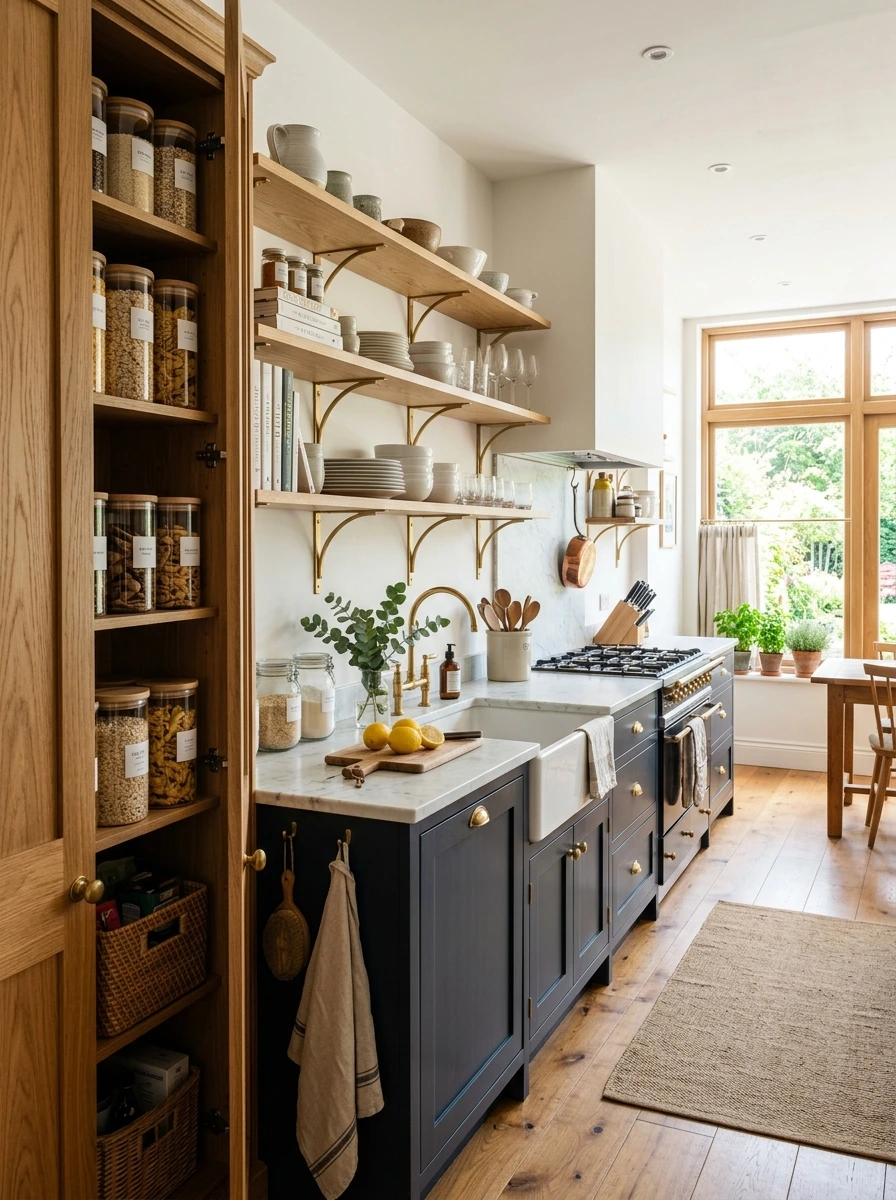
None of these systems work in isolation, and that’s the actual secret behind a kitchen that feels effortless instead of merely tidy. The counter zones feed into the cabinet frequency rule, which feeds into the pantry zone system, which feeds into a drawer setup that matches how you actually cook, all reinforcing the same underlying logic. This is what aesthetic kitchen organization looks like once it’s complete: not a single beautiful shelf, but a kitchen where every surface supports the next step in a recipe instead of getting in its way. Once all five layers are in place, cooking stops requiring extra effort just to locate what you need. The honest closing note is that this system needs light maintenance, not a full reset, since a workflow-based kitchen mostly organizes itself once the initial setup is right.
Kitchen Organization Questions, Answered by Someone Who Has Seen Every Version of This Problem
How do I start organizing my kitchen from scratch?
Start with the counter, not the cabinets, since counter zones reveal how you actually move through the kitchen before you touch anything hidden. From there, apply the same zone logic to cabinets, then the pantry, then drawers, working from the most visible space to the least. This order of kitchen organization ideas matters because fixing workflow first prevents you from re-doing cabinet work later. Aesthetic kitchen organization comes together naturally once the underlying zones are set, rather than being something you layer on separately at the end.
What is the best way to organize kitchen cabinets?
The best approach sorts by frequency of use rather than by category, placing daily items at hip to shoulder height and rare items on the highest or lowest shelves. This single shift solves more kitchen cabinet organization ideas problems than any bin or labeling system, because it matches storage to actual behavior. Once frequency drives placement, you stop reaching past things you rarely use to get to things you need constantly. It’s one of the simplest kitchen organization ideas to apply immediately, with no new purchases required.
How do I organize a small kitchen with no storage?
Small kitchens benefit most from vertical solutions: door-mounted racks, pegboards, and stacked shelf risers that use wall and door space instead of floor space. These kitchen organization ideas for small kitchens work because they add storage without requiring a single new cabinet or renovation. Prioritizing kitchen storage ideas aesthetic in nature, like open shelving with a capped item count, also keeps a small space feeling calm rather than crowded. The goal is maximizing existing surfaces, not squeezing more items into the same footprint.
What should I keep on my kitchen counter?
Keep only what you use at least four times a week, following the same rule that governs countertop appliance organization throughout this piece. Everything else, no matter how attractive, belongs in a cabinet or pantry shelf instead. This is one of the more overlooked kitchen counter organization ideas, since most people default to keeping things out simply because they were already there. A counter with fewer, more-used items reads as considered rather than sparse.
How do I organize a kitchen pantry?
Organize by zone first, grouping items the way you actually cook rather than by container color, then layer in tiered shelves and clear containers for visibility. This approach to kitchen pantry organization ideas, including a tiered shelf organizer kitchen setup for cans and jars, solves the visibility problem that causes most duplicate purchases. A well-organized pantry also supports a broader sense of calm at home; our home wellness aesthetic guide covers how that same intentional energy extends into other restorative spaces. Getting the zones right first makes every container decision after that much easier.
What are the best kitchen organization products?
The most useful kitchen organization products are the boring, functional ones: shelf risers, drawer dividers, and airtight containers with wide openings that actually get refilled. Aesthetic kitchen storage ideas matter, but only after the functional piece is solved, since a beautiful container nobody refills becomes clutter within weeks. Prioritize products that match your actual habits over ones that match a specific aesthetic trend. The right product for your kitchen is the one you’ll actually keep using past the first month.
How do I organize kitchen drawers so they stay organized?
Divide each drawer by task, not by item type, so cooking tools, serving tools, and gadgets each have a defined section instead of competing for the same open space. This approach to kitchen drawer organization ideas means putting things away takes less effort than tossing them in loose, which is what actually makes a system stick. Auditing each drawer occasionally, using the same questions covered earlier in this piece, keeps things from slowly drifting back to a jumble. Kitchen organization ideas that account for real habits always outlast ones based purely on appearance.
How do I make my kitchen look aesthetic while staying organized?
Aesthetic kitchen organization comes from restraint, not decoration: fewer, more-used items displayed with intention, paired with a repeated material palette across bins and baskets. Open shelf kitchen organization works especially well here, since a capped item count naturally keeps the look calm. This same principle of intentional restraint extends well beyond the kitchen; our cozy home aesthetic ideas guide shows how that same energy carries into your main living spaces. A kitchen that looks considered is almost always one that’s genuinely functional underneath.
How do I organize my refrigerator to reduce food waste?
Assign clear bins to categories like produce, dairy, and ready-to-eat leftovers, so nothing gets hidden behind something else on a crowded shelf. This refrigerator organization approach directly reduces food waste because you see what needs to be used before it spoils, not after. It’s one of the more overlooked kitchen organization ideas, since most people focus on cabinets and pantries while ignoring the fridge entirely. A visible refrigerator changes weekly grocery habits almost as much as it changes daily cooking ones.
What is the best kitchen organization system on a budget?
A frequency-based system built from a few key pieces, drawer dividers, clear containers, and a door-mounted rack, delivers most of the functional benefit covered in these kitchen organization ideas for well under fifty dollars. The logic matters more than the price point of what’s holding it together. A well-organized kitchen also contributes to a broader warmth throughout the home; our warm home atmosphere guide shows how that same quality shows up in a gathering space built around comfort. Budget constraints rarely limit the system itself, only the pace at which you build it out.
The System Is Complete
Kitchen organization ideas work best when you stop thinking of them as a finish line and start thinking of them as a system you maintain in small daily moments. A kitchen doesn’t stay organized because you did one big weekend project; it stays organized because the setup makes putting things away easier than leaving them out. Every reveal in this piece, from counter zones to cabinet frequency to pantry visibility to drawer boundaries, points at the same underlying idea: match your storage to your actual habits, and the tidiness takes care of itself. That’s the whole philosophy behind how The Muse Vale approaches a home that genuinely works for the person living in it.
An organized kitchen is one part of a home that genuinely supports your life. The Muse Vale has the meal prep, wellness, and lifestyle guides to help you fill that organized kitchen with the right food and the right routines.
Come back to The Muse Vale whenever your kitchen needs a new system or a fresh idea. We’ll have the organization guides and home inspiration ready for every version of your kitchen life.