
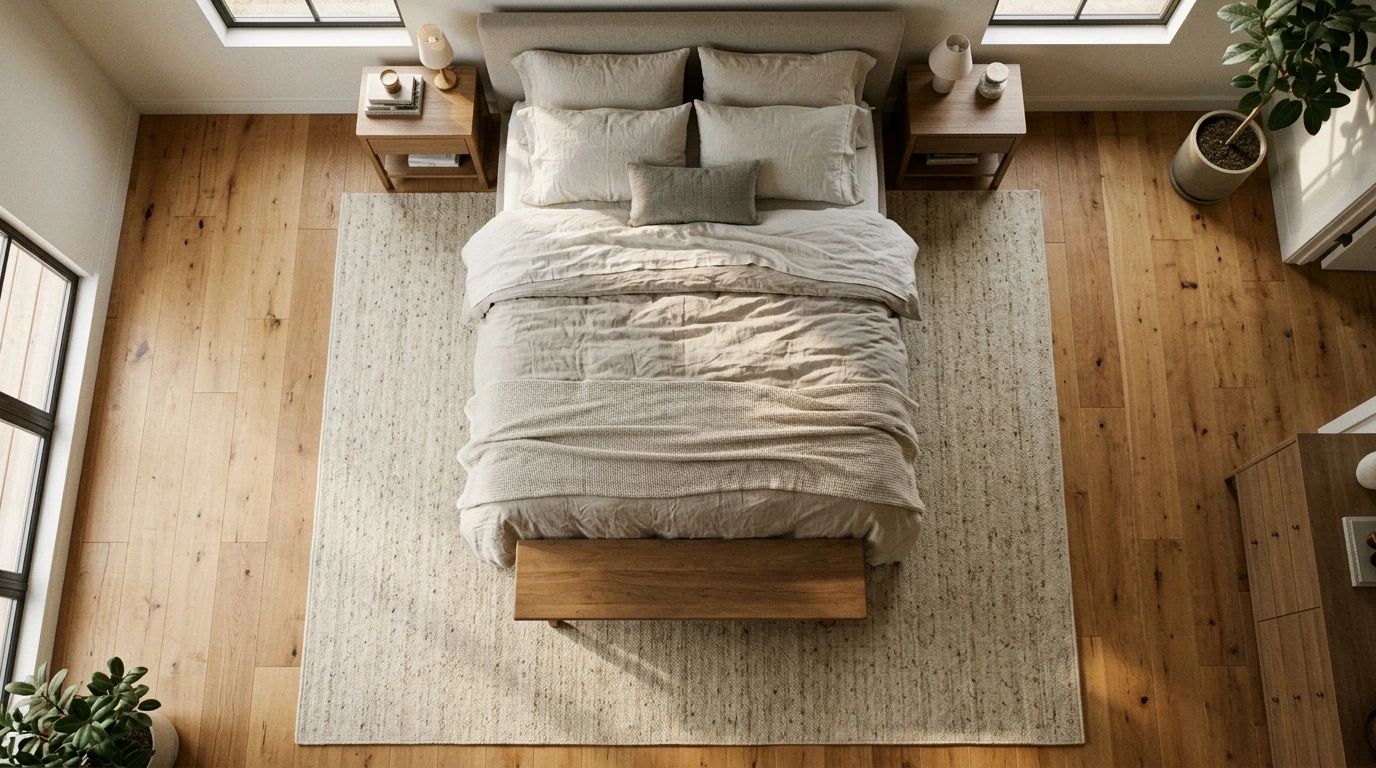
Most master bedroom decor ideas begin with a shopping list, and that’s usually where a good room goes quietly wrong. You’ve probably got a bedroom that works perfectly well. The bed is comfortable, the closet closes, the lamps turn on, and yet the room has never once felt like a retreat. After years of advising women in primary suites from suburban Ohio to city apartments in Chicago, I can tell you the gap is rarely money. Sophistication isn’t about spending more. It’s about deciding better, and this guide is a private session on exactly that. Think of it as a consultation held in your bedroom with the door closed. We’ll move through 26 counsel points, from the largest decisions, like the upholstered headboard and the bed’s layered bedding, to the quietest finishing details, like sconce lighting and scent. Take them in order or jump to the one that bothers you most. Every recommendation is direct, because that’s what you came for.
The Consultant’s First Question: Which of These Is Holding Your Master Bedroom Back?
Before we begin, let’s diagnose. Most master bedroom decor ideas fail not from a lack of effort but from one specific barrier, and elegant master bedroom ideas only work once you’ve named yours.
◆ THE BED THAT HAS NO AUTHORITY IN THE ROOM
What it looks like in the room: The bed sits against the wall with a small headboard or none, and the room’s eye has nowhere to land.
What it is actually caused by: A headboard chosen as an accessory instead of as the anchor, usually too low and too narrow for the wall behind it.
The counsel point that fixes it: Find #1 and #2, where an upholstered headboard master bedroom setup restores authority.
◆ THE LIGHTING THAT MAKES EVERYTHING LOOK ORDINARY
What it looks like in the room: One overhead fixture floods the room evenly, and good furniture looks flat and a little tired.
What it is actually caused by: A single light source with no layers, so there are no shadows, no warmth, and no depth.
The counsel point that fixes it: Find #13 through #17.
◆ THE COLOR THAT PLAYS IT TOO SAFE TO FEEL RESOLVED
What it looks like in the room: Everything is beige or gray, and nothing is wrong, but nothing is decided either.
What it is actually caused by: A neutral chosen to avoid commitment rather than to do any design work.
The counsel point that fixes it: Find #7 and #8.
◆ THE FURNITURE THAT HAS NO RELATIONSHIP WITH EACH OTHER
What it looks like in the room: The pieces were bought separately and sit at different heights, in different woods, facing nothing in particular. Bedroom symmetry design is missing entirely.
What it is actually caused by: Buying for each piece individually, with no shared proportion or finish holding the room together.
The counsel point that fixes it: Find #18 through #22.
◆ THE ROOM THAT LOOKS FINISHED BUT NEVER FEELS COMPLETE
What it looks like in the room: Everything is in place, yet the walls are bare, the air is neutral, and the room has no personality at all.
What it is actually caused by: Skipping the final layer of detail that the eye keeps returning to.
The counsel point that fixes it: Find #23 through #26.
Every room has a first move. Start with the bed, because everything else in the room answers to it.
The most reliable rooms I’ve worked in, from a Georgia farmhouse to a Brooklyn brownstone, began with a decision about the bed. A bed either has presence or it doesn’t, and the rest of the room can’t make up the difference. These first six points are about giving it presence.
1. The Headboard Decision Is Not a Furniture Choice, It Is the Master Bedroom’s First Statement
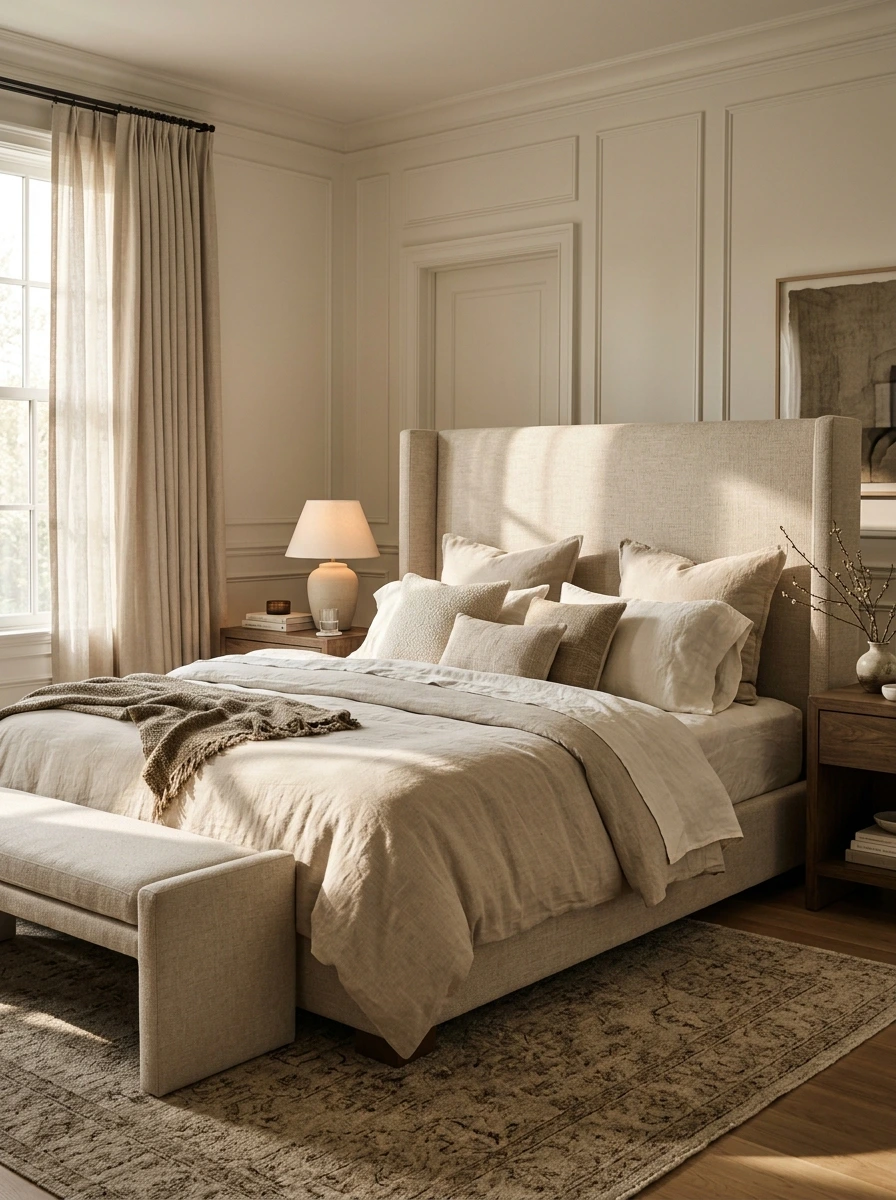
Your headboard is the first thing the eye reaches in a master bedroom, so it sets the terms for every other decision. Choose one at least as wide as the bed, ideally a few inches wider, in a fabric with real weight, such as a tight linen or a mohair velvet. When the bed is pushed against a bare wall with no headboard, or with a small one that ends at the mattress, the room reads as temporary no matter how good the furniture around it is. A strong upholstered headboard master bedroom setup also gives you a backdrop for sconces and art, which is why it deserves the largest single line in your furniture budget. The sophisticated version is one substantial piece you’ll live with for fifteen years, and the version that almost gets there is a trend-driven shape that looks dated in three.
2. Upholstered Headboard Styling: The Height, Fabric, and Placement That Give a Bed Authority
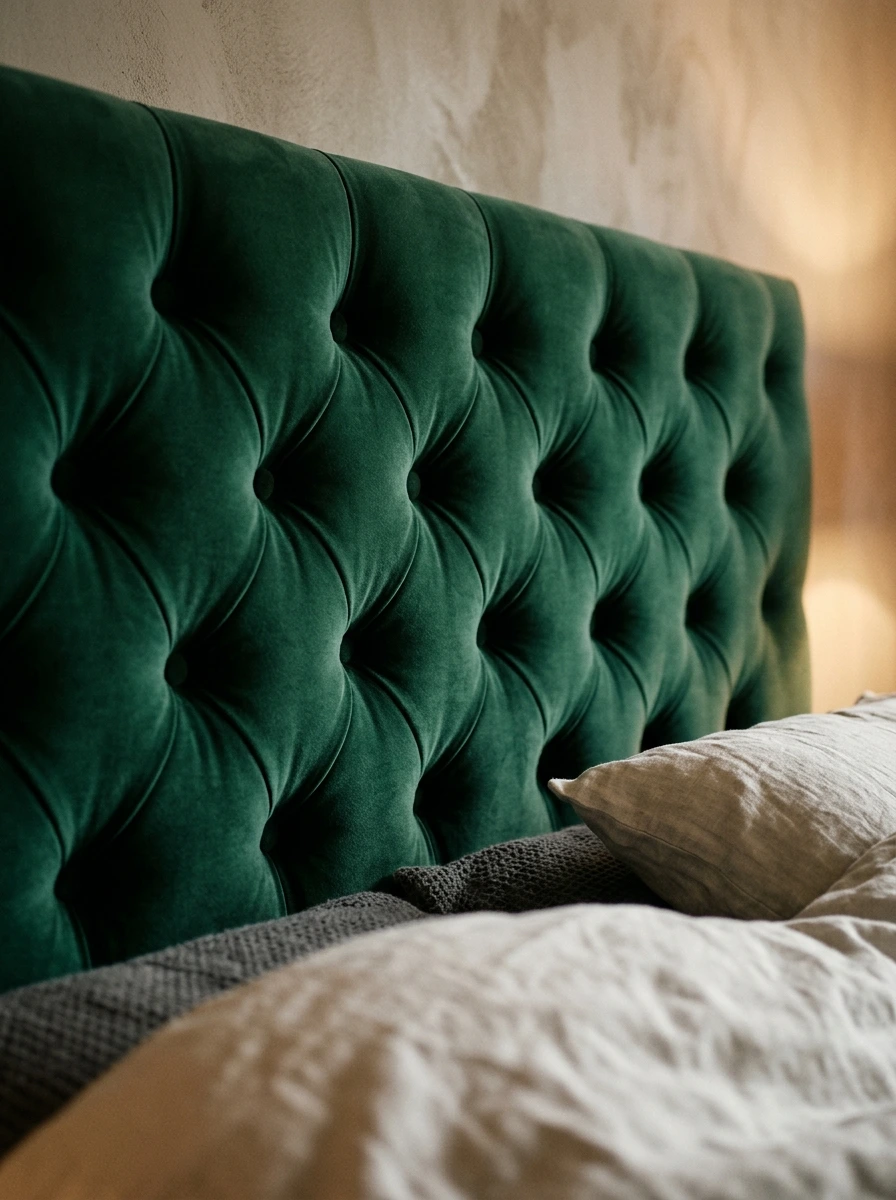
Authority comes from proportion, and proportion in a headboard is mostly about height. Aim for 20 to 28 inches above the top of the mattress, and upholster in a tone slightly deeper than your walls so the bed separates from the room without shouting. A headboard that’s too short leaves a stripe of bare wall above the pillows, and in most American primary suites that stripe is what makes the bed look like an afterthought. A tufted headboard in velvet or bouclé from RH or Pottery Barn works beautifully in a traditional room, while a clean channeled style from West Elm suits a more pared-back one. Choose the one that matches the architecture of the room, not the one that matches the catalog photograph.
The Consultant’s Direct Note: Scale Before Style
✦ Measurement: 20 to 28 inches above the mattress, and at least as wide as the bed.
✦ Material: Performance linen, mohair velvet, or a tight-weave bouclé that won’t pill or sag.
✦ The mistake: Choosing a headboard in the showroom without measuring the wall it will actually sit against.
✦ Budget option: A custom-sized upholstered panel from a local upholsterer, mounted on a wall cleat, often costs less than a retail king headboard.
3. When the Bed Frame Matters in a Sophisticated Bedroom and When It Should Disappear
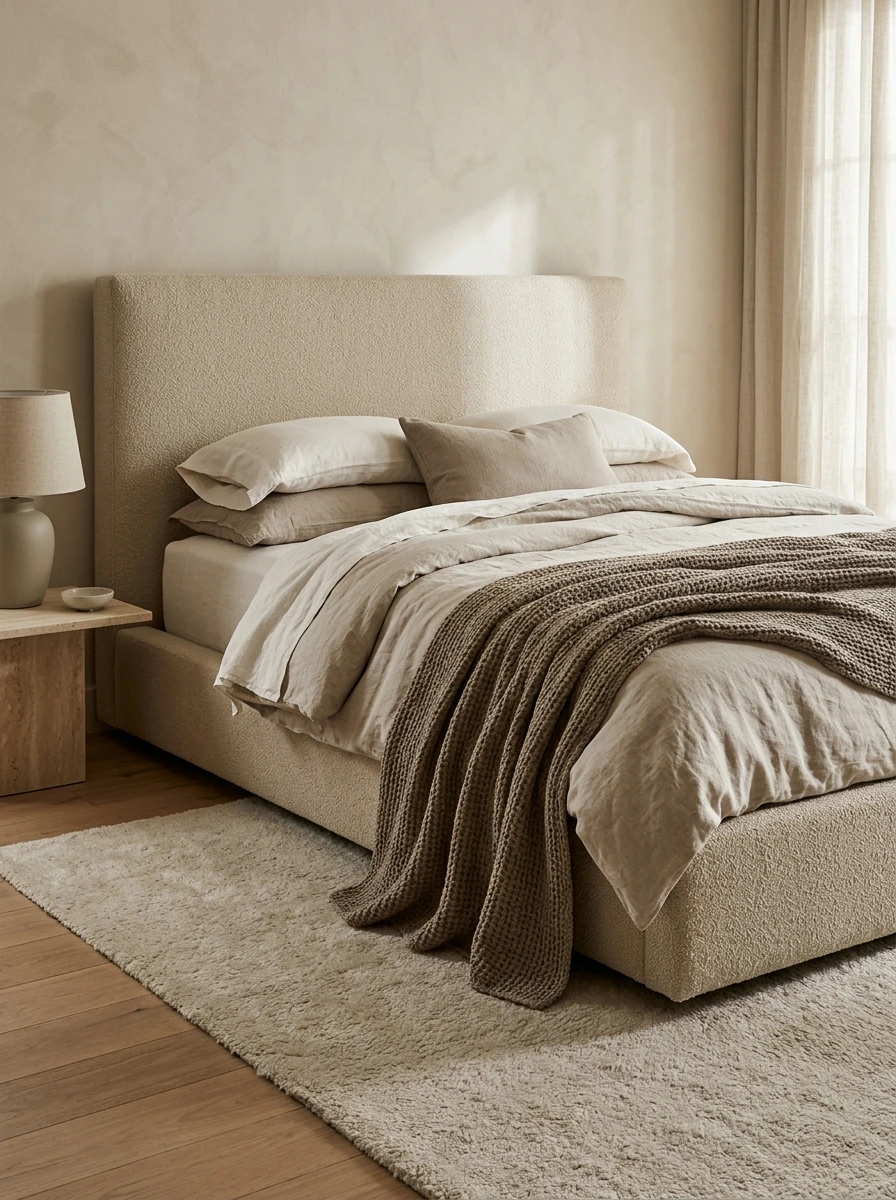
Frames matter only when they’re the focus, and in most rooms they shouldn’t be. Pair a substantial headboard with a simple platform or low-profile frame in a matching or deeper tone, with a dust skirt or short hidden legs, keeping the mattress top around 25 to 28 inches off the floor. A heavy sleigh or storage frame fighting a statement headboard turns two pieces into competitors, and the bed ends up looking assembled instead of designed. A quiet frame also leaves room for layered bedding in your master bedroom to carry the visual weight where it belongs. The resolved version lets the frame disappear, and the near miss is an ornate footboard that quietly argues with everything else.
4. Why a Sophisticated Master Bedroom Needs Five Layers on the Bed, Not Five Pillows
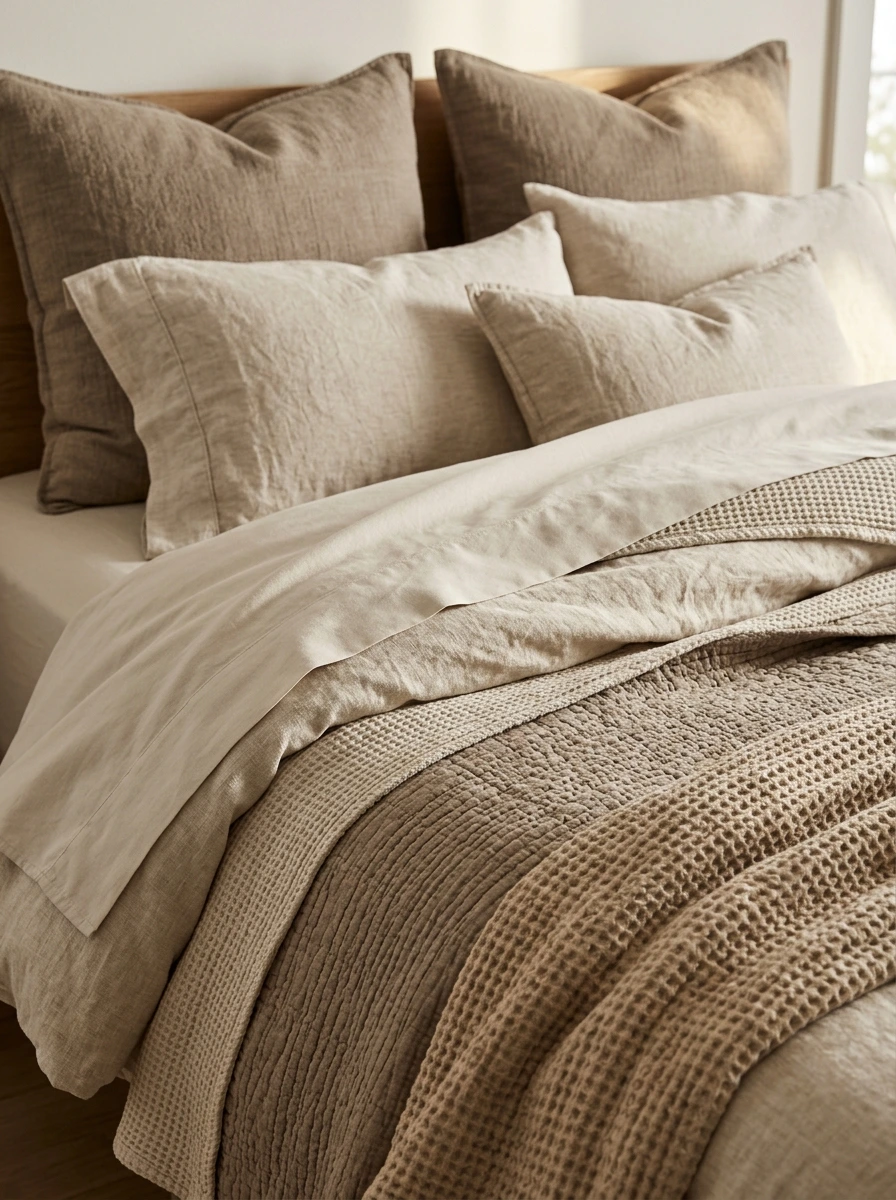
Five layers give a bed depth, and that depth is what the eye reads as comfort and quality. Start with a crisp percale or washed linen sheet, add a lightweight coverlet or quilt, fold a duvet over it, and finish with shams and a single throw. Skipping the middle layers leaves a bed that looks flat and hotel-neutral, with nothing to catch the light or suggest warmth. Pottery Barn and Serena & Lily both do washed linen well, and a mix of two tones in the same family reads richer than one flat color. The sophisticated version looks softly rumpled in a way that was clearly planned, and the near miss looks like a catalog bed that nobody sleeps in.
5. How Many Pillows Does a Master Bedroom Bed Really Need? Fewer Than the Catalog Suggests
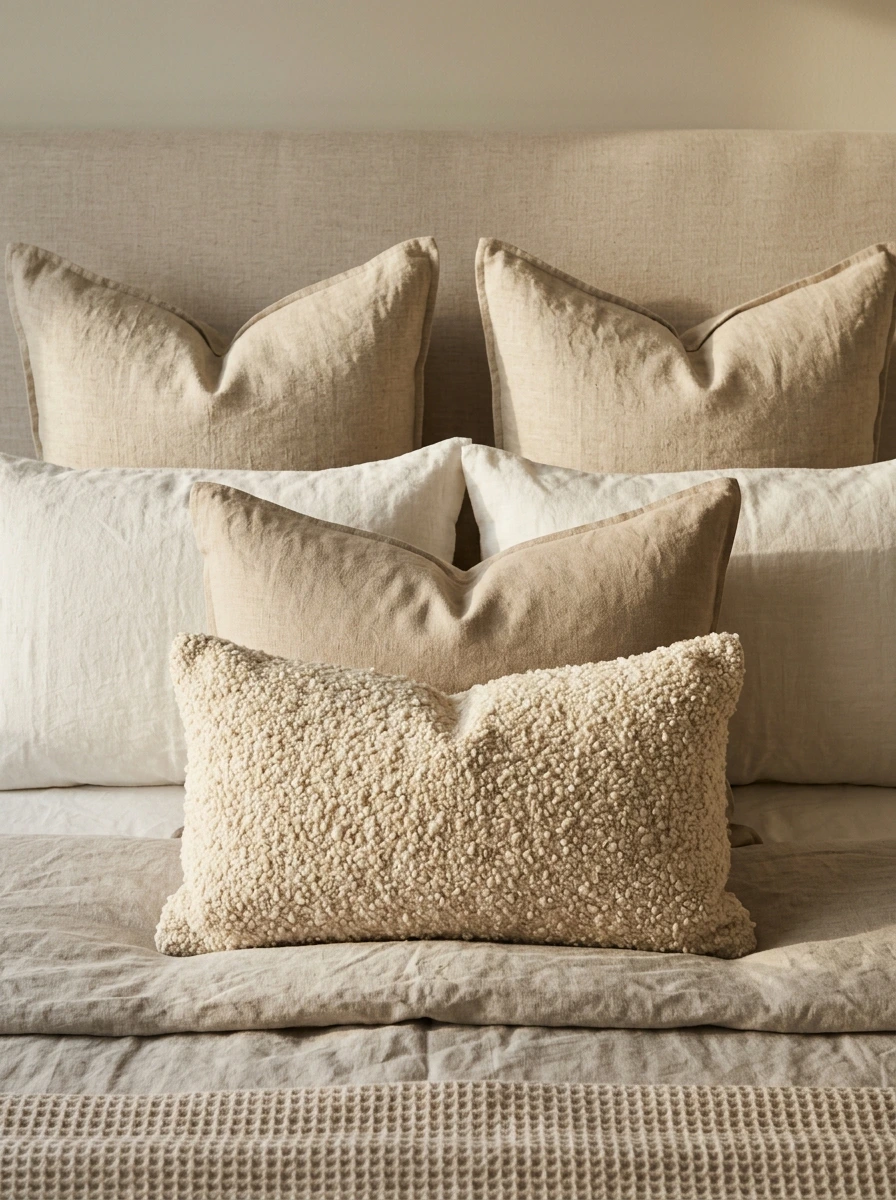
Pillows should have a job, and a bed with more than seven of them is almost always doing too much. On a king, use two Euros at the back, two or three standards in front, and one lumbar or small accent pillow at the center, which gives you five or six that each earn their place. Beyond that count, the bed becomes a pile that someone has to dismantle every night, and by the second week it won’t be remade properly at all. Anthropologie Home and McGee & Co both offer sham sets in muted, textured weaves that layer well without competing. Aim for order and restraint rather than abundance, because a bed that’s easy to remake is a bed that will stay beautiful.
6. The Bench at the Foot of the Bed Does More Than Hold Your Shoes
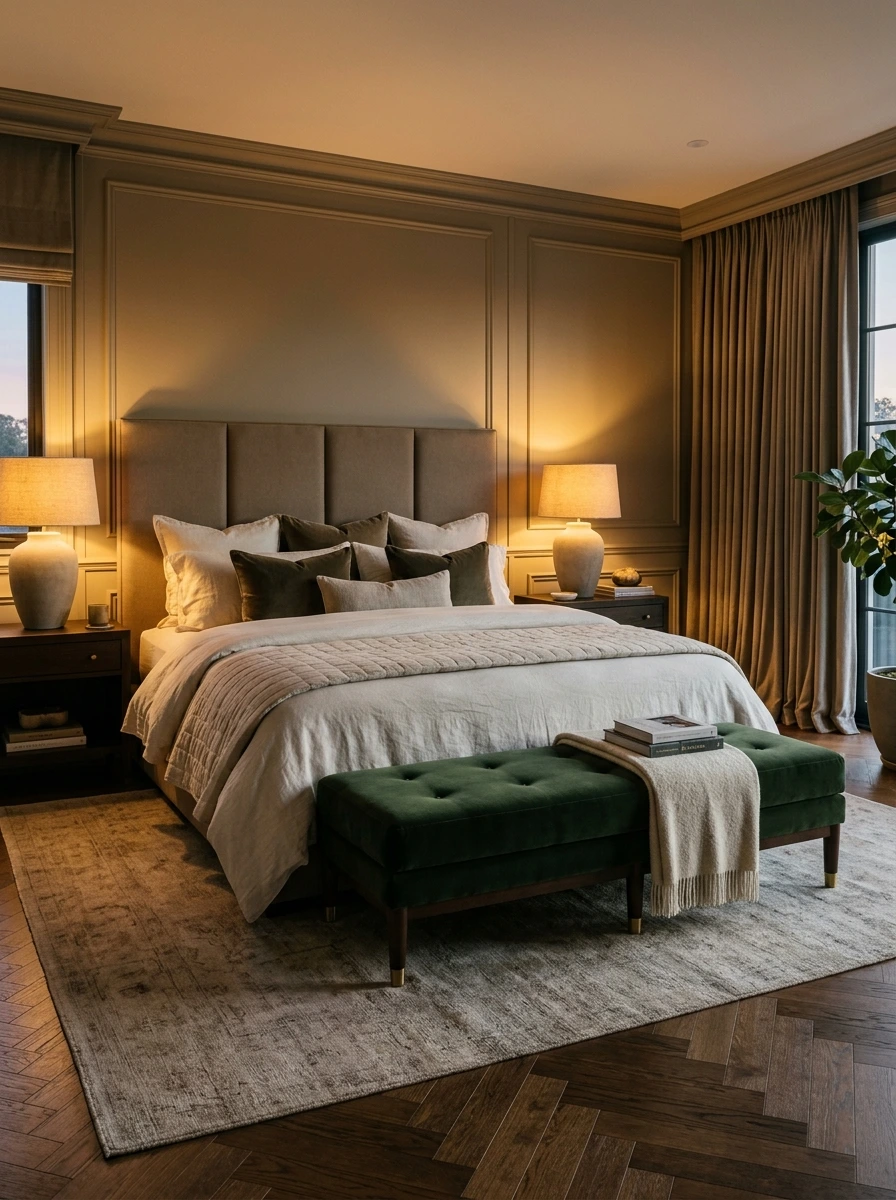
Hotels use a bench because it finishes the bed’s silhouette, and the practical use is secondary. Choose one about two-thirds to three-quarters the width of the bed, upholstered in a fabric that echoes the headboard without matching it exactly, and no more than a few inches lower than the mattress top. A bench that’s too long, too tall, or too bulky blocks the walkway and turns the foot of the bed into a barrier. A bench at the foot of the bed also gives you a place to sit and dress and drop a throw, which makes it one of the most used pieces in a primary suite. The resolved version looks proportionate and light, and the near miss is a chest that feels like storage someone forgot to put away.
🛏️ The Master Bedroom Bed Styling Formula: What Every Sophisticated Bed Has in Common Regardless of Budget
The same master bedroom decor ideas apply to a $400 bed and a $4,000 one, because the formula is about layers and proportion rather than price. Work from the mattress up, using this order for layered bedding in any master bedroom.
LAYER 1, THE BASE: A fitted sheet in 300 to 400 thread count cotton percale or washed linen, in white, ivory, or a soft oatmeal, pulled tight with no visible wrinkles.
LAYER 2, THE FOUNDATION: A flat top sheet or lightweight cotton coverlet, folded back about 18 inches at the top so the edge shows against the duvet.
LAYER 3, THE DUVET: A linen or cotton-linen duvet with a soft, natural drape, hanging about 12 to 14 inches on each side, folded in thirds at the foot or draped loosely.
LAYER 4, THE EUROS: Two 26-inch Euro shams against the headboard, standing upright, in a texture slightly deeper than the duvet.
LAYER 5, THE STANDARDS: Two or three standard pillows in front of the Euros, in a coordinating tone, arranged flat or slightly angled, there for comfort as much as for the look.
LAYER 6, THE ACCENT: One lumbar pillow or a folded wool or cashmere-blend throw placed across the foot of the bed or off-center, never both.
Our bedding styling guide covers the exact tones and textures that carry this formula in any room.
THE ONE RULE: A styled bed looks like someone made decisions about it, while a decorated bed looks like someone bought things for it.
A room’s palette and surfaces do the quiet work. They’re the decisions people make fastest and regret longest.
In real American master bedrooms, the walls, rug, and curtains account for most of the room’s visual weight, yet they’re often chosen last and from a catalog. The next six points slow that process down.
7. Master Bedroom Decor Ideas Start With a Neutral That Is Actually Doing Something
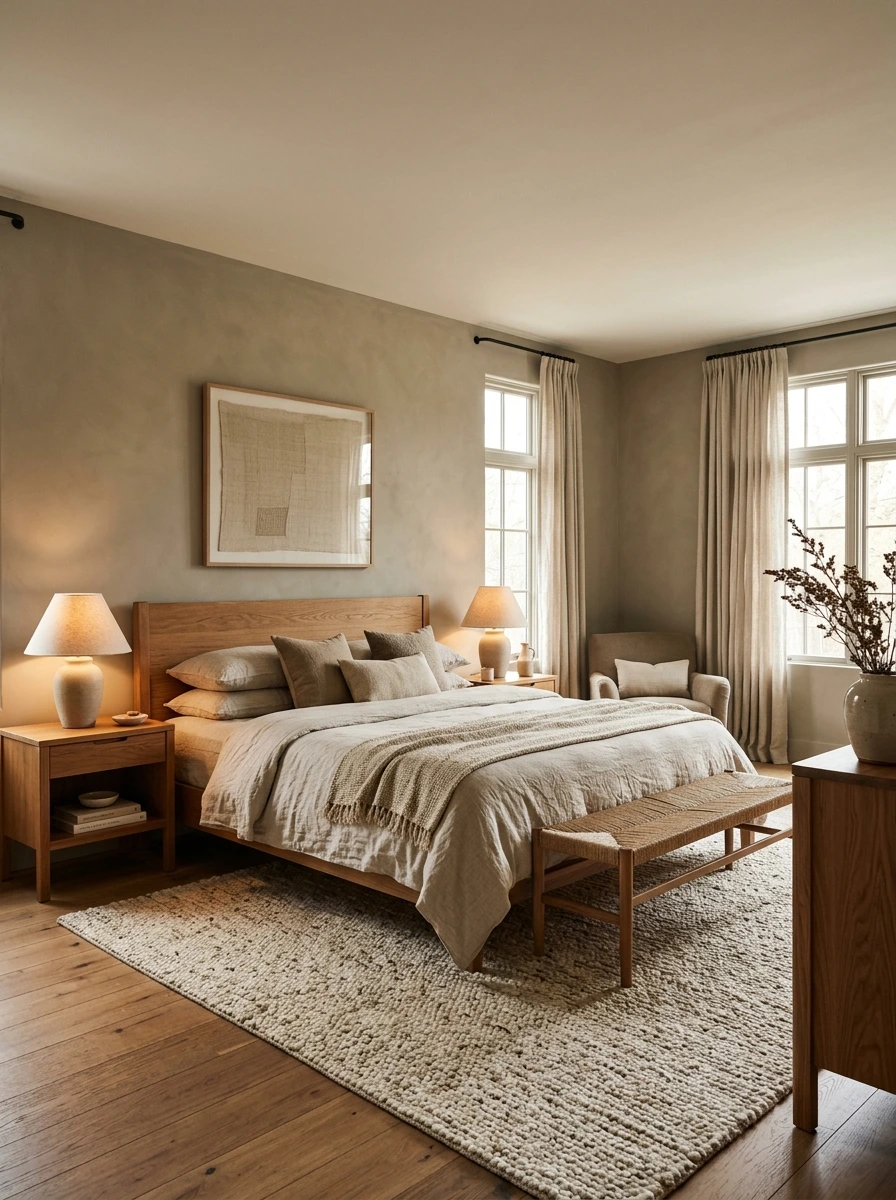
Neutral master bedroom ideas only work when the neutral has a point of view. A neutral with a warm undertone, such as a soft greige, a pale putty, or a creamy ivory, gives the room a feeling, while a flat builder-grade white gives it nothing. Rooms painted in a safe gray often feel unfinished because the color was chosen to avoid a decision rather than to make one. Look at how the paint shifts between morning and evening light before you commit, and test it on at least two walls. The sophisticated version has depth and a little warmth, and the version that almost gets there is simply the color that offended no one.
The Consultant’s Direct Note: Tone Before Trend
✦ Measurement: Test three samples on two walls and check them at morning, noon, and after dark before choosing.
✦ Material: A matte or eggshell finish in a warm neutral, with trim in a shade or two lighter.
✦ The mistake: Picking a cool gray, then adding warm wood and warm lighting that fight it all evening.
✦ Budget option: A gallon of well-chosen paint and one change of bedding tone costs less than a single accent chair and transforms the room.
8. Dark Master Bedroom Ideas: When Depth Is the Most Sophisticated Choice in the Room
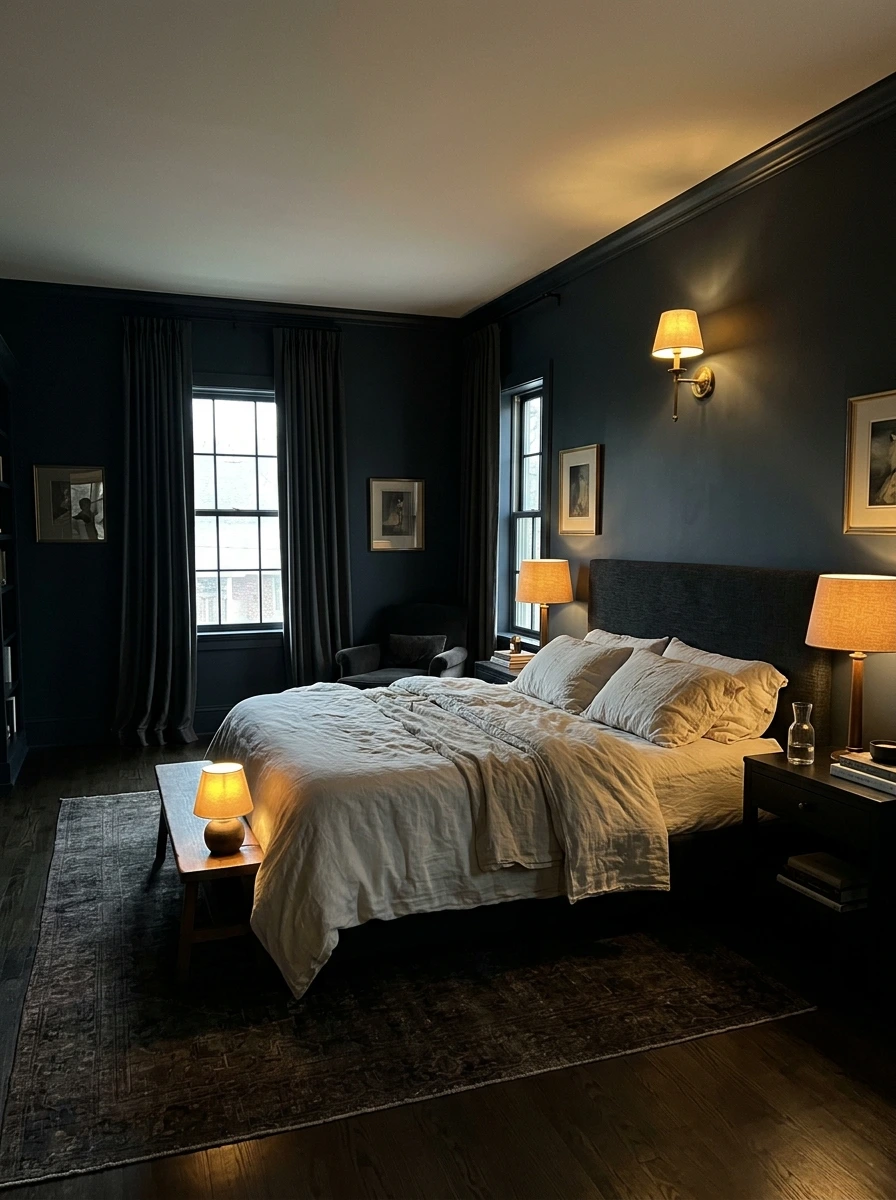
Depth is a design tool, and a dark room can feel more resolved than a pale one. Deep inky blues, charcoal, aubergine, and forest green all work when you commit to the walls, the trim, and the ceiling together, and when you add warm lighting at three different heights. A dark room with only one overhead light and pale furniture often reads as cave-like and unfinished, which is the most common failure in a dark scheme. For an even bolder take, our dark bedroom styling guide shows how shadow and atmosphere work at their most considered. The sophisticated version feels enveloping and calm, and the near miss is simply a dim room.
9. The Accent Wall Question, Settled Honestly
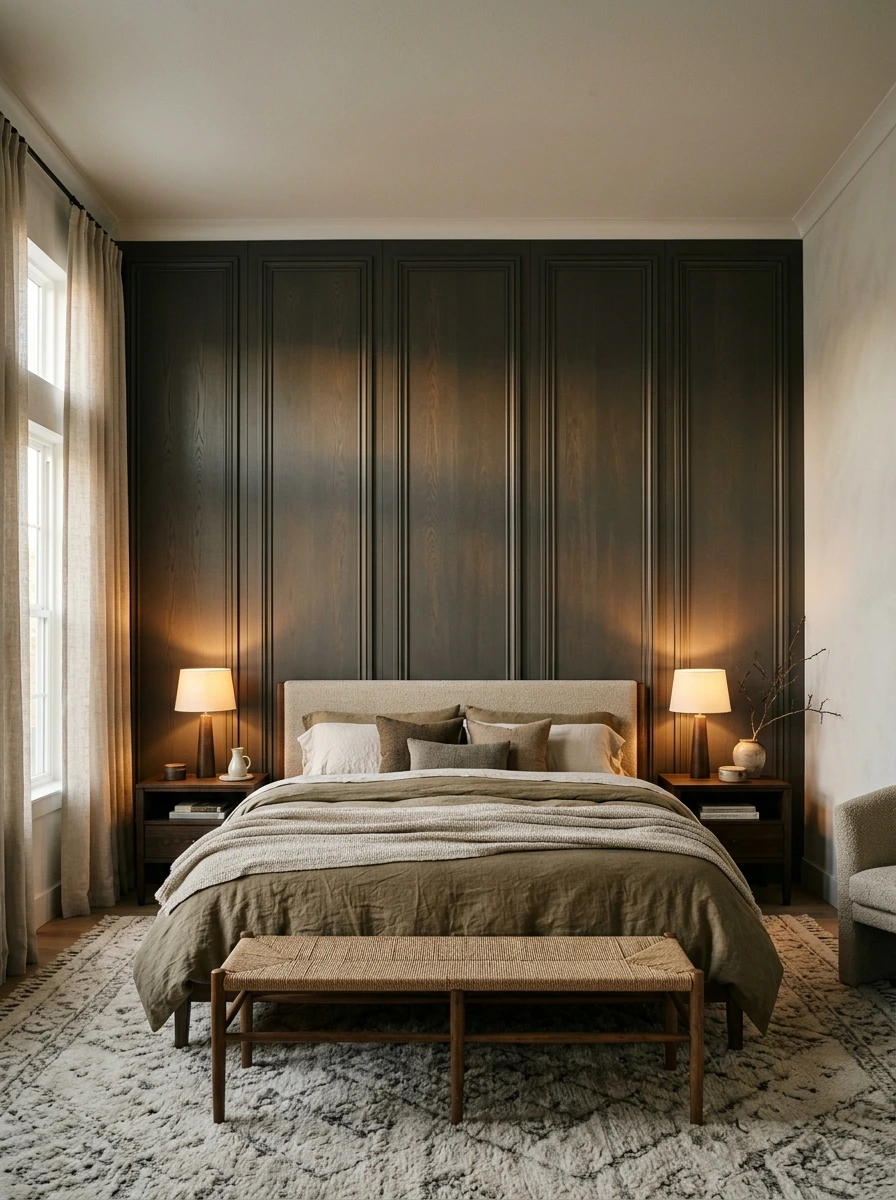
A master bedroom accent wall works when it frames the bed and fails when it competes with it. If you choose one, make it the wall behind the headboard, in a deeper tone, a textured paper, or a subtle paneling, and keep the other three walls quiet. An accent wall on the wrong surface, such as the one with the window or the closet door, draws the eye away from where the room wants it to go. Wainscoting, board and batten, and fluted wood are three treatments that add architecture rather than color, and they age far better than a single bold paint. The sophisticated version supports the bed, while the near miss is a feature wall that has no reason to be where it is.
10. The Master Bedroom Rug Is a Measurement Before It Is a Style
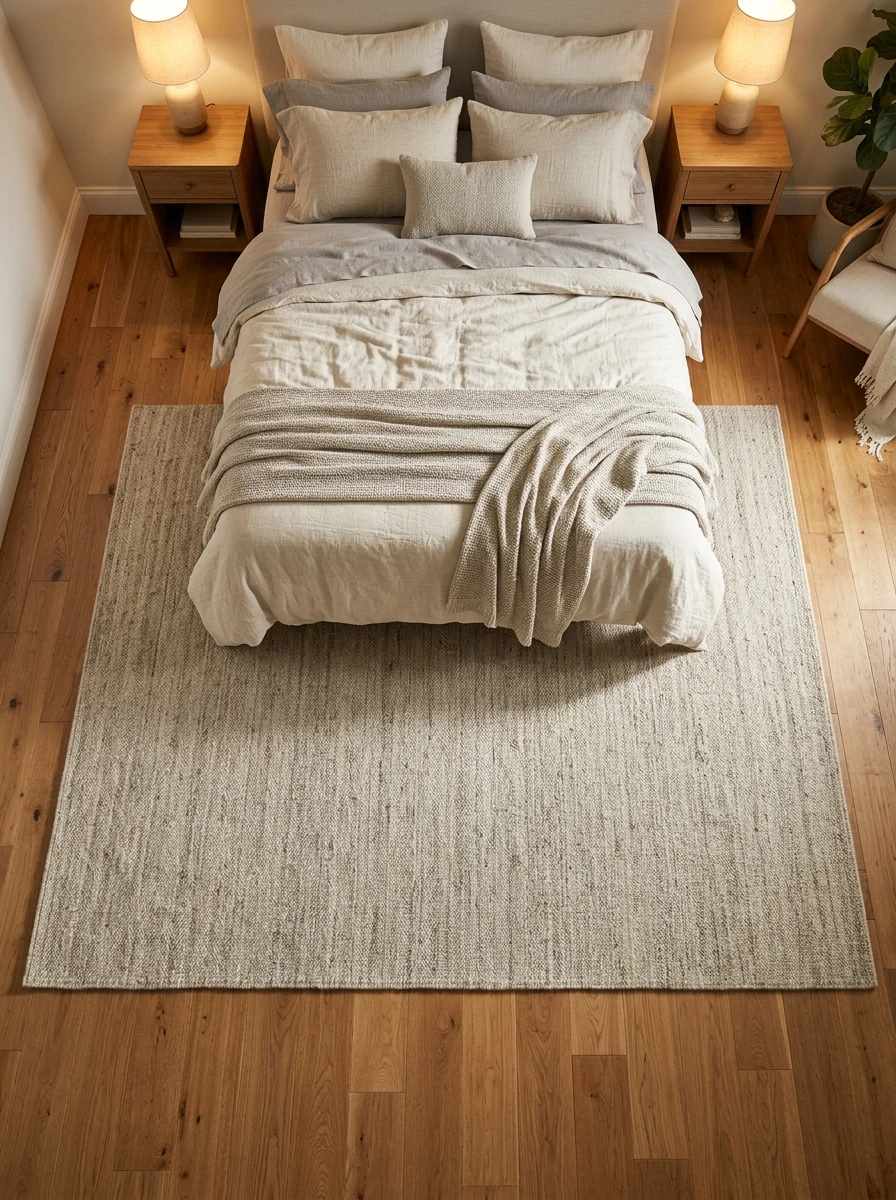
Rugs fail on size far more often than on style. Under a king bed, use a 9 by 12 or at least an 8 by 10, extending 18 to 24 inches beyond the sides and foot of the bed, so your feet land on wool when you stand up. A rug too small to reach the nightstands makes the bed float, and it’s the most common mistake I see in suburban primary suites. Bedroom area rug placement matters just as much as size: set it so the bed’s front two-thirds sit on the rug and the headboard end stays off. Choose wool or a wool blend in a low pile and a tone close to your floor, and the room will look larger and calmer at once.
11. Master Bedroom Curtains Should Be Hung Higher, Longer, and Heavier Than You Think
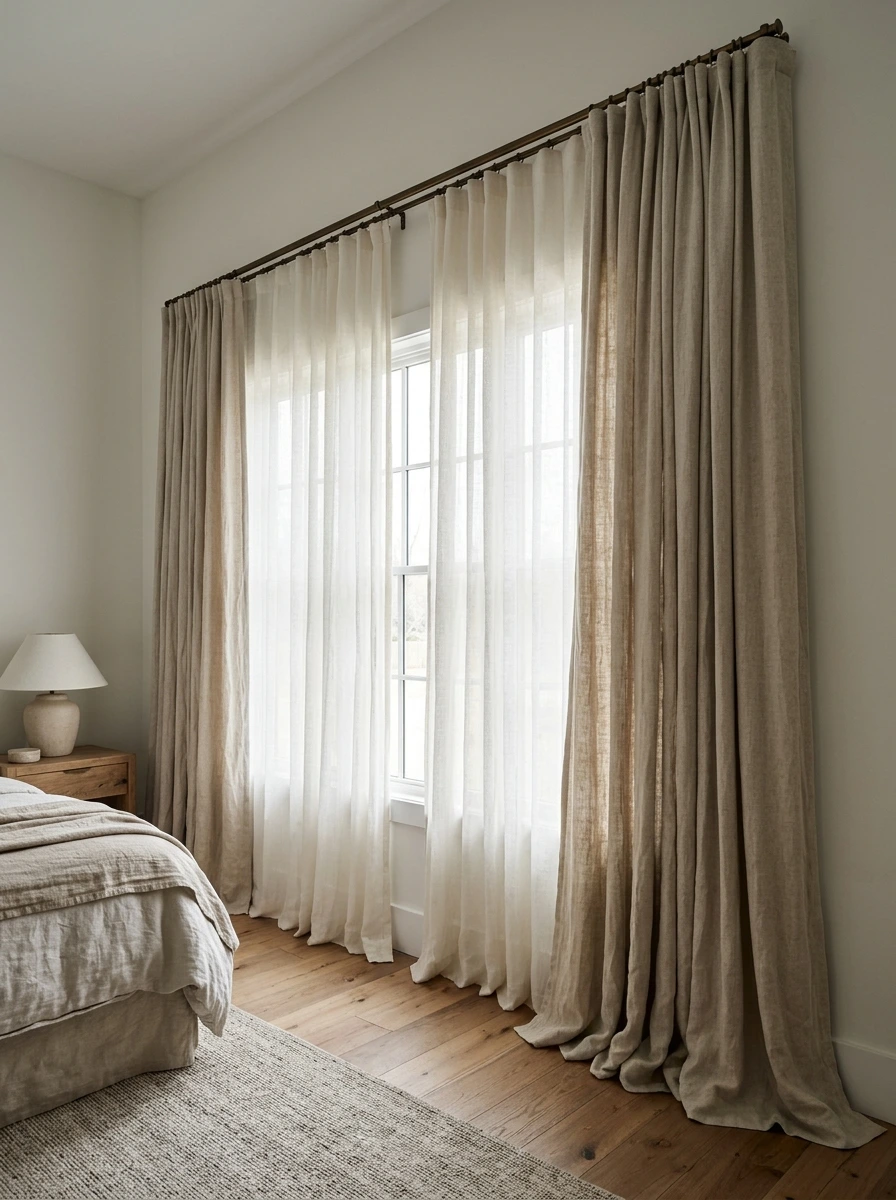
Curtains are the most forgiving way to raise a ceiling and soften a room. Mount the rod four to six inches above the window frame, or near the ceiling if the room allows, and choose panels that just kiss the floor with at least double fullness. Short curtains that stop at the sill, or panels hung directly on the window frame, make a room feel cramped and builder-grade. A good master bedroom window treatment layers a sheer panel with a heavier linen or lined panel, so you get privacy, light control, and softness in one move. The resolved version looks tailored and pooled slightly at the floor, while the near miss looks like they were hemmed to the last inch of the fabric.
12. Master Bedroom Flooring: What Works Under the Rug and What the Rug Is Hiding
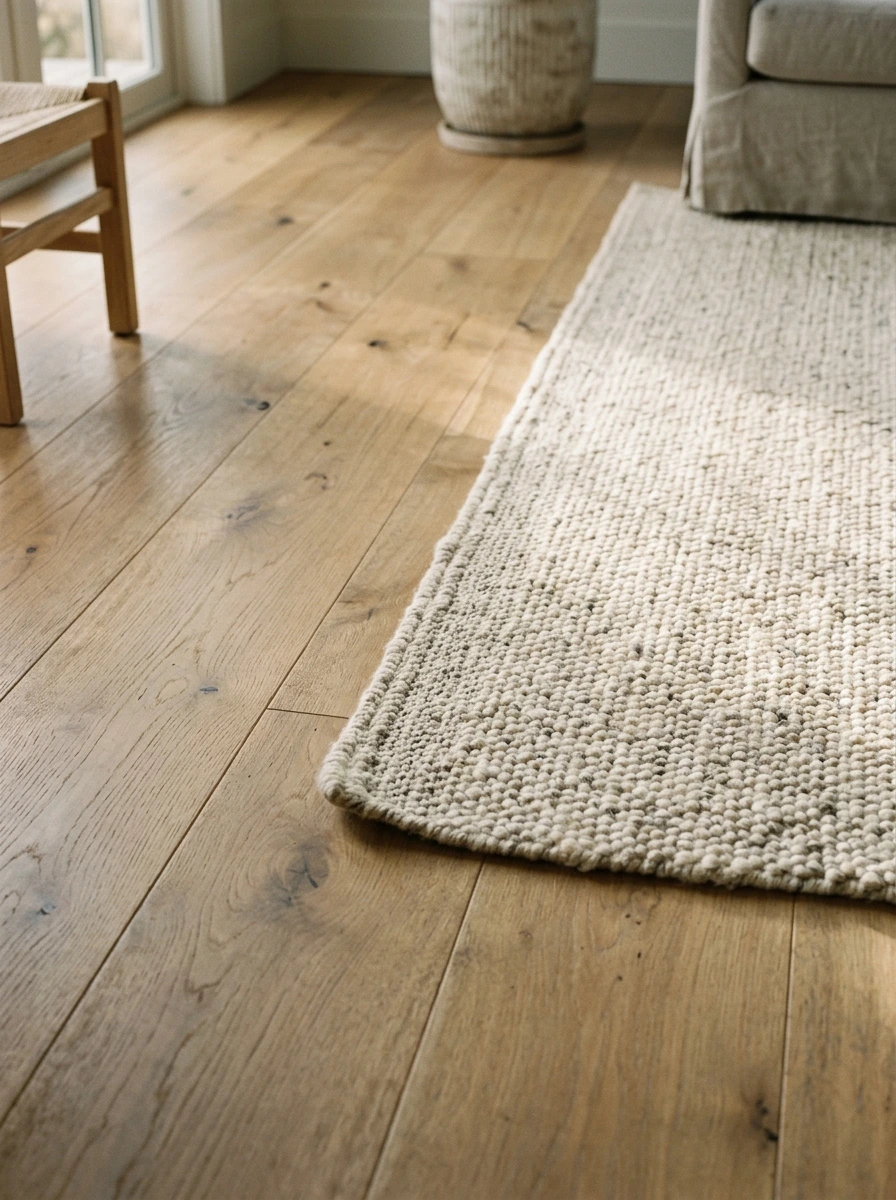
Flooring sets the room’s tone, and the rug can only refine it. Wide-plank oak in a matte finish, a warm engineered hardwood, or a low-pile wall-to-wall wool carpet all work, and a rug pad underneath adds cushioning and keeps the layers quiet. High-gloss floors, heavily orange-toned wood, and very thin carpet can’t be fully hidden by a rug, and they usually make the whole room feel dated. If you’re stuck with a floor you don’t love, a larger rug that covers most of it, and a deeper tone in the walls, will do more than any refinishing. The sophisticated version feels solid underfoot, while the near miss is a floor that’s constantly competing for attention.
🎨 The Sophisticated Master Bedroom Color Guide: Every Palette That Works and the One Decision That Determines Which One Is Yours
These master bedroom color ideas cover the four palettes I return to most, and each of them works when it’s committed to rather than hedged. For neutral master bedroom ideas especially, the shade matters less than the commitment.
THE WARM NEUTRAL SUITE: Putty, oatmeal, soft greige, and cream, with walnut or oak wood and brass or bronze hardware. It needs texture, such as linen, wool, and bouclé, to avoid flatness, and it suits anyone who wants calm without coldness. Our warm bedroom palette guide shows how earthy tones add depth to this approach.
THE COOL SOPHISTICATED PALETTE: Soft gray-blue, pale sage, dove gray, and crisp white, with polished nickel and glass. It needs plenty of natural light and a warm bulb, and it suits north-facing rooms and people who find warm palettes heavy.
THE COMMITTED DARK PALETTE: Deep navy, charcoal, aubergine, and forest green, with aged brass and rich wood. It needs at least three layers of light and a pale or textured bedding contrast, and it suits people who love evenings in the room more than mornings.
THE SINGLE COLOR DEPTH APPROACH: One hue in three or four tones, from the walls to the bedding to the curtains. It works best in rooms with strong architecture, where the lack of contrast becomes a quiet, enveloping effect.
THE COUNSEL QUESTION: When do you use this room most, in the soft light of morning or the lamplight of night? Your answer tells you whether the palette should open the room up or draw it in.
Lighting is the layer almost nobody budgets for. The room changes dramatically once it’s right.
In nearly every American primary suite I’ve walked into, the lighting was the single biggest gap between the room as it was and the room as it could be. These five points close that gap without any structural work.
13. The Master Bedroom Lighting Audit: One Overhead Fixture Is a Decision, Not a Starting Point
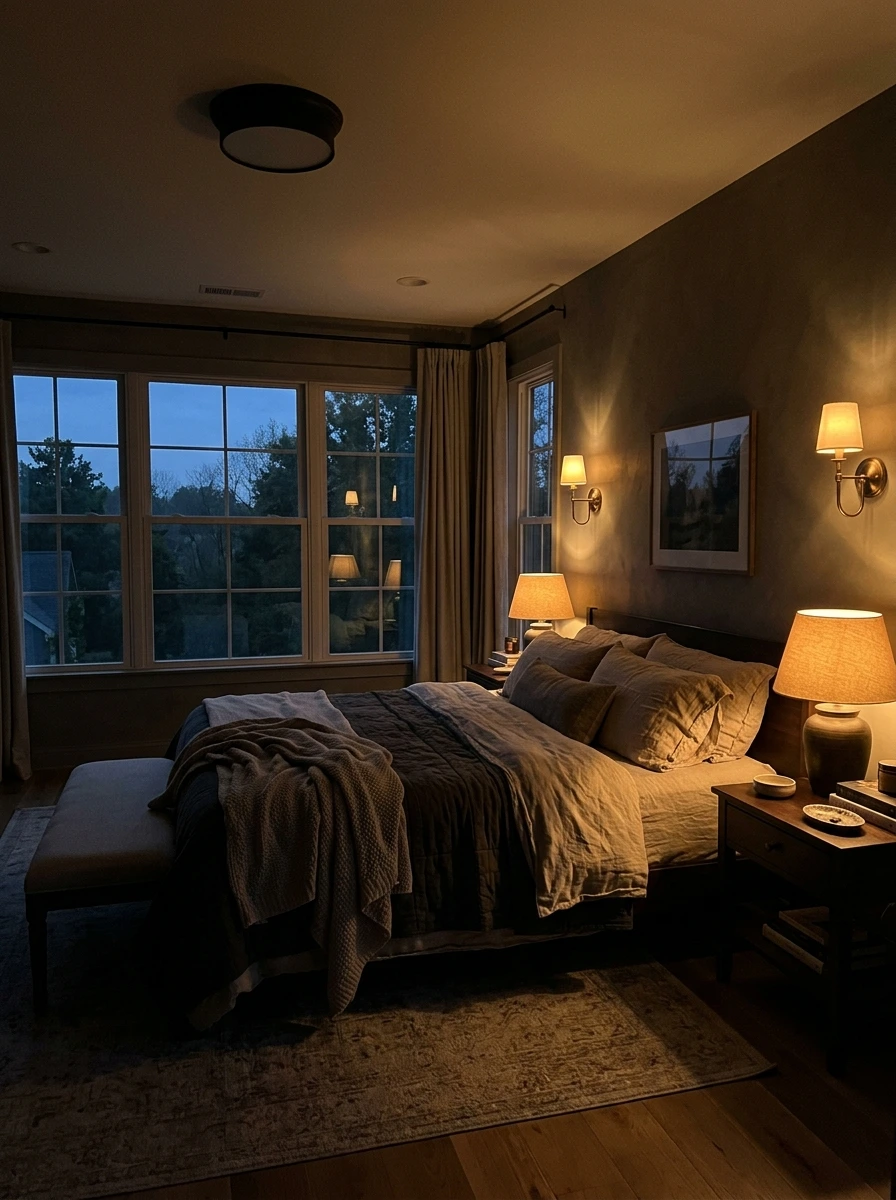
One overhead light is a single decision, and it’s usually the wrong one. Count the light sources in your room at night and aim for at least four at three different heights: ceiling, wall or bedside, and low accent. A flat overhead flood removes every shadow and makes even beautiful furniture look ordinary, which is the most common lighting failure I see. Good master bedroom lighting ideas begin by turning the overhead off and asking what the room looks like with only the lamps on. The sophisticated version feels warm and layered, and the near miss feels evenly lit and a little clinical.
14. The Statement Chandelier Scale Rule That Nobody Follows
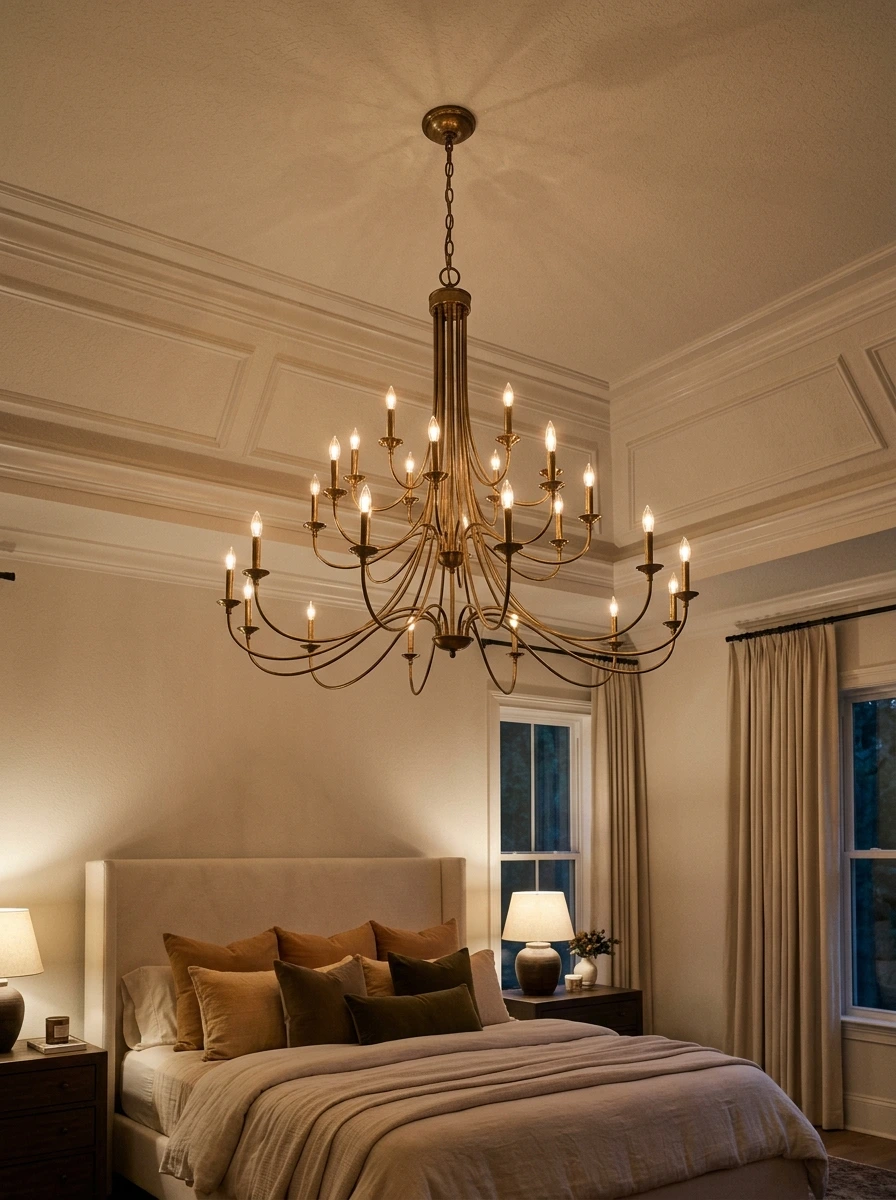
Scale is the entire secret of a chandelier. Add the room’s length and width in feet, and use that number in inches as the fixture’s diameter, so a 12 by 14 room takes a 26-inch fixture, hung with the bottom at least seven feet above the floor. A small chandelier in a large room looks like an apology, and a statement chandelier bedroom scheme only works when the piece is allowed to be noticeable. Rooms with high ceilings can handle a larger scale and a tiered shape, while standard eight-foot ceilings suit a semi-flush or a drum. Choose a fixture with a dimmer, because a chandelier at full brightness in a bedroom never feels right.
The Consultant’s Direct Note: Scale, Height, Glow
✦ Measurement: Room length plus width in feet equals the fixture’s diameter in inches, with the bottom at least 7 feet above the floor.
✦ Material: Aged brass, blackened iron, or hand-blown glass with a warm, diffused light.
✦ The mistake: Installing a fixture without a dimmer, then living with full brightness for years.
✦ Budget option: A drum or woven-shade pendant in the right diameter looks more considered than an ornate fixture that’s too small.
15. Sconces: The Lighting Layer No Decorator Skips and Most Homeowners Do
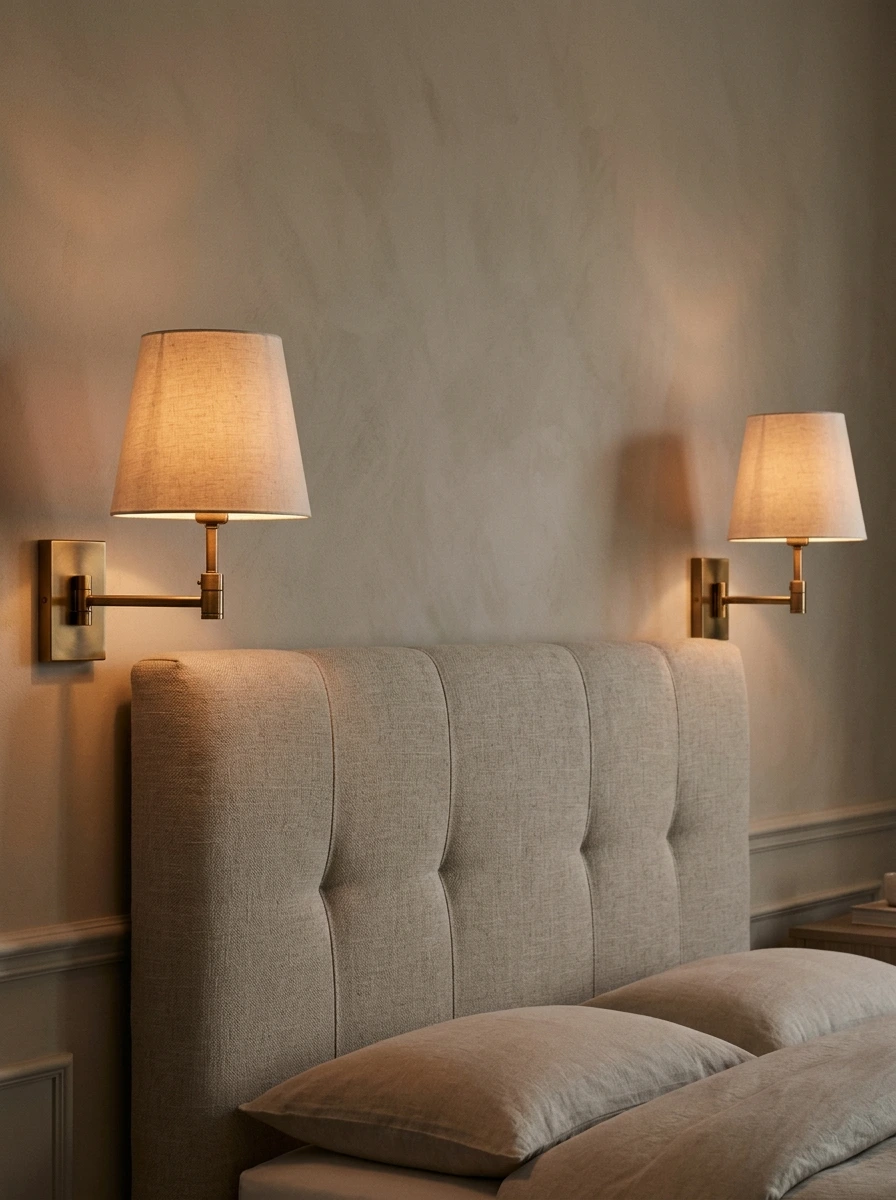
Sconces do what lamps can’t, which is free up the nightstand and frame the bed. Mount them about 20 to 24 inches above the mattress top, centered on each side of the headboard, so the bottom of the shade falls near eye level when you’re sitting up in bed. Without sconces, the nightstand holds a lamp and a clutter of other things, and the wall above the bed stays dark. Plug-in versions from RH, Pottery Barn, and Serena & Lily work for renters, with a cord cover painted to match the wall. Bedroom sconce lighting is a small investment that changes the whole room, and it’s the single addition I recommend most often.
16. Bedside Lamp Styling Is a Question of Height, Shade, and Warmth
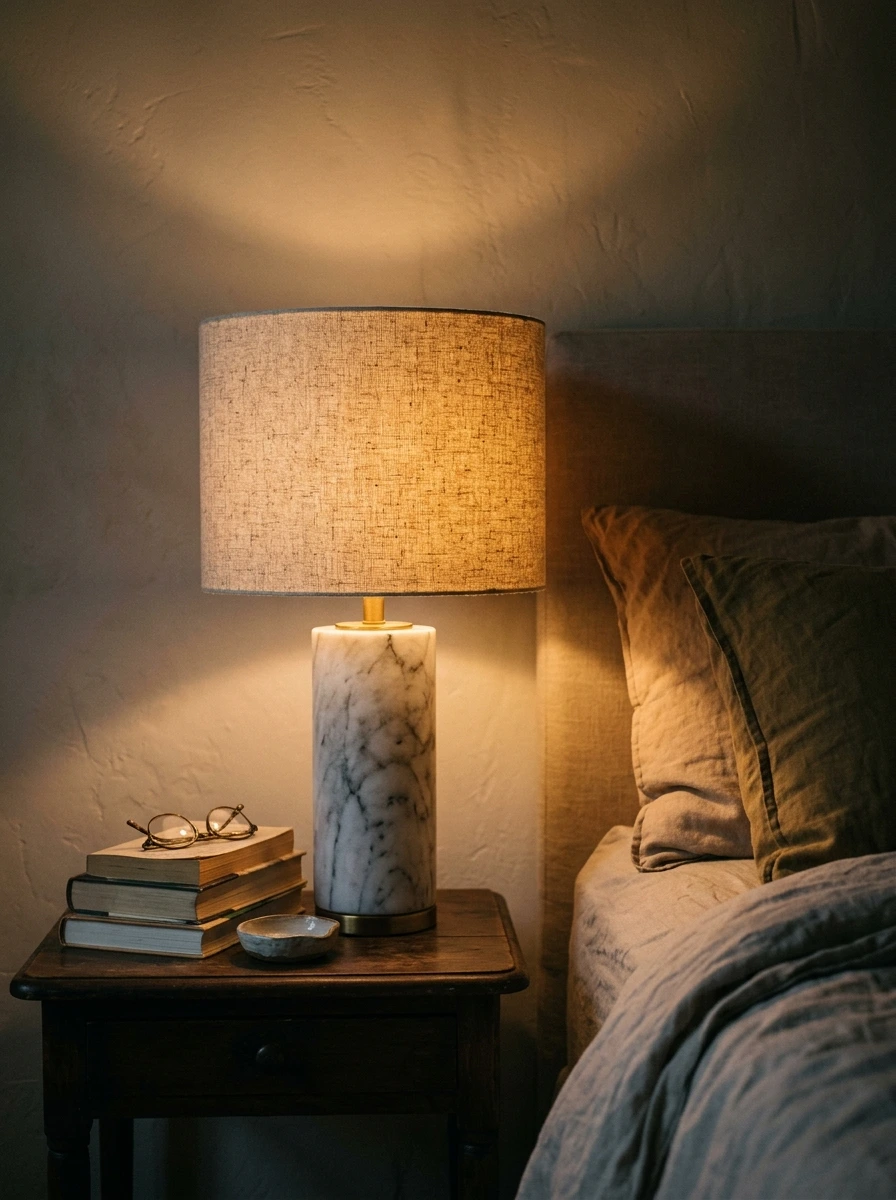
A bedside lamp should light a page, not the whole room. Choose one where the bottom of the shade sits near your shoulder when you’re sitting up in bed, with a shade about two-thirds the height of the base and a warm 2700K bulb inside. Lamps that are too tall throw glare into your eyes, and lamps that are too short leave the page in shadow, which is why so many people end up reading on a phone instead. Marble, ceramic, and brass bases all work, and a matching pair gives the bed a sense of order. The resolved version feels calm and focused, while the near miss is a lamp chosen for how it looks in the daytime.
17. The Evening Transformation: Dimmer Switches in a Sophisticated Master Bedroom
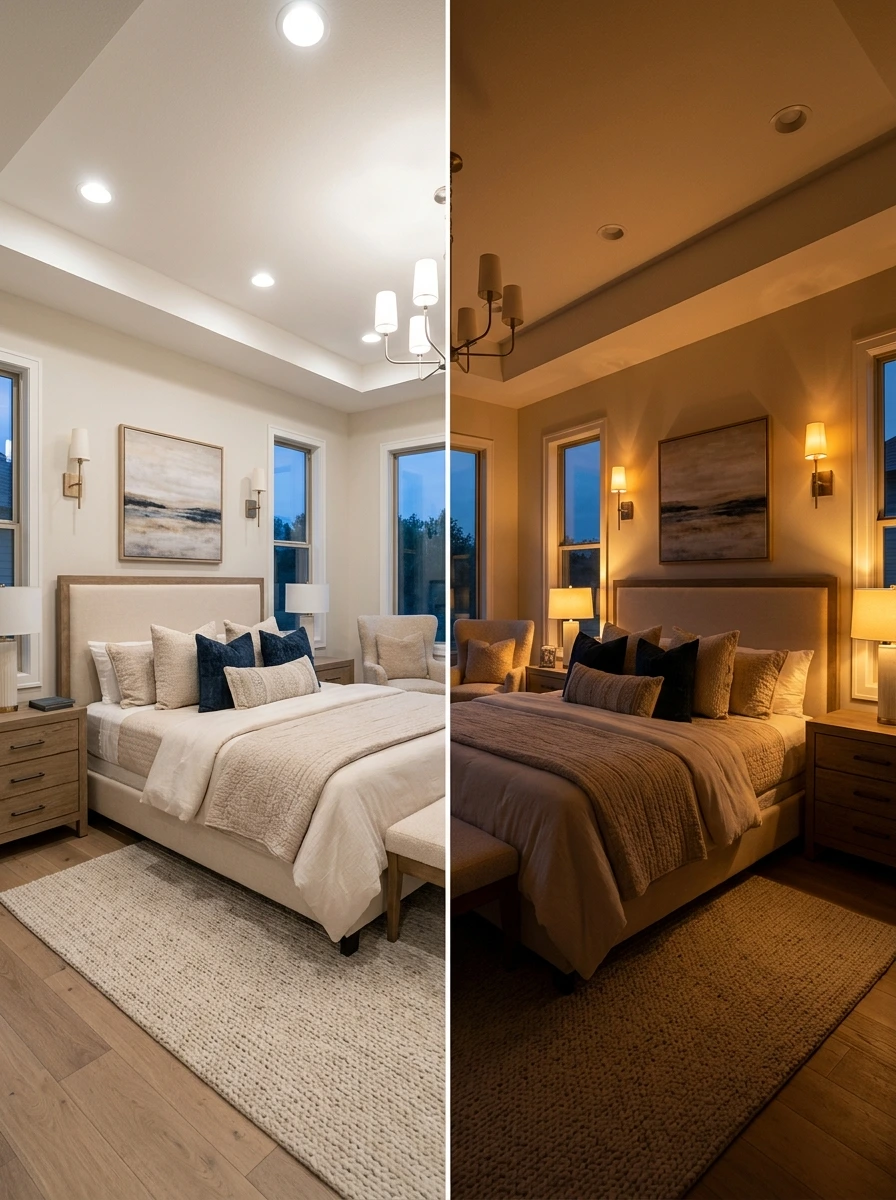
A dimmer is the cheapest way to change how a room feels at night. Put every fixture on a dimmer, including the overhead, the sconces, and the lamps, and aim for a warm, low level of light about an hour before sleep. Rooms with no dimmers force the choice between full brightness and darkness, and neither supports winding down. A sophisticated master bedroom shifts through the evening, from bright and functional at six o’clock to soft and enveloping by ten. For the quiet routine that completes the effect, our evening bedroom ritual guide offers the specific practices. The sophisticated version feels like a slow exhale, while the near miss still feels like a place where you work.
💡 The Master Bedroom Lighting Formula: What Every Sophisticated Bedroom Has in Common After Dark
These master bedroom lighting ideas work in any room, because they’re built on layers rather than fixtures. Bedroom sconce lighting ideas fit naturally into the task and accent layers below.
AMBIENT LAYER: A ceiling or semi-flush fixture with 2700K bulbs at roughly 40 to 60 watt equivalent per fixture, always on a dimmer and rarely above half brightness.
TASK LAYER: Bedside lamps or swing-arm sconces with the shade bottom near shoulder height when you sit up, using a 40 watt equivalent warm bulb.
ACCENT LAYER: A picture light, a lamp on the dresser, or a low light in a reading corner, placed below eye level to add depth and shadow.
ATMOSPHERE LAYER: Two or three candles or a low-glow lamp, with every dimmer turned down about an hour before sleep, as the start of an evening ritual.
THE MISSING LAYER IN MOST BEDROOMS: Accent light below eye level, which is the one source that makes a room feel designed rather than merely lit.
THE SWITCH RULE: Every light in the bedroom goes on a dimmer, with no exceptions.
For rooms that lean toward shadow, our dark bedroom styling guide shows how the same layering works at its most dramatic.
The furniture beyond the bed should support it and never compete with it.
In real primary suites, the second-tier pieces are where rooms lose their discipline, because each one is bought alone. These five points keep the supporting cast in its place.
18. Matching Bedside Tables Versus Mixed Ones: The Counsel That Ends the Debate in Any Master Bedroom
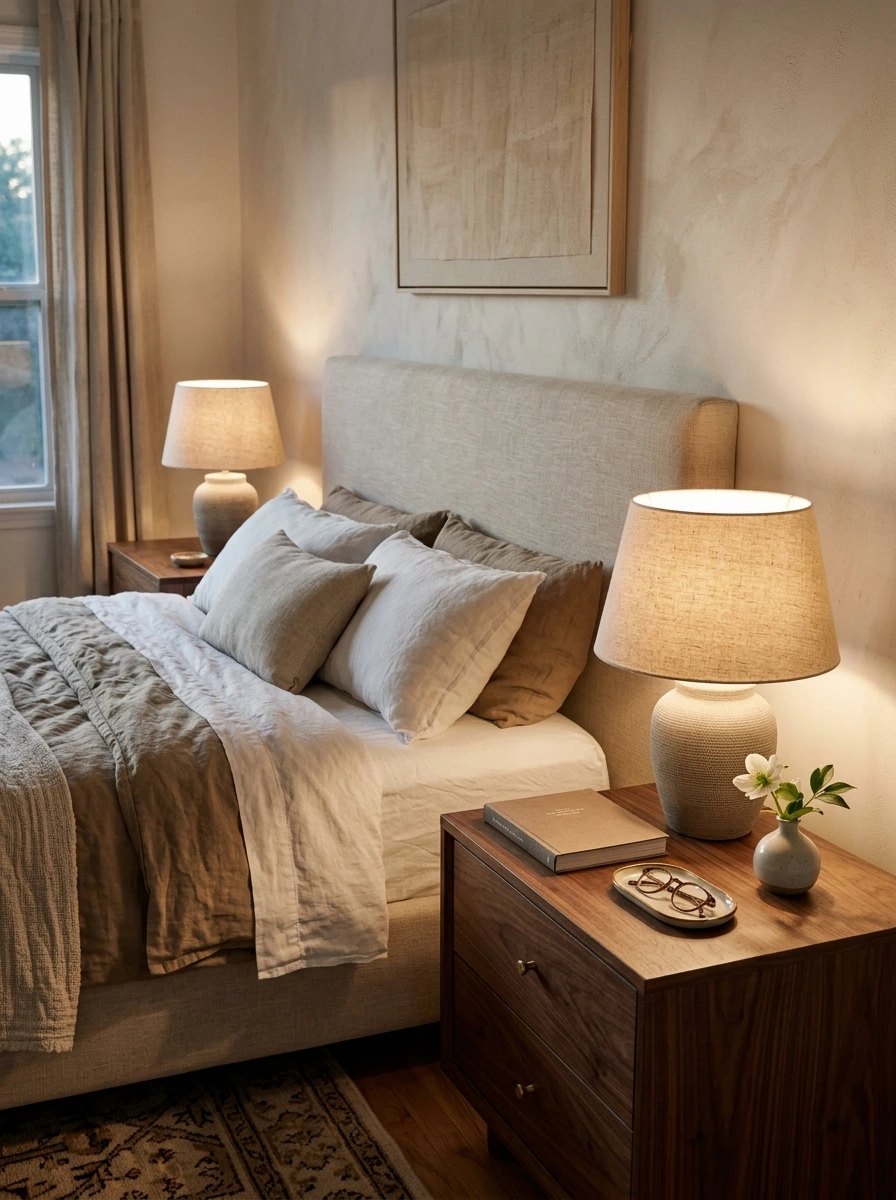
Matching tables suit a formal room, and mixed ones suit a collected room, but both need a shared height. Keep the tops within two inches of the mattress, and if you mix, hold one element constant, such as the wood tone, the metal, or the scale. Two tables at clearly different heights make the bed look crooked, and that mismatch is the one I see most often in primary suites furnished over time. Bedroom symmetry design doesn’t require identical pieces, only equal visual weight on each side of the bed. The sophisticated version looks balanced and deliberate, while the near miss looks like two unrelated pieces that happened to end up together.
19. Every Sophisticated Master Bedroom Has a Place to Sit That Isn’t the Bed
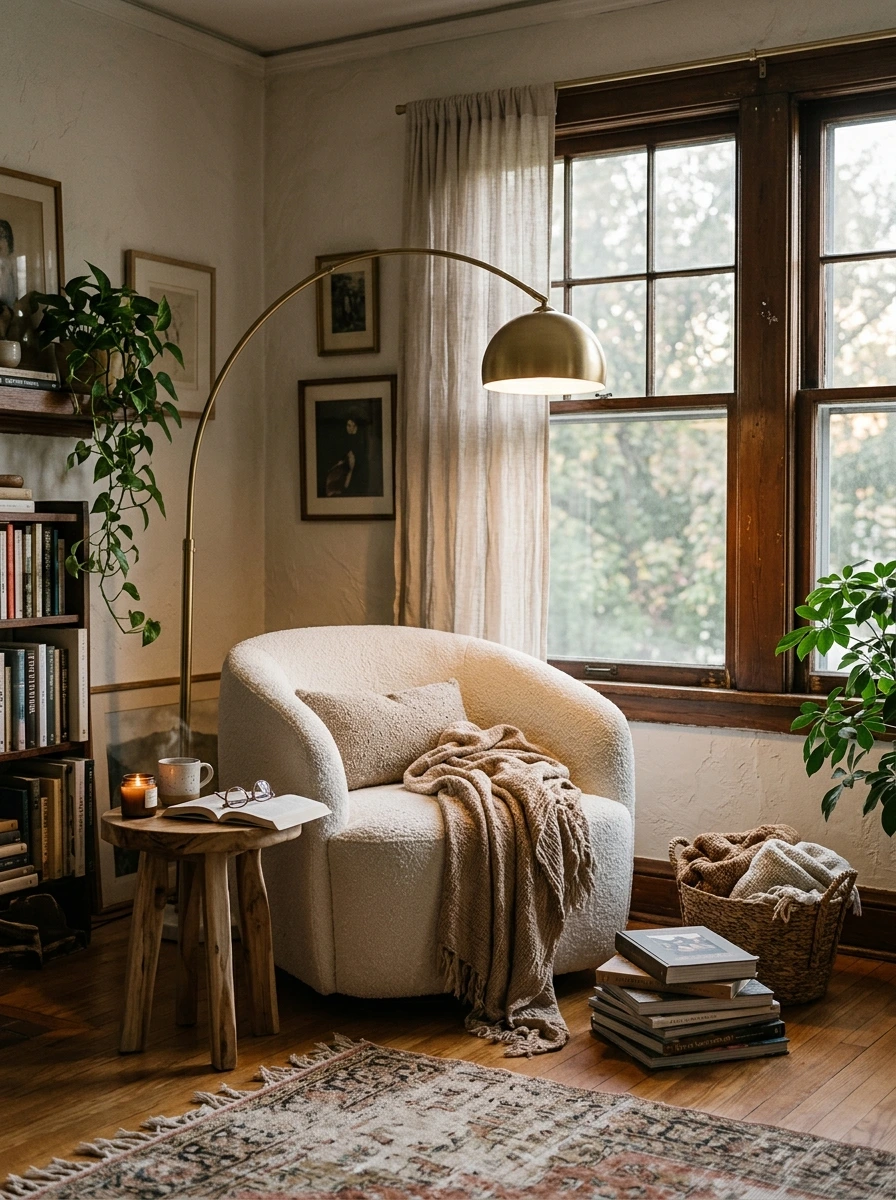
Somewhere to sit changes how a room is used, and a reading corner turns a bedroom from a place to sleep into a place to stay. Use a chair with a 17 to 19 inch seat height, paired with a small side table and a floor or arc lamp, in a corner with a window if possible. Without a chair, clothes pile onto the bed’s edge and the room never gets to feel like a retreat. Anthropologie Home and Serena & Lily both offer chairs in washable, tactile fabrics that suit this kind of daily use. The resolved version feels used and inviting, and the near miss is a chair that’s only there to hold laundry.
20. Dresser or Built-In Wardrobe? Let the Room Decide, Not the Trend
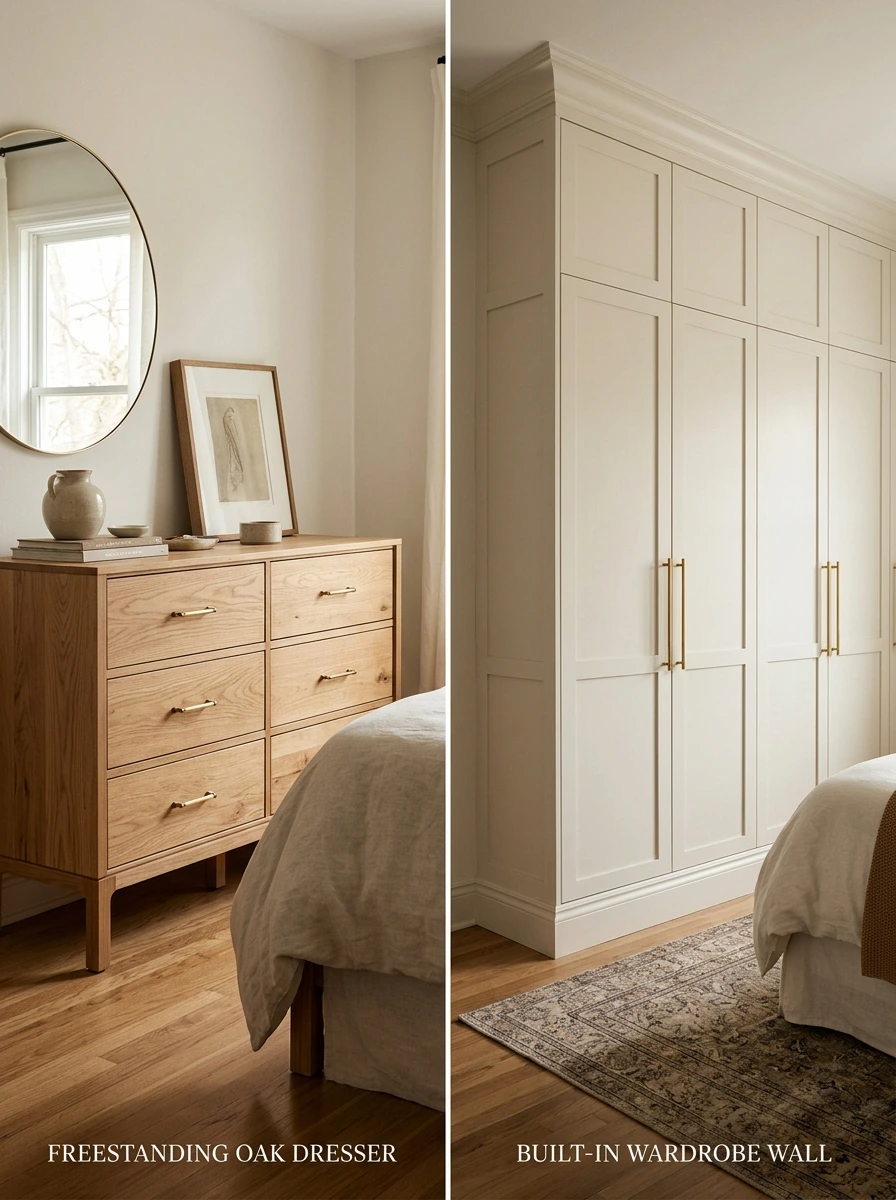
The right storage depends on the architecture, and a trend can’t tell you that. A built-in wardrobe suits a room with an awkward alcove or a low ceiling, while a freestanding dresser suits one with room to spare and a strong wall to anchor it. Putting a bulky dresser in a small room cramps the walkway, and a built-in in a rental-style room often looks pasted on. A built-in wardrobe bedroom plan adds real value to a home and gives you a clean wall of storage, while a quality dresser adds character and can move with you. Choose by what the room needs, and the answer is usually obvious.
21. The Mirror That Belongs in a Sophisticated Bedroom
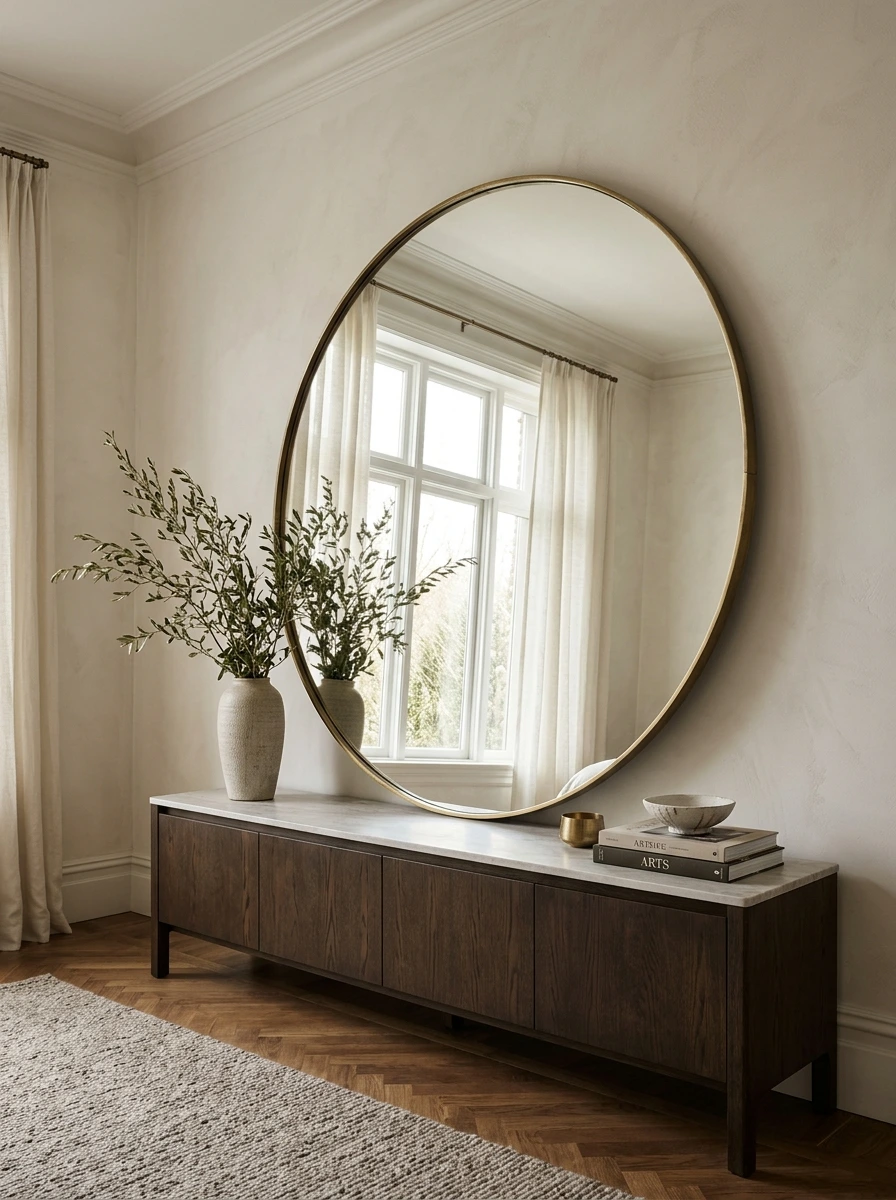
A mirror should extend the light, not just reflect the bed. Choose a master bedroom mirror at least half the width of the furniture beneath it, or a full-length floor mirror 60 inches or taller, leaned or mounted opposite a window so it catches daylight. A mirror placed directly opposite the bed doubles the clutter and gives the room a restless feeling at night. Aged brass, a thin black metal frame, or a carved wood frame all suit a refined room, and an arched shape softens a boxy one. The sophisticated version adds depth and light, and the near miss is a mirror that mostly reflects the unmade bed.
22. The Bedroom Vanity Belongs Only When It Doesn’t Compete
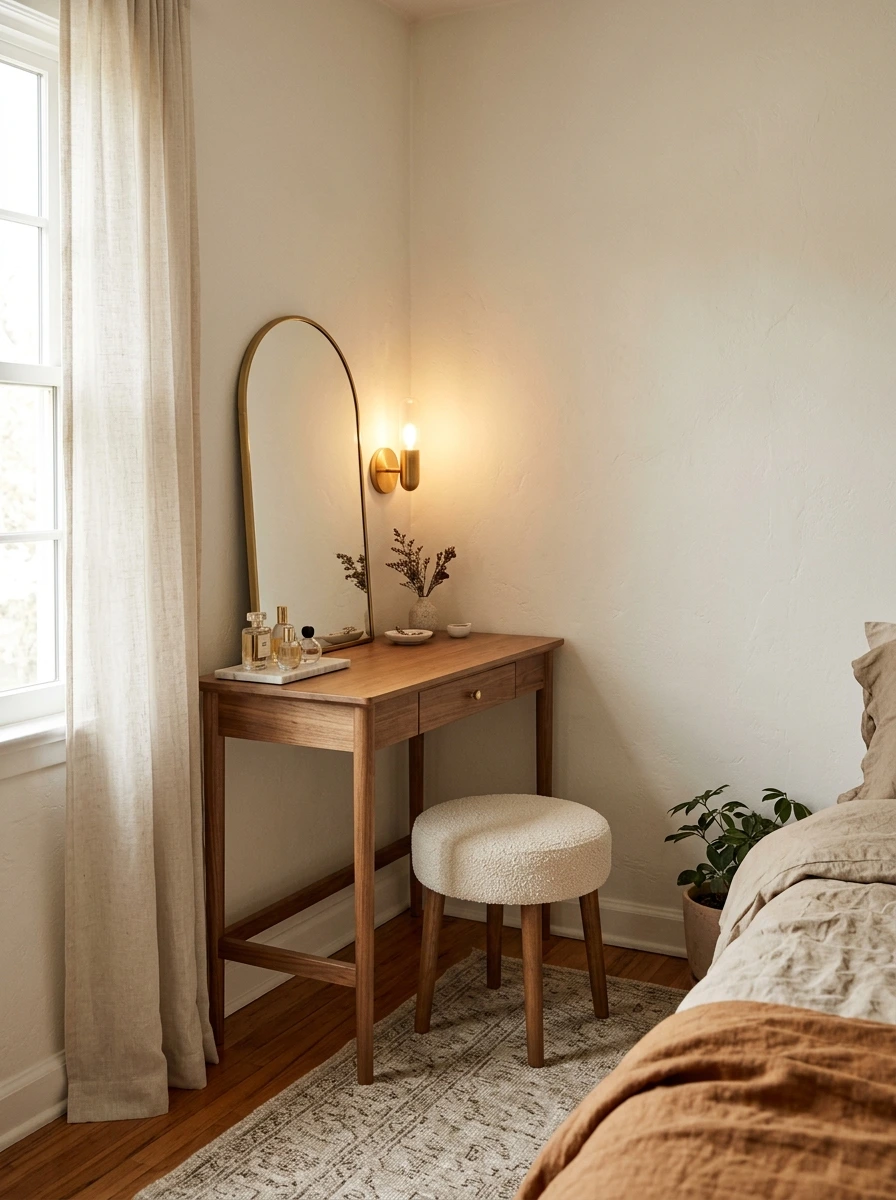
A vanity earns its place when it has a real purpose and a real corner. Keep it slim, around 36 to 42 inches wide, with a comfortable stool and a mirror lit from the sides rather than from above. A vanity jammed in beside the bed or against a blocked window gets cluttered within a week, and it pulls the eye away from the focal wall. Pottery Barn and West Elm both offer slim desk-style vanities that double as a writing surface in a smaller room. The resolved version feels like a quiet daily ritual, while the near miss looks like a crowded dressing table that took over the room.
📐 The Master Bedroom Proportion Guide: The Measurements That Separate a Resolved Room From a Furnished One
Good master bedroom furniture ideas all come back to proportion, and these seven numbers make the difference. The same logic applies throughout a home, as our classic interior principles guide explains for every room.
HEADBOARD HEIGHT: Aim for 20 to 28 inches above the mattress top, rising higher in rooms with taller ceilings.
RUG SIZE: Bedroom area rug placement calls for a 9 by 12 under a king, extending at least 18 inches past each side and the foot of the bed.
BEDSIDE TABLE HEIGHT: Keep the tabletop within two inches of the mattress top, either slightly above or slightly below.
CURTAIN LENGTH: Panels should just touch the floor or pool slightly, hung four to six inches above the window frame.
MIRROR SCALE: A wall mirror should be at least half the width of the furniture below it, and a floor mirror at least 60 inches tall.
LAMP HEIGHT: The bottom of the lamp shade should sit near your shoulder when you’re sitting up in bed, usually 26 to 30 inches above the tabletop.
BENCH LENGTH: A bench should be two-thirds to three-quarters the width of the bed, so about 54 to 60 inches on a king.
The last 15% is what the eye returns to after everything else is right.
In nearly every finished master bedroom, the details are what people remember, and they’re also what most rooms skip. These last four points complete the room.
23. Master Bedroom Decor Ideas for Walls: One Considered Piece or a Gallery
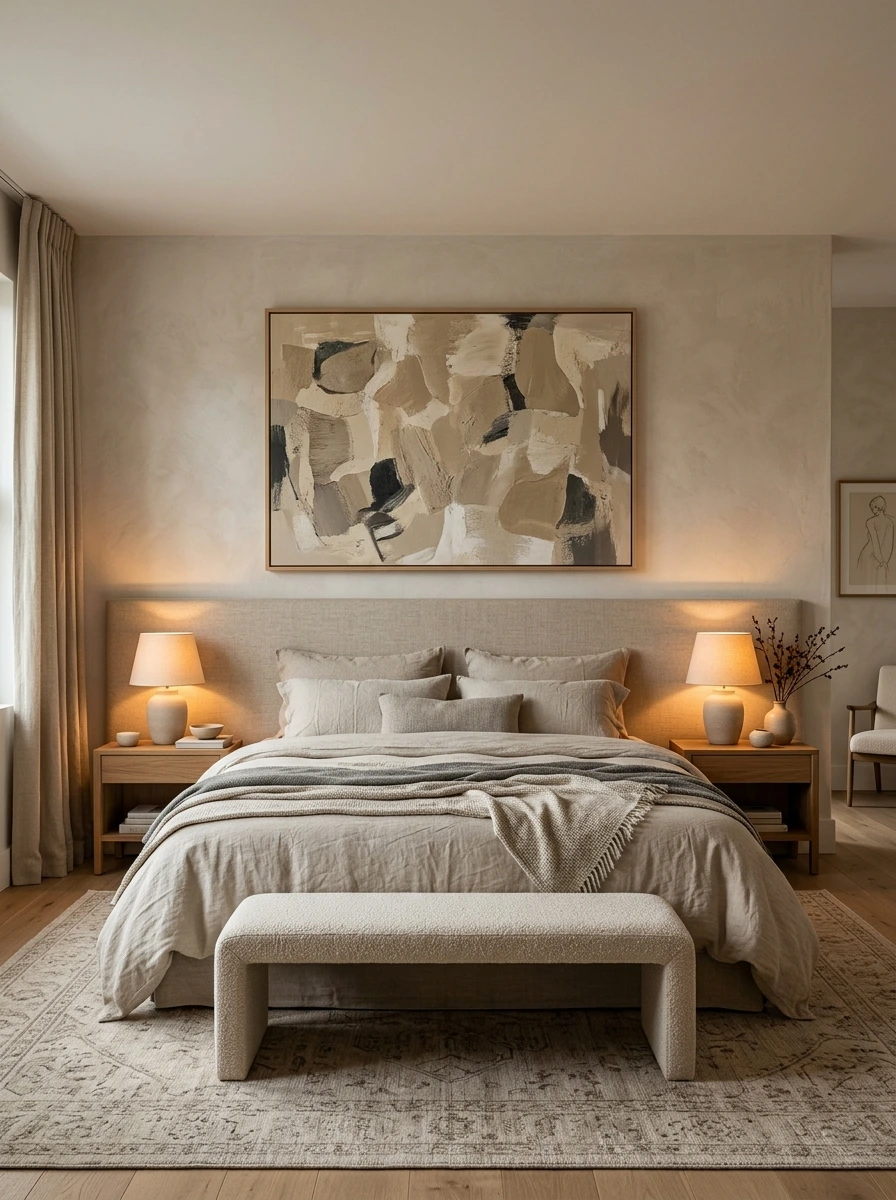
Walls need either one confident piece or a deliberate group, and nothing in between. Hang a single piece at about two-thirds the width of the headboard, centered above it, with the center around 57 to 60 inches from the floor, or build a master bedroom gallery wall in a tight grid with two inches between frames. Several small frames scattered across a wall look hesitant, and that hesitation is the clearest sign a room hasn’t been finished. Master bedroom wall decor in matching frame finishes and generous mats reads as collected instead of random. The sophisticated version feels intentional, while the near miss looks like pictures that were hung because there was a nail.
The Consultant’s Direct Note: Fewer, Larger, Lower
✦ Measurement: Art at two-thirds the width of the headboard, centered about 57 to 60 inches from the floor, with 2 inches between frames in a group.
✦ Material: Natural wood or thin metal frames with wide white or cream mats.
✦ The mistake: Hanging art too high, so it floats away from the furniture beneath it.
✦ Budget option: Oversized prints in simple frames look far better than a cluster of small, inexpensive ones.
24. Plants in a Sophisticated Master Bedroom: What Belongs and What Doesn’t
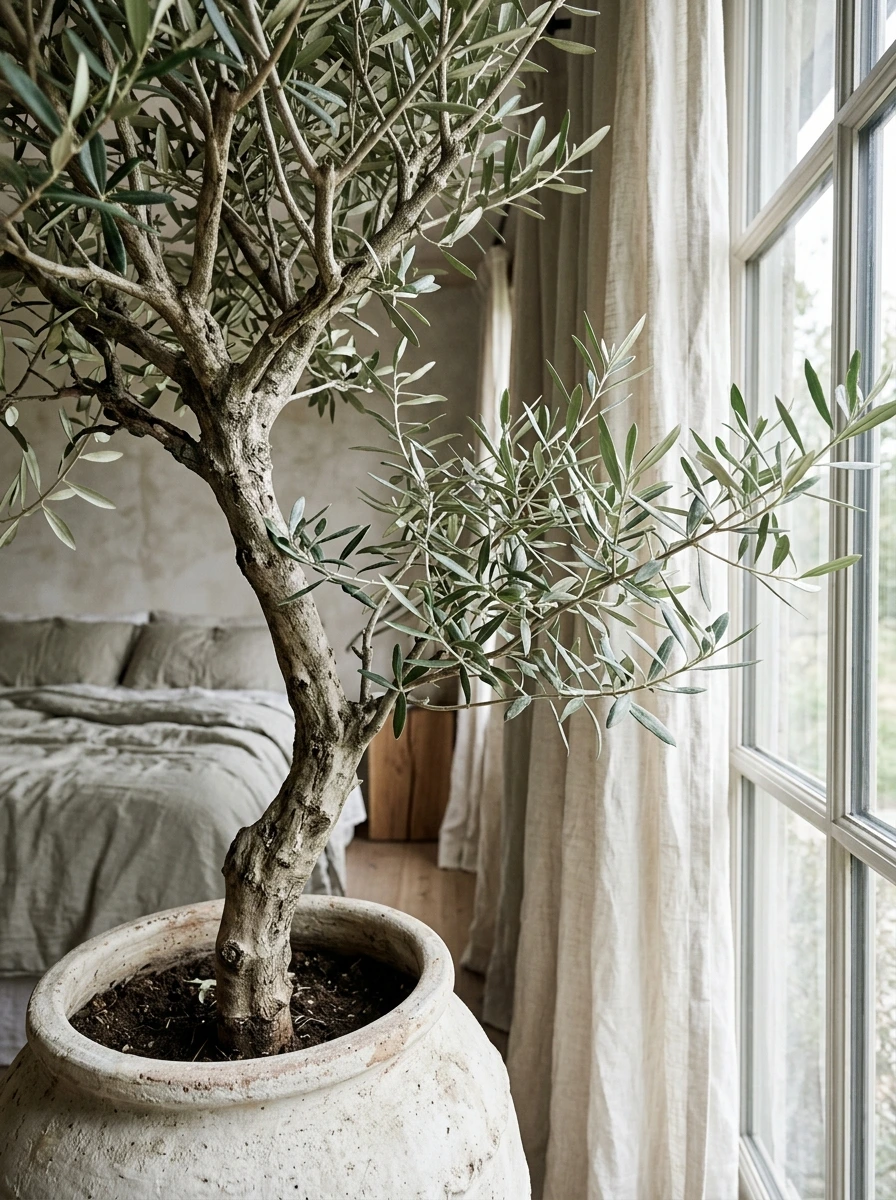
One good plant softens a room, and five mediocre ones clutter it. Choose a single large plant, such as a fiddle-leaf fig, an olive tree, or a snake plant, in a plain ceramic pot, placed in a corner or beside a window with real light. A row of small plants on the dresser or windowsill reads as clutter, and a plant starved of light drops leaves in a way that looks neglected. Master bedroom plant styling works best with low-maintenance, air-friendly species, and a high-quality faux version is an honest option in a dark room. The resolved version looks effortless, and the near miss looks like a collection that nobody has time for.
25. The Scent Layer Photographs Nothing and Changes Everything in a Master Bedroom
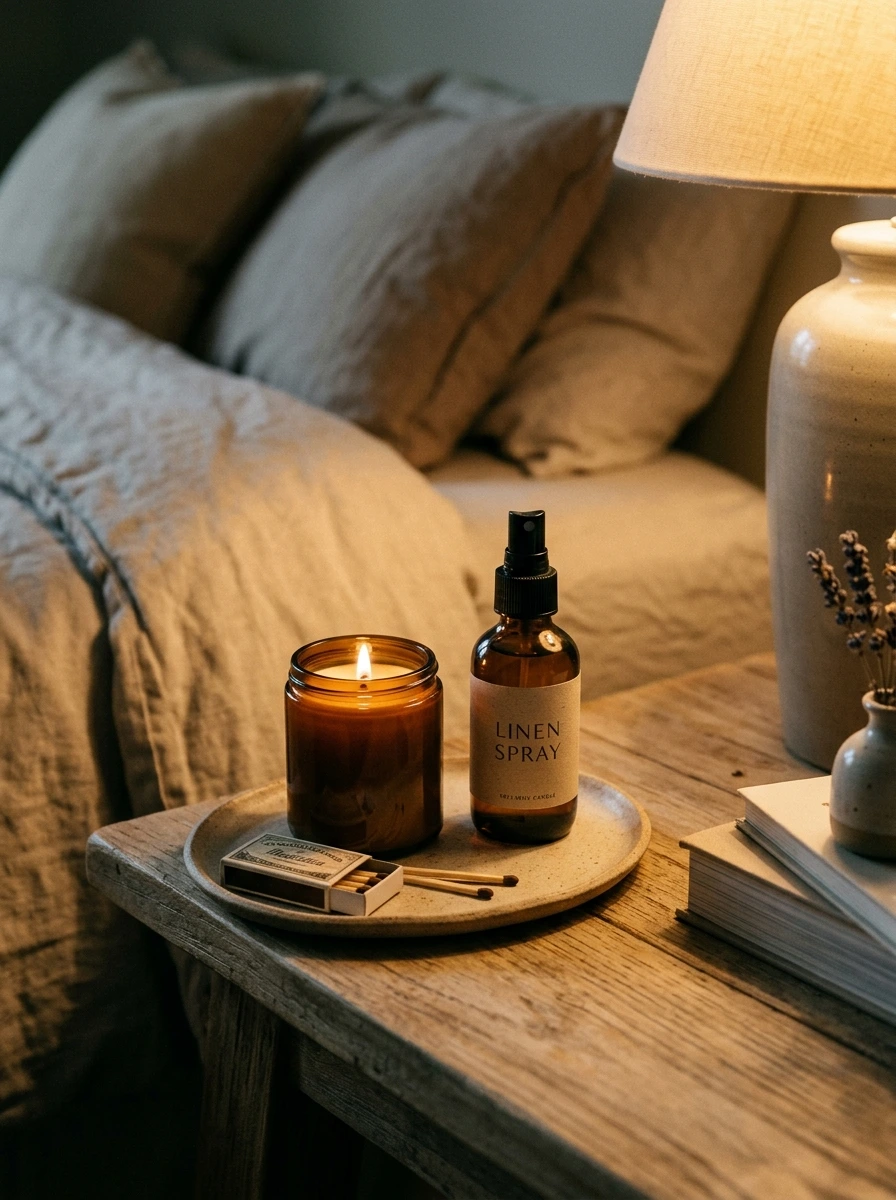
Scent is the one layer a camera can’t see, and it’s the one a guest notices first. Choose a single fragrance family, such as fig, cedar, or white tea, in one good candle, a reed diffuser, or a linen spray, and keep it soft enough that you only notice it when you enter. Competing scents, or a heavy candle burning all evening, turn the room stuffy rather than calm. Five-star hotel bedroom at home is largely a matter of one consistent scent, which is why hotels guard theirs. The sophisticated version is barely there, while the near miss announces itself from the hallway.
26. Master Bedroom Decor Ideas, Resolved: Every Counsel Point in One Complete Room
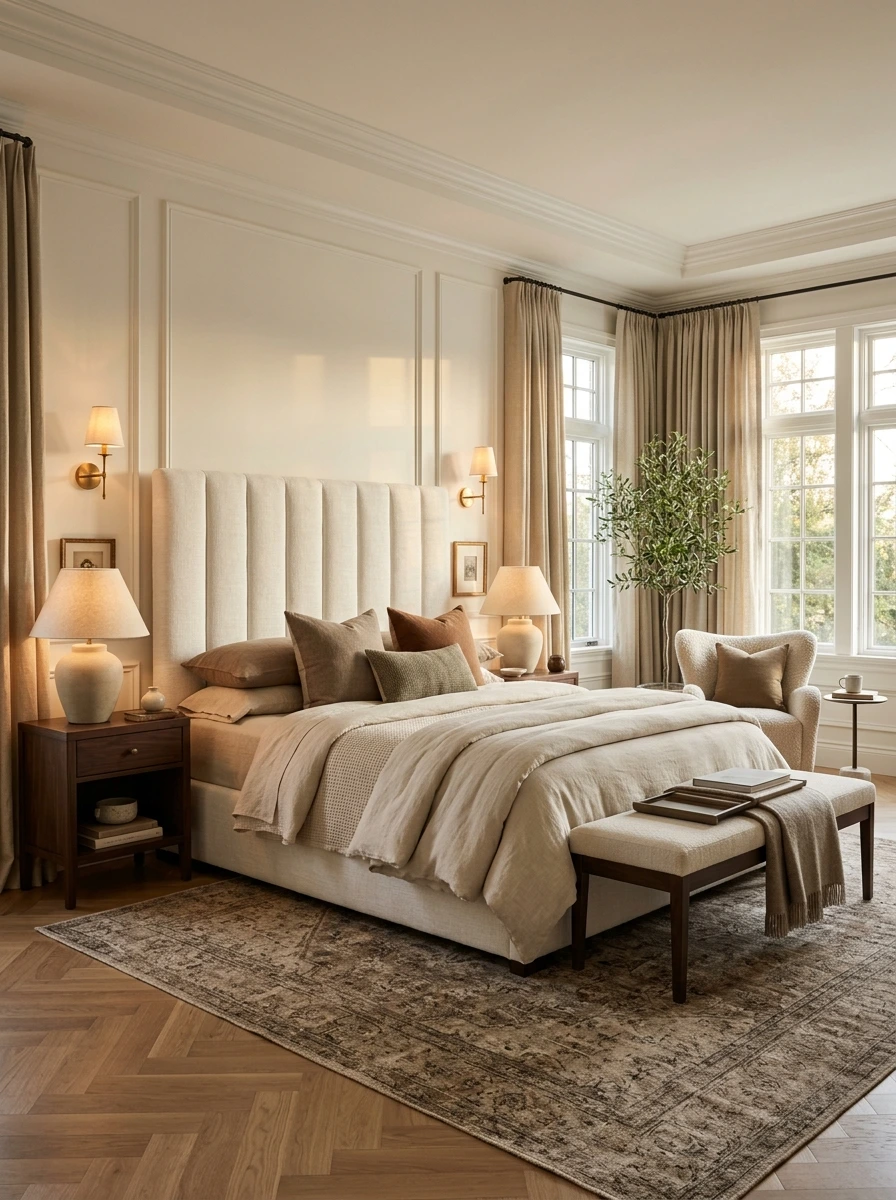
A finished room is the sum of its decisions, and it holds together because each one answers the others. Picture a tall upholstered headboard in oatmeal linen, a quiet frame, five-layer bedding in two tones, a 9 by 12 wool rug, floor-length curtains, sconces on dimmers, matched bedside tables, one reading chair, and one large piece of art. Rooms that skip even two or three of these usually feel unresolved, and the missing ones are almost always lighting and scale. The best way to apply this is to work through the guide in order, and let each decision inform the next. The sophisticated version feels calm and complete, while the near miss has every element but no relationship between them.
Master Bedroom Design Questions, From the Consultation Files
How do I make my master bedroom look more sophisticated?
Start with the biggest decisions: the headboard, the lighting, and the palette. Master bedroom decor ideas work best when they’re applied in that order, because a tall headboard and warm layered light do more than any accessory. Sophisticated bedroom decor is mostly editing, so remove what doesn’t earn its place before you add anything new. Even small changes, like hanging curtains higher, can shift the whole feel of the room.
What colors make a master bedroom look elegant?
Warm neutrals, deep blues, soft greens, and charcoal all read as elegant when they’re committed to rather than hedged. The best master bedroom color ideas share a quality of depth, using two or three tones of one hue instead of a single flat shade. Elegant master bedroom ideas also depend on texture, so add linen, wool, and velvet in tones close to the walls. Test samples on two walls and check them in morning and evening light.
How do I style a master bedroom on a budget?
Spend on the bed’s layers, the lighting, and the curtains, and save on frames, accessories, and extras. Master bedroom decor ideas on a budget start with paint, a good duvet, and a larger rug, because those three changes affect the whole room. Master bedroom decor on a budget also rewards thrift-store lamps, secondhand frames, and one oversized print. Buy fewer things and make each one count.
What furniture is essential in a sophisticated master bedroom?
You need a bed with a substantial headboard, two bedside tables, a dresser or built-in storage, and one place to sit. Master bedroom furniture ideas should be chosen for proportion first, and master bedroom design ideas should keep the pieces within a shared tone and scale. Anything beyond those pieces is optional and should be added only if it has a job. For a softer, more atmospheric approach to the room, our dreamy bedroom inspiration guide shows how that quality sits alongside refined furniture.
What lighting makes a master bedroom feel most sophisticated?
Layered, warm, dimmable light is what separates a sophisticated room from an ordinary one. Master bedroom lighting ideas begin with at least four sources at three heights, all on dimmers and all using 2700K bulbs. Sophisticated bedroom decor depends on sconces or lamps at shoulder height and a low accent light that adds depth. Turn off the overhead in the evening and the room will feel entirely different.
How many pillows should a master bedroom bed have?
Five or six on a king is the right number, with two Euros, two or three standards, and one accent pillow. Master bedroom decor ideas around bedding favor restraint, and layered bedding in a master bedroom works because each piece has a job. More than seven pillows turns the bed into a daily chore. Fewer, better pillows in coordinating textures always looks more sophisticated.
What rug size works best in a master bedroom?
A 9 by 12 works best under a king and an 8 by 10 under a queen, extending 18 to 24 inches past the bed’s sides and foot. Master bedroom design ideas rely on this proportion, and bedroom area rug placement should leave the rug’s front two-thirds under the bed. A rug that’s too small makes the room feel unfinished, which is the most common mistake in primary suites. For rooms with age and character, our vintage bedroom elegance guide explores how heritage pieces, including an older rug, add depth.
How do I add elegance to a master bedroom without spending a lot?
Hang the curtains higher and longer, switch to warm bulbs, and replace a bare-looking bed with one good duvet and two Euro shams. Elegant master bedroom ideas rarely need a large budget, because they depend on proportion and restraint. Master bedroom styling tips that cost almost nothing include clearing surfaces, grouping objects in threes, and removing anything that doesn’t belong. One new lamp and one good piece of art can change the room entirely.
What window treatments work best in a sophisticated master bedroom?
Floor-length linen panels layered over a sheer, hung four to six inches above the window frame, work best in almost any room. Master bedroom decor ideas for windows favor weight and fullness, and a good master bedroom window treatment should block light without feeling heavy. Add a blackout liner if you’re a light sleeper, since rest is the point of the room. For the practices that complete a restful bedroom, our evening bedroom ritual guide offers the specifics.
How do I create a five-star hotel feel in my master bedroom?
Use crisp white or ivory linens, a tall headboard, matching lamps, and a consistent soft scent. Luxury master bedroom ideas rely on repetition and restraint, and master bedroom decor ideas that echo a hotel favor symmetry and quiet tones. Add a bench at the foot of the bed and a robe on a hook, and keep the surfaces clear. A five-star hotel bedroom at home is simply a series of small, consistent decisions.
Your master bedroom decor ideas should begin with one decision, and the next one follows from that. A sophisticated room isn’t achieved in a single purchase or a single weekend, but through a series of better decisions made one at a time. Start with the bed, then the light, then the walls, and let the room accumulate its character.
A sophisticated master bedroom is the beginning of a home that takes every room seriously. The Muse Vale has the bedroom decor, interior design, and home styling guides to help you bring that same level of intention to every space.
Come back to The Muse Vale whenever your master bedroom needs a new counsel point. We’ll have the design guidance, decor inspiration, and sophisticated bedroom ideas ready for every decision you’re working through.