
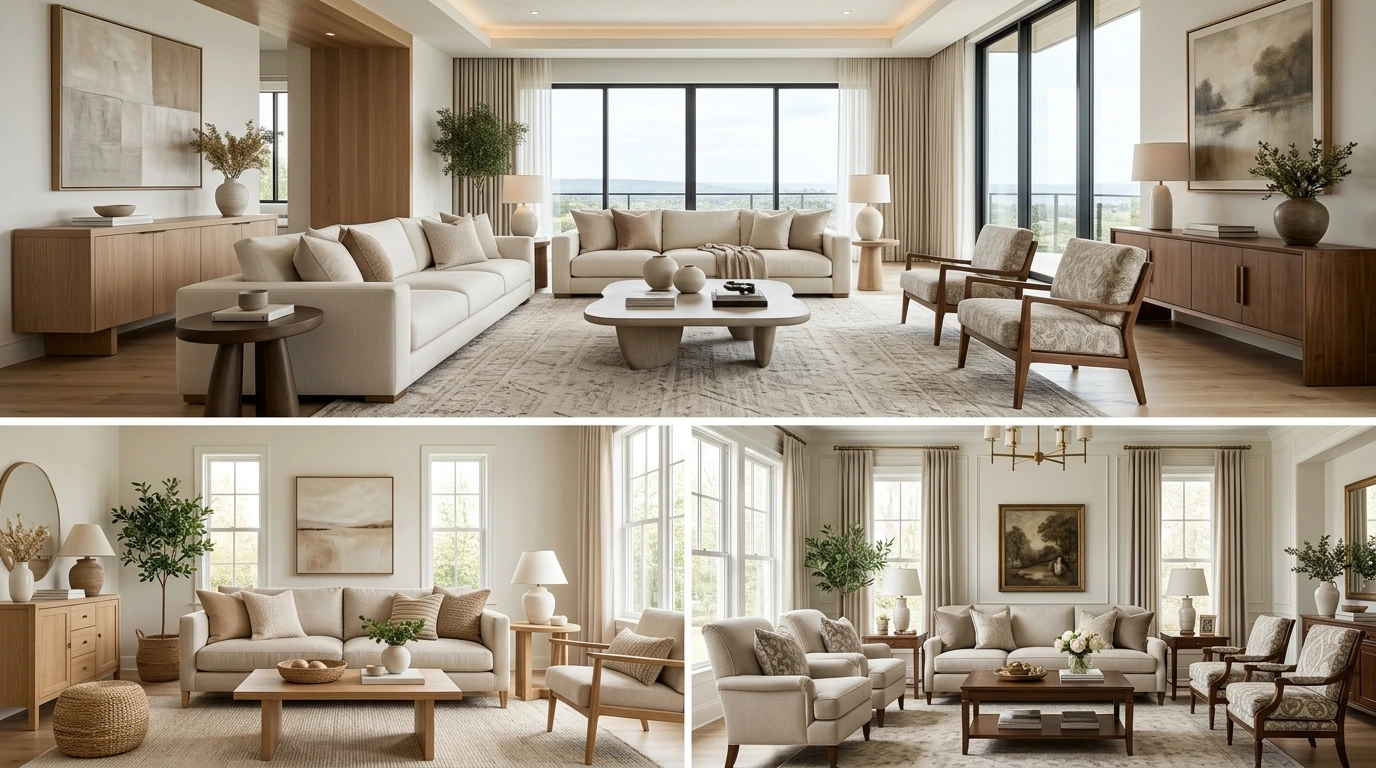
Every week a client sits on my sample sofa and says some version of “I want it cozy, but modern.” That phrase alone could describe four completely different rooms, and it tells me people are hungry for living room design ideas that actually match how they live, not just a mood board. Lately the vague words have shifted: “elevated,” “collected,” “grounded,” “curated.” They’re not wrong, exactly. They’re just not finished sentences yet. This roundup exists to finish them: thirty living room design ideas broken into the six style families I see most in my own client meetings, each one turned into something you can actually buy and place in a room. If autumn is your season, we’ve got a full breakdown of fall living room decor here, but this list covers the other eleven months too.
Style Finder: Which Living Room Style Fits You?
Before you scroll, answer these fast. No wrong answers, just data.
- Clean lines or curved silhouettes? Clean lines lean minimalist. Curves lean warm and earthy.
- Neutral palette or saturated color? Neutral points you toward coastal or minimalist. Saturated points toward eclectic or moody.
- Old pieces or new pieces? Old, or old-look, pieces suit farmhouse and vintage-leaning eclectic rooms. New, considered pieces suit minimalist and coastal ones.
- Settled for a decade, or updated every couple of seasons? Settled means invest in fewer, better anchor pieces. Updated means build around a neutral base you can restyle cheap.
Match your answers to a family below, then let these living room design ideas fill in the rest.
1. Clay-Toned Walls That Make a Room Feel Held
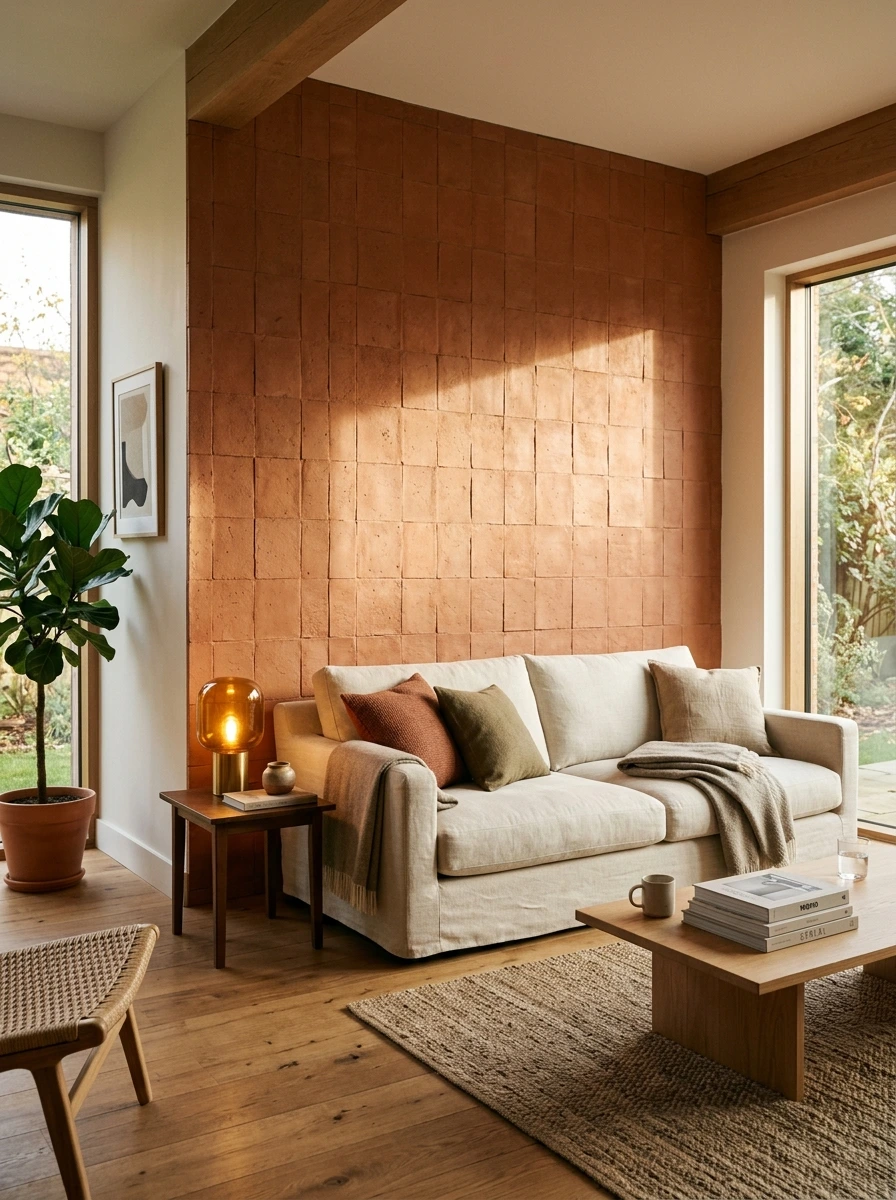
Paint isn’t the only way in anymore; textured, clay-look panels are having a real moment among people chasing warm, grounded living room design ideas. Apply them behind the sofa or media console as a single-wall treatment, and skip the trim so the material reads intentional instead of patched. Go for burnt orange, terracotta, or dusty brick, in a matte finish that catches light instead of bouncing it. It’s one of the fastest ways to build a warm neutral color palette into a rental-safe room. My honest take: half my clients ask for this look, and it works best in rooms with north-facing windows that need the visual heat.
2. Rounded Furniture Softening a Boxy Room
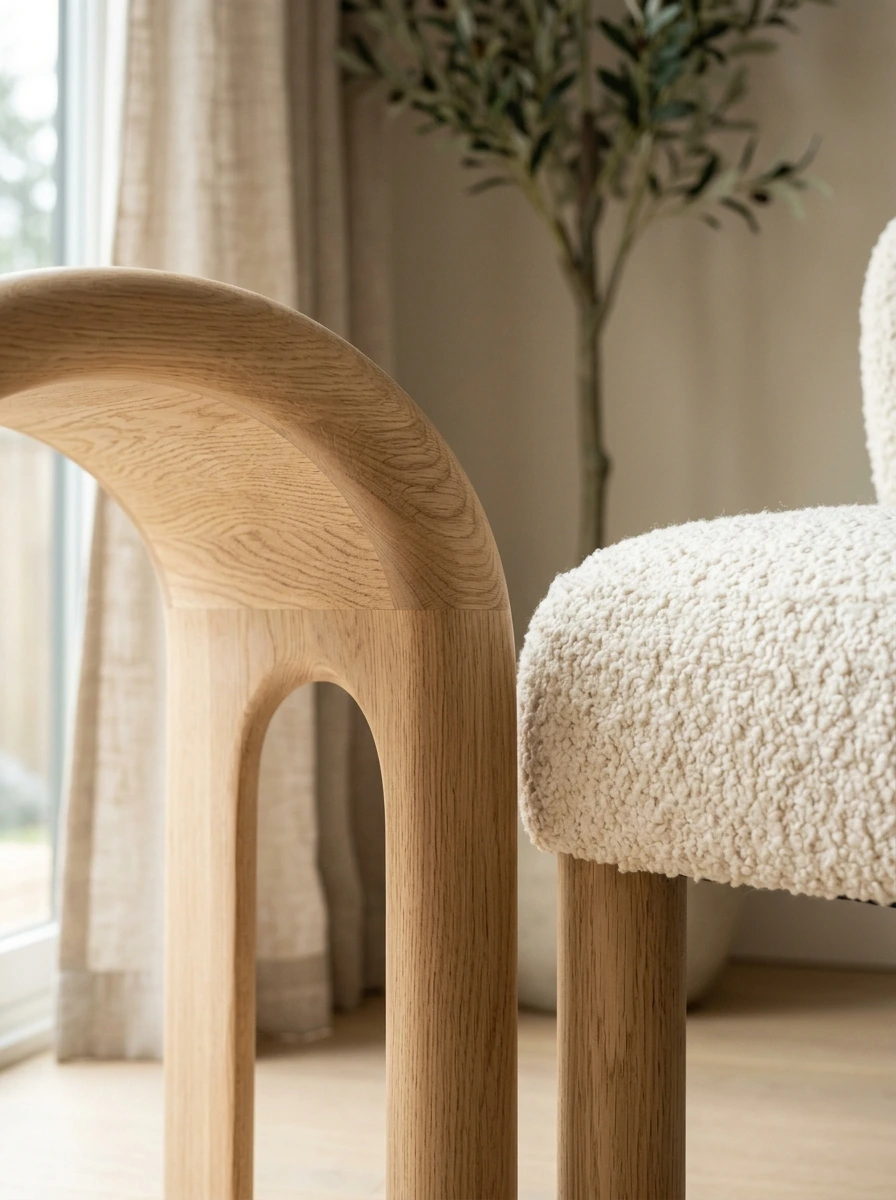
Curved silhouettes are the quiet fix for a living room that feels like a shoebox. Swap one hard-edged piece, a rectangular coffee table or a squared-off console, for something arched or barrel-shaped, and the whole floor plan reads calmer. Stick to natural materials like oak, travertine, or bouclé so the curve doesn’t feel trendy for its own sake. This is one of those modern living room ideas that photographs well but earns its keep in daily use, softening traffic paths for kids and pets alike.
🎨 Palette Pull: The Warm & Earthy Base
Four colors carry this whole family: terracotta, warm sand, rust, and a deep olive for contrast. Keep walls in the lighter tones and save rust or olive for pillows, art, or a single upholstered chair. This is a neutral color palette that still reads warm instead of beige and forgettable. Two keywords worth flagging here: living room color schemes and neutral living room decor both live inside this family.
3. Layered Woven Rugs for Texture Without Color
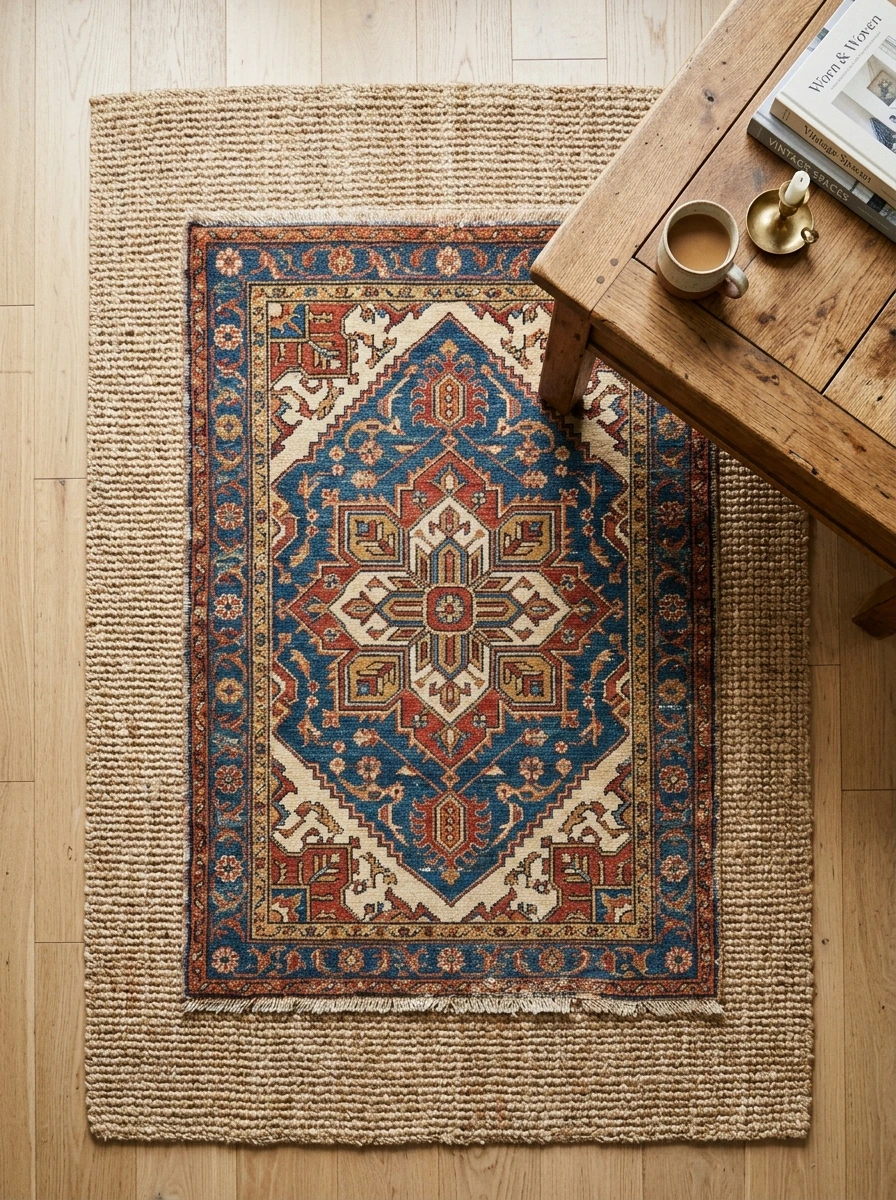
Two rugs, not one, is the trick most people miss when they picture living room design ideas from a magazine. Lay a flat jute or sisal rug under the whole seating area, then float a smaller patterned or vintage-style rug on top, centered under the coffee table. Stick to natural fibers, jute, wool, or a cotton flatweave, so the texture layering reads as a natural material accent rather than clutter. This layered area rug approach is cheap insurance against a room feeling flat, and it’s the single easiest style change on this whole list.
⊹ Get the Look
- A flatweave jute rug sized to the full seating area
- A smaller vintage or pattern rug layered on top, off-center is fine
- One rug pad underneath both, so they don’t shift
- A coffee table with visible wood grain to tie the tones together
4. Leather and Oak Paired for Warmth With an Edge
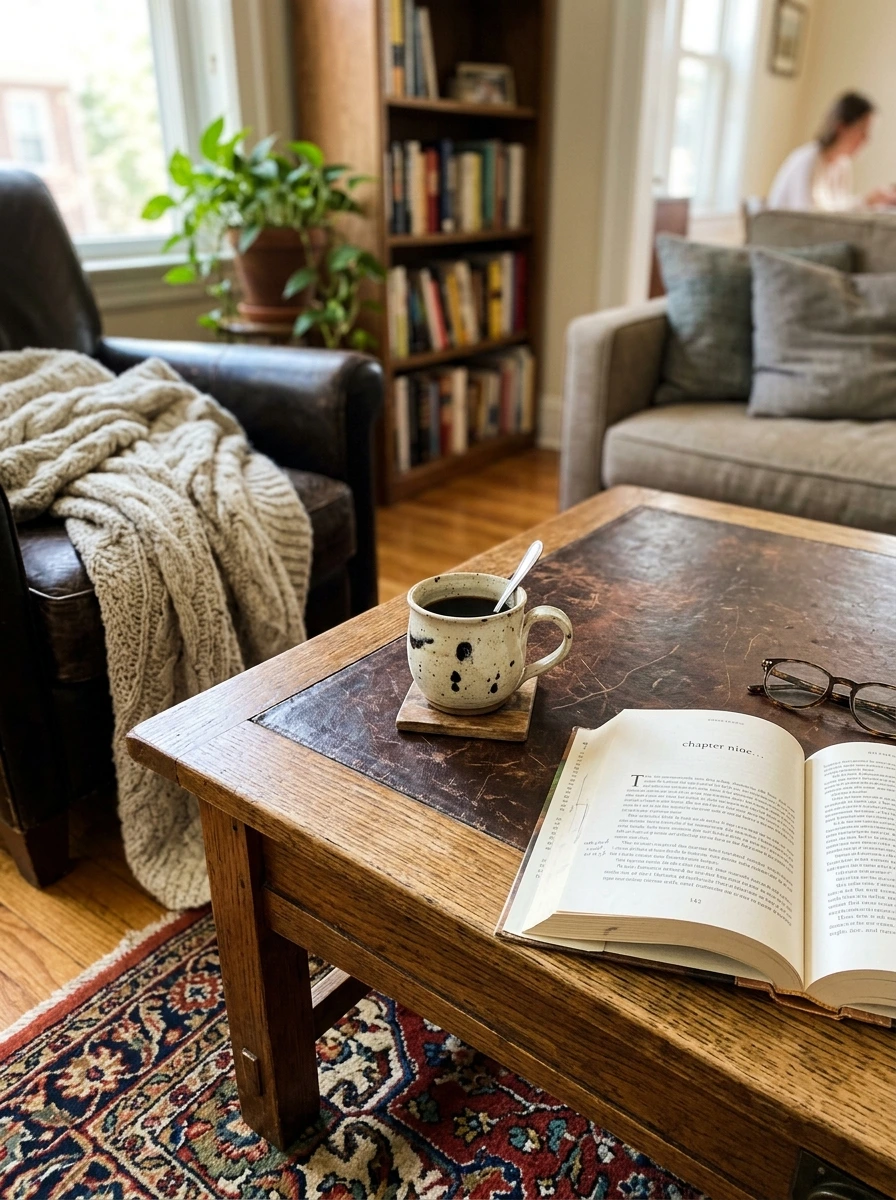
A leather coffee table base grounds a room the way a fabric one never quite can. Choose a saddle tan or cognac leather top on a solid oak or walnut base, and let the material contrast do the styling work instead of piling on accessories. Keep the surrounding pieces simple: a linen sofa, a wool throw, maybe one brass object. This pairing shows up constantly in interior design ideas living room projects because it ages instead of wearing out.
✦ Priya’s Translation Tip
When a client says “cozy,” they usually mean layered textures at different heights, not a pile of blankets. Translate it into: one chunky knit throw folded, not draped, two pillow textures that aren’t twins, and a rug you can actually feel with bare feet. That’s cozy, turned into a shopping list instead of a feeling.
5. Amber Glass Lighting for a Golden-Hour Glow
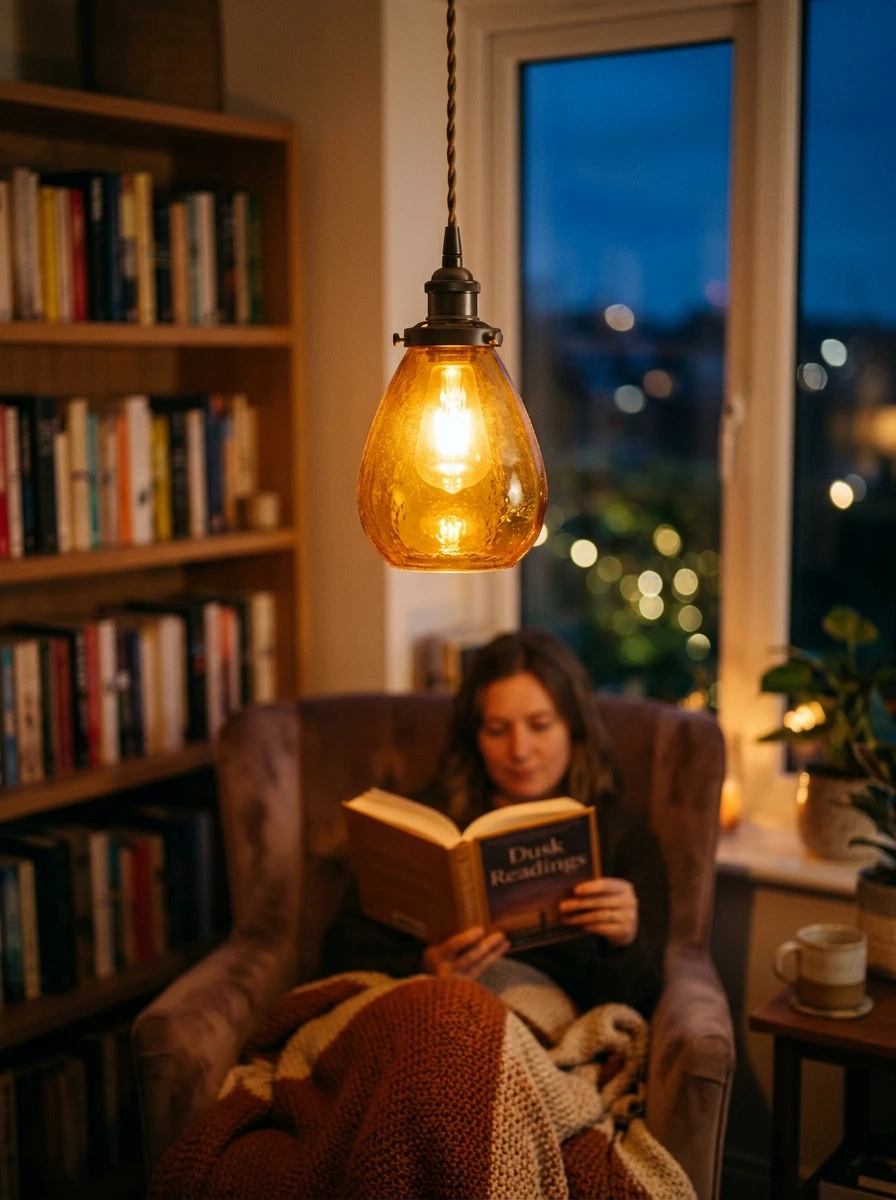
Swap a bright white bulb for amber glass and the whole room shifts temperature without moving a single piece of furniture. Hang it low over a reading corner or a console, and pair it with a dimmer so the glow scales from daytime bright to evening low. Amber, smoked, or honey-toned glass all work, especially against wood tone furniture already in the room. It’s a small move, but it’s one of the living room design ideas that clients notice fastest once it’s installed, right up there with adding a rug.
6. Deep Charcoal Walls That Make Art Pop
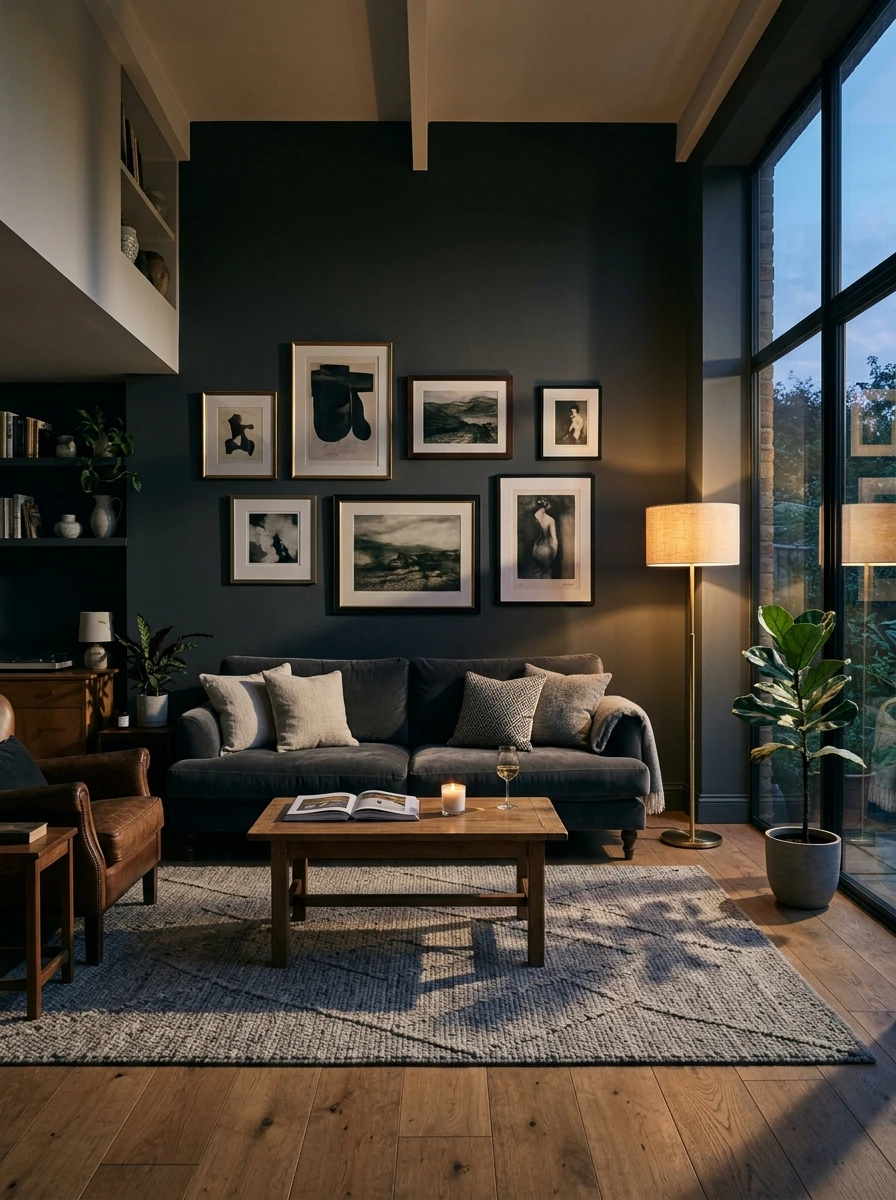
Dark walls read moody, not depressing, when the room has enough contrast to balance them. Paint or panel one wall, usually the one behind the sofa, in a deep charcoal, forest, or ink blue, and keep the ceiling and trim lighter so the room doesn’t feel like a cave. Bring in brass or warm wood tones to keep it from tipping cold. Readers drawn to this look tend to carry it upstairs too, and our moody bedroom ideas guide takes the same palette into the bedroom. This is one of the more dramatic living room styles on this list, but it photographs beautifully in low light, which is exactly when most of us actually sit in our living rooms.
7. Layered Vintage Rugs for an Old-World Feel
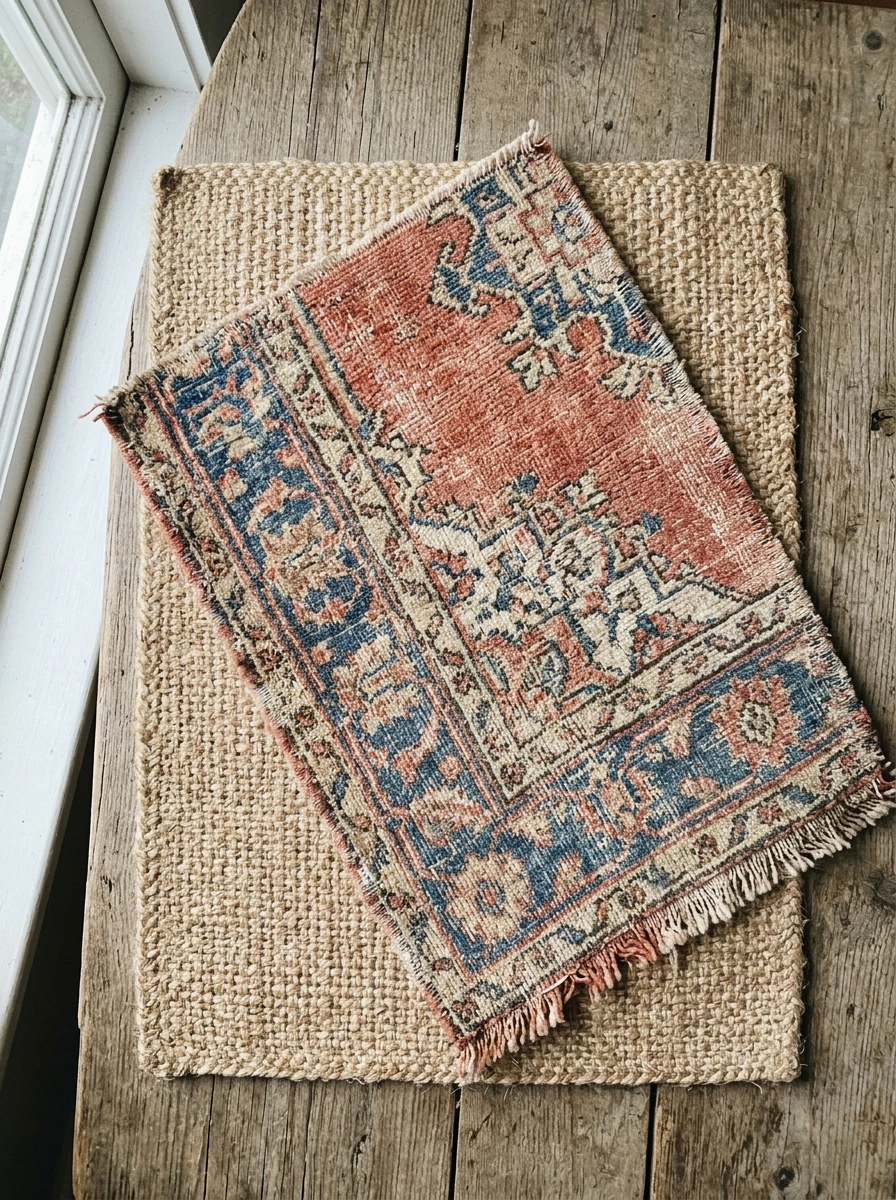
A worn, vintage-style rug does more for a moody room than a new one ever will. Look for faded reds, deep blues, or muted florals, and layer it over a plain jute base the same way you would in a lighter room. The slightly imperfect pattern keeps a dark room from feeling too polished or showroom-flat. This is where living room styles get personal, since a rug with some history in its pattern does what no new piece can fake.
🧭 Style Compass: Is Moody & Layered Right for You?
This style asks a lot of your light. If your living room gets strong natural light most of the day, dark walls will feel intentional. If it’s already dim, test a sample first, because moody can slide into gloomy fast without warm lighting layered in. Renters should stick to a single dark accent wall in removable wallpaper rather than paint, and households with young kids may want to save dark upholstery for a chair instead of the main sofa.
8. Dark Wood Built-Ins as a Room’s Anchor
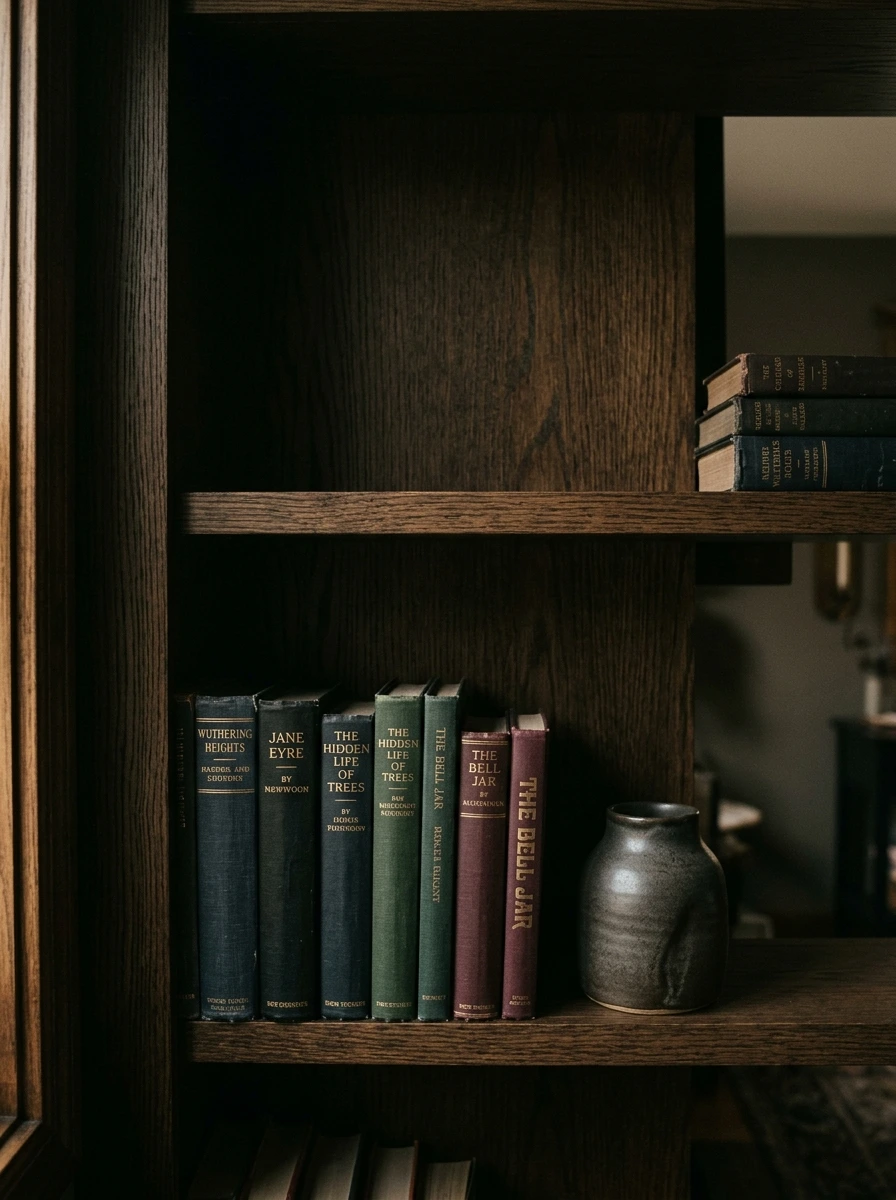
Built-in shelving ideas don’t require an actual renovation anymore; modular dark-stained units can flank a fireplace or TV and read custom from across the room. Stain them near-black or a deep walnut, and style them with a mix of books, ceramics, and negative space rather than filling every shelf. Leave the top third emptier than feels natural; that restraint is what makes it look designed instead of accumulated. It’s a strong living room furniture layout move for anyone dealing with an awkward chimney breast or dead corner.
⊹ Get the Look
- Two matching dark-stained shelf units, symmetrical if the wall allows
- A mix of hardcover books, spaced loosely, not shelved edge to edge
- One or two ceramic or stone objects per shelf, no more
- A single brass reading lamp clipped to one unit
9. Mixed Metal Fixtures for Unexpected Contrast
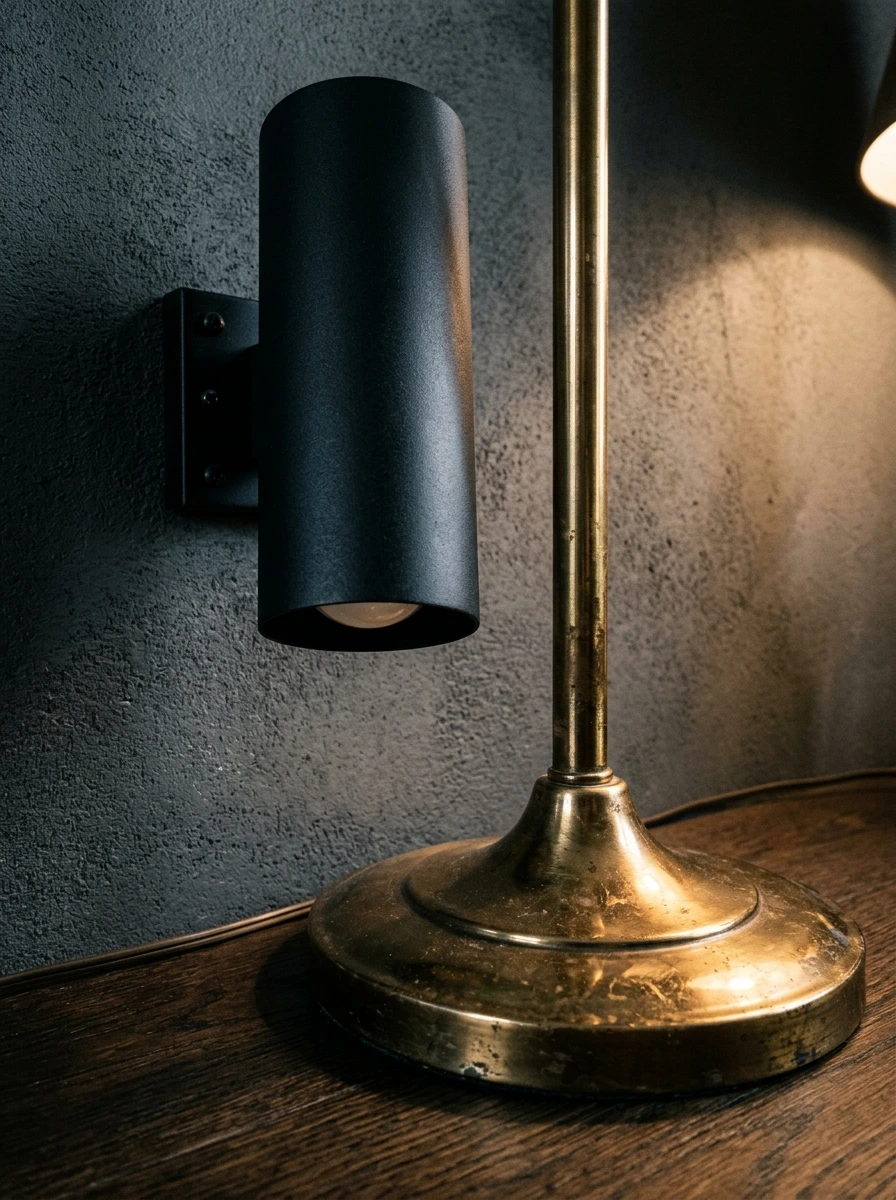
Nobody’s matching all their metals anymore, and moody rooms are where that rule-breaking looks best. Pair matte black sconces with a brass or aged-gold floor lamp, and let a chrome or nickel accent sneak in through a small tray or picture frame. The contrast reads as mixed metal finishes done on purpose, not a decorating accident. It’s a detail most guests won’t consciously clock, but it’s the difference between a room that feels curated and one that feels like it came from a single catalog page.
✦ Priya’s Translation Tip
“Elevated” usually means fewer, better light sources instead of one overhead fixture doing all the work. Translate it into: one floor lamp, one table lamp, and a dimmer on whatever ceiling light you already have. Layered light is the actual mechanism behind that vague, expensive-sounding word.
10. A Jewel-Toned Velvet Sofa as the Star
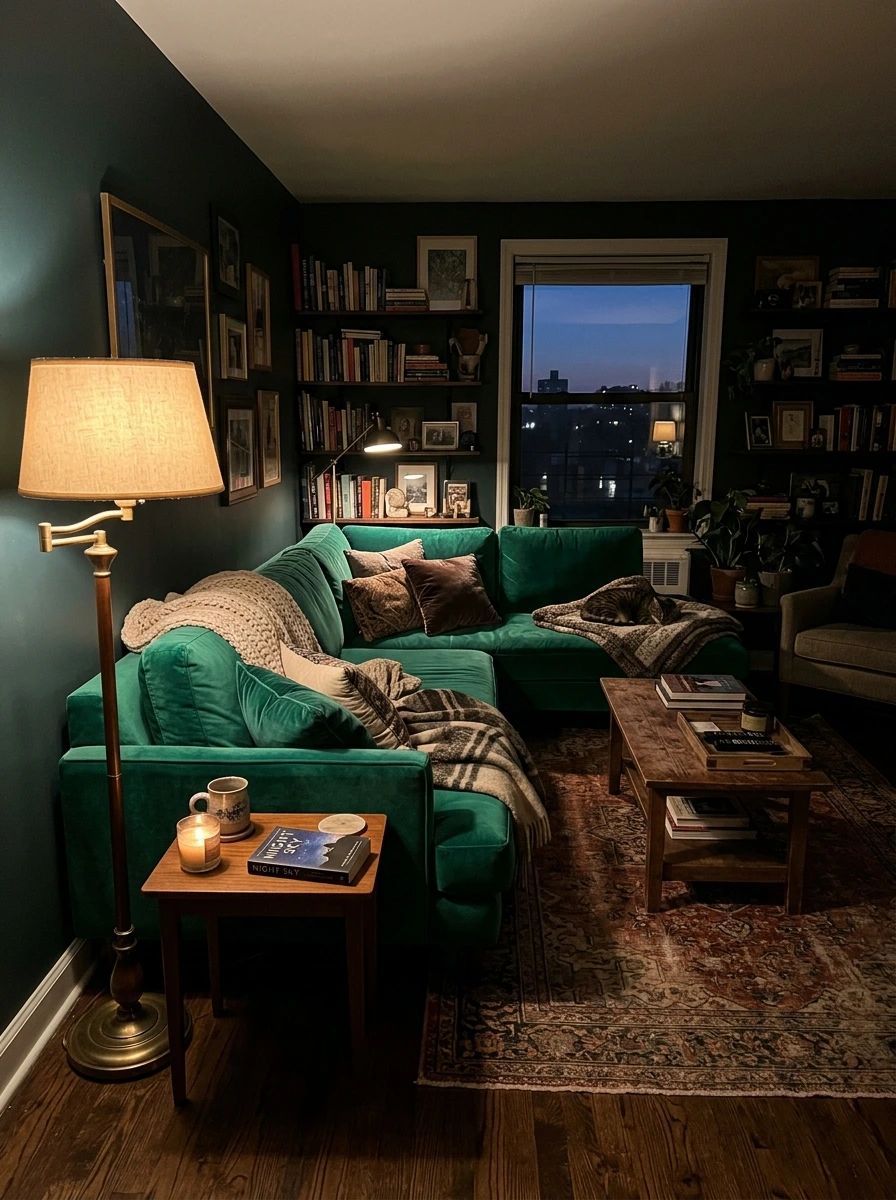
A colored sofa is the boldest single move on this entire list, and in a moody room it’s the one to make. Choose emerald, deep sapphire, or a wine red velvet, and keep every other upholstered piece neutral so the sofa stays the obvious focal point. Velvet catches light in a way flat cotton never will, which matters more in a darker room that needs help reflecting what light it gets. This is a living room focal point strategy that works even in small spaces, since one saturated piece reads as intentional where three would read as chaos.
11. Whitewashed Wood for a Sun-Bleached Base
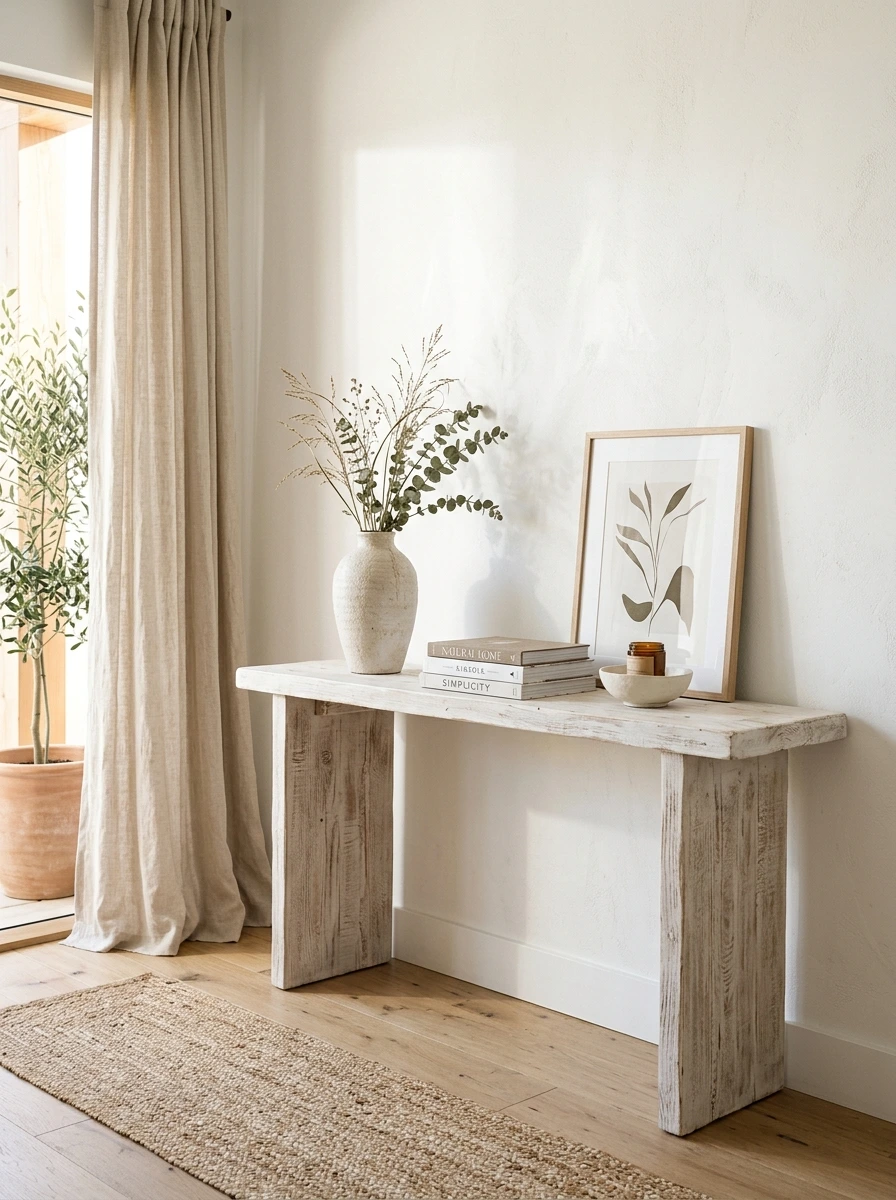
Coastal living room decor starts with the wood tone, not the color scheme. Choose whitewashed oak or a limed finish over anything dark or glossy, on a console, coffee table, or media unit. The lighter grain keeps the room feeling sun-bleached even in a space with modest natural light. It’s a simple swap that shifts a room’s mood without touching a single wall.
12. Rattan and Wicker for Texture Without Weight
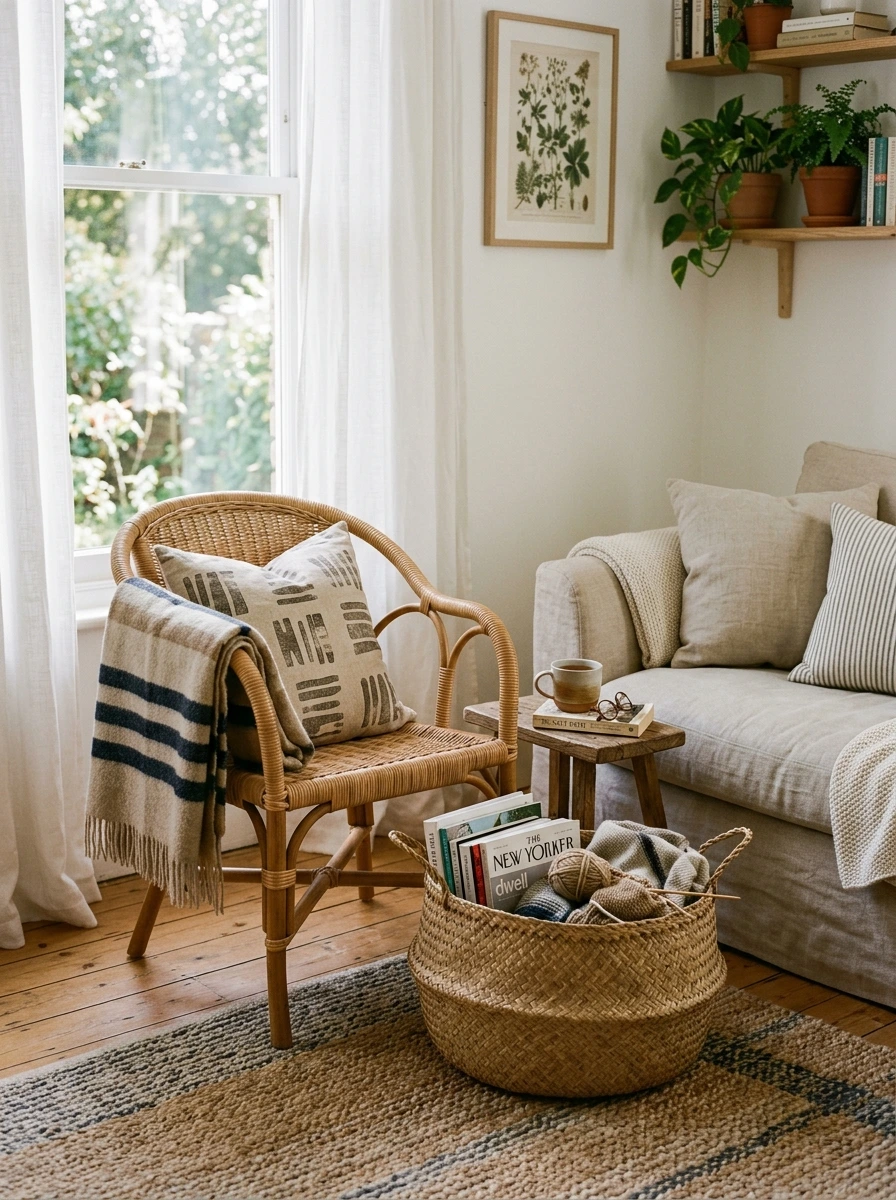
A rattan accent chair does what a fully upholstered piece can’t: it adds shape and texture while staying visually light in a small room. Pair it with a low-profile sofa in natural linen so the materials feel related instead of competing. Rattan, cane, and light wicker all read as natural material accents that keep a coastal room from tipping into beach-house cliché.
🪑 Key Pieces: Coastal & Airy Anchors
Four pieces make or break this look: a low, relaxed sofa in natural fabric, one rattan or cane accent chair, a whitewashed or light-oak coffee table, and woven baskets doing double duty as storage and texture. Skip glossy or lacquered finishes entirely; they read more resort than real life. This combination covers most small living room ideas questions we get, since every piece here is compact by nature.
13. Sheer Curtains That Let the Room Breathe
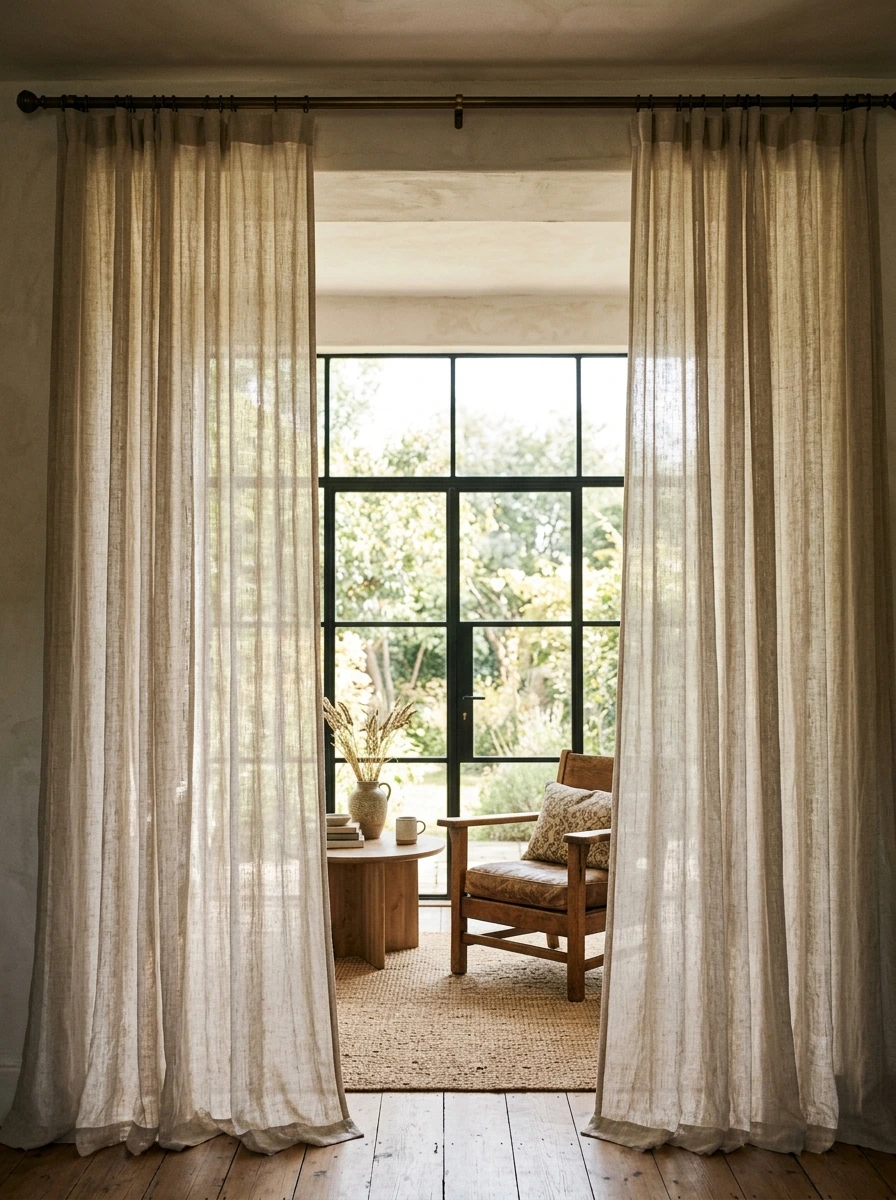
Heavy drapes have no place in a coastal-leaning room; sheer linen panels are the move. Hang them from ceiling height rather than window-frame height, and let them puddle slightly at the floor for softness. Natural, undyed linen or a soft off-white keeps the light filtering through instead of blocking it. This is the kind of open concept living room detail that makes a room feel bigger than its square footage without any construction involved.
⊹ Get the Look
- Ceiling-mounted curtain rods, not frame-mounted
- Undyed or soft white linen panels, floor-length
- A slim woven curtain tieback instead of a hard metal one
- Sheers layered under, not instead of, a light-blocking liner if you need one
14. A Blue and Sand Palette for Instant Calm

Blue and sand is the shorthand palette everyone pictures for coastal living room decor, and it earns the reputation. Keep blue to accent pieces, pillows, ceramics, a piece of art, rather than a full wall, so the room doesn’t skew nursery. Layer in sandy neutrals through the sofa and rug so the blue has somewhere to land. It’s one of the most forgiving living room color schemes for anyone nervous about picking “the wrong color.”
✦ Priya’s Translation Tip
“Airy” gets thrown around a lot, and it actually means low visual weight near the floor. Translate it into: a sofa with visible legs instead of a skirted base, a glass or light-wood coffee table, and rugs in pale tones. Airy is a furniture-height problem more than a color problem.
15. Layered Jute for Grounded, Beachy Texture
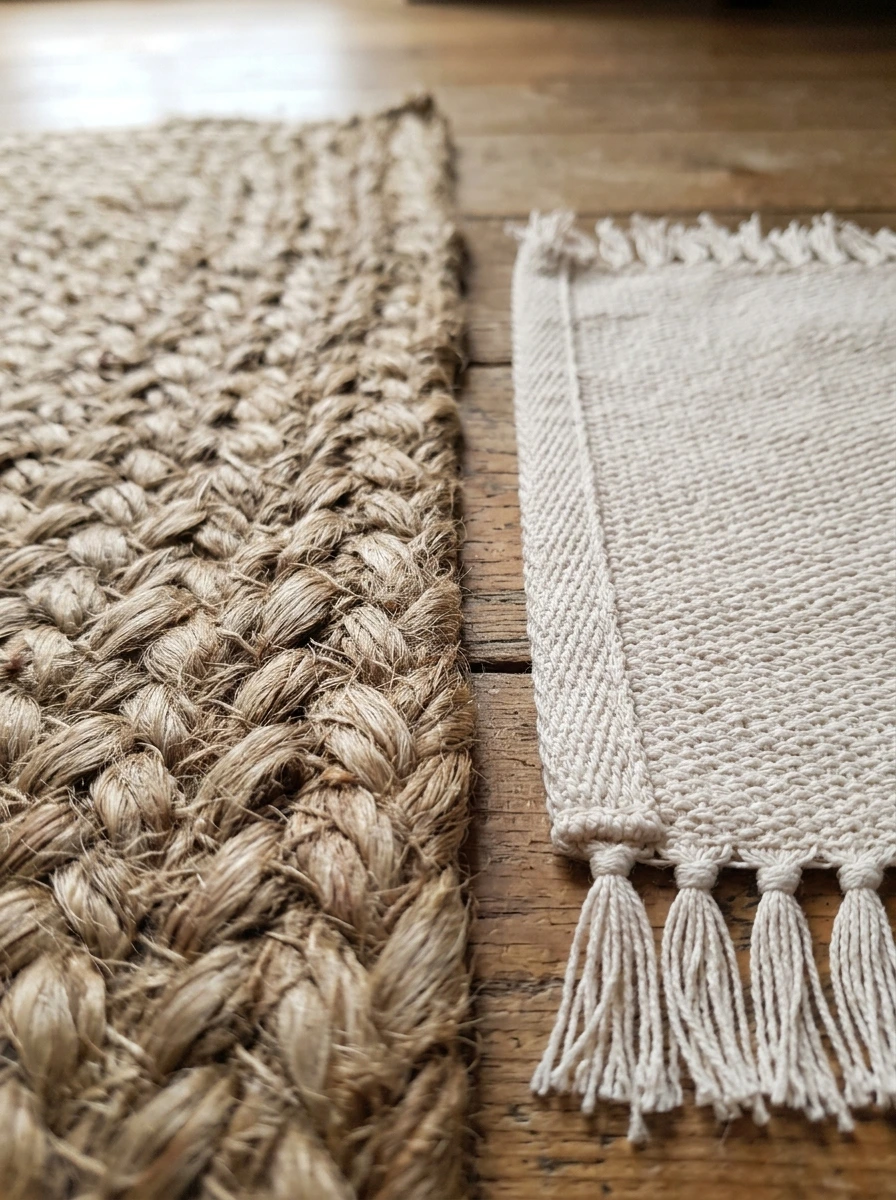
A chunky jute rug is the texture equivalent of sand underfoot, and it’s the single most common request I get for coastal living room decor. Size it to extend at least a few inches past the front legs of the sofa on every side. Pair it with a lighter, smaller cotton rug layered on top near the coffee table for a softer landing spot. These living room design ideas work in a beach house and in a landlocked apartment equally well, since the materials do the storytelling, not the location.
16. A Low-Slung Sofa That Makes a Room Feel Bigger
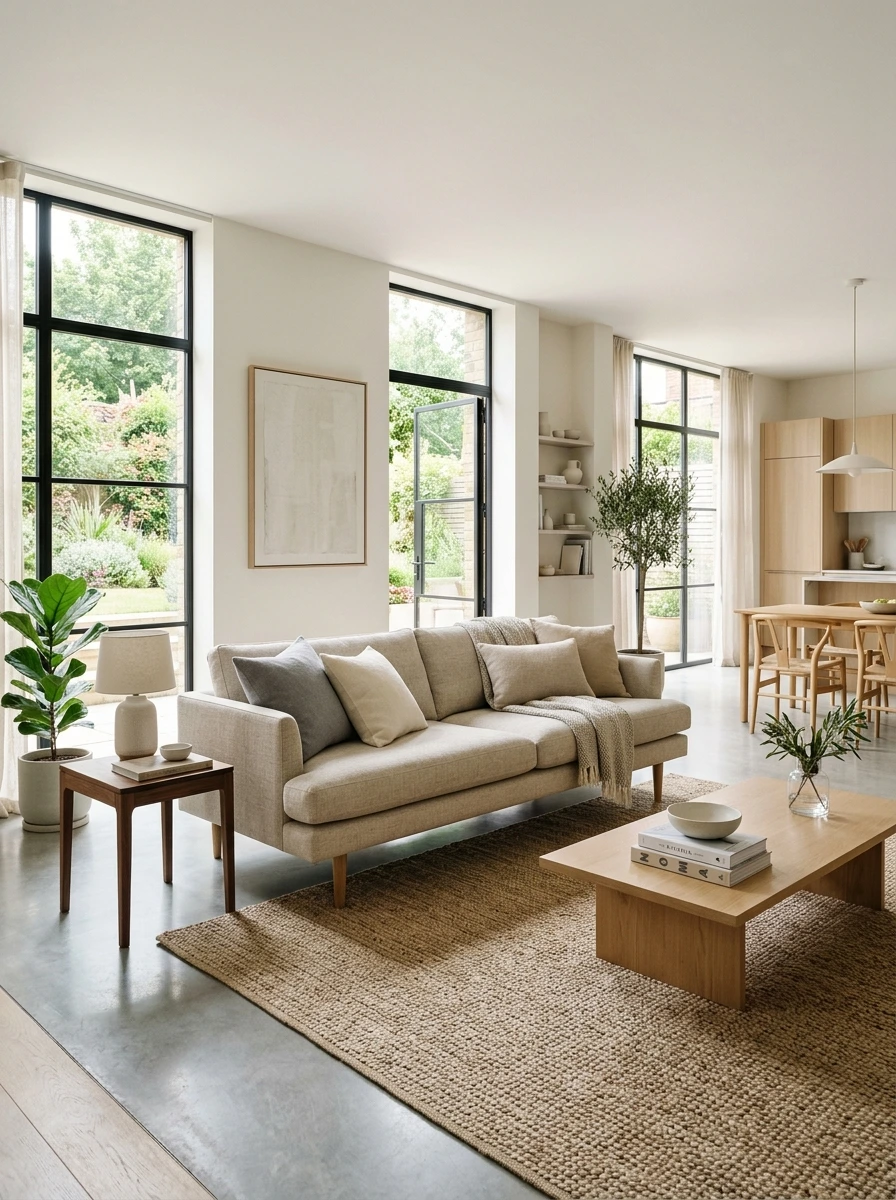
A lower sofa silhouette opens up visual space above it, which is why it shows up in nearly every minimalist living room I design. Choose a frame with legs, not a skirted base, and a back height a few inches shorter than standard. Keep the fabric solid, in oatmeal, stone, or graphite, so the shape does the talking. This is one of the clearest modern living room ideas for anyone dealing with low ceilings or a narrow floor plan.
17. One Statement Art Piece Instead of a Gallery Wall
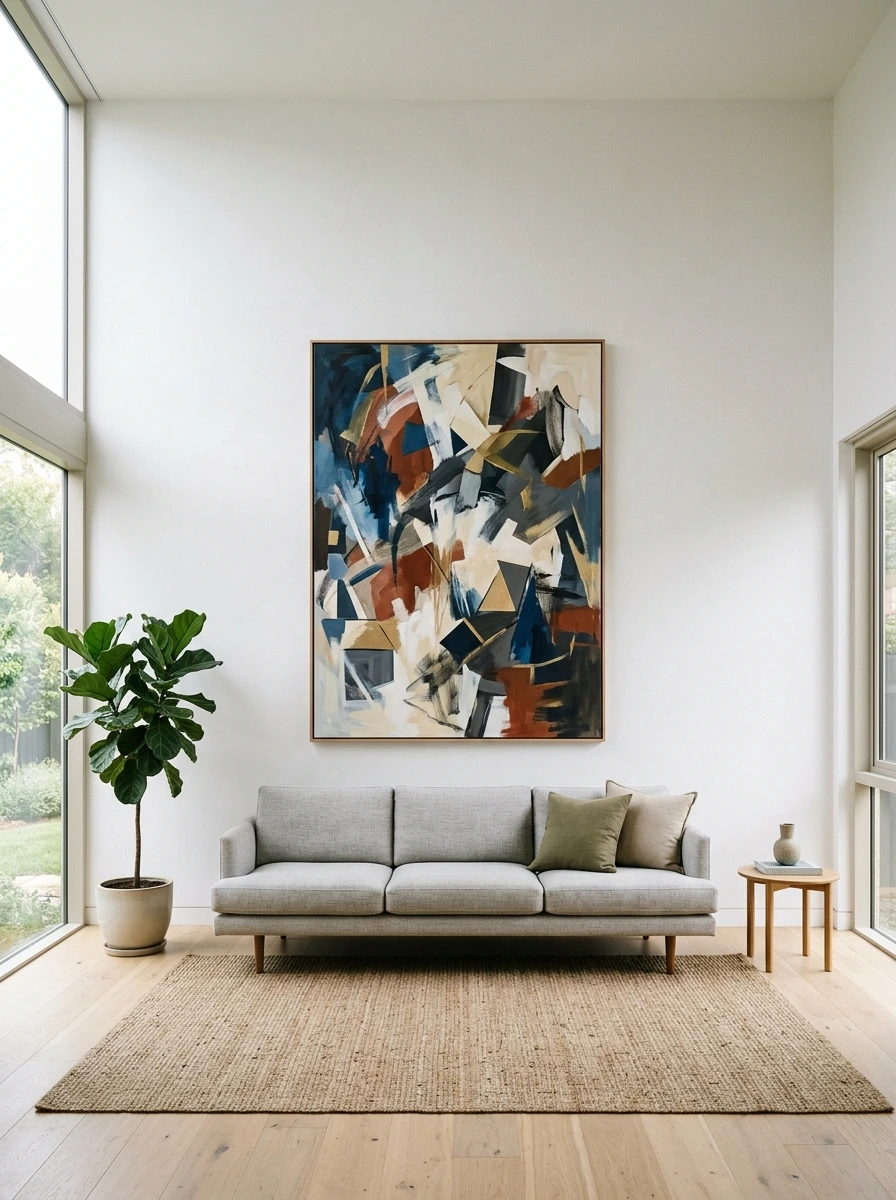
Minimalist rooms need a focal point precisely because they have so little else competing for attention. Choose one large-scale piece, abstract or a single bold photograph, sized to at least two-thirds the width of the sofa below it. Skip the frame gallery entirely here; one piece, properly scaled, reads more considered than five smaller ones. It’s the fastest way to build a living room focal point without adding any furniture at all.
💬 Client Ask: “Won’t Minimalist Feel Cold?”
I hear this constantly, and the honest answer is: only if you stop at furniture and skip texture. A minimalist living room still needs a wool throw, a textured pillow, and a rug with some depth to it, the color palette just stays tighter. Neutral doesn’t mean empty; it means every piece earns its spot. That’s the difference between minimalist living room decor that feels intentional and a room that just looks unfinished.
18. Built-In Shelving That Disappears Into the Wall
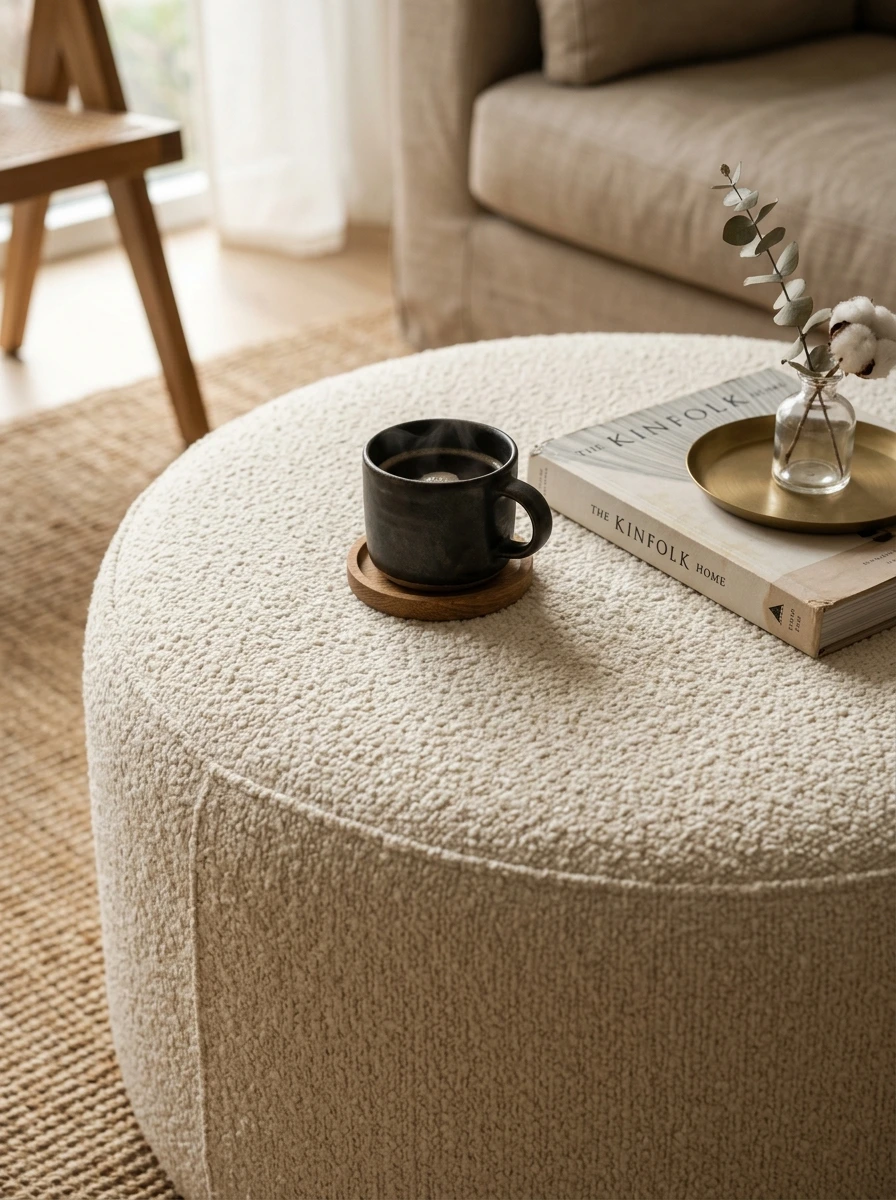
Storage is the real enemy of a clean minimalist room, so hide it instead of styling around it. A storage ottoman that doubles as a coffee table keeps remotes, blankets, and clutter out of sight without adding another piece of furniture. Choose one in a solid bouclé or linen so it reads as seating first, storage second. This built-in shelving ideas approach, hiding function inside form, is the actual secret behind rooms that look effortlessly clean.
⊹ Get the Look
- One low-slung sofa with exposed legs
- A storage ottoman in place of a traditional coffee table
- One oversized art piece, no gallery wall
- A single sculptural lamp instead of multiple small lights
19. A Monochrome Palette Built on Texture
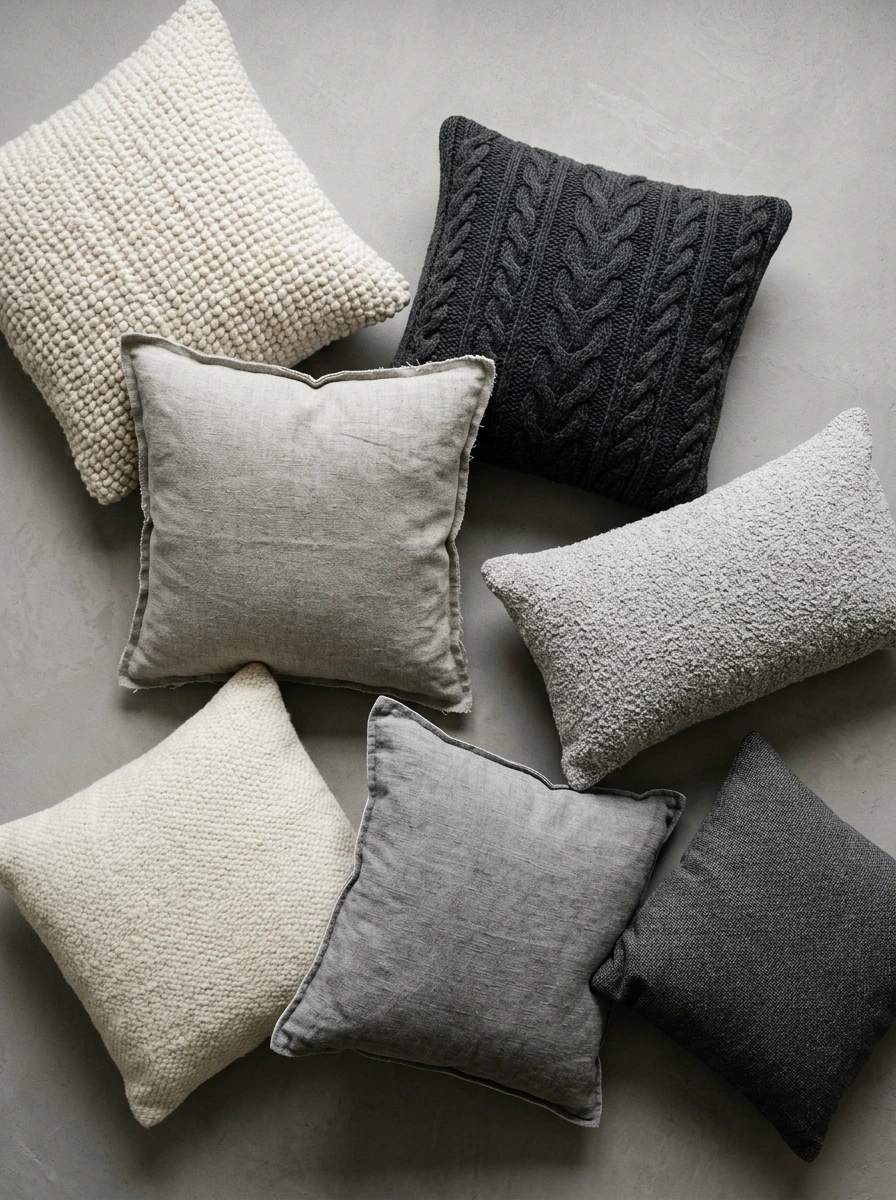
A single-color room only works if the textures do the heavy lifting instead of the color. Stay within one neutral family, all warm grays or all soft whites, and vary the material: a bouclé pillow next to a linen one, a wool rug under a leather chair. This is the most common way to fake a “designer” look on a small living room ideas budget, since texture reads as expensive even when the palette costs nothing extra.
✦ Priya’s Translation Tip
When someone says they want their room to feel “collected,” they usually don’t mean matching. Translate it into: pieces from at least three different sources, vintage, new, handmade, unified by one shared color or material. Collected is a sourcing strategy, not a look you buy in one trip.
20. Sculptural Lighting as the Room’s Only Ornament
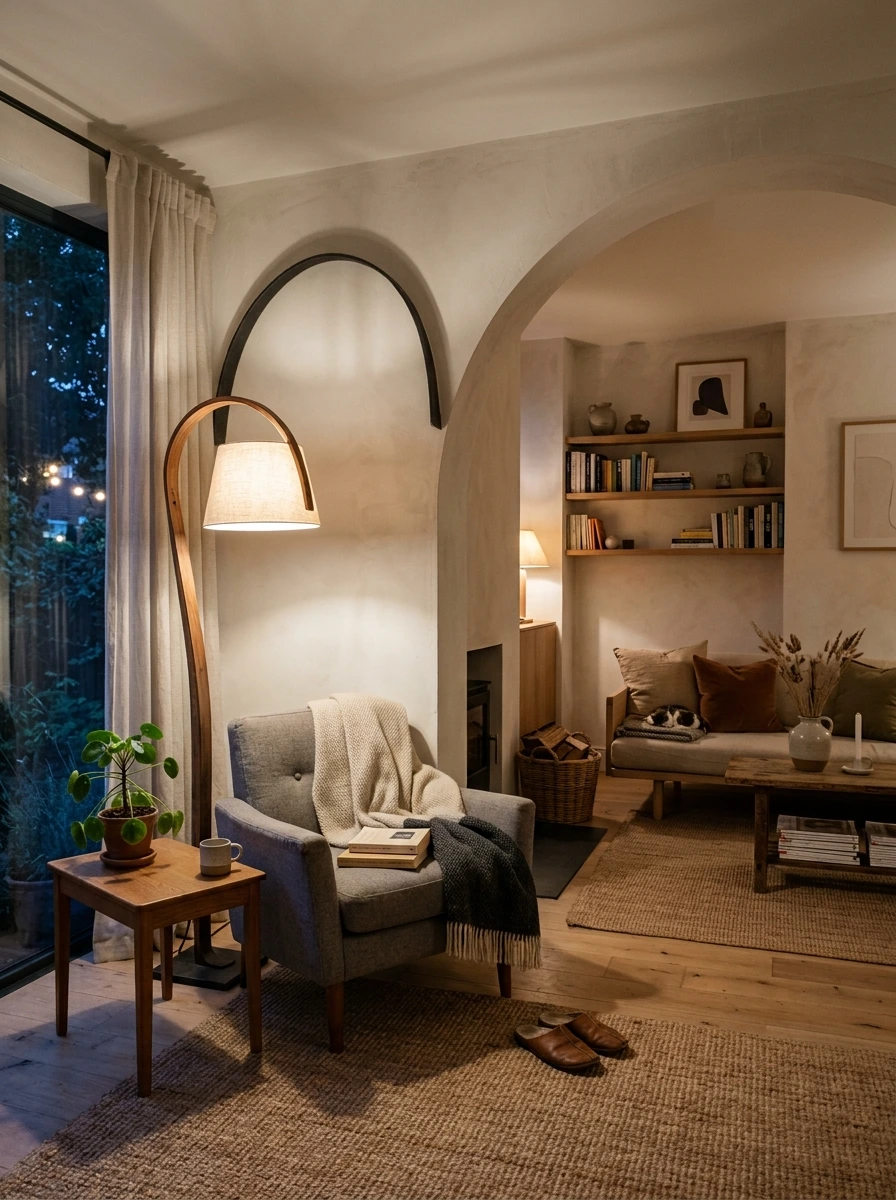
In a minimalist room, the lighting fixture gets to be the decoration, since almost nothing else is competing for that job. Choose one sculptural floor or table lamp with an interesting silhouette, arched, asymmetric, or oversized, and let it stand alone rather than pairing it with a matching set. This kind of statement lighting fixture works especially well in interior design ideas living room projects where the client wants “impact” without adding clutter. It’s proof that minimalist doesn’t mean plain, it means the room only gets one loud detail instead of ten quiet ones.
21. A Slipcovered Sofa for Easy, Lived-In Comfort
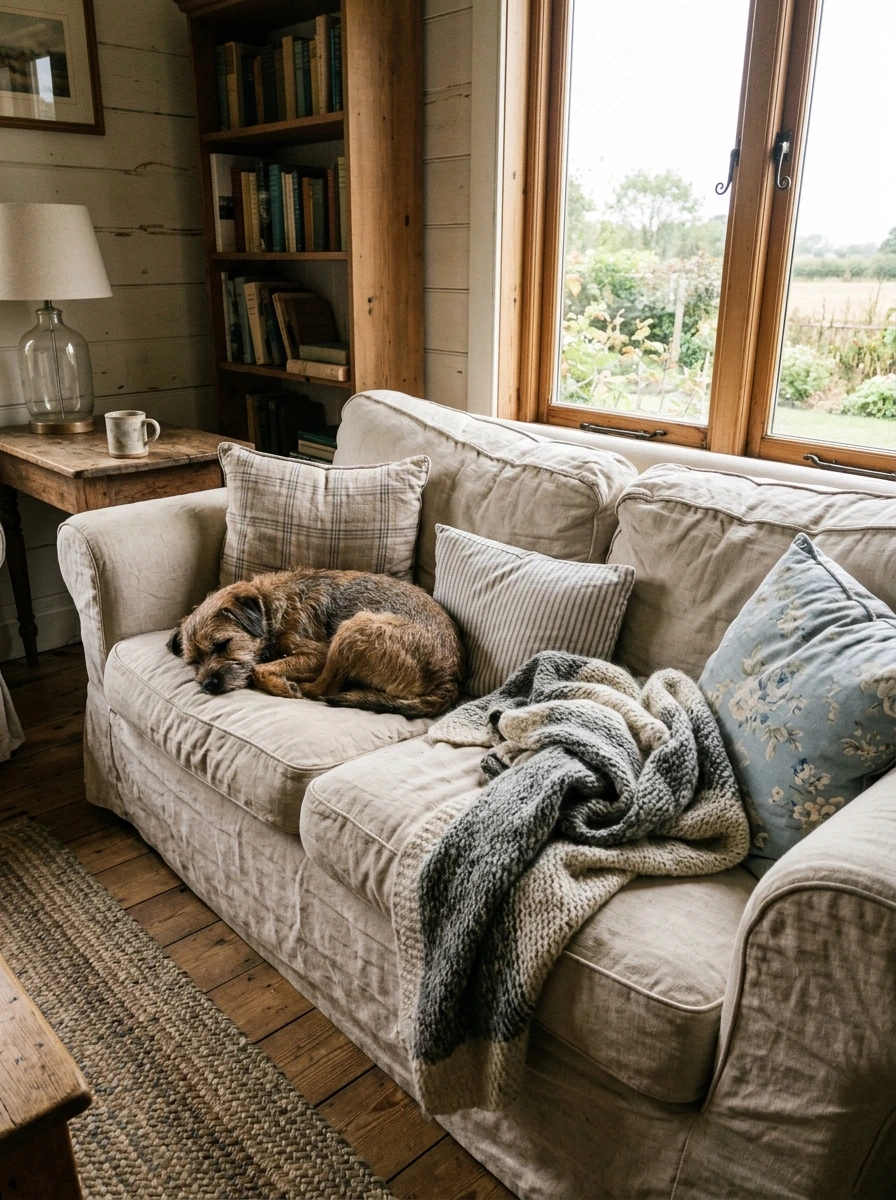
Farmhouse living room ideas start with furniture you’re not afraid to actually use. A slipcovered sofa in a washable cotton or linen blend handles kids, pets, and red wine better than anything tailored ever will. Choose a soft white or oatmeal cover, and let the slight wrinkles stay; that relaxed texture is the whole point of the look. It’s a practical answer to one of the most common questions I get about this style, which is how to keep it from looking staged.
22. Throws and Pillows Stacked for Maximum Coziness
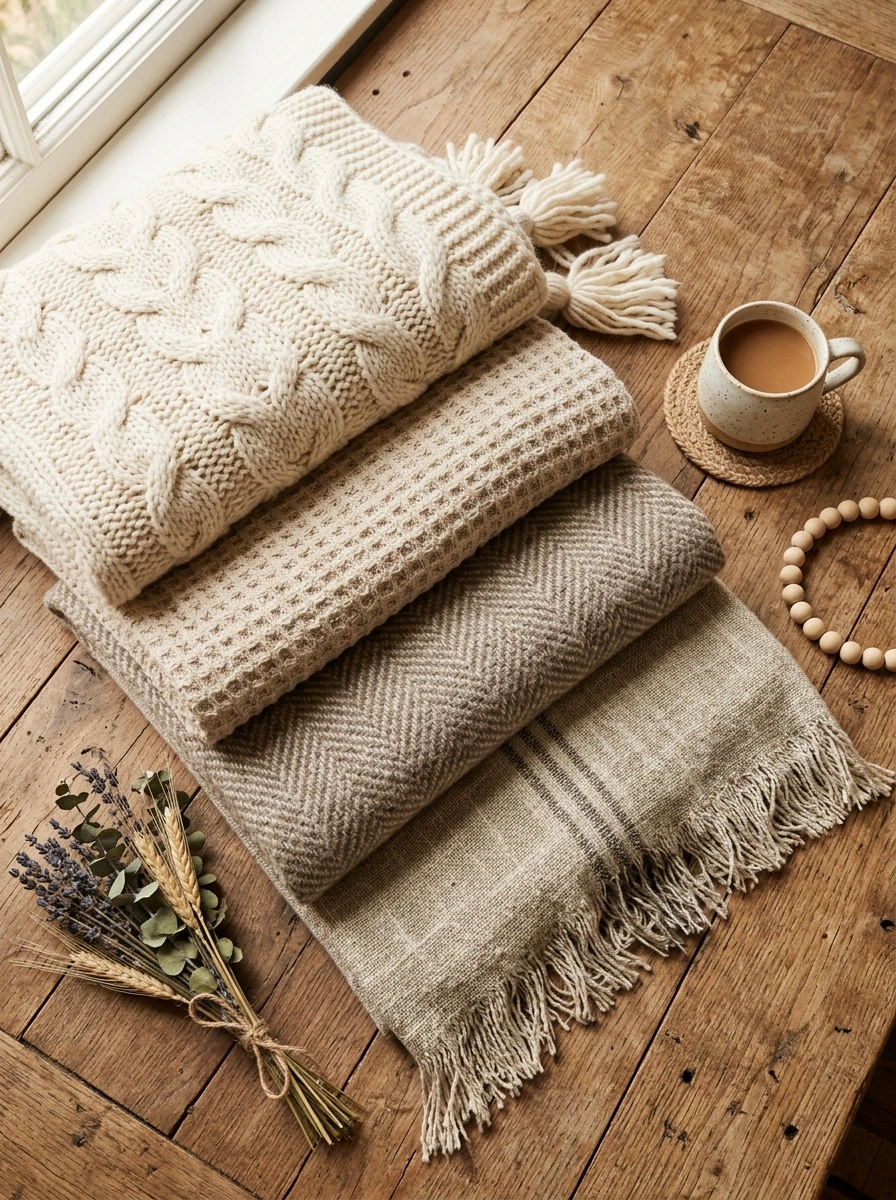
This is the family where “more” is genuinely the right instinct, within reason. Layer two throw blankets of different weaves, a chunky knit and a woven cotton, over the back of the sofa, and mix at least three pillow textures across the seating. Stick to a warm neutral palette so the layering reads cozy instead of cluttered.
🧵 Texture Notes: What Makes Farmhouse Read Intentional
The materials that separate a considered farmhouse room from a themed one: chunky knit wool, raw linen, worn or distressed wood, and a little bit of vintage brass. Skip anything shiny, glossy laminate, chrome, high-gloss paint, since it fights the whole point of the style. This mix of textured throw pillows and natural material accents is what actually reads as farmhouse living room ideas rather than a costume version of the trend.
23. Vintage-Styled Coffee Table Vignettes
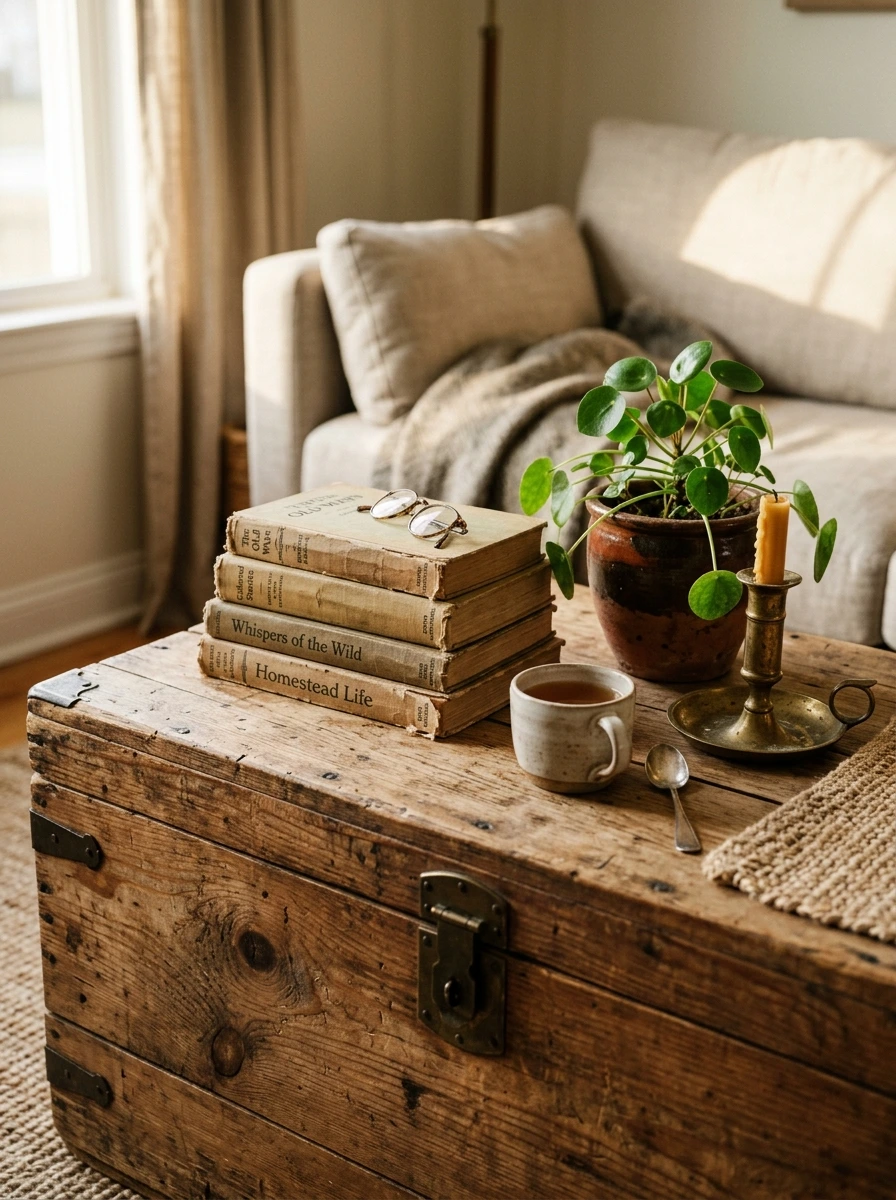
An old trunk or a reclaimed-wood table does more storytelling than a new coffee table ever could. Style the top with a stack of worn books, a single plant, and one object with real age to it, a brass candlestick, an old scale, anything with a story. It’s the living room version of cozy layered looks, texture built up piece by piece until the surface feels lived-in rather than staged. This vintage-forward approach to living room decor ideas is one of the cheapest, since half the best pieces come from flea markets instead of retail.
⊹ Get the Look
- One trunk or reclaimed-wood coffee table with visible age
- A stack of three to five worn hardcover books
- One brass or aged-metal object with real history
- A small plant in a simple terracotta pot
24. Open Shelving Styled Like a Working Kitchen
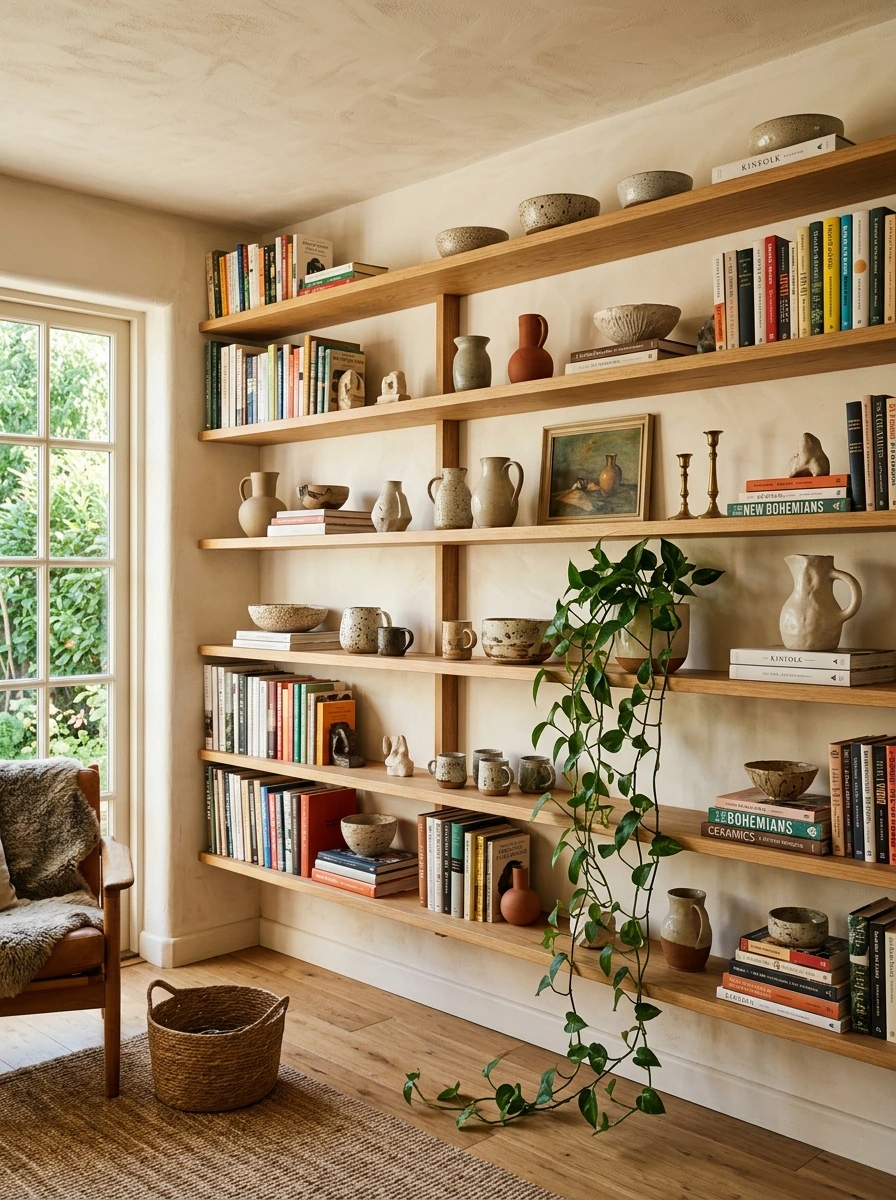
Open shelving isn’t just for kitchens anymore; it works in a farmhouse living room as a spot for curated bookshelf styling. Mix ceramics, a few plants, and books at varying heights rather than lining everything up evenly. Stick to a warm wood tone for the shelves themselves so they match the room’s other furniture wood tones.
✦ Priya’s Translation Tip
“Cozy” in a farmhouse context usually means visible warmth, not just soft textures. Translate it into: warm wood tones everywhere you can manage it, a few pieces with real age or wear, and at least one handmade-looking ceramic object. That combination reads cozy even in a room with clean, simple lines.
25. Wood Beam Accents With Warm Ambient Lighting
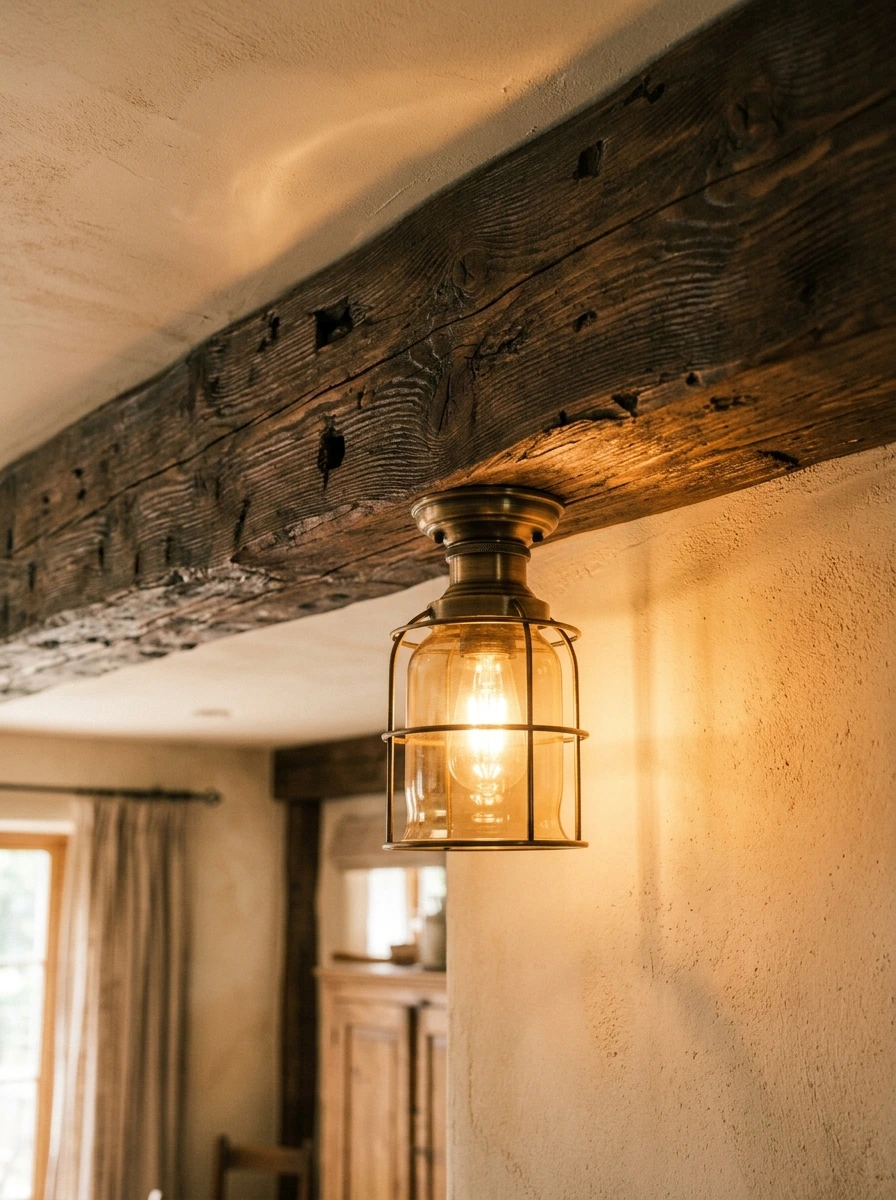
Faux or real wood beams add architectural warmth that a flat ceiling never quite delivers. Pair them with warm-toned sconces mounted along the beam line instead of a single overhead fixture, so the light spreads low and golden through the room. Choose a warm wood tone that’s close to, but not identical to, your existing furniture wood tones, so the room doesn’t feel like a matched set. It’s one of the more architectural living room design ideas on this list, but even a single faux beam over the sofa carries the effect.
26. A Gallery Wall That Mixes Every Era on Purpose
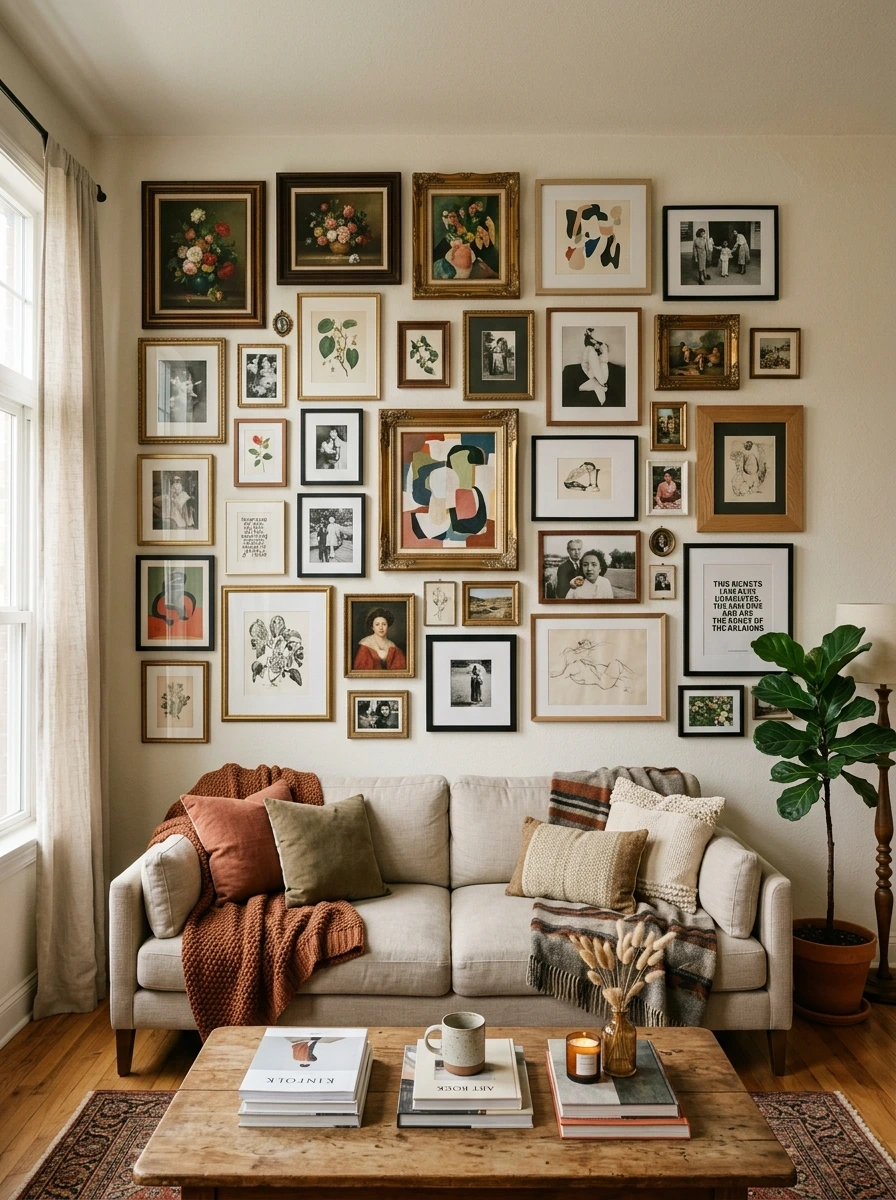
Gallery wall ideas work best when the frames don’t match at all. Mix a vintage gilt frame, a plain black modern one, and something unexpected, a mirror, a small tapestry, a woven hanging, into one arrangement. Lay it out on the floor first, then hang from the center piece outward so the whole thing reads as one composition instead of a scattered collection. This is eclectic living room design in its purest form, proof that “mixing eras” is really just about confident spacing.
27. Clashing Patterns That Actually Work Together
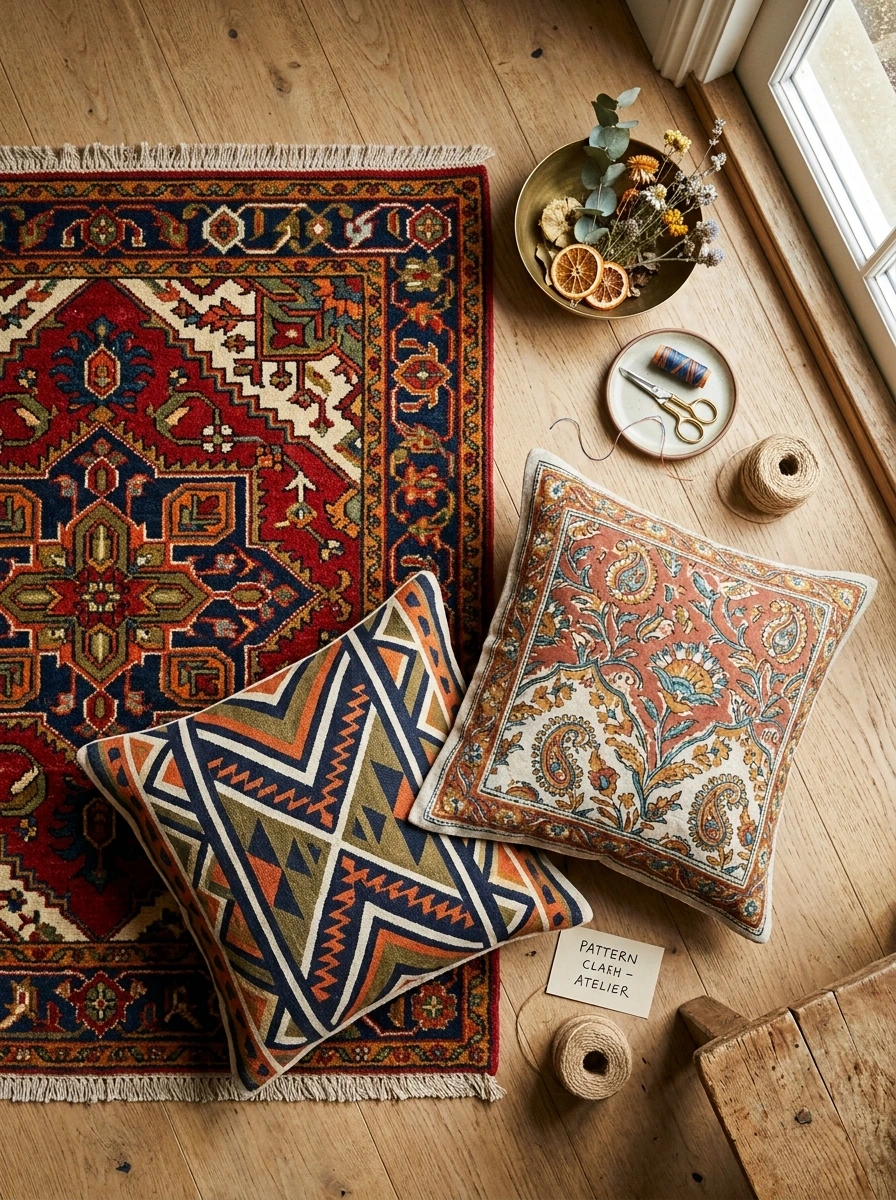
Pattern mixing scares people more than any other move on this list, and it’s actually one of the easier ones to get right. Pick one large-scale pattern for the rug, one smaller-scale pattern for the pillows, and keep both within the same color family so they read as coordinated rather than random. A solid sofa in a neutral or bold single color gives the eye somewhere to rest between patterns. This is boho living room decor and eclectic living room design overlapping, and it’s exactly why both terms describe the same instinct toward a layered, personal room.
✦ Priya’s Translation Tip
“Curated” gets misused constantly to mean expensive. It actually means every piece can answer the question “why is this here,” whether that’s a color connection, a material echo, or a genuine story. Translate it into: before buying anything new, check it against three existing pieces in the room for a real connection. If it can’t answer that question, it’s clutter, not curation.
28. Mixed Metal Hardware Tying an Eclectic Room Together
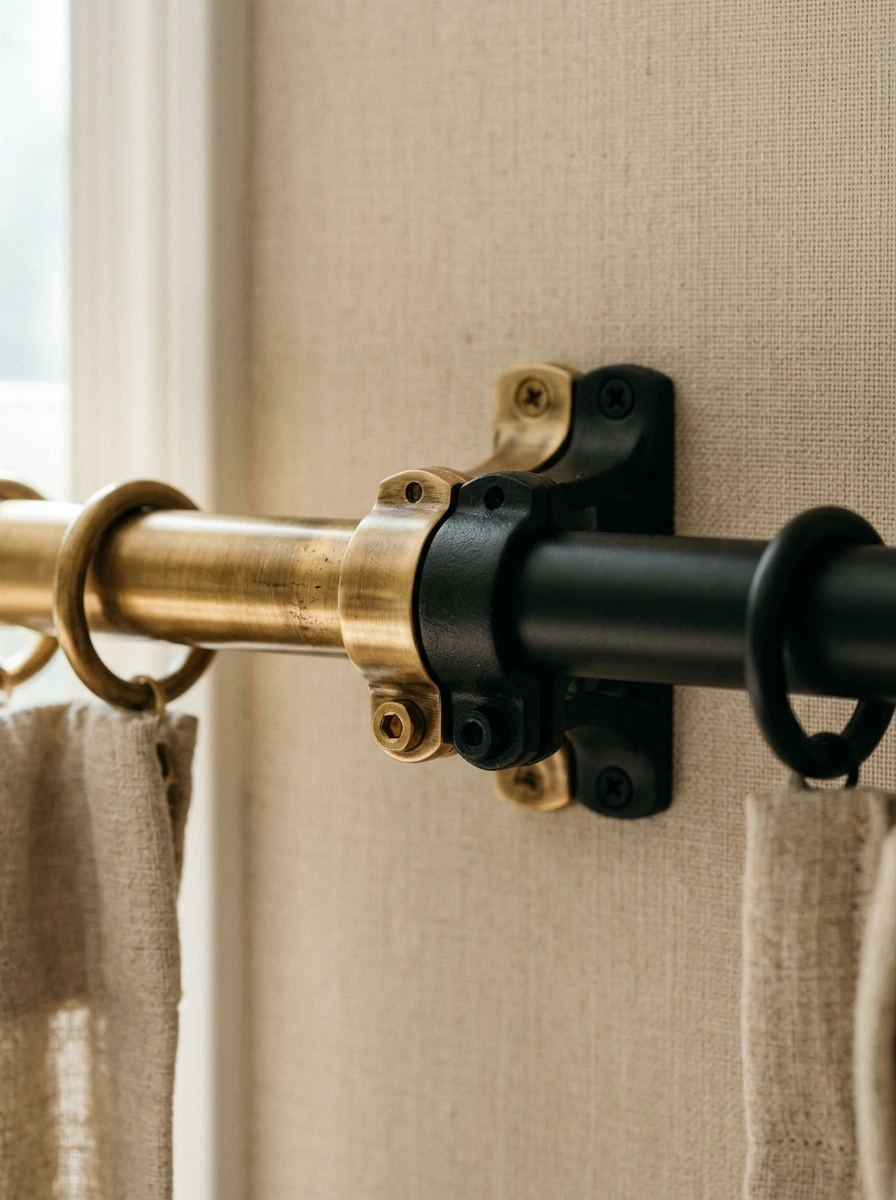
Small hardware choices carry more weight in a maximalist room than people expect. Mix a brass curtain rod with black picture-frame hardware and a nickel lamp base, and let the variety feel intentional rather than mismatched. Black and brass together read as mixed metal finishes done with confidence, especially against a wall of patterned art. This is where industrial living room design sneaks in too, since black metal hardware pulls double duty across both styles.
⊹ Get the Look
- Mixed metal hardware across at least three visible pieces
- One vintage-sourced object with real patina
- A bold-pattern textile mixed with one solid anchor piece
- At least one unexpected material, like a woven or tapestry-style hanging
29. Flea-Market Finds Styled Like They Belong
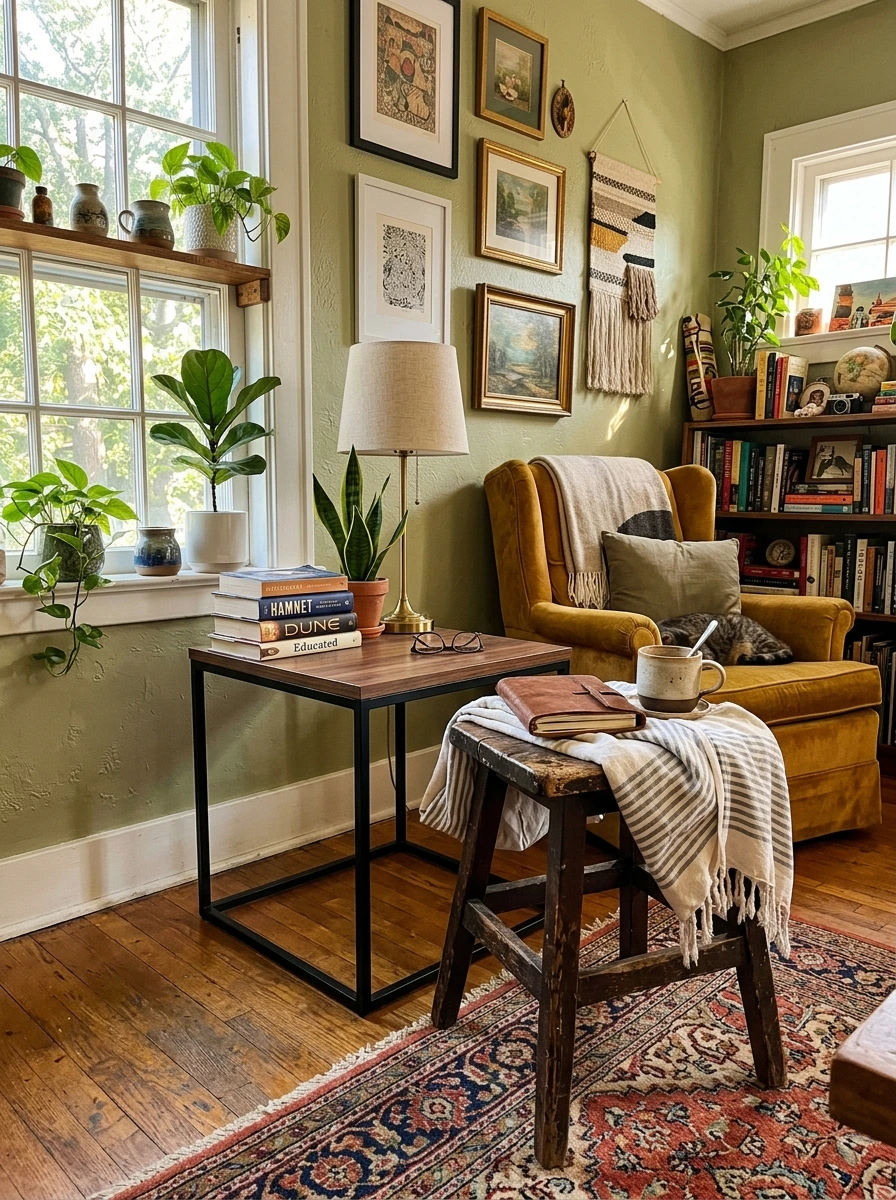
A single flea-market stool or side table can carry an entire eclectic room’s personality. Choose one piece with obvious age, a carved leg, a worn cane seat, a hand-painted surface, and let it sit next to something completely modern for contrast. The gap between old and new is what makes the pairing feel curated instead of accidental. This kind of accent chair styling logic applies to stools and side tables just as well, and it’s the cheapest way to add real character to interior design ideas living room projects.
✦ Priya’s Translation Tip
Clients ask for pieces that look “collected over time” and then want it delivered by Friday. Translate it into: buy one genuinely old piece now, then let the rest fill in slowly over the next year. A room that actually was collected over time looks different from one styled to fake it, and buyers can always tell.
30. A Maximalist Bookshelf Built on Color, Not Order

The bookshelf is the most forgiving spot in the house to go bold, so use it. Group books by color instead of alphabetically or by height, and mix in ceramics, small art, and one or two oversized objects to break up the rows. Let some shelves stay fuller than others; that unevenness reads as lived-in maximalism rather than a stage set. It’s a favorite trick for anyone chasing living room inspiration on a budget, since it uses books you probably already own instead of new purchases.
Frequently Asked Questions
How do I decide on a living room style?
Start with the Style Finder above, then look at what’s already in your space that you’re not willing to get rid of, since your style should work with your good pieces, not against them. Most people land somewhere between two families rather than fully committing to one, and that’s normal. Pick a primary family for about seventy percent of the room, and let the second family show up in accents. This is honestly how most professional living room design ideas get built: a primary style plus an accent, not a single pure one.
What living room style is popular right now?
Warm and earthy tones are dominating client requests currently, especially terracotta and deep olive paired with wood tones. Moody, layered rooms are close behind, particularly among people who work from home and want their living space to feel different from their office corner. Coastal and minimalist styles remain steady favorites for smaller apartments. None of these are going anywhere soon, they’re rotating in popularity, not replacing each other.
How do you mix design styles in a living room without it looking messy?
Pick one element to stay consistent throughout the whole room, usually the wood tone or the metal finish, and let everything else vary. A shared color palette across mismatched furniture styles also keeps a mixed room from reading as random. Limit yourself to three style influences max; four or more starts to look unplanned instead of curated. This is the actual mechanism behind good eclectic living room design: one consistent thread holding several different influences together.
What makes a living room look designer instead of generic?
Scale is the biggest tell: oversized art, a properly sized rug, furniture that fits the room instead of floating in the middle of it. Texture variety matters just as much as color choice, since an all-smooth room reads flat no matter how nice the individual pieces are. Restraint on accessories helps too; fewer, better objects beat a shelf full of small trinkets every time. These three things cost nothing extra to get right, they just take more attention than most people give them.
How do you choose a color scheme for a living room?
Start with one piece you already love or plan to keep, a rug, a piece of art, even a favorite mug, and pull the palette from there. Stick to three main colors: one neutral base, one secondary tone, and one accent used sparingly. Test paint and fabric samples in the actual room at different times of day, since lighting changes color more than people expect. Good living room color schemes almost always trace back to one anchor piece rather than a Pinterest board of unrelated colors.
Can you combine modern and traditional furniture in one room?
Yes, and it’s one of the more sophisticated things a room can do when it works. Keep the color palette unified even if the furniture eras aren’t, and let one piece, often a light fixture or rug, bridge the two styles visually. If you love a darker, more traditional-with-edge look, our vintage moody bedroom guide shows the same old-meets-new mixing taken further in a bedroom setting. The key is confidence: half-committing to the mix is what reads as accidental rather than intentional.
What’s the most budget-friendly living room style?
Minimalist and farmhouse styles tend to be the cheapest to execute since so much of the work is thrifting, styling, and paint rather than new furniture. A slipcovered sofa, a secondhand coffee table, and one good rug get you most of the way to either look. If you want a fuller room without a big furniture budget, warm bedroom aesthetic tricks like layered textiles and warm lighting translate directly into the living room too. Living room design ideas on a budget almost always lean on paint, textiles, and secondhand finds over anything new.
How do I make a small living room feel like a designed space?
Scale down, not just in size but in quantity: one great rug instead of two, one statement light instead of three lamps. Low-profile furniture with visible legs keeps sightlines open across the whole room. Mirrors placed opposite a window do genuine work here, not just decoratively. These small living room ideas matter more in compact spaces than in large ones, since every piece has to earn a more visible spot.
Do accent walls still work in living rooms?
Yes, especially textured ones like the clay-panel or dark charcoal treatments covered above. The key is choosing the wall that already draws the eye, usually the one behind the sofa or the fireplace wall, rather than a random side wall. Keep the rest of the room’s palette simple so the accent wall has room to stand out. They’re a low-commitment way to test a bolder color scheme before painting the whole room.
How often should you update a living room’s design?
Full redesigns rarely need to happen more than once every several years if the bones, sofa, rug, big furniture, are solid. Smaller refreshes, pillows, a new lamp, swapped art, work well on a shorter, seasonal cycle. The families in this list hold up regardless of trends, since they’re rooted in materials and proportion rather than a specific color that will date quickly. Most of these living room design ideas last because they solve a real problem in the room, not because they’re currently fashionable.
The Style Sign-Off
These thirty living room design ideas aren’t meant to be followed exactly, they’re meant to give you a vocabulary for the room you’re already picturing in your head. Whether you land in warm and earthy or full eclectic maximalism, the actual work is the same: fewer, better pieces, real texture, and a palette you chose on purpose instead of by accident.
Start with one change this week, a rug, a lamp, one bold accent wall, and build outward from there instead of trying to finish the whole room at once. That’s how every good room at The Muse Vale actually comes together, one considered decision at a time, and it’s an approach worth applying to any other room in the house.
Come back to this list whenever a client phrase, or your own vague inspiration caption, needs translating into something you can actually shop for and place.